Quentin Tarantino: Definitive Guide To Homages, Influences And References
Django Unchained
18. The Borrowed Title Track
The titular track, "Django," is also the titual track from the movie of the same name directed by Sergio Corbucci. It was composed by spaghetti western regular Luis Bacalov. The movie also includes several other tracks taken from the 1966 Django.
17. Tarantino's Ozploitation Nod
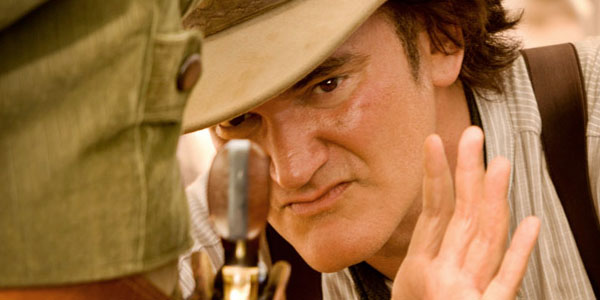
The bizarre Australian-accented cameo from Quentin Tarantino as a member of the LeQuint-Dickey Mining Company is likely a nod to the little-known Ozploitation film genre. Tarantino regular Michael Parks, who plays sheriff Earl McGraw in a number of his flicks, can also be seen as an employee of the oddly-named company.
16. Zoe Bell's Hidden Cameo
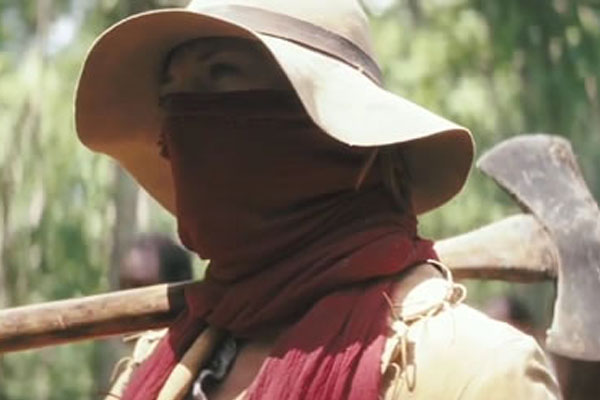
Zoe Bell, who played a fictionalized version of herself in Death Proof, appears briefly in Django Unchained as a tracker. Bell, a real-life stuntwoman, can be seen wielding an axe during one scene. Her head, however, is covered by a mask.
Django Unchained
15. Broomhilda's Blaxploitation Surname
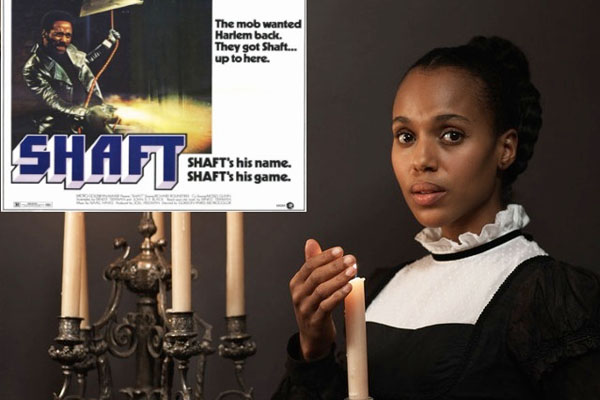
Broomhilda's surname is von Shaft, a reference to the infamous blaxpoitation character John Shaft. Tarantino has mentioned on a number of occasions that Django and Broomhilda are supposed to be the ancestors of said gun-toting character. Broomhilda's name is inspired by the mythical German female warrior Brunnhilde, to be rescued by her very own Siegfried in Django.
14. Candyland
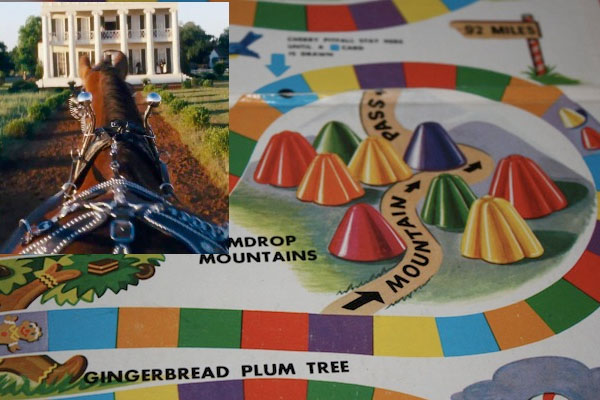
Calvin Candie's estate, nicknamed "Candyland," is likely a reference to the board game of the same name. Tarantino is known for his personal fondness for board games. Various board games can also be glimpsed throughout Pulp Fiction, including Operation and Life.
13. The Matt Houston Cameo
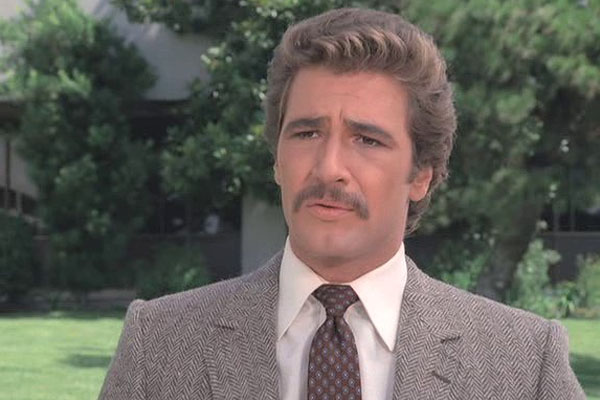
The star of the 80s private eye television show Matt Houston plays the role of Sheriff Gus.
Django Unchained
12. Don Johnson's Cameo

Don Johnson, best-known for his role as Crockett in Miami Vice, plays Big Daddy. Tarantino, of course, is renowned for his obscure casting choices, and this is no exception. Johnson was also the star of L.Q. Jones's bizarre 1975 post-apocalyptic film A Boy And His Dog: a cult classic today, it's also one of Quentin Tarantino's favourite movies.
11. Mandingo
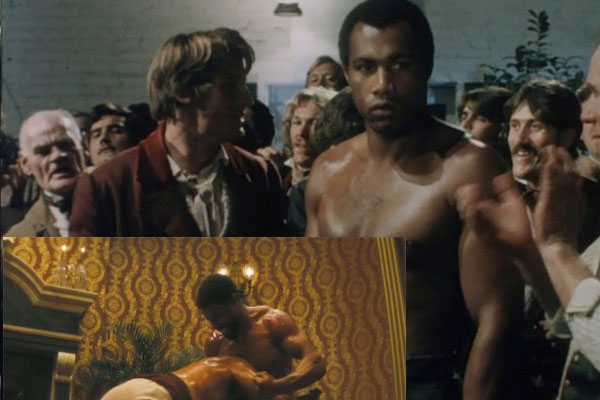
One of the film's most notable sequence is the "Mandingo fight," which sees two slaves pitted against one another in a Gladiatorial match to the death. Tarantino has asserted that Mandingo fighting was a real occurrence, though it's actually thought that such things didn't take place - there's no real evidence to suggest it, anyway.
Tarantino's inspiration, it seems, comes instead from the 70s film Mandingo, which heavily bases its story around these types of fight. The film, which starred James Mason, is considered a big influence on Django Unchained, given its willingness to explore racial politics and themes of slavery amidst the framework of a blaxploitation film.
10. The Polynesia Pearl Diver
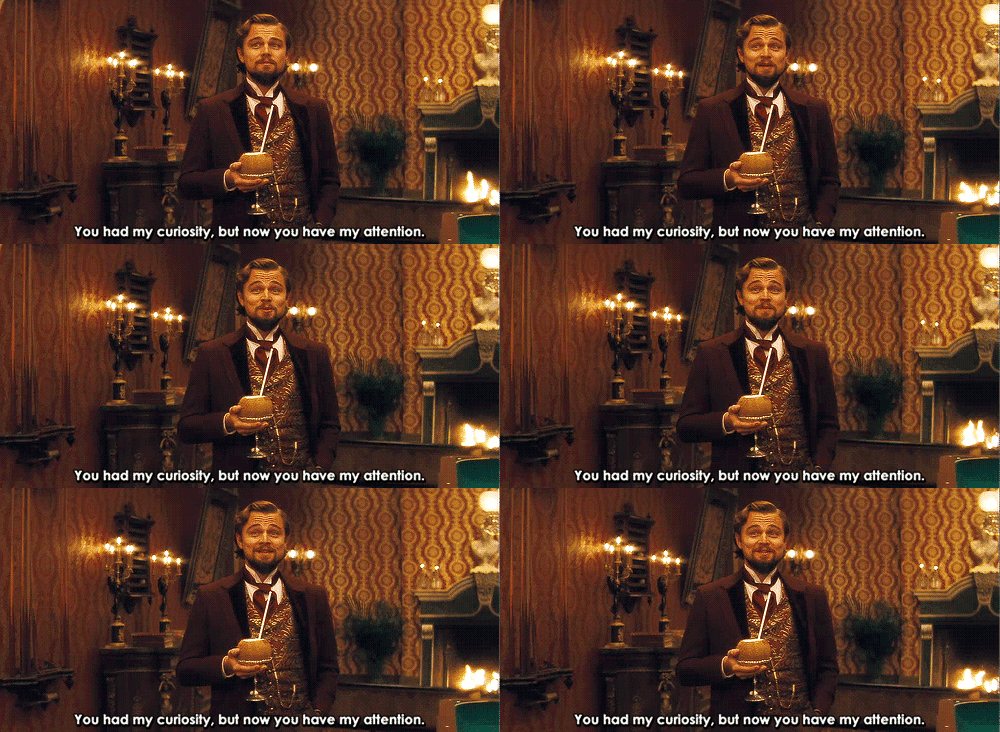
During the sequence in which we meet Calvin Candie, the flamboyant Mandingo owner orders a Polynesian Pearl Diver at the bar - adding "do not spare the rum." This could be a reference to Fritz Lang's The Blue Gardenia (1953), a film noir classic starring Anne Baxter as a heart-broken woman accused of a murder she cant remember any detail of, despite waking up in the dead man's apartment.
The night before the murder, the dead man (Raymond Burr) attempts to seduce Baxter by plying her with tropical drinks: Ever see a Polynesian Pearl Diver before? Baxter: Not served as a drink. Burr: These arent really drinks. Theyre trade winds across cool lagoons. Theyre the Southern Cross above coral reefs. Theyre a lovely maiden bathing at the foot of a waterfall.
Django Unchained
9. Minnesota Clay
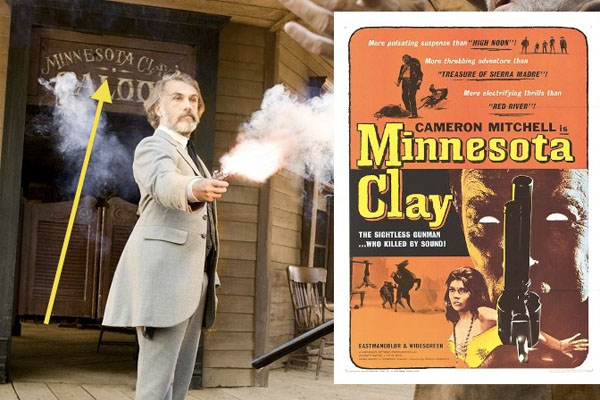
The name of the saloon where Django and Dr. King Schultz first discuss the ethics of bounty hunting is named the Minnesota Clay. This also happens to be the name of one of Sergio Corbucci's first spaghetti westerns, about a blind gunfighter who sets out to reek revenge.
8. Gone With The Font
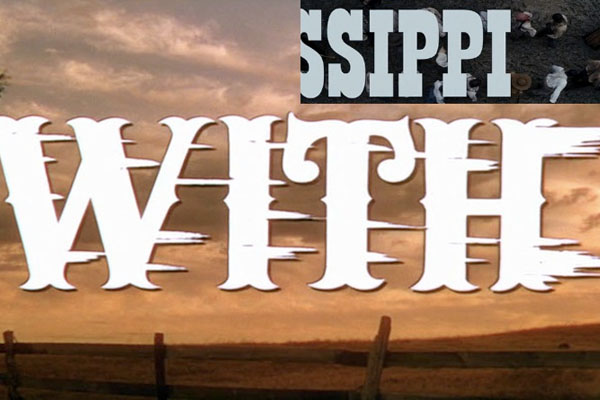
When Django and Dr. King Schultz arrive in Mississippi, the word appears on-screen in large capitals and scrolls across the screen. Though this is a very spaghetti western-esque touch, it might also be a reference to opening credits in Gone With The Wind (another film, which dealt with themes of slavery amongst the backdrop of a southern plantation).
7. Franco Nero's Cameo
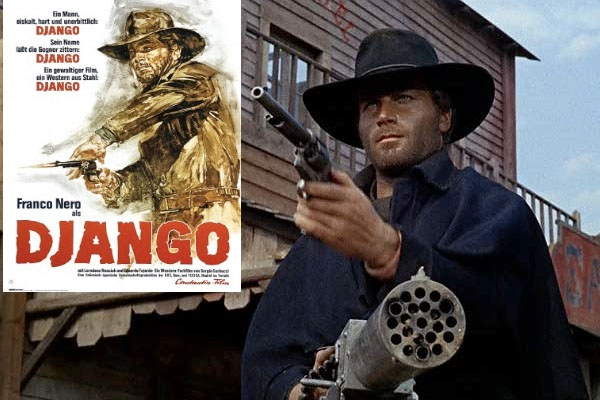
Franco Nero, the original Django, makes a cameo as an Italian mandigo-owner in the Cleopatra Club. Despite being the first ever Django, Nero has only ever played the role in two films - the first film, and the only official sequel, Django II, which was released in the 80s.
Django Unchained
6. Edwin Porter
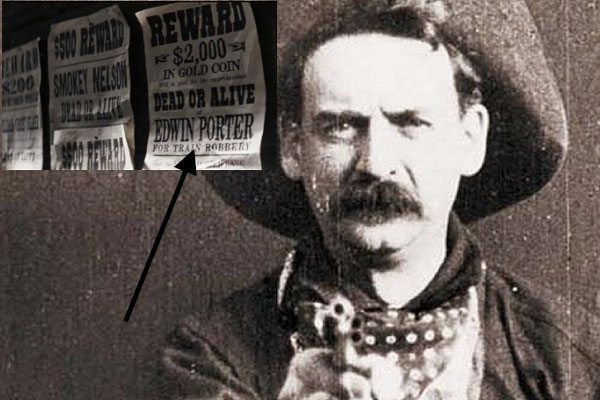
At one point in the movie, viewers might spot a wanted poster for an "Edwin Porter," who is known for directing the infamous silent film short The Great Train Robbery. Not only was this the first ever western film, it was also one of the first films with a fully-fledged narrative.
5. Tom Savini
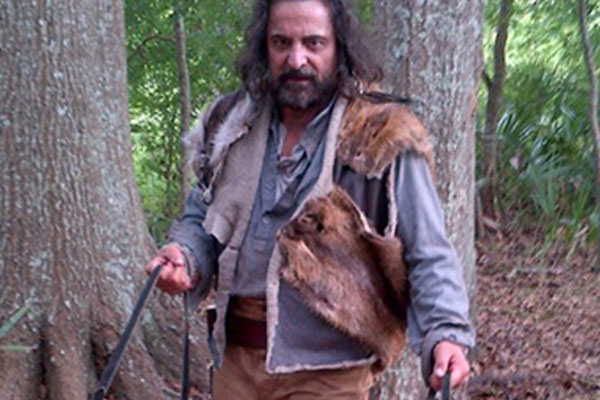
Tom Savini, the now-legendary make-up, SFX artist and film director, appears in a minor role. Savini also had a starring role as a character nicknamed "Sex Machine" in the Tarantino-penned vampire flick From Dusk Till Dawn, directed by his friend Robert Rodriguez.
4. The Daughter Of A Son Of A Gunfighter
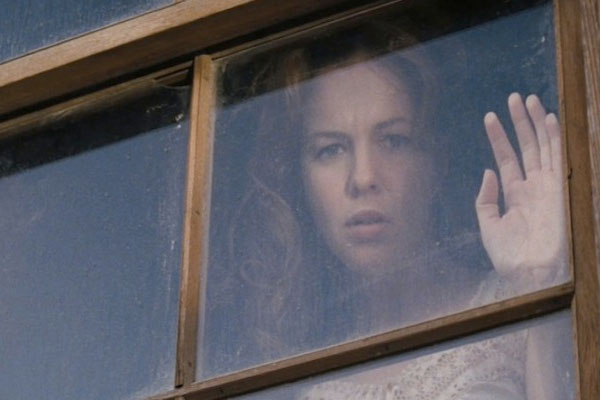
Amber Tamblyn, daughter of actor Russ Tamblyn, makes a neat appearance with her father in Django Unchained. Her father was the star of 1965 western Son of a Gunfighter and is credited in this movie as "Son of a Gunfighter." Amber is credited, therefore, as "Daughter of the Son of a Gunfighter."
Django Unchained
3. A Duke Of Hazzard
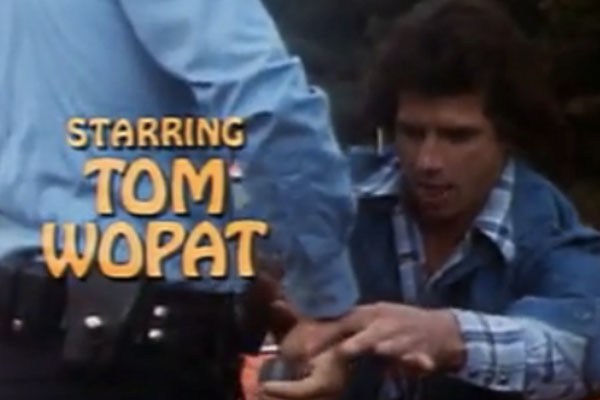
Gil Tatom, a U.S. Marshall, is played by Tom Wopat. Wopat played Luke Duke in the TV series Dukes of Hazzard, one of Tarantino's favourite shows.
2. The Snap Zooms

Like in Kill Bill and Inglourious Basterds, there are dozens of snap zooms scattered throughout the movie, a reference to the stylistic technique made famous in spaghetti westerns by directors like Sergio Leone, and one that was frequently utilized in kung-fu flicks. One notable snap zoom can be glimpsed when Django and Dr. King Schultz first meet Calvin Candie - he turns, grins and nods to greet them, whilst the camera snap zooms.
1. Django's Hat
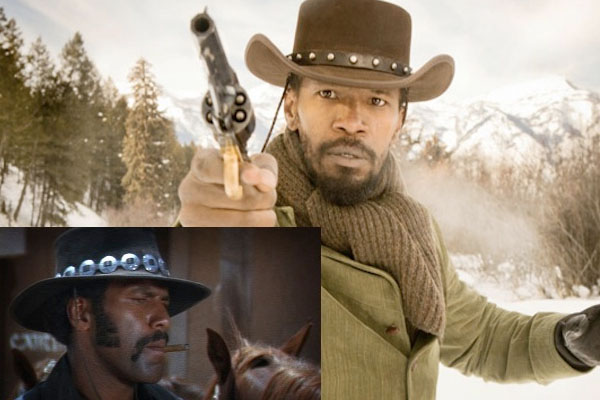
Django's hat is similar to the hat worn by Fred Williamson in blaxploitation/western Boss !*$%.
The Hateful Eight
17. The Title
Obviously, the title is a play on The Magnificent Seven. It's also Tarantino's longest title, with a massive three words. This is also Tarantino's eighth film and follows the same approach to Fellini's 8½, which was also named after its numbered release.
16. John Wayne
Kurt Russell repeats the John Wayne impression he does in Death Proof, this time extending it out into a whole performance. He even goes as far as re-appropriating one of Wayne's catchphrases - "that'll be the day!" - from The Searchers.
15. Lawrence Of Arabia
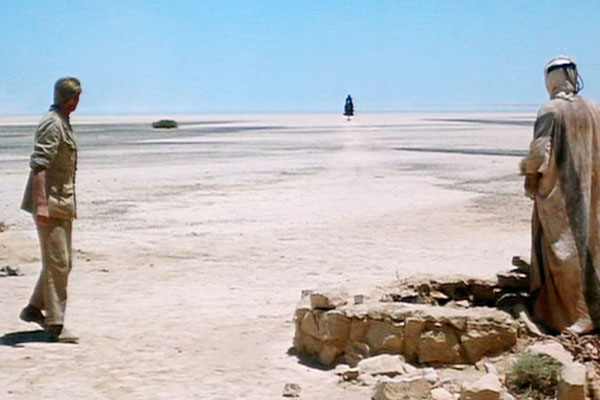
Both the opening reveal of John Ruth's carriage on the distant horizon and Chris Mannix's appearance in the distance feel like they consciously call back to the slow approach of this scene from Lawrence Of Arabia...
14. "Butterfield Overland Stage Co." & Stagecoach
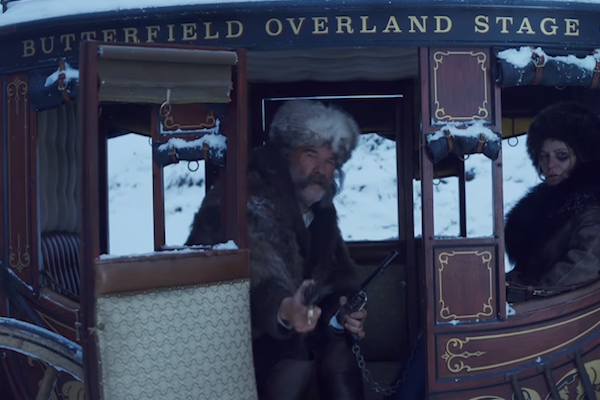
The inscription above the door of Ruth's carriage says "Butterfield Overland Stage Co - the name of an actual company of the same name that operated in the midwest during the mid 19th century. In real life, it didn't operate in Wyoming but Tarantino used that particular company in homage to John Ford's classic Stagecoach. He even goes as far as recalling specific shots...
13. The Great Silence & McCabe And Mrs. Miller
The Hateful Eight is both tonally and spiritually similar to Sergio Corbucci's The Great Silence. Both are set in a snow-covered mid-West locales filled with bounty hunters and a host of notoriously shady characters.
The cinematography and general aesthetic of both are remarkably similar. The Hateful Eight also looks very similar to Robert Altman's masterpiece McCabe And Mrs. Miller - not only in its snowy setting, but ialso specifically in terms of the interior of Minnie's Haberdashery.
The Hateful Eight
12. Testicles!
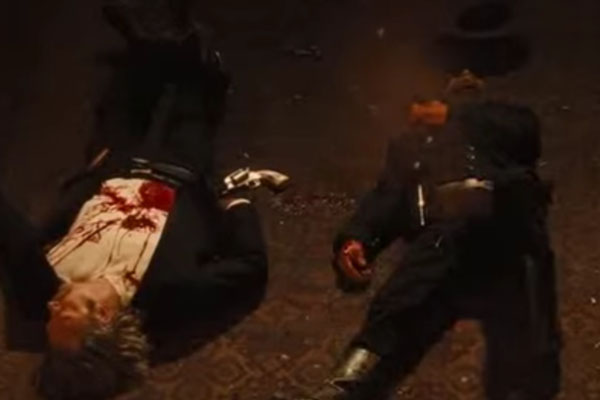
In what is becoming something of a trademark for Tarantino recently. this is the third film in a row in which a character gets shot in the genitals. It also happened in Pulp Fiction, of course.
11. Lance Lawson
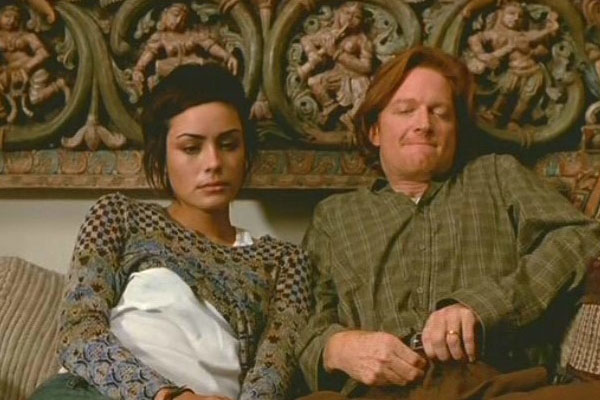
Fans of Tarantino might recognise the name of Lance Lawson, who is mentioned as the man destined to hang at the end of Mobray's rope. He was of course the owner of now fabled video store Video Archives, where Tarantino once worked. The name was also used in The Rules Of Attraction, by fellow Video Archives worker Roger Avary, who wrote Pulp Fiction with Tarantino. Eric Stoltz's Lance is also named for the same guy.
10. The Musical Cues
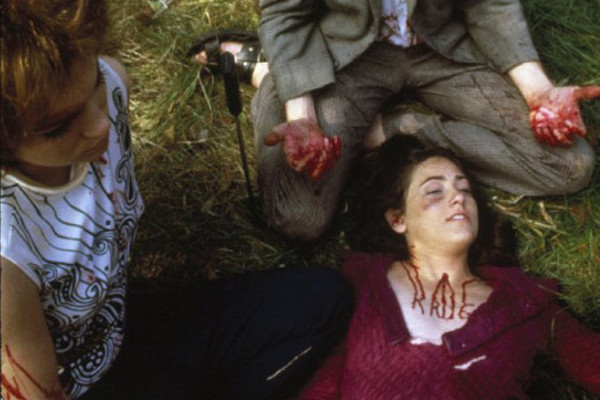
Inevitably, the film borrows music from other important films to Tarantino. "Now You're All Alone" from Last House On The Left plays as Joe Gage follows Minnie's hired man and kills him: it plays out over a very similar scene in the original. "Regan's Theme" from Exorcist II also features and so too does "There Won't Be Many Coming Home" from The Fastest Guitar Alive.
The Hateful Eight
9. It's Basically A Spiritual Follow Up To The Thing

There are a lot of obvious references to The Thing - and not just the presence of a hairy faced Kurt Russell. Ennio Morricone lent his skills to both films, producing a similarly haunting score for Tarantino. And more generally, there are distinct thematic similarities: the cold setting, the paranoia, the duplicitousness... And more specifically, three songs from The Thing's soundtrack even show up in Hateful Eight's soundtrack (though two didn't make it into the film itself). It was also the only film Tarantino showed to the cast.
8. Channing Tatum's Cameo

In terms of actual human cameos - which the director loves - Tarantino himself turns up as the unseen narrator and of course Channing Tatum appears as the nefarious Jody. Briefly, at least. His casting has been suggested as an homage to Once Upon A Time In The West, which featured Henry Fonda as the primary antagonist, a controversial against-type casting designed to shock the audience.
7. The Pulp Fiction Bonnie Situation
As a hint to something not being quite right, Sweet Dave's favourite chairs is covered with blankets and fur to hide the bloodstain of the unfortunate victim killed in it. That mirrors how Sam Jackson's Jules and Vincent cover up the accidental slaying of Marvin in the back of the car
.