The Best Movie Of Each Year From 1925-2025
21. 2005 - Kiss Kiss Bang Bang

Honourable Mentions: Brokeback Mountain, Good Night, and Good Luck., Munich
Shane Black may not have originated the buddy cop genre, but he damn well perfected it. Whether it was under the directorship of Richard Donner in Lethal Weapon or Tony Scott in The Last Boy Scout, Black's cutting dialogue, noir sensibilities, and his approach to themes of masculinity and mental frailty helped define an era in action cinema, culminating in the ill-fated but still under-appreciated meta genre parody Last Action Hero in 1993.
The failure of Last Action Hero led to a bit of a lull in Black's career, during which he scripted the overlooked Christmas classic, The Long Kiss Goodnight, directed by Renny Harlin. It wouldn't be until 2005, however, that Black was finally able to marshal one of his scripts as a director, and it turned out to be his best film ever - Kiss Kiss Bang Bang.
One of the first steps in a journey that would take Robert Downey Jr. to the pinnacle of Hollywood, Kiss Kiss Bang Bang was Black's love-letter to hardboiled fiction, rooting the film in Hollywood scandal and hubris as down-on-his-luck petty criminal Harry Lockhart (RDJ) blags his way into the movies and ends up uncovering a sordid conspiracy with the reluctant help of PI Perry van Shrike, played by the late, great Val Kilmer.
Michelle Monaghan is also along for the ride as a flagging actress and childhood friend of Harry's, Harmony Lane, who carries the soul of the film with her love of trashy detective fiction.
What's so impressive about Kiss Kiss Bang Bang as a directorial debut isn't just that it recollects the technical prowess of Black's former genre collaborators Donner, Harlin, and John McTiernan, but that it cultivates so effortlessly its own imprint of L.A. This is a tinsel town in the most literal sense - an absurd festive playground masking a dark interior, but one we all can't help but want to drink up all the same.
Die Hard may have the monopoly on festive action movie discourse, but with Kiss Kiss Bang Bang, Black once again proved that he is the master of that domain.
20. 2006 - Pan's Labyrinth

Honourable Mentions: Casino Royale, Children of Men, The Departed
A thematic and spiritual follow-up to his 2001 Spanish Civil War-set horror, The Devil's Backbone, Pan's Labyrinth is the film Guillermo del Toro was born to make. Dark and fantastical, with a heavy sprinkling of the gothic romanticism that has become a defining feature of del Toro's work, Pan's Labyrinth is both the director's scariest and most technically impressive piece of cinema - an old-school fable that translates both the fear and fascination of childhood, only this time set in an unforgiving historical context (that being Francoist Spain).
Del Toro has proven to be a real champion for horror and fantasy - as well as other facets of genre filmmaking - but Pan's Labyrinth, needless to say, is a hard one to top.
19. 2007 - Zodiac

Honourable Mentions: Michael Clayton, No Country for Old Men, There Will Be Blood
2007 was a frankly ridiculous year for cinema in terms of quality. In fact, it might just be the greatest cinematic year ever. The Coens directed a neo-Western masterpiece in No Country for Old Men, while Paul Thomas Anderson wielded a fiery Daniel Day-Lewis performance in the equally gripping There Will Be Blood. Throw into the mix Michael Clayton, a throwback conspiracy thriller for the modern age from Bourne screenwriter Tony Gilroy, plus Paul Haggis' redemptive In the Valley of Elah (the second Tommy Lee Jones-starring film to receive Oscar plaudits that year), a Pixar masterpiece in Ratatouille and other highlights like Juno and Atonement, and you have to ask just what exactly was in the water that year for everything to have landed as well as it did.
And then there's Zodiac.
David Fincher's historical thriller about California's notorious real-life serial murderer is a true tour de force in direction and performance, the director's laser-guided approach creating a perfect portrait of the Golden State milieu over the course of Zodiac's reign of terror - and long after.
Taken from Robert Graysmith's book of the same name and starring Jake Gyllenhaal, Robert Downey Jr. and Mark Ruffalo as the figures caught in Zodiac's horror story, Fincher's film explores Zodiac's impact on both a macro and micro level, resulting in a sensitively drawn adaptation that bucks true crime trends by placing the human cost of these myriad traumas - the estuaries and streams that bubble out from the river of violence - front and centre.
Zodiac was passed over for awards success at the time, but it still shows Fincher at the peak of his powers.
18. 2008 - WALL-E

Honourable Mentions: The Dark Knight, The Hurt Locker, The Wrestler
2008 turned about to be a transformative year for cinema (one where the comic book movie went into overdrive with the critical and box office successes of The Dark Knight and Marvel Studios' Iron Man), but also one of familiar trends - hence another Pixar classic, WALL-E, topping the year's best on this list.
While the Disney-owned animation studio has achieved more revolutionary and indeed influential feats in the years both before and since WALL-E's release, it will perhaps remain its most prescient and affecting - an animated family film about humanity's self-inflicted destruction where the protagonist communicates in electronic inflections and robotic expressions.
Like the best Pixar films, it's a production of real conscience, as well as one whose salience only increases with each subsequent decade.
17. 2009 - Inglourious Basterds

Honourable Mentions: Fantastic Mr. Fox, Moon, Up
Inglourious Basterds marks a transformative moment in Quentin Tarantino's filmography. Not necessarily in the sense that it's more technically astute or cuttingly scripted than his early efforts, but instead because of the themes it dwells on.
Inglourious Basterds is, like most of Tarantino's films, one that is slavishly devoted to the genre cinema the filmmaker grew up with - in this case, classic war movies, Spaghetti Westerns, and "Macaroni" combat pictures. But unlike Jackie Brown or Kill Bill, Tarantino's sixth effort as a director begins a continuing transition towards themes of historical righteousness and catharsis, effectively taking history's greatest monsters and putting them through a well-deserved meatgrinder.
With Inglourious, said monsters are of course the Nazis, and yes, that meat-grinding moment is right up there with the most satisfying in Tarantino's oeuvre. He does obviously have the historical context to wield in making that alt-history beatdown hit as hard as it does, but that's not to discount the skill and craft on display in the screenplay, direction, and casting. Christoph Waltz's Hans Landa deserves singular praise for being such a good villain, and on top of that, you have the added element of gratification that it's a cinema that becomes the Nazis' tomb, and the last thing they see is their propaganda going up in flames.
Throw in a couple of the most suspenseful scenes this side of 2000, and you have what could be Tarantino's best ever work.
16. 2010 - The Social Network

Honourable Mentions: Inception, Shutter Island, True Grit
David Fincher's The Social Network may have arrived right at the beginning of the 2010s but it is still very much a defining movie of that decade - one whose ominous conclusions surrounding the Facebook phenomenon only seem to grow starker with each passing year. Fincher's precision-guided directing is well-suited to the bitter story of Mark Zuckerberg's rise - adapted here by screenwriter Aaron Sorkin - and is complemented perfectly by what would become a staple partnership for the filmmaker in a score from Nine Inch Nails' Trent Reznor and Atticus Ross.
There's a bleak, morose quality to Fincher's film that dwells not just on the man who made Facebook (Jesse Eisenberg in a career-defining role) and the various relationships that were shattered in the wake of its beginnings, but also on the sense of collective loss that came with its explosion.
Even in 2010, it was clear that the immediate, invasive switch to digital-first living was causing adverse social consequences. Not to the extent and scale that it has spiralled into from the late 2010s onwards, perhaps - where social media has become a tool for radicalisation, surveillance, and political subterfuge - but the most devastating moments of the film are of those pre-Facebook years and the jarring transition to social media drama and interpersonal collapse, exemplified best in the scene where Andrew Garfield's Eduardo Saverin is confronted by his girlfriend Christy (Brenda Song) for not having updated his relationship status on his Facebook profile.
Now, 15 years later, The Social Network's Pandora's Box approach to Facebook and its then still-burgeoning consequences feels even more upsetting and impressive. We didn't know what hit us until it was too late.
15. 2011 - Tinker Tailor Soldier Spy

Honourable Mentions: Drive, The Girl with the Dragon Tattoo, Shame
It's a bit unusual, perhaps, that a brooding, Cold War-era throwback spy movie ended up being one of the best and most successful films of 2011, but sometimes the chips just fall in a really cool way like that.
One of several adaptations of the great John le Carré's spy novels (the best undoubtedly being 1965's Richard Burton-starring The Spy Who Came in from the Cold), Tomas Alfredson's Tinker Tailor Soldier Spy stars Gary Oldman as MI5 agent George Smiley (a role previously played by Alec Guinness in a successful BBC mini-series adaptation), in a story based on le Carré's own experience working for the security services during the Cambridge Five scandal of the 1960s. Alfredson's film is as messy and complex as the source material but rendered somewhat unlavishly, its stripped-back components amplifying the sense of dour paranoia that became a calling card of seventies espionage fiction.
Oldman gives a typically committed performance as Smiley, with the cast rounded out by a just-as-impressive ensemble comprised of Benedict Cumberbatch, Toby Jones, Colin Firth and Mark Strong. One that isn't to be missed, even with the likes of Drive and The Girl with the Dragon Tattoo garnering more lasting attention in the years since.
14. 2012 - Django Unchained
Honourable Mentions: Argo, The Hunt, Lincoln
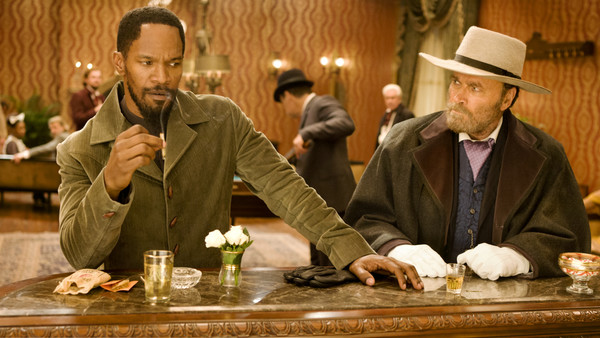
Like Inglourious Basterds before it, Quentin Tarantino's Django Unchained is a story of righteous revenge - an antebellum warpath that tells the story of freed slave Django (Jamie Foxx) and his quest to rescue his beloved Broomhilda (Kerry Washington) from the clutches of plantation owner Calvin Candie (Leonardo DiCaprio). Tarantino's eighth film also reteamed him with Inglourious Basterds' Christoph Waltz, with the Austrian actor reversing moral polarity by playing a charismatic hero in Dr. King Schultz instead of a charismatic villain.
It's a winning combination once again, with Tarantino bringing to bear his love for Spaghetti Westerns in a similar genre landscape, pulling notes from Sergios Leone and Corbucci while accompanied by a soundtrack that fuses Ennio Morricone with hip hop and R&B.
Django Unchained is perhaps overdrawn in some regards, stretching past the two-hour 45-minute mark while lacking the taut pacing of the even beefier The Hateful Eight, but when the sparks start flying and squibs erupt like boiling geysers from the worst humanity has to offer, it's hard not to feel giddy about the carnage unfolding.
13. 2013 - Gravity

Honourable Mentions: Her, Under the Skin, The Wolf of Wall Street
2013 proved to be one of the most vibrant and multifaceted years for cinema during the 2010s, with Alfonso Cuaron's Gravity its undeniable event picture.
A space-set character drama that pulls from the same perilous threads as Ron Howard's Apollo 13, Gravity paired Sandra Bullock with George Clooney as astronauts caught in a deadly catastrophe while in Earth's orbit. The film was developed using a groundbreaking mix of digital techniques, which enabled Cuaron to make its space-set sequences (which naturally comprise the vast majority of the film) even more butt-clenchingly stressful.
While most blockbusters aim for showstopping moments of audible carnage, it is the absence of sound in Gravity that really emphasises the uncanny horror of its environment. The vastness of space brings its own kind of existential dread, and in showcasing the fine margins between safety and peril, Cuaron delivered one of the most suspenseful and thrilling films of the 2010s.
12. 2014 - The Grand Budapest Hotel
Honourable Mentions: The Babadook, Birdman, Whiplash
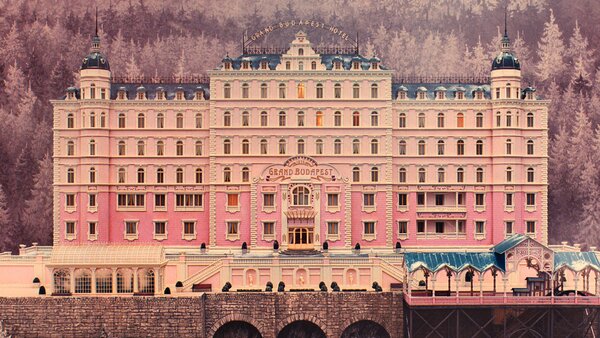
The cinema of Wes Anderson is the cinema of joy. Vivid, colourful, and almost mathematically composited, Anderson's films are instantly definable and his aesthetic impulses have cemented him as one of the great visual storytellers of the last two decades.
At the same time, that visual rigidity has led to the occasional underestimation of Anderson's talents. There's still a broad want to label his films as "quirky", and surface-level critiques like these are at least partially responsible for all the embarrassing AI gremlins who've been churning out "Andersonised" versions of popular IP to pollute the internet with over the last several years. To them, he's all quirk, when the truth is obviously very different.
Anderson's cinema is a visual delight, but it's also raw, emotional, and frequently devastating. It can also prove unfortunately prophetic, as was the case with 2014's anti-fascist tragedy, The Grand Budapest Hotel.
Picturesque and comforting like so many of Anderson's works, and just as crushing when it wants to be, Budapest dwells on themes of expression, pleasure, and non-conformity in a 1930s European country on the cusp of a Nazi-style takeover. Anderson's usual players are along for the ride, including the likes of Bill Murray and Willem Dafoe, but the chorus is complemented this time by Ralph Fiennes and Tony Revolori - the former as the flirtatious yet professional hotel concierge of the Grand Budapest, Gustave, and the latter as a young refugee-turned-bellhop, Zero.
Anderson brings these various ingredients together to create possibly his finest ever dish - a darkly comic yet whimsical tale that grows ever more bittersweet with each passing year.