The Best Movie Of Each Year From 1925-2025
11. 2015 - The Witch
Honourable Mentions: Mad Max: Fury Road, Sicario, Spotlight
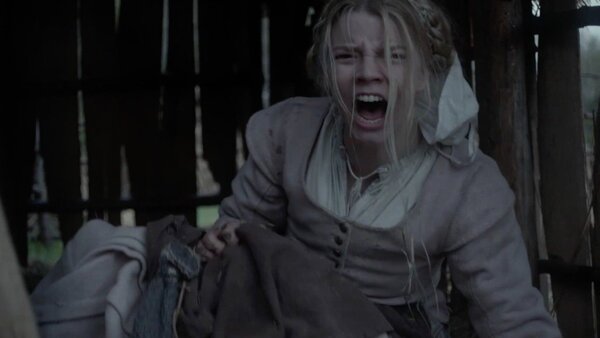
Robert Eggers has developed a strong brand for folksy, gothic horror over the decade or so since he first emerged as a director, but this wasn't so much a slow, steady process as it was a bolt from the blue, with his directorial debut, 2015's The Witch, arguably remaining his finest work to date.
Set in 17th-century colonial America and telling the story of a settler family whose child is abducted in plain sight, The Witch operates at a molecule-vibrating frequency from the very beginning and doesn't really let up from that point on, with a veil of darkness and paranoia draping down and suspicions falling on Anya Taylor-Joy's Thomasin - all the while an unassuming black goat, Phillip, moves slowly into the picture.
Eggers' film is unrelentingly grey during the day, with dusk giving way to inky darkness interrupted by dim candlelight and ultimately, in a moment of levitational "good for her" catharsis, a roaring flame. But as good as the resolution is (and it is an all-timer), Eggers pulls off an even better trick over the course of his debut, and one that he's employed repeatedly in the years since.
Like the very best of gothic and folk fiction, The Witch taps into a horror that feels primordial and somewhat distant, and yet, by the time the credits close, the proximity of that connection becomes almost unbearably close. It's a feature that both distinguishes The Witch as a uniquely transformational horror film of the 2010s and one that roots itself with the very best of its genre forebears. A triumph all around.
10. 2016 - Arrival

Honourable Mentions: La La Land, Moonlight, Your Name
Denis Villeneuve has become one of the most exciting and buzzworthy directors working in Hollywood over the last decade, making his mainstream entrance with 2013's Prisoners and following that up with the insidiously brutal Taylor Sheridan-penned Sicario in 2015, both of which were shot by cinematographic maestro, Roger Deakins.
Villeneuve changed tack in terms of subject matter for his following film - a time-travelling sci-fi tragi-romance starring Amy Adams and Jeremy Renner, titled Arrival. Adapted by Eric Heisserer from a story by Ted Chiang, Arrival is mind-bending like the best entries in the genre but with an emotional throughline that crash-lands in the third act to tearful effect.
More importantly - and undoubtedly the reason why Villenueve was courted for the Blade Runner and Dune franchises in the immediate aftermath - it felt like a sci-fi film we hadn't seen before.
9. 2017 - Dunkirk

Honourable Mentions: Get Out, Personal Shopper, Phantom Thread
Christopher Nolan is Hollywood's mainstream auteur, a filmmaker who cut his teeth on Batman's pointy ears and has since leveraged that acclaim and popularity to repeat success in other genres. The British director's non-Batman works were noted for their dense approach to science fiction (The Prestige, Inception, Interstellar, and Tenet), but arguably his best films have a different thing in common: they're rooted in history instead.
2023's Oscar-homerun biopic Oppenheimer is, weighted by sheer awards success alone, Nolan's most successful film. But years before he told the story of the Manhattan Project and the new world it unleashed, he delved deep into a different part of World War II, and the results were, in retrospect, even more compelling.
2017's Dunkirk feels like it's secretly Nolan's finest film. Not because it underperformed compared to the director's other works (it performed very well), but because it fits into an easily definable canon of war cinema and, by convention, is less intricate or heady than his typically high-concept productions.
It is that very simplicity, however, that enables Nolan's gifts to shine more brightly here - his eye for detail, technical authenticity and realism, and the ratcheting up of tempo and suspense are all on display in Dunkirk, which is much more a mood piece that seeks to capture a desperate hour than a dialogue-laden drama invested in the context of the event itself. The end result is his most gripping work as a director yet, and surefire proof of the old idiom that less can sometimes be more.
8. 2018 - Spider-Man: Into The Spider-Verse

Honourable Mentions: Black KkKLansman, Hereditary, The Favourite
As custodians of the Spider-Man IP in film, Sony had a pretty rough time across the 2010s. Sam Raimi's Spider-Man era was long over (a self-inflicted wound on the studio's behalf), and its reboot replacement failed to yield similar critical highs. The prospect of the studio producing a masterpiece worthy of not only rivalling Raimi's films, but potentially eclipsing them, was next to none.
But then Spider-Man: Into the Spider-Verse came along and laid down a claim for being one of the greatest pieces of western animation of the century, if not all time.
In what was a bumper year for Marvel's webslinger - with Peter Parker getting the spotlight in Avengers: Endgame and Marvel's Spider-Man for the PlayStation 4 - Spider-Verse proved to be the cherry on top (the cherry in this instance being so delicious that it makes you forget about whatever tasty morsel it was you were eating in the first place). Sony Pictures Animation were able to produce an adaptation that lived up to the scope and potential of Marvel artists Steve Ditko, Jack Kirby, and John Romita Sr., carrying forward Spider-Man's gargantuan legacy by pulling from the Miles Morales comics created by Brian Bendis and Sara Pichelli.
7. 2019 - Parasite
Honourable Mentions: The Irishman, Uncut Gems, 1917
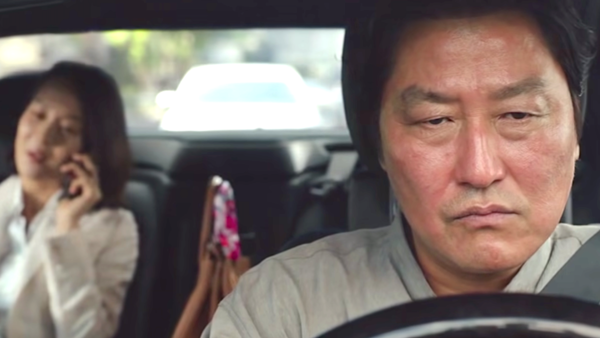
More than just zeitgeist-defining for its commentary on class warfare and economic injustice, Bong Joon Ho's Parasite was a veritable phenomenon - a rare foreign-language film that penetrated Western audiences on a wide scale and opened up a discourse on subtitles, narrow viewing habits, and the joys of cinematic exploration in a profound way.
Of course, as a piece of cinema itself, Parasite is also phenomenal. A neo-noir set in Seoul with a heart of pure black comedy, Bong's film features stellar performances from Song Kang-Ho, Park So-Dam, and Choi Woo-shik, and remains the best film of a year that boasted some truly seminal cinema, including The Irishman and Uncut Gems.
6. 2020 - Another Round

Honourable Mentions: The Father, Minari, Tenet
2020 was a disruptive and scarily existential time for the movies, with the onset of the global COVID-19 pandemic pausing life as we know it for large swathes of the global population and with it the theatrical model that had proven the lifeblood of cinema since its beginning. Some adapted. Others, like Christopher Nolan, stubbornly refused, ushering his sci-fi blockbuster Tenet into empty theatres in what remains the defining industry narrative of that year.
But while much of the discussion surrounding COVID-era cinema tends to dwell on off-screen logistics and the various audience habits that were changed in its wake, less is made of the "in-between movies" that managed to make it through the door - films that almost belonged to a different era altogether, but that still had to navigate a shifting social context all the same.
And one film, out of all of those that had to survive the pandemic, seemed to meet the occasion head-on - Thomas Vinterberg's Another Round.
The second of two collaborations between Vinterberg and his Danish compatriot (and internet heartthrob) Mads Mikkelsen, Another Round is a comedy-drama that ruminates on relationships with alcohol on both a broad and individual scale, sidestepping binge tropes for something much more nuanced, compassionate, and ultimately liberating. Mikkelsen is electric as a teacher in the midst of a midlife crisis, juggling his responsibilities of guiding another year of students through to graduation whilst microdosing booze to maintain a steady level of tipsiness with his colleagues, all the while navigating a crumbling marriage.
That a movie about the social connections forged and destroyed by alcohol arrived during the global pandemic is deathly ironic, but that only made Another Round all the more cathartic. Vinterberg's film takes that oft-quoted Simpsons axiom of alcohol being both the cause and solution to life's problems, and finds a way to engage the topic without dismissing the dizzying highs and nauseating lows that come with it.
5. 2021 - Pig

Honourable Mentions: The Green Knight, The Power of the Dog, West Side Story
The reemergence of Nicolas Cage as a serious acting force has made for one of the best movie developments of the last decade. Following years spent in the direct-to-video wilderness in the 2010s, Cage garnered critical and cult acclaim with two key turns in 2018 - as the lead of the bizarre horror revenge flick Mandy, directed by Panos Cosmatos, and as Spider-Man Noir in the aforementioned Spider-Man: Into the Spider-Verse, with the actor following that up with highly rated performances in Dream Scenario, Longlegs, and The Surfer.
Cage's talent has long been apparent, albeit widely dismissed as part of his assimilation into meme culture across the 2000s, which is perhaps why the performance of his career in Michael Sarnoski's Pig was so painfully snubbed when it premiered in 2021.
Marketed in part as a quasi-John Wick revenge thriller in which reclusive truffle pig farmer Robin Feld (Cage) must track down those responsible for stealing his beloved farm animal and exact sweet, succulent justice, Sarnoski's film is actually anything but. What it is is something much more contemplative and introspective - an emotionally wrought reckoning with unfulfilled dreams, betrayal, and the slow death of compromise, with Cage giving it both barrels as he returns from the wilderness to confront those who stole his peace.
Cage's career has been one of distinct eras. There was indie darling Cage, action virtuoso Cage, and schlocky misfire Cage. This latest one, however, has cast him in a much more complex and multifaceted light: as an intrepid performer reasserting his talent, and one who is finally being recognised for being so much more than the sum of his internet celebrity.
4. 2022 - Nope

Honourable Mentions: Aftersun, The Banshees of Inisherin, Kimi
We may only be halfway through the 2020s, but Jordan Peele's Nope already feels like it's the definitive movie of the decade. Divisive though it may be (and really, it's so unjust that it carries that reputation), Peele's film crash-landed and spilt its post-pandemic guts all over audiences, with a story all about the trauma of the moving image, the relentless bombardment of violent information in the digital age - which is processed largely at a remove through our own individual lenses - and the absurdity that is simply getting on with it.
Nope is both historical and thoroughly contemporary, a movie of our time for the time, and one in which Peele reiterated his talent for conjuring a genre vibe that is truly distinct. In this case, he orchestrates a suffusion of sci-fi, horror, and western, a multi-genre composition that speaks to Nope's approach to the evolution of film and the violence that is baked into its DNA.
It doesn't hurt either that Peele is able to draw from a stellar cast, with Daniel Kaluuya, Keke Palmer, Steven Yeun, and nineties staple Michael Wincott all delivering career-best work as the movie industry figures whose paths cross thanks to a menacing extraterrestrial influence.
3. 2023 - Killers Of The Flower Moon

Honourable Mentions: John Wick: Chapter 4, The Killer, Poor Things
Few living filmmakers possess the kind of inimitable legacy that Martin Scorsese has. Now 83, Scorsese formed a pillar of the American New Wave with films like Mean Streets and Taxi Driver and has grown into a true ambassador for the medium, helming seminal film after seminal film while also working diligently off the camera in efforts related to preservation and film history.
But Scorsese is also in his twilight, and with that phase of life comes an even greater level of introspection and self-interrogation. He developed The Irishman with Netflix in 2018 - a film that reckons with regret and age to a desolating end - and followed that with an adaptation of David Grann's non-fiction book Killers of the Flower Moon in 2023.
Grann's book dove deep into the exploitation and violence enacted on a systematic level against the oil-rich Osage Nation by white Americans at the beginning of the 20th century, which Scorsese's film unflinchingly depicts, ably aided by fearsome performances from Lily Gladstone, Robert De Niro, and Leonardo DiCaprio.
But what makes Killers of the Flower Moon such an urgent piece of cinema - perhaps the most vital in Scorsese's oeuvre - is how it diverges from Grann's text. The director weaves the story of the Osage's persecution into a dissection of cinema's role as a mythologiser and the various, often destructive guises that has manifested over the years. It's a theme that's brought to a heartrending head in the epilogue, which sees the director himself step into frame - acknowledging his own role as a storyteller - and provide a tacit lament for the time it has taken for cinema to begin readdressing the balance of those formative, historic narratives.
Grann's work is of real salience, but Scorsese's adaptation finds additional and indeed vulnerable weight in its ruminations on artistic regret and pain.
2. 2024 - Furiosa: A Mad Max Saga

Honourable Mentions: Anora, Challengers, Rebel Ridge
Mad Max: Fury Road was one of the biggest surprises of the 2010s, with director George Miller revisiting his cult-favourite franchise and bringing its zany, no-holds-Aussie approach to action to the 21st century. Fury Road was relentless in its pacing and orchestration, and the results spoke for themselves. However, it was also the subject of a tempestuous shoot and attempts to get a follow-up made faced repeated delays, until finally a prequel, Furiosa, made its way to theatres in 2024.
Starring Anya Taylor-Joy as the eponymous character and weaving a tale that focused on her origins before she became the Imperator seen in Fury Road, Furiosa was sadly not the universally-adored follow-up to Fury Road that audiences were expecting. Miller instead made something a little more operatic, with bizarre visual flourishes that blended more computer-generated effects with the practical stuntwork that made Fury Road such a visual feast.
But rather than create a sense of tonal dissonance, Miller's visual recalibration had the effect of making the world of Mad Max grander, more mythological, and epic. Taylor-Joy proves a more-than-worthy successor to Charlize Theron, while Chris Hemsworth turns in the performance of his career thus far as a dark mirror of Max, the warlord Dementus. The action is just as kinetic and punchy as Fury Road, but Furiosa reaches new heights by plunging into greater emotional and thematic depths with its characters and narrative.
The end result is something luscious and defiant - a meditation on evil and cruelty in an unjust world that reiterates the bonds of love and compassion. It may lack the pure visceral edge of its predecessor, but Miller's prequel finds greater strength by seeking different avenues.