50 Movies Where Evil Won
40. Primal Fear

Plot: Arrogant defence attorney Martin Vail (Richard Gere) defends altar boy Aaron Stampler (Edward Norton) when he's accused of killing an archbishop who was abusing him.
Sometimes, evil winning can rescue an entire film - just ask Primal Fear.
Prior to this twist, Primal Fear was a fairly straightforward legal thriller, one which would've probably been forgotten long ago were it not for its ballsy, beautifully executed gem of an ending, in which Edward Norton delivers an acting masterclass that launched his entire career.
Throughout the first half of the film, it seems unlikely that the mild-mannered, stuttering Aaron could be the killer, and then, a second personality emerges. He's seemingly suffering from split personality disorder and doesn't remember the killing. Vail ultimately succeeds in getting him acquitted of murder on grounds of insanity.
However, just when he thinks he's won, Vail is brought right back down to earth when Stampler mentions something that happened when he was supposedly in his other personality, nicknamed Roy, and Stampler smugly reveals that the entire split personality was an act. It also turns out that, alongside the archbishop, he also murdered his own girlfriend.
Vail says, "So there never was a Roy?" to which Stampler, wearing a chilling grin, replies, "There never was an Aaron." He was stringing Vail along the entire time, and the previously overconfident attorney, brought down to earth in the most brutal way imaginable, leaves court in a devastated trance, which mirrors how many audience members will be feeling.
39. Twin Peaks: Fire Walk With Me
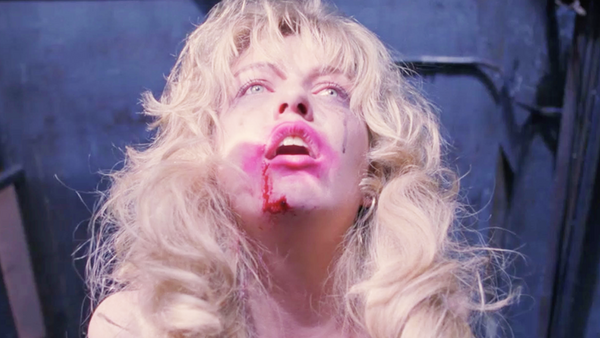
Plot: In this spin-off/prequel/sequel to his ground-breaking show Twin Peaks, David Lynch tells the story of the last week of Laura Palmer's (Sheryl Lee) life.
With this one, most saw a downer coming. The murder of Laura Palmer was the event that set off the entire story of Twin Peaks, so audiences guessed exactly how Fire Walk With Me would end, and this was a rare occasion where Lynch chose not to subvert everyone's expectations.
Laura Palmer is indeed killed by her own father Leland (Ray Wise), who is himself possessed by Killer BOB (Frank Silva), the main antagonist of the original show. Fans probably expected this, but many were hoping for more answers from the show's cliff-hanger ending, which saw series protagonist Dale Cooper (Kyle MacLachlan) trapped in the Black Lodge, an extradimensional realm.
No such luck. Definitive answers about what happened following the TV's conclusion aren't really given, and audiences would have to wait another 25 years for a continuation, which eventually came in the form of Twin Peaks: The Return, arguably one of the greatest seasons of television ever produced.
38. Summer Of 84

Plot: Oregon Suburbia, 1984. 15-year-old Davey (Graham Verchere) becomes convinced that his neighbour is an unidentified serial killer of teenage boys, but no-one else is convinced.
With many of the movies on this list, many viewers might've been able to guess that evil was going to win - not with Summer of 84.
One of the powerful things about this picture is that much of it is light-hearted and comedic in tone, and it seems quite possible that the suspect, police officer Wayne Mackey (Rich Sommer), is, in fact, innocent. It'll successfully keep the viewer guessing... right up until Davey and his friends find a mutilated corpse in Wayne's house, which serves as one of the nastiest and most effective jump scares in recent memory.
From then on, the light-hearted tone vanishes, and it's full steam-ahead into a shockingly bleak final act in which Wayne violently murders one of Davey's friends and then tells him he'll spare him, leaving Davey living in constant terror until Wayne finally returns for his revenge.
And that's how Summer 84 ends, with everyone traumatized and Wayne still at large. Brutal stuff.
37. The Usual Suspects

Plot: US Customs Agent Dave Kujan (Chazz Palminteri) interrogates small-time criminal Verbal Kint (Kevin Spacey), one of only two survivors of a drug deal gone wrong on a boat.
Earlier on in The Usual Suspects, Kint says, "The greatest trick the devil ever pulled was convincing the world he didn't exist. And like that, he's gone." With this, Verbal was directly foreshadowing the end of the movie.
In this 1995 movie, evil does indeed win, and we wouldn't have it any other way. It forms part of what could just be the best plot twist in movie history, and the victory of evil has rarely been so enthralling.
The conclusion to The Usual Suspects is one of the all-time great film endings. Just after Kujan allows Verbal Kint to leave, he realizes that Kint has been bulls***ting him this entire time. The elaborate story Kint told was improvised with inspiration from the various names and pictures in the office, and Kint is actually Keyser Soze, a feared crime lord referred to throughout his story, and he'd killed the people on the boat. Outside, Keyser Soze shakes off the limp he'd been faking throughout the film and gets into a car.
And like that... he's gone.
Keyser Soze might be a chilling figure of pure evil, but it's hard not to reluctantly respect the guy for pulling off one of the smartest and most badass victories a movie villain has ever carried out. This guy truly was an evil genius.
36. The Conversation
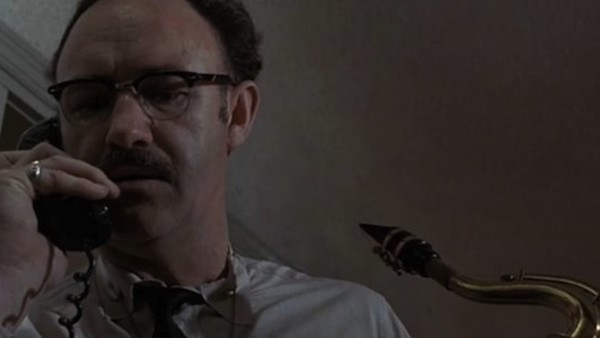
Plot: Harry Caul (Gene Hackman), a surveillance expert, hears some words that hint that a murder might be about to happen, and he spirals into paranoia.
Francis Ford Coppola's The Conversation is a potent and ingeniously put-together surveillance thriller featuring arguably the best performance that the late Gene Hackman - one of the greatest actors who ever lived - ever gave, as well as an unforgettably bleak ending.
The Conversation isn't as violent as Coppola's other 1970s masterpieces, but it's just as disturbing. At the start, Harry is already struggling with guilt due to a previous surveillance job going wrong and resulting in several deaths, and by the end, he's partly responsible for yet another fatality.
A client instructs him to record his wife and her lover, and Harry misinterprets their conversation. He believes that they're in danger of being murdered and tries to withhold the tapes, but he realizes all too late that they were the killers, not his client, who's murdered by the couple.
Harry is then phoned by another villain named Martin Stett (a pre-Star Wars Harrison Ford), who warns him not to interfere further and that they'll be listening. He reveals that Harry's been bugged, and Harry then destroys his apartment, searching in vain for the device.
The final shot is absolutely chilling: Harry sits in his wrecked apartment playing his saxophone, the only thing he still has any control over... or maybe not. It's often been theorized that the bug was in the saxophone itself.
35. Kill List

Plot: Two hitmen are sent to carry out three hits, and soon, things get extremely weird.
Ben Wheatley's Kill List is a stunning tour-de-force of genre-bending mayhem. It begins as a down-to-earth thriller about two hitmen being sent on an assignment to carry out three hits, and, by the end, it's metamorphosized into a full-blown, delirious folk horror that culminates in protagonist Jay (Neil Maskell) being tricked into killing his wife and son during a ritualistic duel. He's then crowned by the cultists.
One of the keys to Kill List's power is its ambiguity. It isn't clear exactly what the cult's ultimate intentions are, but it can be safely assumed that whatever happens next will be nothing good. The ending shows that several side characters encountered throughout the movie were part of the cult, which implies that Jay ended up exactly where they wanted him to be.
As such, whatever exactly this cult was, two things can immediately be confirmed. Firstly, these guys are twisted, as they're shown partaking in human sacrifices earlier on and kill an innocent child at the end. Secondly, they definitely won, and it's upsetting to think of what lay ahead for poor Jay after this.
34. Saltburn

Plot: A mysterious, working-class Oxford undergrad named Oliver (Barry Keoghan) goes to stay at the Saltburn Estate, the lavish home of his friend and crush Felix (Jacob Elordi).
Emerald Fennell's Saltburn is one of those films that has its audience following the villain without them actually realizing it until very late in the movie. In this case, it's Oliver.
Throughout the movie, he seems like a strange guy - especially after Saltburn's legendary bathwater scene - but he also seems harmless, and eccentric at worst. That all changes in Saltburn's third act, as his lies and manipulations are slowly uncovered. Despite what he told Felix, he actually came from a stable, middle-class home with two loving parents.
Once Felix discovers Oliver's duplicity, he decides (not unreasonably) to send Oliver away. And so, Oliver proceeds to murder Felix, indirectly kills his sister (Alison Oliver), and also murders his mother Elspeth (Rosamund Pike) years later, though not before getting her to sign all of her assets over to him.
Just before he murders Elspeth, Oliver explains to her how he orchestrated everything from the off, and he then celebrates his victory as only he would. He dances nude around the mansion to Sophie Ellis-Bextor's Murder on the Dancefloor in an already-iconic ending.
It's only at the end that audiences realize just how dangerous Oliver always was and how gravely everyone underestimated him. As much as he deserved a better movie than the fairly hit-or-miss Saltburn, he's one fearsome antagonist.
33. Truth Or Dare

Plot: A group of teenagers gets caught up in a supernatural game of Truth or Dare, where the price of failure is death.
Evil winning isn't always a good thing. Sometimes, a downer ending is just a cynical way to set up a sequel and thus deny a story an ending that feels satisfying or organic. Case in point: Truth or Dare.
This rancid horror film is a terrible work from start to finish, yet it's perhaps this ending that truly cemented Truth or Dare as one of the very worst horror pictures of the 2010s. By the end, only Olivia (Lucy Hale) and Markie (Violett Beane) are still alive, and their attempt to finally stop the demon Calux, who's responsible for the game, has failed. They are informed that there's no way to escape the game, and only adding more players to the game will keep them alive.
And so, in what is surely one of the most selfish decisions ever made in a horror film, Olivia decides to start a live broadcast and spread the curse to thousands more innocent people. So yes, in the end, the demon did indeed win, not least because it encountered some pretty reprehensible people who themselves certainly weren't the good guys.
This ending was meant to set up a sequel, but this was eventually cancelled thanks to the COVID pandemic - small mercies.
32. Alien: Covenant

Plot: A group of colonists answers a distress call on a mysterious planet, which is inhabited only by the sinister android David (Michael Fassbender) and the early versions of the Xenomorph, which he himself created.
The Alien franchise has never exactly been a cheerful one, but it outdid itself with Alien: Covenant, which closed with perhaps the bleakest ending the franchise has ever given us. Sure, Alien 3 killed off Ripley (Sigourney Weaver), but she did also destroy a new Alien Queen in her final moments, so evil didn't win. In the case of Covenant, it absolutely does.
While he was more of a neutral figure in Prometheus, his first appearance, David is now a full-blown and extremely dangerous antagonist. He eventually escapes from the planet by impersonating Walter (also Fassbender), an android who was identical to him, and getting on the escaping ship.
Covenant ends with David in control of a huge ship of sleeping colonists for him to use in his unethical experiments, and, for the time being, his victory remains unqualified, given that a third Alien prequel film thankfully isn't happening. Because it was driven by so many plot holes and stupid character decisions, this ending didn't really feel earned, but it was an intriguing way to leave things all the same.
31. Lady Macbeth

Plot: A young bride trapped in a loveless marriage in Victorian England begins an affair with one of the workers on her husband's estate and embarks on a brutal rampage of vengeance against those who oppress her.
Lady Macbeth is a criminally underrated masterpiece of British cinema, one which triumphs as an effed-up revenge tragedy and as a stunning showcase for Florence Pugh, who immediately announced herself as one of the very best actresses of her generation here.
One of the many things that makes Lady Macbeth so outstanding and unique is that it doesn't treat Katherine's (Pugh) revenge as some triumphant fantasy. If anything, she's worse than her abusive husband and father-in-law are. Not only is she a violent murderer, but she even kills an innocent child towards the end, just so that the boy won't inherit the estate and drive her lover away.
Her lover Sebastian (Shogun's Cosmo Jarvis) is wracked with guilt and confesses to the police, only for Katherine to calmly turn his accusation back on him, and frames him and another innocent servant (Naomi Ackie), one whom Katherine has bullied and traumatized throughout the film, for all of her crimes. And so, Katherine gets away with everything.
This isn't your grandmother's period drama, that's for sure.