50 Movies Where Evil Won
Some of cinema's best downer endings...

When you're young and naïve, you put on a movie and expect the good guys to win, not unreasonably. The overwhelming majority of movies aimed at younger audiences do feature good triumphing at the end, thus presenting a more hopeful vision of the world. Are such endings truthful to the real world? Oh yes, absolutely, but only sometimes.
We live in a crazy world of light and dark, of hope and despair, and, unfortunately, good doesn't always come out on top. As you get older, you'll encounter more and more films that reflect this uncomfortable truth, such as the following 50 movies.
They're a hugely varied bunch, ranging across many genres, many countries, and many different eras, and the only thing they have in common is that they all have downer endings where evil wins. Some of them use this device poorly, but refreshingly, an overwhelming majority serve as a testament to the power of unhappy endings. These conclusions elevate the entire narrative and hammer home the story's themes to devastating effect. In the context of a fictional story, evil winning can actually be weirdly great.
Kicking off with one of the greatest film sequels of all time...
50. Star Wars Episode V - The Empire Strikes Back

Plot: The Rebel Alliance continues its fight against the Galactic Empire, while Luke Skywalker (Mark Hamill) seeks out an old Jedi Master to train in the ways of the Force.
For many, The Empire Strikes Back will be one of the earliest movies they watch where evil wins.
The original Star Wars concluded with one of the most uplifting movie endings ever, and the sequel flipped the script in the best way imaginable. This time around, the Rebels lose, the Empire wins. The Rebel base on the planet of Hoth is destroyed, Han Solo (Harrison Ford) is kidnapped and frozen in carbonite, while Luke Skywalker falls for Darth Vader's tricks, loses his arm, and also learns the most horrifying truth imaginable: Darth Vader is his father.
A New Hope concluded with the heroes proudly standing before applauding Rebels at a medal ceremony, but The Empire Strikes Back ends with the group vulnerable and broken, looking out into space and hoping, possibly in vain, that they'll be able to get Han back. This was such a change of pace that The Empire Strikes Back was actually quite divisive when it was first released, although fans later came round to it and it now enjoys the level of acclaim it deserves. Not only is it arguably the best of the 12 Star Wars movies, but it's also one of cinema's most elite sequels.
49. Avengers: Infinity War

Plot: Avengers old and new unite against Thanos, who plots to wipe out half of all life in the universe.
When it comes to the Marvel Cinematic Universe, the heroes generally win. It might be a pyrrhic victory on occasion, such as in films like Spider-Man: No Way Home and Thunderbolts, but it'll almost always be a victory nonetheless. Avengers: Infinity War is the one time when they truly, totally lost.
Thanos (Josh Brolin), the most fearsome enemy the Avengers ever faced and most likely ever will face, overwhelms Earth's Mightiest Heroes and does exactly what he always said he was going to do: he used the Infinity Stones to wipe out half of all life in the universe. The Mad Titan murders trillions, including many beloved heroes.
Sure, many guessed something like this could happen, especially thanks to Tom Holland's notorious issue with dropping spoilers, but that didn't prepare audiences for this, not by a long shot. This conclusion sent shockwaves through the cultural ether all over the world, and fans experienced one year of agonized anticipation before Avengers: Endgame finally arrived and reversed Thanos' actions.
That really was a time to be alive.
This ending might've broken millions of hearts, but it was an incredible piece of storytelling nonetheless, one which helped to make both this and Avengers: Endgame two of the biggest event movies of all time. Retrospectively, it's ridiculous that the MCU carried on after Endgame - they're never going to top this.
48. Jean De Florette
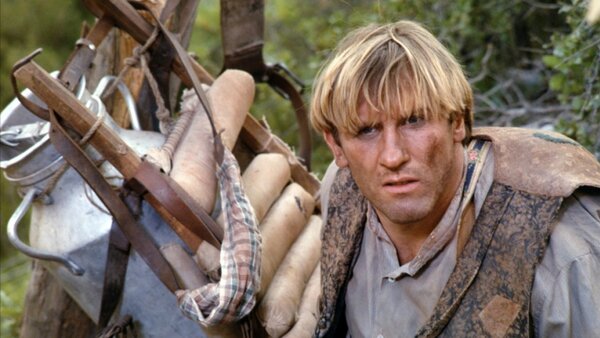
Plot: Greedy landowner Cesar Soubeyran (Yves Montand) and his nephew Ugolin (Daniel Auteuil) conspire to cheat a new arrival named Jean (Gerard Depardieu) out of the land he has inherited.
It might seem odd to say that a French period drama from the 1980s has anything in common with Avengers: Infinity War, but yes, it does. Just like Infinity War, Jean de Florette is the first half of a story, one which ends with a shocking victory for its villains.
Jean de Florette is a jolly good film, but be warned: it will make you angry.
There is something utterly insidious about the way Cesar and Ugolin destroy Jean's life. They do this by blocking a nearby spring, meaning that Jean can't run his farm. He becomes more and more desperate and eventually dies in an accident on his farm. After this happens, the remorseless pair buys the land off Jean's widow and begins a new, profitable venture.
An infuriating ending this might've been, but thankfully, unlike with Infinity War, the direct sequel came out only a few months later. As such, before long, audiences were able to savour the wonderful spectacle of Jean's grown-up daughter exposing Cesar and Ugolin's crimes and giving them their just desserts.
47. Macbeth (1971)
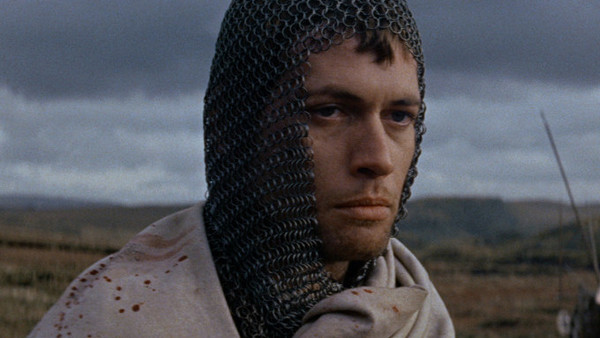
Plot: A retelling of William Shakespeare's tragedy starring Jon Finch and Francesca Annis as Macbeth and Lady Macbeth, respectively.
William Shakespeare's Macbeth might be classed as a 'Tragedy', but it does actually have a fairly happy ending in most ways. Macbeth and Lady Macbeth do get punished for their ruthless rise to power, and a new, nobler king takes power at the play's end. Well, that's normally how it goes.
Roman Polanski's adaptation of Macbeth does things a little differently. As in the play, Macbeth is indeed killed, and Malcolm (Stephan Chase), the older son of the king that Macbeth murdered, subsequently takes the throne. Nevertheless, this particular adaptation ends on a far more chilling note than normal, as Malcolm's younger brother Donalbain (Paul Shelley) encounters the Three Witches once he returns to Scotland, suggesting that the cycle of power, corruption, and evil is about to begin all over again.
This was the first film Polanski made after his pregnant wife Sharon Tate was murdered by the Manson Family, and he really leant into the darkness of the play, creating an adaptation that is perhaps even more brutal than the play it adapts.
46. Vertigo

Plot: Scottie (James Stewart), a retired detective with a crippling fear of heights, is asked by an old college friend (Tom Helmore) to observe his troubled wife (Kim Novak), and Scottie begins to fall in love with her.
Alfred Hitchcock's mesmerising study of obsession is a deeply haunting affair, not least because the evil man who orchestrated it all never faces justice.
Around halfway through, Madeleine (Novak) seemingly commits suicide by jumping from a bell tower while Scottie fails to save her thanks to his vertigo. Not long after, the viewer learns that the woman Scottie knew wasn't Madeleine at all, but a decoy named Judy (also Novak).
The whole thing was an elaborate scheme by Gavin Elster (Helmore) to murder his wife. When Judy ran up to the top of the tower, Elster was waiting above and threw the body of his real wife (he'd already killed her) off the tower. Scottie was there to be a witness to this 'suicide', and the sicko knew he wouldn't catch Judy due to his phobia.
Elster moves abroad after the 'suicide' and disappears from the movie, which was an unusual narrative choice. It works, though, as this is really about Scottie's journey rather than the crime. Hitchcock did film an ending where Scottie hears a broadcast reporting Elster being pursued by authorities, but ultimately the director chose to leave it out.
One likes to think justice would've caught up to Elster eventually. Sadly, things don't always end that happily, especially in Hitchcock's world.
45. The Strangers

Plot: A trio of masked serial killers attack a couple at their house.
The three killers known as the Strangers stand in front of Kristen (Liv Tyler) and James (Scott Speedman), both tied up and in utter terror. "Why are you doing this to us?" Kristen sobs. One of the attackers then replies, in the most chillingly matter-of-fact way, "Because you were home."
With that single line, The Strangers secured itself a place in infamy.
The motiveless malevolence of the titular trio of serial killers was unusual for the time, and although the Strangers were defeated in 2018's The Strangers: Prey at Night, in this original film, they get away scot-free. They terrorize and violently stab an innocent couple before driving off into the night. Kristen (Liv Tyler) just about survives as her wounds aren't quite fatal, but her partner James (Scott Speedman) isn't so lucky.
The movie itself isn't actually that good for the most part, and nothing else about it is especially memorable. It is this uber-cold ending that has allowed it to endure and gain a cult film status it didn't necessarily deserve to begin with.
44. Host

Plot: During the COVID-19 pandemic, six Londoners host a séance over a Zoom call and find themselves under attack from a brutal demon.
Horror movies and downbeat endings go together like chocolate and peanut butter; sad conclusions suit the dark material typically found within this genre's movies. Quite frankly, if a horror film has a happy ending, that in itself is often a massive plot twist.
Rob Savage's Host, an excellent supernatural horror movie filmed entirely over Zoom in the midst of lockdown, is one of the many horror flicks out there that end with the villain killing all the heroic characters. Nearly all of the characters are killed by the picture's demonic antagonist, and it ends with the demon rushing towards the final two survivors. It can be safely assumed they didn't make it, so this was an unequivocal victory for the demon.
It's debatable as to whether or not this was the right approach. The characters were likable enough that it would've been nice to see at least one of them live, but then again, the bleakness does make an already scary film even more frightening.
Host is a great movie regardless, and an absolute must-see for horror fans.
43. Unfriended: Dark Web

Plot: Mattias (Colin Woodell) takes home a laptop that turns out to be the property of a deranged criminal associated with a gang of murderous cybercriminals called the Charons. Soon, they begin to threaten the lives of Mattias, his deaf girlfriend Amaya (Stephanie Nogueras), and several of his friends.
Unfriended: Dark Web, a much-underrated screen-life thriller and a standalone sequel to Unfriended, is another horror flick where everyone dies... or rather, they do, depending on which version you see. Several different endings exist, and different versions were sent to different cinemas during its theatrical release.
There is one ending where Mattias and Amaya do survive, but most endings see Amaya abducted, and the others either dead or close to it. It's arguable that, in this case, a happier ending would've been beneficial. This is a very good flick overall, but the main issue is that it does feel a little too cruel at times, as the characters in this one are genuinely likable, and it would've been nice to see at least a couple of them make it.
As for the first Unfriended, in that one, the 'villain' does technically win, but in that case, the ghost was arguably less evil than the teens she was stalking, so that wouldn't fit on this list.
42. Gone Girl
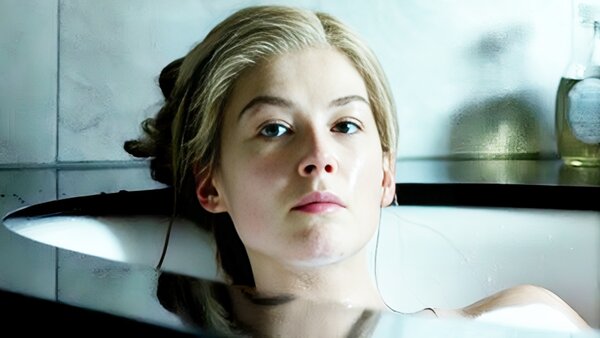
Plot: Nick Dunne (Ben Affleck) tries to solve the disappearance of his estranged wife Amy (Rosamund Pike), but finds that he is the number one suspect.
Prior to the release of this immensely successful missing-person thriller, it was said that screenwriter Gillian Flynn, who adapted the film from her own novel, had written a different ending. This turned out to be false and, much like in the source material, its villain totally gets away with everything.
Around halfway through Gone Girl, it's revealed that Amy - who's actually a manipulative, vengeful psychopath - faked her disappearance and is trying to frame Nick for her murder to get revenge on him for cheating on her. Eventually, she decides to return to him and fakes an abduction by a creepy ex-boyfriend, whom she murders.
Once she returns, she impregnates herself with Nick's baby, and he is blackmailed into staying with her to raise their child, ending Gone Girl on a bleak note. The final shot is Amy looking at the camera, defiant, unbeaten, and completely in control, while Trent Reznor and Atticus Ross' atmospheric score plays hauntingly in the background.
It's debatable as to how well this ending worked. It was anticlimactic, and Amy only really won thanks to the unrealistically incompetent police characters failing to do their job and investigate her story, but it's undeniably chilling. You can always count on David Fincher to turn subpar writing into powerful cinema.
41. The White Ribbon

Plot: Many inexplicable tragedies unfold in a German village in the years just before World War I begins.
Michael Haneke's stunning, Palme d'Or-winning knockout is the kind of subtle, slow-paced picture that'll quietly sneak up on you and terrify you senseless by the end.
In Haneke's words, it's a movie about the origin of evil. The many unexplained crimes occur in a troubled community ruled over by corrupt, puritanical hypocrites who abuse those beneath them, especially the village children. Things are disturbing throughout, yet it gets even worse by the end when the village schoolteacher (Christian Friedel), who also narrates the film, tells the village's corrupt pastor that he believes the village children are responsible for the various acts of violence throughout the story.
The pastor is enraged and threatens him with prison if he ever repeats this accusation, so the crimes remain unsolved and the village spirals further into paranoia. Several prominent characters disappear without a trace towards the end, and it seems all too possible they were murdered to keep them silent about these crimes, although, in typical Haneke style, nothing is ever definitively answered.
Nevertheless, whether you assume these crimes as the actions of the village adults or their children, this movie can be read as a haunting look at how a corrupt society breeds evil actions and shelters those who commit them. Put it this way: it is so easy to imagine that those children grew up to become Nazis.