25 Best Movies From The 1950s

16. Rififi
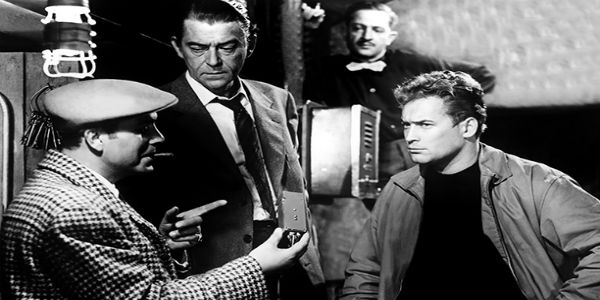
The Film: Blacklisted American director, Jules Dassin, retreated to France in order to plan the perfect heist movie. Taking author Auguste Le Breton's pulpy novel and turning it into something ultimately better on the screen, Dassin€™s Rififi follows a now classic template €“ aging criminal takes on a seemingly impossible theft €“ but enhances it with an engaging score, gritty characters and a robbery that needs to be seen to be believed. Classic Moment: The film€™s centrepiece heist: running for half an hour with not a word of dialogue spoken and the score paused this is quite simply the best robbery ever committed to celluloid.

15. Night And Fog

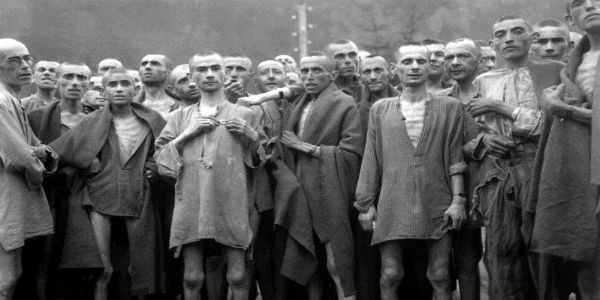
The Film: Released ten years after World War II ended, Night And Fog focuses on the events that took place in concentration camps during the conflict. French director Alain Resnais staged his documentary in such a way that contrasting, coloured imagery depicting of the rise of the Nazis plays a big part in drawing emotion from the viewer, while in turn piling on the revulsion by presenting footage of sterile gas chambers and piled up bodies. Unflinching. Classic Moment: Running at just over thirty minutes in length, none of which could be tastefully classed as classic, you should simply watch this short documentary in its entirety and reflect on the horrors of our past.

14. Some Like It Hot

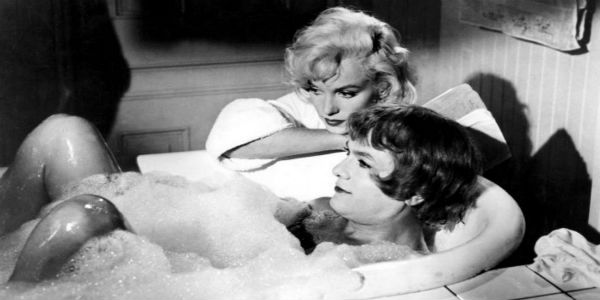
The Film: Tony Curtis and Jack Lemmon star as Joe and Jerry, two bickering speakeasy bandsmen who, having witnessed the Saint Valentine's Day Massacre take to the road - and not to mention some feminine garb - to escape their mob pursuers. Along the way Joe takes a shine to Marilyn Monroe's Sugar 'Kane' Kowalczyk, Jerry attracts the attention of a millionaire and some ripe gags are born as these hapless chaps struggle to balance their female alter egos with the task in hand. Billy Wilder helms the madcap comedy like a pro, Monroe dazzles and both Curtis and Lemmon set the bar for what a successful comedy due should, err, look like. Classic Moment: As the film's stars make a madcap dash for the docks, Joe stops by the lounge bar to witness a heartbroken Sugar belting out 'Through With Love'. Iconoclastic stuff.

13. Vertigo

The Film: So much more than just fodder for students, or a text for Freud bods to pore over, Alfred Hitchcock's dizzily complicated thriller stunned audiences at the time and continues to impress on re-mastered releases. This is Hitch working in overdrive, propelling his tale of a retired cop (played by Jimmy Stewart, naturally) who takes on on a case involving a mysterious blonde, by throwing unique framing, innate reflections, hypnotic animation and, famously, that dolly zoom at us in order to tell his unsettling tale. Classic Moment: Defining moments that change a movie's direction in the early stages don't come much better than Kim Novak's fateful tumble from a bell tower.

12. A Streetcar Named Desire

The Film: Reprising their roles from the Broadway production of Tennessee Williams€™ sizzling southern tale, director Elia Kazan and stars Marlon Brando, Karl Madden, Kim Hunter as well as Vivien Leigh (drafted in to give the film some star power) complete a formidable ensemble in an adaptation that is as much about love and devotion as it is lusty rage. In Brando€™s interpretation of Stanley Kowalski alone, this dramatic motion picture makes for unforgettable viewing, where the birth of method acting erupts in front of your eyes. Classic Moment: Stumbling in drunk from a night of celebrations, Stanley makes a pass at Leigh€™s Blanche DuBois culminating in a shocking finale.

11. Sunset Boulevard

Sunset BoulevardThe Film: At the turn of the decade, director Billy Wilder unleashed the definitive Hollywood satire on viewers. Told from the perspective of dead screenwriter, Joe Gillis, as he plays narrator of the piece recounting his fate to viewers; the film sees Gillis hole up with reclusive silent film star, Norma Desmond (played by silent era queen Gloria Swanson), as he becomes drawn in to her frazzled world. No film that came before it cast such a crooked eye on Tinseltown, and thanks to John F. Seitz's musty cinematography the film glided successfully under the guise of a noir, allowing plenty of inside quips and nods €“ look out for the likes of Buster Keaton and Cecil B. DeMille in sly cameos - to sink into the viewers consciousness. A dark classic. Classic Moment: The finale is rapturous, but the film€™s opening glimpse of William Holden€™s Gillis, floating in a pool shot from the bottom, remains a composition that deserves applause.

10. Seven Samurai
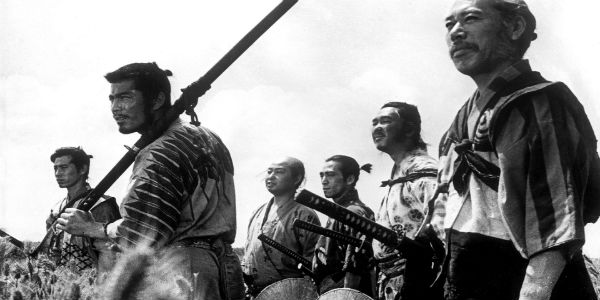
The Film: Before Akira Kurosawa cut loose with this utterly influential action picture and changed cinema as we know it, the notion of a motley crew banding together to fight a cause hadn't been seen before. This simple premise that we probably take for granted these days was born in The Seven Samurai, where its story of a bunch of warriors being enlisted by a bandit-plagued village to protect their crops from an incoming onslaught remains a thrilling and action-packed spectacle to this day. So good, that in 1960 Hollywood took notice with an admirable remake in The Magnificent Seven. Classic Moment: A rain-soaked final push for victory against the bandits features cinema's grandest warrior sacrifice courtesy of legendary actor Toshiro Mifune.

9. The Night Of The Hunter

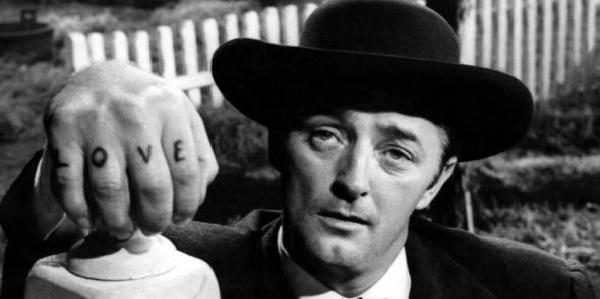
The Film: Having already conquered stage and screen as an actor, Charles Laughton chose the 1950s as the time to helm his directorial debut. The result was Night Of The Hunter, an adaptation of author Henry Grubb€™s novel of the same name, which sees a psychotic ex con work his way into a widow€™s affections while being secretly hellbent on unearthing the spoils of her dead husband€™s loot. It€™s hard finding where to start laying the plaudits with this unique feature €“ Robert Mitchum turns in one of cinema€™s greatest ever performances as the faux evangelical Harry Powell, Laughton draws on Europe€™s silent greats to inform the way this was shot and Walter Schumann€™s score is still terrifying €“ and what€™s even harder is the fact that as the film was neither a critical or commercial hit for United Artists, Laughton was put off enough by this response to never direct another feature film again. Classic Moment: As the film enters its final third, the terrified Harper children take to a skiff and escape from a howling Powell. As they paddle by night, Laughton employs expressionist angles, lens shadows to an art form and frames his shots with all manner of nocturnal creatures in order to form a jarring sense of tranquillity and menace.

8. The Seventh Seal

The Film: The film that truly put Swedish auteur Ingmar Bergman on the map was this timeless allegory of love, death and sacrifice. The story begins with a weary Max Von Sydow as he swaps the horrors of the Crusades for those of plague-ridden Sweden. Upon returning, he bumps into Death (played by Bengt Ekerot in a much mimicked role) and in order to beat his wrap, engages him in a game of chess, one that whisks them from Nordic shores into the mainland and atop a fateful hill. Lighting, set design and simple storytelling make this one of the most heralded world cinema releases of all time. Rightly so. Classic Moment: Forget the beach, as nothing floats into the consciousness quite like Bergman's staging of the danse macabre, where Death leads his little lambs for one last waltz.

7. The Searchers

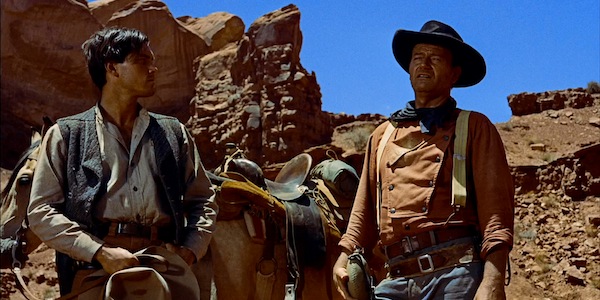
The Film: John Ford and John Wayne collaborated on numerous occasions throughout the decade, shooting out a decent western here (Rio Grande) and a comedy of sorts there (The Quiet Man), but these were just the build up to their greatest pairing: The Searchers. Shot in and around Ford's beloved Monument Valley the story is simple from the outset - Wayne's Civil War vet, Ethan Edwards, returns to his brother's homestead, which shortly after is ravaged by Comanches and his niece kidnapped - but soon develops into something that is both brutal and beautiful. A regular in best of lists across the years, The Searchers went on to influence the likes of David Lean and his latter output as well as Martin Scorsese, Steven Spielberg and, recently, even Breaking Bad creator Vince Gilligan cited this movie as being his inspiration for the show's series finale. Classic Moment: The composition of cinematographer Winton C. Hoch's doorway scene deserves a mention, but the standout scene in The Searchers, the one that makes us realise this is a role Wayne would never beat in terms of complexity, remains his callous mutilation of a slain Comanche in the film's earlier stages.


Contributor
Contributor

Shaun is a former contributor for a number of Future Publishing titles and more recently worked as a staffer at Imagine Publishing. He can now be found banking in the daytime and writing a variety of articles for What Culture, namely around his favourite topics of film, retro gaming, music, TV and, when he's feeling clever, literature.