Is This The Worst Batman Comic Ever?
From The Dark Knight Returns... to this?!

You'd struggle to find a name in comics that courts as much reverence and controversy as Frank Miller. The writer/artist revitalised Batman in the 1980s with works like The Dark Knight Returns and Year One, and presided over acclaimed runs on Daredevil, Wolverine, and later creator owned works like Sin City and 300.
At the same time, his legacy - while unquestionably influential - has been marred by a series of controversies over the last few decades. From bizarre tirades issued against the occupy movement in the late noughties, to the obvious racism of Holy Terror, Miller today is simply not the Miller of yore. And yet he keeps finding work, with DC evidently eager to rehabilitate the creator's image, and capitalise on the nostalgia there is for his classic and indeed seminal works.
Except, regardless of his own public controversies, Miller has also struggled critically over the last twenty years. The Dark Knight Strikes Again was touted as a long anticipated follow-up to TDKR, but it was poorly executed, and is today considered one of the worst Batman comics of the modern era. Likewise, further forays into Batman and Sin City also proved to be divisive, while 2019's Superman: Year One is quickly cementing itself as one of the most peculiar reads of the year.
For all the faults of Miller's recent bibliography though, one comic stands out above all others as being the most brazenly offensive - All Star Batman & Robin, the Boy Wonder.

DC's All Star line was meant to pair the medium's biggest talents together, and when they twinned Miller with superstar artist Jim Lee, it was heralded as a match made in heaven. Miller would flesh out the world he created in TDKR with a comic set decades earlier, while Lee would get to continue his hot-streak after providing art for Batman: Hush, which had concluded towards the end of 2003.
Only, the end result proved to be anything but. By the time it had finished in 2008, All Star Batman & Robin was considered among the worst Batman stories ever told, with Miller's characterisation of the World's Greatest Detective drawing ire from pretty much every corner of the character's fanbase. Lee's art was impeccable as ever, but Miller had gone completely off the rails, leading the charge on a version of the Dark Knight who revelled in violence, ableist slurs, bizarre sexual encounters, and what would probably be considered child abuse by any lawyer or court worth their salt.
The end result is something quite impressive - but for all the wrong reasons. All Star Batman is an all star mess, and quite possibly the worst comic ever to feature the Caped Crusader...
4. Masterminding The Dark Knight's Return

For all it's worth dunking on All Star Batman, it's equally worth examining the trajectory of Miller's efforts beforehand.
Today, his name commands as much respect as it does controversy - for good reason - but for a long time he was rightly considered a legend of the medium. His run on Daredevil was groundbreaking, and influenced pretty much every single other interpretation of the character thereafter; Sin City remains a standout independent publication, and his work on Batman - although frequently over-credited with restoring the character to his darker roots - is rightly lauded as some of the character's best.
Mainstream narratives tend to over-exaggerate the transformative effects of Miller's first DC work, The Dark Knight Returns, on Batman, but that isn't to say it wasn't important. Although key industry figures like Dennis O'Neil, Neal Adams, Steve Englehart Marshal Rogers and others had all divested from the Silver Age motif that governed the character throughout the fifties and sixties, the delineation between their Batman and Miller's is clear.
Post-TDKR, DC's Bat-books shifted from bright blue and yellow to black and grey, with more artists opting to take inspiration from Miller, Klaus Janson and Lynn Varley's work on that particular comic. A new visual motif was adopted - one also spearheaded by Miller and David Mazzucchelli's Year One - and it's there where Miller's influence on Batman can best be seen today.

Influence aside, it's also patently accurate to say that both TDKR and Year One are incredible books. The former is a great examination of Batman's enduring legend and how he differs to DC's other heroes, while the latter optioned a now definitive origin for the character.
As well as all of that, Miller's Batman was - while certainly fierce - a hero at heart. There was no implication that he'd lost his humanity, even while being consumed by his new crusade. He wanted to save people, and he was determined to do so even if it meant putting his own, ageing body on the line.
For all there was a cruel streak to this knight, one never got the sense he was off the rails, abusive, or delighted in hurting people. So how did those traits come to define Miller's Batman just a short two decades later?
3. What DC's All Star Imprint Was Meant To Be

When it started out, All Star was meant to be the imprint that would marry DC's most popular characters with their most talented creators, free from the restraints of mainstream continuity. Creators would be free to chart a new course for iconic heroes and villains, and for a while it seemed as though everything was going to plan.
Grant Morrison and Frank Quitely marshalled the Man of Steel in the sensational All Star Superman, and the publisher's other, now cancelled All Star books were hotly anticipated by readers. Among them included an Adam Hughes fronted Wonder Woman comic, a Batgirl series from Geoff Johns and J.G. Jones, and a Green Lantern series helmed by Brian Azzarello and Cliff Chiang.

For all that those other projects got fans excited, a collaboration between Miller and Lee on Batman was deemed the imprint's hottest prospect. Miller had the chance to reiterate his credentials after Strikes Again, while Lee had just enjoyed a phenomenal stint on Batman opposite Jeph Loeb. Pairing them together was a no-brainer - even for those apathetic to the duo's respective portfolios.
Of course, ten years on, and it's clear that DC's All Star imprint didn't work out. Those comics mentioned earlier became stuck in a permanent limbo, but the publisher has fashioned a spiritual successor over the last year in Black Label. It's been made with the same intent as All Star, and while DC threaten to dilute the overall intent of the imprint by bringing in older comics for... no reason, it's already proven to be a damn-sight more successful than its predecessor.
...Weird Superman/Mermaid sex aside.
2. How All Star Batman & Robin Became An All Star Mess

For all its potential, All Star just didn't work. What was meant to be a legendary coming together between two beloved industry figures resulted in a fudged, cringe-inducing Batman story that reads like a complete fever-dream with few redeeming features.
Situated in the same continuity as The Dark Knight Returns, All Star centres on a version of Batman during the burgeoning years of his crimefighting career. He's established and known to the Justice League, but he's yet to encounter any major supervillains. A familiar setting for Miller, you could argue, only there's nothing familiar about this incarnation of the character at all. He's spiteful, moody and potentially psychotic, so bizarre is his depiction in the comic.
The peculiar thing about All Star is that it doesn't play this version of Batman for laughs either. Miller has the Dark Knight refer to himself as the "goddamn Batman" all the time and yet, honest-to-god, it's meant to be taken seriously. He's just thoroughly reprehensible all around, but before we dive too heavily into what's wrong with Bruce Wayne's characterisation, let's take a look at the book's story itself.
As mentioned just before, All Star is set towards the beginning of Batman's crimefighting career in the same universe as The Dark Knight Returns, The Dark Knight Strikes Again, The Dark Knight III, and the yet to be released Golden Child. There's a rawness to the character, but not in the way seen in Year One or The Long Halloween. He's currently revelling in his mission - one he treats like a military campaign.

The book opens much the same way all of Dick Grayson's origins do - at a circus performance that goes tragically wrong. Dick's parents are killed, and Batman apprehends the killer. This all seems like fairly run of the mill stuff, until we see Bruce straight up abduct the newly orphaned boy, tell him that he's just been "drafted" into a war (all the while hurling ableist insults at him), and leaves him in the Bat Cave to fend for himself. Batman even says that, should Grayson ever get hungry while he's out, that he can eat the bats and rats in the cave.
Yep. Nothing to see here. Not at all. Not even when Batman chastises Alfred for giving Grayson clothes and actual food. This is absolutely normal behaviour for Batman, the World's Greatest Detective, to exhibit.
All of this sort of pales in comparison to what happens next, though, because instead of looking after the child, Batman decides to spend the night indulging in grievous bodily harm, intermingled with occasional bouts of maniacal laughter. He then stumbles across Black Canary, and after assisting her by taking down a bunch of thugs - who are all brutally caught in an explosion, by the way - the pair decide to roll around in the rain and get intimate, all the while Batman lauds the fact they've kept their masks on throughout.

Soon after we discover that it was the Joker who employed a hitman to assassinate the Graysons, but the story somehow gets even more derailed than it already has at this point, by focusing on a feud with the Justice League. Miller's characterisation of Wonder Woman is hilariously one-note, while the likes of Superman and Green Lantern are only present to make the Dark Knight seem cool and superior.
Batman's interactions with the League in this book almost makes it seem like Miller is contemptuous of those other characters. The Dark Knight - joined by Robin, finally - paint themselves yellow to give Green Lantern a verbal dressing down, and then a physical one, when the Boy Wonder steals his ring.
Oh, and an admittedly brilliantly designed Batgirl shows up, but does fairly little other than get captured at the end of the comic. The book teases a future confrontation with the Joker, and even an interaction with Catwoman, but none of it ever came to pass - so reviled was the story upon release.
1. Will Frank Miller Ever Make A Comeback?
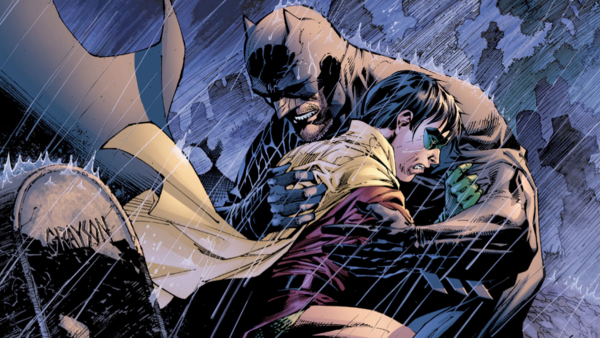
So... is All Star Batman & Robin the worst Batman comic ever conceived? Quite possibly. It's frankly absurd, whether it be the characterisations of Batman and the Justice League or the casual bigotry the comic illicits from page-to-page.
All Star is also a testament to the decline of Frank Miller as a creative force in the comics industry, with the writer/artist capping off his trilogy of garish books (Dark Knight Strikes Again, All Star...) in Holy Terror, a comic littered with horrid stereotypes that was actually intended as a Batman story, before DC decided not to proceed with it. That said, efforts have been made on DC's behalf to reintegrate Miller into the company, with Dark Knight III and the soon to be released Golden Child reuniting the All Star writer with his pointy-eared betrothed.
Aside from Batman, DC has also given Miller the keys to the Man of Steel on Superman: Year One, one of 2019's weirdest comics, and one that sadly also intimates that the longtime comics legend is past his prime.

It's one thing to spend two-thousand words dunking on one of the industry's vaunted creatives, but it's worth suffixing this essay with a closing comment - or maybe even two. Frank Miller is one of the most influential artists the comics medium will likely ever see. He redefined Daredevil, reimagined Batman and achieved both feats before bringing Sin City to the fore in the early nineties. Throw in a great Wolverine story with Chris Claremont, and several other series of varying quality and influence, and it only makes his modern day works all the more frustrating to approach.
At the time of writing, it's difficult to say whether or not Miller will ever bounce back. DC are certainly trying to facilitate a comeback of sorts, but one does have to wonder if Miller's moment has passed by. Is the appeal of a 'Frank Miller comic' enough to keep fans coming back? Evidently so, given the writer is returning with another Dark Knight comic next year. But is it right?
The decision to fall back on the Dark Knight universe seems almost calculated and - dare I say it - safe, at this stage. Even with so much talent attached, it might best if Miller turned his attention elsewhere, and tried fashioning a modern legacy away from his past works and controversies.