10 Greatest Comic Books We Never Got To See
Nothing is quite as tantalising as what could have been.

The medium of comic books is a strange one. The very nature of so many different writers and artists taking a crack at these long-standing and beloved characters, and the monthly, episodic nature of comic book publishing, can mean the industry is constantly shifting and changing. Couple that with editorial mandates and politics within the publishing houses themselves, and you can begin to see why there are so many great stories that we have never had the good fortune to get our hands on.
Whether we are talking entire stories that never saw the light of day, to seminal series cut off in their prime, the history of comics is choc full of such frustrations. And it doesn't seem to matter if you're an up-and-comer or one of the biggest names in the industry, nobody spends a career in comics without seeing some of their favourite ideas and plans shelved, never to make it into the hands of grateful readers.
Join us as we explore ten of the greatest comic books we never got to see, and why this happened. If we have missed out any notable instances, be sure to let us know!
10. Tom King - Nightwing

Tom King recently shared via Twitter that, in the wake of Nightwing having been shot in the head by KGBeast, he had a proposal rejected by DC that would have seen Tim Drake take over the Nightwing mantle as Dick Grayson recovered.
Per King, this would have included "two brothers bonding, caring for each other in the shadow of the Bat", and Dick would have resumed the Nightwing mantle "in 6-12 issues".
Instead, what we got was Ric bloody Grayson. Yep, a two-year-long arc, a classic case of sniper-induced amnesia and a whole lot of fan displeasure.
Dan DiDio's editorial intervention has had a lot to answer for in the last decade, and this is not least among them. It seems nobody involved in the storyline was happy with the turn it took. Nightwing writer Benjamin Percy's run was hijacked in order to run with the amnesia arc, King's suggestions were rejected, and instead of getting to continue Percy's promising run, we got one of the worst extended arcs in recent comics history.
Post-shooting, amnesiac Dick Grayson renamed himself Ric Grayson (haha!) and became a taxi driver, and it lasted two years. Need we go on?
9. Peter Tomasi - Batman & Robin

One of the few genuine bright spots of The New 52 was Peter Tomasi and Patrick Gleason's Batman & Robin, a genuinely exciting story that was just hitting its stride when the axe came down on it. Picking up on a lot of what made Grant Morrison's work with the characters great, Tomasi wrote wonderful characterisation for the titular heroes that still stands as one of the most consistent and well-written series of that particular era.
The New 52 was nothing if not chaotic, not to mention profoundly illogical from an editorial perspective. It did, however, contain some gems; titles that fans who have come to the medium since the 'Convergence' storyline drew DC's ill-fated experiment to a close may miss, due to understandably writing off The New 52 overall as a failure.
Don't let that, or the incomplete nature of the title put you off, though. If you want to see why many long-time fans have such a soft-spot for Damian Wayne, or you're a fan of Morrison's earlier work with these characters, Batman & Robin is well worth checking out. While it is a shame that the stories weren't allowed to wrap up naturally, there is still a lot of fun to be had here.
8. Jack Kirby - New Gods

The great unfinished masterpiece of the King of Comics himself, New Gods - despite its exceptional art and ambitious writing - was not all that well received at the time. Despite being hailed since by other comics legends such as Grant Morrison as visionary and ahead of its time, Jack Kirby's New Gods was met with lukewarm sales and critical reception.
Looking back, it is hard to see why. Certainly, there are some anachronisms, silly names and stilted dialogue, but this is to miss the forest for the trees. Kirby would have been one of the all time greats were it only for his work with the Fantastic Four, let alone all of his work prior to that innovation. And still, the invention of what even to this day constitutes the majority of the DC Universe's cosmic mythology may be his most ambitious and impressive work.
But, the series was cancelled, and was finished of a decade later under the title 'The Hunter Dogs'. However, it was never finished in the way Kirby had intended, leaving comic book fans wondering what could have been, had the most boundless imagination in comics' history simply been allowed to do his thing.
7. Alex Ross - Say My Name - Shazam!

This is one we will never fully understand.
Alex Ross is among the biggest names in comics, at least from an artists perspective, and any major project he is involved in invariably is a big deal. From his '90s classics Marvels and Kingdome Come, to his recent Fantastic Four, Ross rarely misses. He is also just about the biggest purist in the comics industry when it comes to his reverence of Golden Age characters.
Then you have Geoff Johns, one of the most successful and prolific writers in comics for the last two decades, and a major star in his own right. So, one would think that with the combined weight of two genuine superstars backing it, a pitch for a soft reboot of Billy Batson and his all-powerful alter-ego would be a no-brainer.
Unfortunately, it wasn't so, and DC instead went with Judd Winnick's 12-part miniseries The Trials of Shazam! rather than Johns and Ross' Say My Name - Shazam!.
The Trials of Shazam! wasn't a total flub on DC's part, as Winnick's effort is an underrated and well-written series, but one can't help but wonder what could have been. Still, with Shazam seeing something of a resurgence in recent years, perhaps Alex Ross will one day get his chance.
6. Roger Stern & John Byrne - Captain America

This one is particularly painful, as we in fact did get to see this comic and how good it was and could have continued to be, but it was cancelled after nine issues - despite, according to John Byrne, it still being profitable - due to "editorial pressure over scheduling difficulties".
If you don't believe us about how good this run was, feel free to consult the internet. You will quickly fine that the Stern & Byrne combo churned out in their limited run some of what are still regarded to be seminal Cap stories. Even better, go and read them for yourself. And it's no surprise they're so highly regarded, with Roger Stern being an accomplished writer who just understood the character, and John Byrne being, well, John Byrne in 1980, at the peak of his powers, just after his X-Men run and just before his Fantastic Four one.
Unfortunately, as the title was running behind when the duo took over, and Marvel at that time being overseen by the notoriously strict taskmaster and deadline-hitter Jim Shooter, the Captain America series was cancelled. Right before a big three-part Red Skull storyline Stern had already plotted. Sigh.
5. Gail Simone, Mark Waid & Grant Morrison - Shazam!
According to Gail Simone, this proposal was for an anthology that would have featured three stories per issue. Captain Marvel by Mark Waid, Captain Marvel Jr by Grant Morrison, and Mary Marvel by Simone. Wow.
It's hard to imagine why this project didn't come to fruition. According to Simone, DC had a new take on Shazam lined up that never actually ended up happening anyway. So, why wouldn't it have been so? In the three writers involved in this pitch, you have some of the biggest, most tried and tested names in comics. More than that, they would all be writing a character that would suit their styles and personal predilections perfectly. But for whatever reason, it wasn't to be.
Simone went on, in her July 2014 tweets on this matter, to say that though she thinks the direction Shazam/Captain Marvel went was good, the three writers in question will always be bummed that they didn't get to do that book, rhetorically asking, "Can you imagine how fun that book would have been?".
Unfortunately, like Alex Ross' aforementioned take on Billy Batson and his heroic alter-ego, DC's 2000s' editorial decisions robbed us of what could have been a huge moment for the character.
4. Grant Morrison - Teen Titans

It is understandable that DC went with the more proven duo of Dan Jurgens and the great George Perez over Grant Morrison in 1997. They were looking to relaunch an old classic in Teen Titans, and wanted a steady pair of hands to do it. However, in retrospect, Morrison may well have been the perfect person for the job.
The thinking for turning down Morrison was that they had a limited track recorded in mainstream superheroics. The counter argument to that, of course, is that the Scot's track record with superheroes, while not prolific, was nonetheless stellar. The Chaos Magician had worked wonders with the superhero team Doom Patrol in the '80s, and had an unprecedented success with their seminal Arkham Asylum story for Batman.
In the years following, Morrison would also have extended and highly successful runs with the JLA and X-Men, while Jurgens and Perez flopped completely with their Teen Titans reboot. Unfortunately, we don't know the details of Grant Morrison's proposal, though they did work with a more mature version of the Teen Titans in the 1998 DC One Million mini-series.
3. Chris Claremont & John Byrne - The Dark Phoenix Saga

Jim Shooter has caught a lot of flack over the years. By all accounts, the former Editor-in-Chief at Marvel was stunningly lacking in tact, diplomacy, and any capacity to compromise his vision of what comics should be. But, the man was also writing genuinely good comics for DC at the age of 14. He understood comic books. So, of course, do Chris Claremont and John Byrne, two bona fide legends. But this may be one scenario in which the notoriously difficult Shooter was in the right.
In the decades since the classic Dark Phoenix Saga, writer Claremont has elucidated that the original ending of this tale included Jean Grey surviving and having to come to terms with having killed five billion people. Jim Shooter read this and thought, no, you can't just kill five billion people and then ruminate on it for a while before moving on. Shooter regarded Claremont's proposed ending as 'wimping out', that Grey needed to be punished for her actions, because that is how comics worked in 1980. And he's right.
Just because Jean Grey was beloved doesn't mean she should go unpunished. But... one can't help but feel Chris Claremont's ending, though unsatisfying in some respects, would have been more interesting.
2. Grant Morrison, Mark Waid, Tom Peyer & Mark Millar - Superman 2000
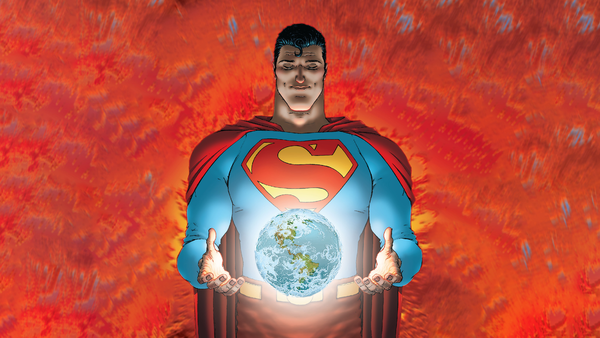
Back before their rivalry, the Grant Morrison/Mark Millar tandem was once one of the premier creative forces in all of comics. And there is every chance Superman 2000 could have been their coup de grace, especially when you add into it the tremendous Mark Waid and the underrated Tom Peyer.
This reboot of Supes was to be a soft one, eschewing the 'cosmic reset' in favour of a policy of 'include and transcend' with regards to past continuity. The pitch included a wholesome attitude towards Clark Kent and his all-powerful Superman side that went counter to the attitude in comic books throughout the '90s (and for most of Millar's career).
Superman 2000 would embrace the kindness and virtue within Big Blue, and aim to demonstrate his innate humanity despite his Kryptonian origins. The pitch is much more all-encompassing than that, including several ideas that would go on to show up in All-Star Superman, Red Son, and Birthright.
When you consider the sheer weight of talent shared between the four writers pitching this, as well as their clout in comics overall, it's hard to understand why Superman 2000 never came to be.
1. Alan Moore - Twilight Of The Superheroes
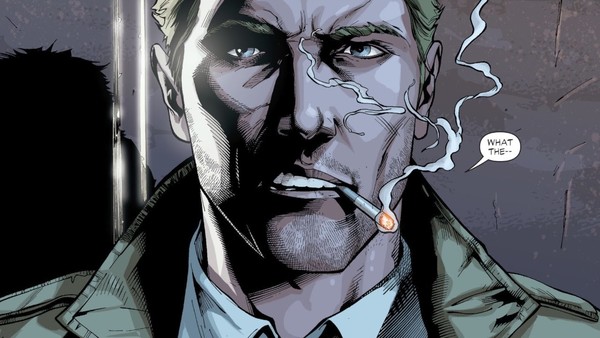
One of the greatest 'what ifs?' in comic book history, Alan Moore's Twilight of the Superheroes proposal could have been the old maestro's great send-off from the superhero comics genre (assuming, of course, that in this continuity he didn't make sporadic returns after his multiple dramatic 'retirements').
Coming at the end of Moore's legendary 1980s run - hot on the heels of Watchmen - Twilight of the Superheroes would undoubtedly have been another defining moment in a decade in comics which was full of them.
Those who have read Moore's 18,000-word pitch for the story will find themselves sorely wishing it had been realised. They will also, however, recognise clear derivations of Moore's ideas surfacing in several DC stories since, most notably Mark Waid and Alex Ross' seminal Kingdom Come.
It is - in typical Moore fashion - a story with many moving parts, with complex interweaving narratives, factions, worldviews and tragedies competing. Providing a summary here would quickly turn this entry into a convoluted series of digressions. Suffice it to say, it was intended to be an epic of mythological proportions, providing an out-of-continuity hypothetical endgame for the DC Universe, told through the eyes of John Constantine. If only.