8 Times Marvel And DC Screwed Over Comic Book Creators
Time to feel guilty about consuming all that Watchmen content...
The comics industry is meant to be a place where dreams come true, and if you only spent your time reading the comics you love that would probably be the case. Sadly, the reality is that the industry is a precarious place fraught with all sorts of danger, the biggest of course being that Marvel and DC could screw a creator royally at a moment's notice.
The Big Two's long documented mistreatment of comics creators is - as you may suspect - nothing new. The creators of the very first American superhero, Superman, were left high and dry by their publisher, while even the King of Comics himself, Jack Kirby, found himself in constant conflict with the two biggest comics publishers.
It's a sad story, and it's also one that tragically repeats itself in pretty much every age in some form or another.
Whether it's writers and artists being poorly compensated, creators being forced to abandon specific plot lines due to bizarre editorial policy or even the misattribution of credit, the comics industry boasts an appallingly long history of creator mistreatment - one that looks set to persist into the next decade...
8. It Took Decades For DC To Recognise Batman's ACTUAL Creator

For 75 years, if you read, watched or experienced any kind of Batman-related media, you'd probably encounter the familiar opening-credits of "Batman created by Bob Kane."
For decades, Kane was recognised as the sole creator of DC's most successful comic book character. To the general public, he was the man who created the Caped Crusader, his costume, his personality, his world - everything. And yet, for those who actually worked on Detective Comics #27 and the very first Batman comics, they all knew that Kane wasn't a pivotal force in the character's creation.
The real hero responsible for Batman's creation was a man called Bill Finger. Finger created Batman's secret identity, the iconic grey and black costume and pretty much every iconic foundation that allowed Batman to become such a towering figure in modern mythology. Kane spent his entire life reaping the benefits of DC's ignorance, having signed a clause that recognised him as the character's sole creator, and only recognised his old collaborator after his death in 1974.
It was only in 2016, after years of pressure, that DC officially recognised Finger as the Dark Knight's co-creator. Now, you'll find his name at the front of all Bat-related media. But it shouldn't have taken that long.
7. Jack Kirby Had To Fight Marvel For Ownership Of His Own Art

Jack Kirby is the single-most important figure in American comics past or present. He created Captain America in World War II alongside Joe Simon, and fashioned the modern Marvel mythos in the 1960s alongside the likes of Stan Lee, Steve Ditko, John Romita and others. Afterwards, he embarked on a new opus, the Fourth World Saga, which changed the landscape of the DC universe and provided yet another cause for Kirby's legend - as if he needed anymore at that point anyway.
And yet, if you can believe it, Kirby was repeatedly screwed over by the powers that be throughout his career. There was a long-running battle with Stan Lee over who was instrumental for what in the creation of the Marvel Universe (as Kirby said to the Comics Journal, "If he says he created things all that easily, what did he create after I left?"), but aside from the disputes with his old partner regarding credit, the saddest battle the creator had in the comics industry came towards the end of his life.
During the late eighties and early nineties, Kirby was involved in a long-running dispute with Marvel regarding ownership of the original page boards he'd constructed during the company's bullpen era. Dozens were lost or stolen, and before Kirby went public with the dispute, decrying his former employers as "thugs", Marvel had offered him the paltry amount of reclaiming 88 pages of art - a fraction of the thousands of boards he'd made at the company.
Marvel eventually relented and returned up to 2,100 pages to the King, but that was still only a fifth of the estimated amount he created.
6. DC Editorial Wouldn't Let Batwoman Get Married

One of the greatest comics of the last decade was W. Haden Blackman and J. H. Williams III's Batwoman. It was the strongest of all the New 52 Bat-books and possessed real value in terms of representation, with series protagonist Kate Kane - the titular Batwoman - also being an out lesbian.
Blackman and Williams' comic never downplayed Kate's sexuality, and decided to make GCPD cop Maggie Sawyer a romantic lead. The two fall in love and, by the end of the series, Kate even proposes. Things looked set for another famous comic book wedding, but - wouldn't you know it - DC scuppered the creators' plans and effectively forced them out of their own comic. The story was never finished, and if you pick up those Batwoman trades today, they still end on a cliffhanger.
The reasoning behind DC's decision to forbid Kate and Maggy's marriage was down to the belief that superheroes just shouldn't be able to get married, because they all always have miserable personal lives and the risk posed by crimefighting is too great. No, seriously, this is was the explanation that Dan DiDio gave in the wake of the fallout. (Via THR.)
"If you look at every one of the characters in the Batman family, their personal lives kind of suck… Tim Drake, Barbara Gordon, and Kathy Kane — it’s wonderful that they try to establish personal lives, but it’s also just as important that they put it aside as they know what they are accomplishing as the hero takes precedence over everything else. That is our mandate, that is our edict, that is our stand with our characters."
Yeah... as if we had to wonder why DC rebooted twice in ten years.
5. Jerry Siegel And Joe Shuster Sold Superman To DC For... $130
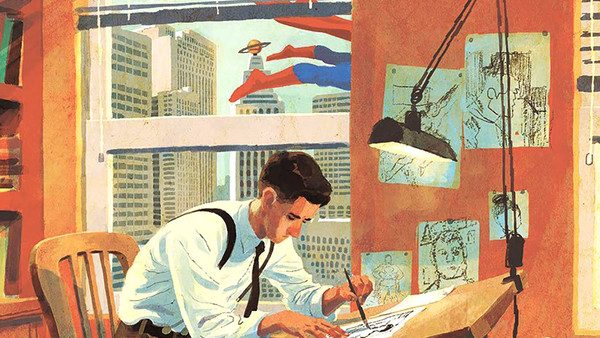
One of the longest running legal disputes in comics history revolves around Superman, and specifically the deal that saw creators Jerry Siegel and Joe Shuster sell the character to DC for the grand sum of... $130. The estates of both families have filed repeated suits against the publisher, meaning the Man of Steel has one of the most complicated legal histories in the business.
Adjusted for inflation, the sum DC gave Shuster and Siegel for Superman was just over $2,000, but that's still a paltry amount compared to the hundreds of millions the character has generated in revenue since. They were both still well paid by DC during this time, but the sale of Superman typifies the unfairness of the industry's work for hire policies.
Siegel and Shuster created the greatest comic book character of all time, and though they were paid handsomely during their years at DC, the publisher still resorted to underhand tactics. Both creators sued their employer for denying them revenue from merchandise and other adaptations, and for also using Siegel's Superboy pitch in a different comic without his permission.
Both Siegel and Shuster encountered financial hardship in their later years, and repeatedly tried to claim the rights to Superman back, only for their names to be dropped from all Superman comics until the release of the Richard Donner movie in 1978. Warner Bros. eventually relented and gave both creators an annual pension, but neither should've had to face the kind of troubles they did.
4. DC Promised Alan Moore The Rights To Watchmen... And Then Reneged

It's absolutely horrid the way the industry treated Alan Moore. Creators and readers love to vilify him as a bitter old figure who just doesn't 'get' comics anymore, and that couldn't be anymore disrespectful.
Alan Moore is a legend of the comics medium and a talent creators all owe a debt of gratitude towards. He redefined the way we look at superheroes and contributed countless seminal offerings to DC and other publishers, including Swamp Thing, Watchmen, and From Hell among others. So again, there is no way he deserves the treatment he's received from creators or fans, and especially not from the industry he helped transform during the eighties.
As for the way the writer has been mistreated, Moore's troubles with the industry all go back to Watchmen. His opus, written with art from David Gibbons, was originally meant to star the Charlton Comics characters DC had acquired a year earlier, but when the publisher decided that they planned to use those heroes elsewhere, Moore and Gibbons were forced to create their own.
And they did. The heroes of Watchmen were created and Moore and Gibbons signed a clause with DC that the rights would return to both authors were the publisher to stop printing comics about those characters, which was the assumption at the time. Comics weren't typically printed in collections and Moore had expected to regain control within a few years, only for Watchmen to become a huge hit, and for him to never get ownership of the characters ever again.
3. J. Michael Straczynski Clashed With Marvel Over One More Day

It's impossible to find a Spider-Man comic more controversial than One More Day. The comic undid years of Peter Parker's development by erasing the events of Civil War and 1987's The Wedding, which had seen Parker marry longtime love interest Mary Jane Watson, and has frequently been criticised as an example of mainstream superhero comics' inability to genuinely move forward.
Editor-in-Chief Joe Quesada had a long running dislike for Parker and MJ's marriage, believing that Spider-Man was losing touch with the hip, modern youths of the late noughties. So in a bid to make him 'relatable' again, Quesada came up with One More Day, which he planned to draw as a conclusion to J. Michael Straczynski's run on Spider-Man.
Although Straczynski was reportedly okay with erasing Parker's marriage (at least according to Quesada), the writer went on the record to state how dissatisfied he was with the comic, and how he initially wanted his name taken off the last two issues. In a now deleted post, Straczynski said the following:
"In the current storyline, there's a lot that I don't agree with, and I made this very clear to everybody within shouting distance at Marvel, especially Joe [Quesada]. I'll be honest: there was a point where I made the decision, and told Joe, that I was going to take my name off the last two issues of the OMD arc."
Would Straczynski have preferred to end his Spidey run in a different way? Quite probably, one would surmise based on this statement. Instead, he was forced to cap it off with the worst Spidey story of all time, and it takes some beating to dethrone the Clone Saga in that category.
2. Marvel Fired Chuck Wendig For His Tweets

Creating comics is a precarious thing. Work is mostly freelance, you're beholden to a weird and admittedly outdated ordering system that can kill your book before you've even finished the first issue, and to cap it all off, you might just get fired for expressing a reasonable opinion on the internet.
This was sadly the story of what happened to Star Wars writer Chuck Wendig, who ran afoul of Marvel editorial for his vocal and persistent criticism of the Trump Administration. Factor in that Marvel Entertainment is ran by Ike Perlmutter - a personal friend of Trump's - and you can see why the whole thing is more than a little bit shady.
Wendig had worked with Disney on his Star Wars novels hitch-free for years, and continues to write tales set in a galaxy far, far away to this day. Marvel took issue with his personal account however, and kicked Wendig off his Shadow of Vader series and an as-of-then unannounced Star Wars comic. Wendig took to Twitter to explain what happened, and the whole thing just sounds super dodgy.
The social media policies at Marvel and DC are so inconsistent. Previous writers have gone out of their way to target industry voices on social media solely for the crime of criticising a comic, and they're still at Marvel, while openly trollish behaviour from another figure went unchallenged at DC for a good long while.
There's no consistency, and while Wendig had other revenue streams to draw from as a writer, for those who work in comics and have nowhere else to go, the threat of being removed because an editor took issue with a Tweet only exemplifies just how precarious a profession it is.
1. Poorly Compensating Creators For Inspiring Their Biggest Movie Franchise

No one could possibly argue that the Marvel Cinematic Universe isn't just about the biggest film franchise of all time. It's monolithic, and generates an awful lot. As in, an awful lot of millions. It's kind of ridiculous.
Anyway, while most would fairly assume that the writers and artists who created these characters now making Disney's billions would be adequately compensated - certainly as much as the scriptwriters and directors on these projects - the truth is far more depressing.
The reality is that a lot of these creators are left out of the loop altogether, with only a select few signing on to projects as creative consultants. Worse still is that royalties for those who created the Thanoses and Rocket Raccoons of the MCU are less than substantial. Thanos co-creator Jim Starlin was paid more for KGBeasts' brief cameo in Batman V Superman than he was for providing Disney with their pivotal, purple-skinned villain, while the family of Rocket Raccoon co-creator Bill Mantlo have a support fund to help with the artist's medical expenses.
Starlin was able to renegotiate with Disney, but Mantlo's story is frankly shocking. How Disney and Marvel don't pay his expenses in light of all the millions his creation has helped generate is just appalling, and a sad indictment of the way the film and TV industries treat those responsible for their most profitable offerings.