5 Most Transformative Creative Runs In Comic Book History
 Anyone who read the oversized Green Lantern #20 last month saw something exceedingly rare in comics: an issue with at least several pages devoted to bidding a fond farewell to the creator who took a comic book with modest a following at best, and turned it into one of the industrys most popular. While the Batmans, Supermans and Spider-Mans of the world have never lost any significant level of name recognition no matter whos driving their respective books, GL #20 reminds us of how crucially important certain creators are to any given characters popularity. The following is a list of the top 5 creators who may not have necessarily written anything that altered the medium itself a la Watchmen, but managed something just as impressive on a smaller scale: taking second-stringers and making them and their respective titles bigger than anyone could have ever imagined.
5. Marv Wolfman and George Perez' New Teen Titans
 Okay, its 1980 and youre the editor-in-chief of DC Comics. Youre continually losing market share to Marvel and the future of your almost half-a-century-old company, despite owning some of the biggest names in the superhero world is in jeopardy. What books going to pull your fat out of the fire? One of the Superman titles? Batman? How about an updated version of a previously canceled book that featured a team of teen sidekicks led by Robin? Incredulous? You should be. That is, until I tell you whos writing and drawing the thing. Marv Wolfman and George Perez version of the Teen Titans became so successful its routinely written about as having saved DC from slipping into permanent irrelevance in the 80s and quickly became a rival to Marvels previously peerless Uncanny X-Men. Even though other versions of the Titans would follow their run, its no coincidence that when the Teen Titans anime-style cartoon premiered in 2003, the group consisted entirely of members pulled from the Wolfman/Perez iteration. Although the series is not remembered as particularly groundbreaking in the way something like The Dark Knight Returns is, it offered unique innovations of its own, being one of the first times character development played such an integral role on a team book. One could argue (as Im about to do so get ready) that character played a bigger role on Wolfman-Perezs team than it did on the X-Men, as Wolfman-Perez began offering battle-free issues devoted entirely to the characters personal lives as early as issue 8 with A Day in the Lives. Even when the book wasnt being so introspective, it consistently showed the members existing as entirely independent entities who had important lives outside the team. Sure, Titans Tower was a meeting place, but at the same time, almost all of the members were either busy with college courses or work, had non-super-powered civilians as romantic interests, and frequently spent their free time away from headquarters. To put it simply, unlike the X-Men or almost any other team book, readers always knew exactly what the heck these heroes did all day when they werent busy battling baddies or trying not to get killed in the Danger Room. Its that human angle that turned the Titans from a group whose only appeal had been based entirely on their connections to their more famous adult counterparts, into such superstars that an appearance by them in an issue of Wonder Woman or Action Comics would be a guaranteed sales boost for their former mentors.
4. Alan Moore's Swamp Thing
 Of the comic books on this list only the Swamp Thing had already experienced the kind of critical acclaim that raises a characters popularity profile, but by the time Alan Moore arrived, the series, despite a less-than-popular feature film, was once again in danger of cancellation. Although Wein and Wrightsons version of the muck monster is also considered a classic, it was Moore s version that literally deconstructed and reconstituted the creature and comics themselves in the process into something wholly different. Moores particular brand of alchemy not only garnered the series a host of awards, but, miraculously, made the character popular enough that yet another attempt was made to translate that success into a feature film, despite the fact that the storylines Moore was writing (like a romance and, yes, even a kind of intercourse between a human and a plant) seem unthinkable for any kind of film not directed by the likes of David Lynch. Moore s tenure also led to the character being given a television series as well, but his biggest influence was completely changing the game of comic writing itself. Even though his run was never under the imprint itself, theres no denying that the ghost of Moore s Swamp Thing lurks between each and every panel of DCs mature readers line, Vertigo.
3. Frank Miller's Daredevil
 Imagine a world where sales of the Daredevil comic book are so low that it isnt popular enough to support being published monthly and where former Marvel editor-in-chief, Jim Shooter, is daily told by Marvels financial officer/circulation VP daily that the book ought to be canceled. Imagine a world where Daredevil never seems like more than a Batman knock-off and where the heaviest hitters in his rogues gallery other than Bullseye, are the likes of The Owl, The Jester, and Stilt-Man. As for the Kingpin, hes nothing more than a third-tier Spiderman villain. Lastly, imagine a comic book world without a character like Elektra, an anti-hero who was so far out on the dark side of the force she paid her rent by killing people. Lets see Wolverine and the Punisher out-badass that. Thats how things were for Daredevil before Frank Miller came along and changed all that. Miller not only turned Daredevil from a Marvel second-stringer to a character so popular that his sales rivaled that of the seemingly eternally popular X-Men, but I posit that his work on the character was the actual birth of the grim and gritty style of storytelling that would become so popular a few years later. Sure, Millers own Dark Knight Returns and Alan Moores Watchmen get all the credit for popularizing the dark overtones comics would come to take, and both series certainly turned the dials of nastiness up to 11, but it was Millers run on Daredevil where New York City and its streets first became such a relentlessly scuzzy Bernie Goetz painting, villains became so sadistically homicidal, and even heroes entered a moral gray zone where they questioned what did and didnt constitute justice.
2. Geoff Johns' Green Lantern
 What Geoff Johns did with Green Lantern is still so recent that its a fair bet that Im going to get lots of blowback for putting it so high on this list, but lets look at what Johns accomplished within the space of a decade. Prior to Johns arrival with the prophetically-titled Rebirth limited series, the popularity of the Hal Jordan Green Lantern had fallen so far that DC felt comfortable enough to kill the Silver Age mainstay. Ouch! The Barry Allen version of the Flash got the same treatment in Crisis on Infinite Earths, but Flash, in all of his retcons and revamps (even with his own Johns-scripted Rebirth), has never enjoyed the level of success Johns brought to Green Lantern. He did this by not only bringing back Hal Jordan (and, more importantly, what made the character work), but engaging in the kind cosmic world building we rarely see outside of Roddenberry, Lucas and their ilk. Before Johns there was only the Green Lantern Corps, after him there were seven corps (Larfleeze would no doubt preen smugly at my describing him and his constructs as an entire corps) and all of them populated with memorable characters embracing distinctly different ideologies. Whatever your feelings about Johns handling of the character and his expansion of the GL mythology, it cant be denied that Johns iteration was far and away the most popular, prompting not only a feature film, but laying the foundation down for four monthly comic books. Prior to Johns arrival there was one Green Lantern comic book with a Corps mini-series here and there; after Johns, Green Lantern became a franchise.
1. Chris Claremont's X-Men
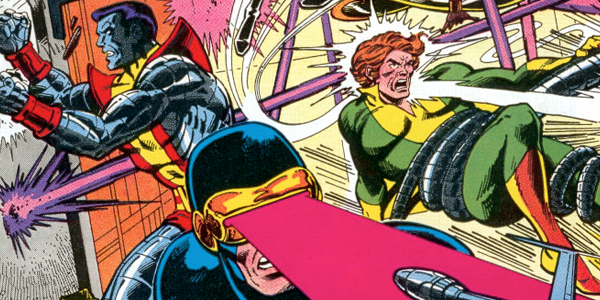
 Speaking of franchisesChris Claremont knows a thing or two about franchises. Yes, it was Len Wein and Dave Cockrum who gave us the core of the all-new version of the Uncanny X-Men, but it was Chris Claremont who built the X-Men into what they are today, and have been for the past 20-plus years: Marvels money-spraying fire hose. Claremont was lucky enough to go on to work with the likes of John Byrne, whos no stranger to breathing new life into flatlining characters himself (see his 80s work on the Fantastic Four and Superman), and together they crafted one of the most memorable arcs in comics history with the Dark Phoenix Saga. They also brought us the lesser-known, but equally beloved Days of Future Past storyline, which probably wont stay lesser-known for long since its the blueprint for the next X-Men film. If that was all Claremont had accomplished, he would go down as a comics legend with his name remaining inextricably linked to Byrnes, but Claremonts handling of the comic and its ever-multiplying spin-offs continued to grow in popularity even after Byrnes departure. After the Dark Phoenix Saga the X-Men were number one by pulling in sales of over 300,000; by the time of Marvels dismissal of Claremont in the early 90s however (talk about not going home with the date who brought you to the dance), the latest X-title, the adjective-free X-Men, became the best-selling single issue of all time. Since then, with Claremont s template firmly in place and spin-offs and mini-series having become standard operating procedure for whatever hero or team is most popular at Marvel, it seems like theres never been less than 10 different X-titles in any given month. If it can be said that Marvel is the house that Stan and Jack built, its fair to say that Chris Claremont renovated and refurbished it.