15 DC Comics Graphic Novels You Must Read Before You Die
If you're looking for some top DC stories, you've come to the right place.

These days, DC heroes enjoy a higher profile than they ever have before thanks to their transition to the big and small screens. The success of DC’s movie and TV universes has exposed fans to not just the adventures of big stars like Superman and Batman, but to those of lesser known heroes too, like Green Arrow and the Suicide Squad.
However, for any new fan coming in (heck, even for a lot of existing comic fans), delving into the comics these characters came from can seem like a daunting task.
With thousands of issues spanning back across decades and decades, it can be difficult to know where to even start reading about your favourite character, let alone what their best stories are.
Now this isn’t even remotely close to being a compilation of all the best stories that DC has to offer, but think of it more as a list of essential reading. These are some of the best comics that have been written for DC, as well as some of their most important.
It’s a smorgasbord of titles from across the DC multiverse, designed to give you the highlights of what makes their heroes so great.
15. 52 Omnibus

DC's big name heroes may usually get all the spotlight, but the company has a whole treasure trove of excellent, lesser known characters and no series better exemplifies that than 52.
Set in the aftermath of the event comic Infinite Crisis, in which an evil clone of Superboy tried to destroy the multiverse (it isn't really required reading to understand 52 though), the series sees Superman, Batman and Wonder Woman all disappear for a year and chronicles the adventures of various other heroes as they try to fill the void.
52 really gives a chance for these characters to shine, highlights include Superman fanboy Steel stepping up as the protector of Metropolis and taking on Lex Luthor, burned out cop Renee Montoya teaming up with the philosophical Vigilante The Question and jerk from the future Booster Gold going from fame hungry narcissist to time-travelling, multiverse saving superhero and narcissist (even proving popular enough to get his own sequel series). All of this is written by a team of top tier writers including Geoff Johns, Mark Waid, Keith Griffen, Greg Rucka and Grant Morrison.
52 is also notable in how it breaks from the format of traditional comics. Each issue occurs a week after the last over the course of a year in real time and the story continually jumps between plotlines, giving the book an addictive TV like quality, much like Game of Thrones.
And of course, we all know the best way to enjoy that type of series is to binge it.
14. Identity Crisis

Now this might not be one of DC's best stories, but it certainly is one of their most important.
Identity Crisis was one of the first comics written by novelist Brad Meltzer and follows the attempts of the superhero community to uncover the truth behind the murder of Elongated Man's wife Sue Dibny. During the investigation, several dark secrets are uncovered, including that D-list joke of a villain Dr. Light was actually a sadistic monster who raped Sue years ago and had his mind erased by the Justice League.
It's a stark departure from the stories that came before it, painting a much darker vision of the DC universe and filling it with damaged and morally ambiguous heroes. Identity Crisis was praised for proving that mainstream comics can have complex characters and intricate plots but also garnered a huge amount of controversy for causing seemingly irreparable damage to beloved characters.
The book was also very influential on future comics from both DC and Marvel, including Civil War. Whether or not this shift to more grounded and serious stories was inherently a good or a bad thing is still debated today, but a definitive downside though was the sheer amount of comics that tried to jump on the bandwagon, leading to a tidal wave of angry cynical books starring mopey jerks.
Identity Crisis could very well be the most divisive comic ever written. However, it is absolutely essential reading to form your own opinions on it and to see how it influenced the entire comics industry.
13. Legion Of Super Heroes: The Great Darkness Saga

A lot of newer fans probably aren't familiar with the Legion of Super Heroes. DC's team of 30th Century crime fighters have struggled to hold an audience for a while now and seemed consigned to the waste bin until the recent DC Rebirth.
Part of the problem could be how far removed they are from the main DC Universe; the far future setting leaves little room for crossovers or involvement in big company wide events so the Legion has always maintained a low profile. It's probably no surprise then that one of their best stories is one that ties the Legion to their 20th Century predecessors.
In The Great Darkness Saga, Darkseid is reborn in the 30th Century and the Legionnaires must race around the galaxy trying to stop him and his superpowered army from conquering the universe. It's a story that brings out the best in both the Legion of Superheroes and Darkseid. It's a sweeping epic that deftly mixes frantic large scale battles with the soap-opera of inter-team dramas and manages to make use of nearly all of The Legion's gigantic roster and their allies (sadly no Matter-Eater Lad though). Darkseid isn't just a threat, he's a nightmare, an ultimate evil of almost Elder God proportions.
The Great Darkness Saga is a perfect example of why the Legion need to be revived, no other comic can offer cosmic drama on such a dizzying scale.
12. Absolute Wonder Woman

Superman, Batman and Wonder Woman have long been held as DC's 'Big Three'. But while Superman has carved out his niche as the Big Blue Boy Scout and Batman his as the Dark Knight Detective, Wonder Woman has never really seemed to find a firm place in the DC roster.
A big part of the problem is that, unlike Batman and Superman, Wonder Woman doesn't have much in the way of definitive stories to really nail down what the character should be. Instead she's bounced around over the years, going through a multitude of origins and roles, including femenist icon, star-spangled defender of America and karate using super-spy.
Brian Azzarello's and Cliff Chang's Wonder Woman though, finally gave us what could be considered as the definitive Wonder Woman comic by taking Diana back to her mythological roots and turning her into DC's answer to Thor.
The series re-imagines Wonder Woman as the demi-god daughter of Zeus and Hippolyta, Queen of the Amazons who must find and protect her half-brother from other members of the Greek pantheon after a prophecy arises that the last heir of Zeus will usurp him.
The series manages to portray Diana as a badass but compassionate warrior and really distinguishes her from the other DC heroes by giving her an entire world of classical mythology to play in.
11. Animal Man Omnibus

Very few writers are as distinctive as Grant Morrison, whose work manages to combine continuity rich superheroics with debates on spirituality and meta commentary on the nature of comic books themselves. To this day, one of the finest examples of those themes is Animal Man.
Now a book about a z-list hero who can harness the powers of animals might not sound like a must-read, but Morrison uses Animal Man's low status to craft a character who is a relatable everyman. Buddy Baker doesn't have an Animalcave, he operates out of his home in the suburbs and has to balance acts of heroism with being home in time for dinner with the wife and kids.
The book also contains strong themes of animal rights activism and, unlike some comics (*cough* Champions *cough*), handles them with enough nuance to avoid coming off as preachy. The main way Morrison does this is by showcasing the sheer brutality of how mankind treats nature, including the graphic slaughter of a pod of dolphins.
The real things that makes Animal Man worth reading though are the moments of surrealism and self awareness, most famously shown in the final issue in which Buddy must confront the ultimate being that has been controlling his life in order to save the lives of his family.
That being is, of course, Grant Morrison himself.
10. The Sandman Collection
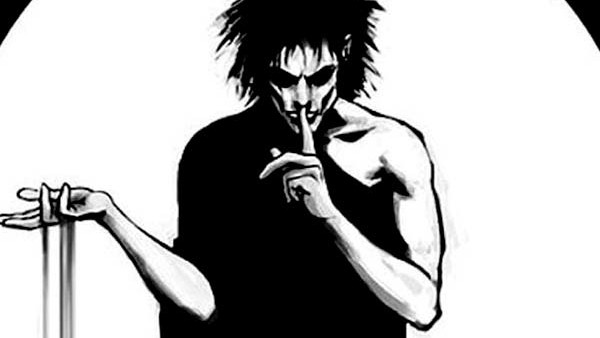
Very few writers are as distinctive as Grant Morrison, and Neil Gaiman is one of them.
The Sandman was created as part of DC's more adult Vertigo imprint (as was Animal Man) and stands as a shining example of the sheer creativity that can be brought to comics. The series stars Morpheus a.k.a. Dream of the Endless, the personification of dreams and the lord of the Dreaming, who must rebuild his kingdom after being held prisoner on Earth for decades.
The series is a dark fantasy, delving heavily into elements of horror (like the return of obscure Justice League villain Dr Destiny as a nightmarish psychopath) while weaving a rich mythology involving the other personifications of concepts like Delirium and Death (a delightfully perky goth girl).
It also includes numerous stand-alone stories set all across history and incorporating many different myths. Highlights include a cult of cats trying to convince catkind to believe in a time where they once hunted humans and Morpheus' involvement in the creation of Shakespeare's A Midsummer Night's Dream.
For further reading, The Sandman also helped launch a number of spin-off series for Vertigo, including Lucifer (which narrowly missed out on making this list), the adventures of the Devil after he abdicates from Hell opens up a club in Los Angeles.
9. The Judas Contract (New Teen Titans)

During the 1980's, The New Teen Titans was one best selling comics on the market and was often compared to Marvel's juggernaut The Uncanny X-Men (not to be confused with Juggernaut, unstoppable master of memes). The story that pretty much defined that entire era was The Judas Contract.
The story established a lot of cornerstones of the Teen Titans, such as Robin taking up the Nightwing identity and showing Deathstroke as a truly devious mastermind. It also helped set the tone of the series our team of bright and energetic young heroes go through a pretty traumatic ordeal.
A lot of the story's darkness comes from Terra herself. She isn't a damsel in distress, forced to betray her friends; she is even crueller and more sadistic than Deathstroke himself, gleefully betraying the team for her lover and inadvertently crushing herself to death while trying to kill them. Adding to the tragedy is Beast Boy's unrequieted love for Terra and his unflinching belief throughout the story that she can be redeemed.
And yes, the previous paragraph did just mention that the teenage girl was bumping uglies with a man old enough to be her grandfather. The Judas Contract is really good, but it's also just a little bit icky.
8. Superman: Red Son

DC's Elseworlds line offered a glimpse into alternate worlds where its top heroes were altered by one fundamental change. One of the most fascinating is Superman: Red Son.
This version of Superman crash landed in Ukraine rather than Kansas and grew up in the Soviet Union, under the close supervision of Joseph Starlin himself. The result is a Man of Steel who no longer stands for "truth, justice and the American way", but rather for "Starlin, socialism and the international expansion of the Warsaw Pact".
What makes this story so interesting is how Superman retains his inherent goodness, a willingness to help save the world and stand up for his fellow man. He even saves Metropolis from a falling Sputnik satellite. However, he is now a much more pragmatic hero, someone who is willing to conquer the world and crush individual liberties to achieve lasting world peace.
This is paralleled by Lex Luthor's rise to become President of the U.S.A, a country that happily elects a madman who resorts to insane, dangerous and often illegal practices to try and combat a perceived threat from another county. And you can read into that whatever subtext you want.
The story also features appearances by other DC heroes like Wonder Woman and Green Lantern, but the highlight is Russian Batman, a lunatic revolutionary in a pointy-eared ushanka.
7. Suicide Squad Volume 1: Trial By Fire

So turns out that the Suicide Squad movie wasn't exactly the saving grace of the DC movie universe but what are you going to do? Go read the John Ostrander and Kim Yale Suicide Squad, that's what you're going to do.
While the series is technically a sequel 50's comic of the same name, it stands apart as the introduction to the 'Mission Impossible but with supervillains' format that has come to define the Squad.
Suicide Squad was incredibly innovative for its time, portraying supervillains not as two-dimensional megalomaniacs, but as complex characters who mostly turned to crime just to make ends meet. The stories are politically relevant to the time period and each arc is thrilling, with the cast of obscure characters adding a real sense that anyone could die.
The first volume contains one of the series' best storylines Misson to Moscow in which a disastrous covert mission leads to the Squad trying to fight their way out of Communist Russia and introduces key characters like the merciless director Amanda Waller, dispassionate mercenary with a deathwish Deadshot and everybody's favourite scumbag Captain Boomerang.
Really the entire series is worth reading, especially this volume and Vol. 5: Apokolips Now where members of the Squad are kidnapped and taken to Darkseid's homeworld. The resulting rescue mission is one of the bloodiest in Suicide Squad history.
6. Batman: The Dark Knight Returns

Back in 1986, before Frank Miller's brain warped into a pit full of misogynistic howler monkeys, he created the greatest Batman story ever.
The Dark Knight Returns is set in a dark and seedy future, in which a retired Batman must put on the costume one last time to fight the Joker, the Mutants gang that have overrun Gotham and even Superman.
The story strips Batman of a lot of his gadgets (a noticeable exception being a now tank like batmobile) and instead plays more into the fear and intimidation angle of the Caped Crusader. This is a Batman who takes no prisoners and leaves a trail of broken and battered bodies in his wake as a warning to anyone even thinking about committing a crime. This savagery is accentuated by Miller's rough art, which paints Batman as a hulking dump truck of a man in a grimy run-down world.
The Dark Knight Returns also contains one of the best comic book fight scenes ever written. Batman takes on Superman on his home turf, weakening the Man of Steel with an array of gadgets before slugging it out with him in a suit of power armour. It's a testament to the idea that, with enough prep time, Batman can beat anyone.
Miller would also go on to write Batman: Year One, a definitive take on Batman's early crime-fighting career and definitely at no point ever wrote a terrible Dark Knight Returns sequel with a shape-shifting, immortal Joker/Robin.
5. All Star Superman

While a lot of Grant Morrison's work is based on adding new twists to existing characters, his work on All Star Superman instead gets right to the core of the character and tells the definitive story of the Man of Steel.
It's a bright and optimistic story, which is surprising considering it's about Superman discovering that he's dying. However, instead of focusing on the grim inevitability of death, Superman decides to fill up his final days by doing everything he can to leave the world a better place. His actions include a return to Silver Age shenanigans like allowing Lois Lane to become Superwoman for a day, epic feats like reigniting the Sun and smaller, more emotional acts of heroism like convincing a young girl not to kill herself. All of these acts are drawn in vivid and detailed style by Frank Quitely, giving Superman the appearance of a kind and benevolent God.
While a lot of jokes have been made about Superman being so good he's boring, All Star manages to take that nobility and give it a sense of wonder. It's a reminder of why so many people fell in love with Superman in the first place and a love letter to the boundless imagination of Silver Age comics.
4. DC: The New Frontier

If All Star Superman is a love letter to the Silver Age then DC: The New Frontier is Darwyn Cooke taking the Silver Age out to a drive-in movie and a couple of malt shakes at the diner.
Framed by a story about the superheroes of the world coming together to fight a sentient island, The New Frontier is a sprawling epic that stretches from the end of the 1940's and the disbanding of the Justice Society, through the 50's and to the 1960's and the formation of the Justice League.
The comic gives in-story explanations for changes made to characters at the time, such as Superman's decision to stand for the rights of the American people rather than the will of its government and Batman's attempts to stop scaring innocents by adopting a sidekick We also see origin stories for the Flash, Green Lantern and Martian Manhunter, who stand side-by-side with obscure non-superhero teams like the Challengers of the Unknown and the original Suicide Squad (to reflect their popularity during that decade).
Like All Star Superman, it's a bright and colourful tale that helps to disprove the myth that comics can only be good if they're dark and gritty. This is helped along by Cooke's art which deliberately invokes the style of 50's comics.
3. Watchmen

The inclusion of Watchmen on this list is probably a 'no duh' entry for a lot of people but it still absolutely deserves a mention.
Watchmen, written by personification of grumpiness Alan Moore and drawn by Dave Gibbons, is a masterpiece and one of the most important comics ever written. It's a dark and cynical deconstruction of the superhero genre, featuring complicated heroes whose attempts to do good are hampered by their own deep personal failings, and contains levels of intricate detail and reference that make multiple readings essential, such as one issue's layout being completely symmetrical throughout and the in-universe comic "Tales of the Black Freighter" which subtly foreshadows the plot of the series.
Watchmen showed the world that comics could be more than just children's entertainment, even making it onto TIME's top 100 novels, and paved the way for them to tackle more adult themes (even if it was for better or worse in some cases).
By this point there are probably very few people who need to be told to go read Watchmen so here's a bonus bit of trivia instead. Watchmen is the only graphic novel on this list not to tie into the DC Universe, but it's characters are all based off of, and were even originally intended to be, characters the company bought from the defunct Charlton Comics. They include The Question (Rorschach), Captain Atom (Dr. Manhattan), Blue Beetle (Nite Owl), Peacemaker (The Comedian), Thunderbolt (Ozymandias) and Nightshade (SIlk Spectre).
2. Kingdom Come

If Watchmen was a deconstruction of classic superheros, then Kingdom Come was a reconstruction of them.
Mark Waid paints a bleak picture of the future of the DC Universe, most of the old heroes have retired and have been replaced by violent vigilantes who fight for the sake of fighting and don't care who gets hurt in the process. When one such fight leaves Kansas a nuclear wasteland, an embittered Superman gathers a team of older heroes to seize power for themselves, opposed by Batman and his team of Outsiders.
It's a clear criticism of comics in the 90's (and to an extent today), filled with angry, gun-toting protagonists and lacking the nobility and heroism that define classic heroes. However, this criticism is backed up by a blockbuster of a story, filled with twists and references to DC lore and illustrated by the lavish watercolour art of Alex Ross. Battles rage across richly detailed double page spreads, packed with cameos from DC's past and new characters brimming with personality.
Despite its cynicism, Kingdom Come ultimately points a way forward for the future of comics, a middle ground where stories can be crafted from the darkness and grittiness of the present day while still keeping the heart and charm of heroes of the past.
1. Crisis On Infinite Earths

Comic book continuity is an incredibly tricky beast to keep in check, especially for DC as a lot of their earliest writers weren't too concerned with keeping details consistent between stories. Questions soon arose like 'Can Superman fly or just jump really far?' and 'How has Robin been a teenager for longer than I've been alive?'. DC tried to mitigate some of this by revealing that its older stories took place on an alternate Earth but by 1985 even this had become convoluted beyond control.
Then legendary double act Len Wein and Marv Wolfman came along with an idea to streamline continuity. Said idea was a huge 12-part epic which saw heroes from across the multiverse uniting to battle the cosmic destroyer the Anti-Monitor. By the end of the event, the entire multiverse had been merged into a single universe, one whose heroes had new origins which combined the best aspects of their past.
In anyone else's hands it might have been a disaster, but Wein and Wolfman had a deep enough understanding of DC continuity to craft a coherent and compelling narrative that ties together a story set on a scale that had never been seen before.
Crisis on Infinite Earth also set the bar for every blockbuster event to follow, including massive stakes, stunning art (thanks to George Pérez) and shocking deaths of characters like Supergirl and the Flash in a time before it was considered the norm.
It's the ultimate love letter to DC continuity.