10 Scientific Secrets Of Spider-Man Only Geeks Will Love
Scientific examination reveals many incredible facts about the Friendly Neighborhood Spider-Man.

Spider-Man was created by Stan Lee and Steve Ditko and first premiered in Amazing Fantasy #15 with a cover date of August 1962. He is Peter Parker, an intellectually gifted science “nerd” who was 15 years old when he was bitten by a radioactively irradiated spider at a science expo. The bite created a body-wide transformation that mimic the abilities of a spider and transferred them to Peter.
Discovering his powers by accident after he was nearly hit by an out-of-control motorist, an ad offering money to challenge wrestler “Crusher” Hogan seemed like an excellent opportunity for the scientifically proficient teen to test his new-found powers. Wearing a mask just in case he humiliated himself, Peter used his strength, agility, acrobatic skills, precognition-like “Spider-Sense” and a little bit of physics to easily defeat the confused wrestler.
Again drawing on his intellect and scientific talents, Peter Parker designed and created his web shooters and the web fluid they use. He also designed and created his own first costume and the identity of Spider-Man. With it, he became a television sensation until a bad decision and fate taught him the lesson that would define his life: With great power must also come great responsibility. With that maxim, his genius intellect, and his incredible powers, Peter abandoned fame to become one of the greatest and most selfless heroes ever imagined.
10. Spider-Man’s Early Tech Was Cool But Hardly Cutting Edge

From the very beginning, Stan Lee and Steve Ditko portrayed Peter Parker as an intelligent young man with a love for science. After the spider bite, Peter realized that Spider-Man was nothing without “webs.” To this end, Parker created twin wrist-worn web-shooting devices of his own design.
The spinnerets mechanisms on the web shooters are stainless steel with Teflon turbines, and the two turbine bearings are made from amber and artificial sapphire. For the cartridges that hold the web fluid, they're made from nickel-plated brass, with the nozzles being stainless steel with brass caps tightly wedged in the top. Where the shooters are concerned, they're activated by a palm trigger attached to a stainless steel band that requires a double tap from Spidey’s super strong fingers and 65 lbs (29.5 kg) of pressure to avoid misfires.
Spider-Man’s web fluid is a substance that Peter designed himself when he was a teenager. The fluid is a shear-thinning liquid similar to nylon that is nearly solid until it comes in contact with air, and the long-chain polymers knit together to become as strong as steel. Over time, the polymers break down and, in about an hour, dissolve into powder. In The Spectacular Spider-Man Annual #7, Thomas Fireheart, aka the villainous Puma, employed a whole group of scientists to recreate the web fluid - and of course they failed to adequately do so.
9. Spider-Man’s “Spider-Sense” Is Always On

Spider-Man’s extra-sensory Spider-Sense is an early warning system that operates as a series of tingles of varying intensities at the base of his skull. It works on three levels: electro/magnetoreception, extreme sensitivity to atmospheric stimuli, and super-fast reflexes.
Parker’s skin uses ambient energy to “see” in all directions in his own version of x-ray vision, and his subconscious filters out the “noise” and alerts his conscious mind when necessary.
Because his Spider-Sense is always “on”, it is impossible to sneak up on Spider-Man. The sense will alert him from which direction an attack may come and its severity; sudden or extreme attacks will go off in an extremely painful way and give Spidey the fraction of a second that he needs to engage his reflexes to avoid or prevent the attack.
The Spider-Sense allows Peter to recognize his villains when they are out of costume or in hiding due to the unique biochemical aura that all people possess. It also allows him to navigate in complete darkness or when he is blinded - similar to Daredevil’s Radar Sense - and this unique ability similarly alerts Spidey to any person or recording device that may be nearby when he's looking to change out of his superhero outfit.
8. Peter Parker’s Intellect Is On Par With Marvel’s Greatest Minds
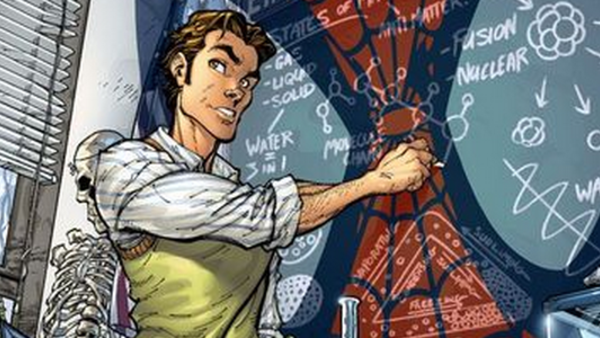
Peter Parker was conceived by Stan Lee and Steve Ditko to be an intellectually gifted young man. In fact, that is what set him at odds with Flash Thompson and his classmates in high school, as Parker was a top student in science in both high school and later college. In short, Peter was a nerd.
In the decades since his creation, more modern writers have gone as far as portraying Spider-Man as having a genius-level IQ.
Academically brilliant far beyond his age, Peter had expertise in the fields of applied sciences, biology, chemistry, engineering, mathematics, mechanics, and physics. It was revealed in Spider-Man Human Torch #3 that Parker’s IQ scores are the same as those of Reed Richards at the same age. In that regard, Richards admits that he defers to Peter in matters of biology as Reed's own specialty in physics may sometimes cloud his decisions.
A gifted engineer, inventor, and robotics maker, Peter Parker created his web shooters and designed his web fluid when he was still just a teenager. Later, Parker made a number of inventions, first for Horizon Labs and then his own Parker Industries. He created many groundbreaking devices and discoveries, including four Spider-Armors, a stealth suit, noise-cancelling headphones, Anti-Electro-Netting, an antidote for the Zodiac poison, and the Parker Particles, an energy force tied to the expansion of the universe that exceeds the Phoenix Force in its level of power.
7. Spidey Heals Fast, Just Not “Wolverine-Fast”

It isn’t hyperbole to say that Spider-Man is tougher than he looks. His skin is denser, his muscles are thicker, and his bones are stronger and more resistant to breaking. This gives him greater shock-absorbing capabilities and general resilience, and while Peter is far from invulnerable, this “hardness” greatly enhances his health and vitality.
Thanks to healing at an accelerated rate, Peter was able to abandon the glasses he wore as a teenager. Cuts and bruises healed in a day or two. Broken bones and larger wounds healed 2 to 3 times as faster than a normal person, such as the broken arm in New Avengers #3 that healed overnight. A gunshot wound will still give Spider-Man pause but will heal far faster than the Average Joe. He also ages slightly slower now, accounting for that famous Parker “boyish face”.
In Peter Parker, the Spectacular Spider-Man #25, the Masked Marauder completely blinded our hero, but he could see with some light sensitivity two hours later. Because of his metabolism, Spidey has a high tolerance to drugs and disease and was able to heal from a vampire bite in Blade #4. He was once stung by thousands of bees and recovered a day later. In Amazing Spider-Man #700, he admitted to healing quickly but not “Wolverine-quick”, referencing his fellow New Avengers teammate and friend.
6. Spider-Man Possesses The Agility Of An Entire Team Of Olympic Level Acrobats
Spider-Man is capable of extraordinary feats of superhuman agility. His web-like muscle tissue, tendons, and connective tissue make him incredibly limber and twice as elastic as a normal human. It is by utilizing a number of skills simultaneously that allows Peter to dodge the attacks of his opponents and, given enough distance, gunfire from multiple weapons.
Able to move as fast as 100 mph in short bursts, Spider-Man’s super strength and speed allow him to make all the necessary acrobatic moves. His superhuman reflexes allow him to adapt to his environment almost immediately and he has the ability to find his equilibrium no matter which way he is oriented or how small an area he is balanced. In Daredevil #16, the Man Without Fear determined the Wall-crawler was every bit the acrobat that he was. Peter's stamina is similarly improved to allow him to continue at peak efficiency for nearly a day.
Spider-Man’s gymnastic and athletic abilities put him above even the best Olympic athletes and gymnasts. He is capable of performing a seemingly endless series of moves, and adding this to his web-slinging, kicks, and punching, Peter has created a unique fighting style. He has been taught to fight by a number of skilled fighters, including Captain America and Shang-Chi, and incorporated those skills into his regime.
5. Spidey’s Web-Slinging SHOULD Shatter Windows Throughout New York City
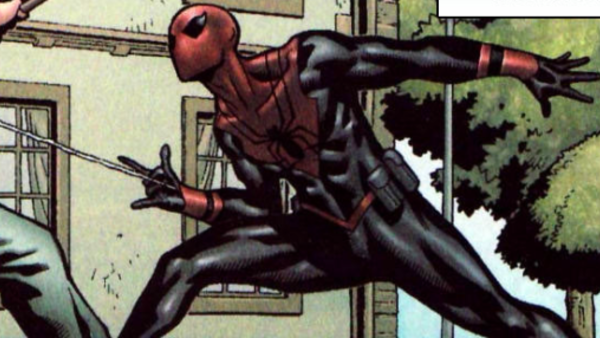
Spider-Man's most popular way of travel throughout the city is what he calls web-slinging. This involves propelling web fluid of his own design through his web shooters at a high building or other structure, grabbing the web line, and pulling himself quickly forward. By doing this action over and over, along with agility and acrobatic skills, Spidey can reach speeds in excess of 14 meters per second. That is over 30 miles an hour!
In Marvel Team-Up #16, he surprised Captain Marvel by keeping pace with the Kree hero at his best speed. Spider-Man is 167 lbs (75.75 kgs) and 5’10” (1.78m) tall. Given his size and the speed he travels by the windows of the buildings that he passes while web-slinging, he should rattle if not shatter some of them outright. Skyscrapers and most modern buildings are required to have safety glass in all the windows, though there are some buildings in parts of New York that are nearly 100 years old. Only luck and comic book psychics save those windows.
Another of Spider-Man’s powers prevents him from webbing a loose brick, a slippery ledge, or a loose window pane. His famous “Spider-Sense”, among other things, in conjunction with his speed and agility, allows him to make the split-second decision of where will be the best place to shoot his next web.
4. Spider-Man’s Ability To Cling To Walls Is Not Limited To His Hands And Feet

One of Spider-Man’s more “spidery” powers is his ability to adhere to, climb and walk on any surface, no matter how smooth. His ability to wall crawl has to do with a principle called the Van der Waal forces. Those are the electrostatic forces between molecule boundary layers. Normally, the outer electron shell of most objects repel each other, but Peter’s ability allows him to form an immensely strong molecular bond between his body and the surface that he is climbing.
While it is true the highest concentration of this ability is centered within Spider-Man’s hands and feet, it is not limited to those areas. Spidey has often been seen assuming a seated position with his back and feet against a building as his only means of support while his hands are free. In Amazing Spider-Man #663, he prevented Anti-Venom from taking his mask off purely by concentrating on his face.
Spider-Man’s ability to stick to things exerts several tons of force per fingertip. Many foes often find it impossible to remove him from the thing he is clinging to and, in fact, have to break a piece of the object away with Spidey still attached to it. It takes an opponent far stronger than ol' Web-head to move him from a surface if he doesn't want to be moved.
3. Spidey Possesses Durability Far Beyond His Slight Frame

Spider-Man is far more durable than his 167 lbs frame might suggest. His skin and muscles are far denser than a normal human's, his bones are stronger and more resistant to breaking, and Peter is able to survive impacts and events that might severely injure or kill a regular person. These include falls of several stories or being struck by opponents with super strength.
The Wall-crawler has survived direct hits from lasers, grenades - pumpkin-shaped and otherwise - gases, explosions, and punches from foes up and down the strength scale. He has even survived multiple punches from the Hulk and a beatdown from Colossus and Magik when they were imbued with the Phoenix Force in Avengers Vs. X-Men #9. Parker actually has to be careful not to tense his stomach muscles when non-powered foes are hitting him, as a boxer broke his wrists hitting Spidey in his tensed stomach early in Spidey's career.
This is not to say that Peter is invulnerable. He’s far from it, actually. While a needle would have a hard time piercing his skin, a sword would definitely do the job. Parker's skin is tough, but he is not made of Kevlar. Significantly hard blows can definitely ring his bell and he can be injured and hurt, but there is no character more famous for bouncing back from the brink than Spider-Man.
2. Spider-Man's Strength Puts Him In A Very Select Weight Class

“The proportionate strength of a spider” doesn’t begin to cover the level of physical power that Spider-Man possesses. His DNA was rewritten by the spider bite and his body now creates more of the proteins actin and mycin. As such, his muscles are stronger, denser, and capable of processing more fuel than a normal human. His skeleton has also been augmented to support any excess weight that he might lift.
Given how strong he is, Peter has had to instinctively pull his punches lest he'd shatter every bone in a common bank robber's body with a light push against a wall. This point was proven when Otto Octavius took over Parker’s body and literally punched the Scorpion's lower jaw off his face with a single punch in Amazing Spider-Man #700.
The ten tons is far from Spider-Man’s limit, although he is rarely called upon to push that limit. When under extreme duress, his absolute “fight or flight” physical strength limit is 135 tons. That is getting into the neighborhood of the Thing, Thor, and the Hulk! Parker was famously called on to shift a pile of debris that was crushing him in Amazing Spider-Man #33, and that pile was said to weigh as much as a locomotive. With the last vestiges of his strength, he succeeded in lifting the mound!
1. The Spider Bite Did More Than Just Give Peter Parker Powers

It was far more than just a simple radioactive spider bite giving a teenage boy superpowers. The newly radioactive enzymes in the spider’s blood entered Peter’s bloodstream and began to rewrite his DNA, adding new code. It essentially changed how Parker’s body works.
Peter’s physical structure was enhanced to superhero proportions. His muscles became far stronger and denser than a normal human, and the protein fibers of his muscles became as strong as a spider's own webbing, allowing him to gain exceptional strength. Spidey’s limit was ten tons under normal circumstances and significantly more under extreme duress.
For Peter Parker, his reflexes are now 15 times faster than those of a regular person, his response time is seemingly almost instantaneously, and he is frequently able to dodge automatic gunfire from multiple sources if he has enough room to move.
Likewise, Spider-Man’s leg strength makes him 10 times faster than the average human, allowing him to run approximately 100 mph at short sprints or 45 mph for longer periods.