10 Reasons The Infinity Gauntlet Is Overrated

People are unquestionably overrating the quality and iconography of The Infinity Gauntlet...
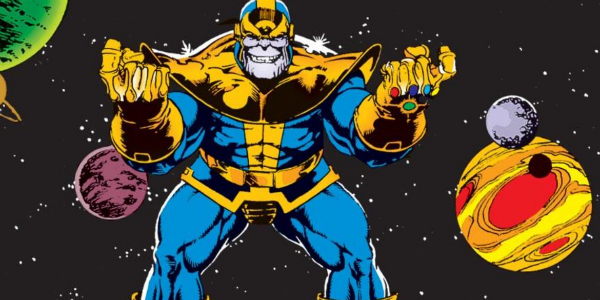
More than 20 years after it was first published, The Infinity Gauntlet miniseries is still considered a classic, revered by critics and fans alike. Marvel Studios has already begun referencing moments from the storyline in its cinematic universe, including the gauntlet appearing in Odin's Trophy Room in Thor. And when Thanos made his cameo in the mid-credits teaser of The Avengers two years ago, sales of The Infinity Gauntlet trade paperback reportedly skyrocketed in anticipation of the storyline being adapted for a future film. Serving as yet another reminder of its the storyline's ongoing popularity, later this month, Marvel is publishing Thanos Annual #1 by Jim Starlin and Ron Lim, dubbed by Marvel's solicitation as €œthe legendary team that brought you The Infinity Gauntlet." But like a lot of major comic book events, The Infinity Gauntlet is not without its flaws, and some may want to think twice before demanding the story get the big screen treatment. The mini is filled with questionable character moments and contrived plot developments, and it hasn€™t aged quite as well as some think. It€™s not a terrible storyline, but the way some people buzz about it, one would think The Infinity Gauntlet was one of the greatest stories Marvel ever produced. People are unquestionably overrating the quality and iconography of The Infinity Gauntlet. The following 10 reasons expose the series for its many flaws and problems.

10. The Finger Snap Crutch

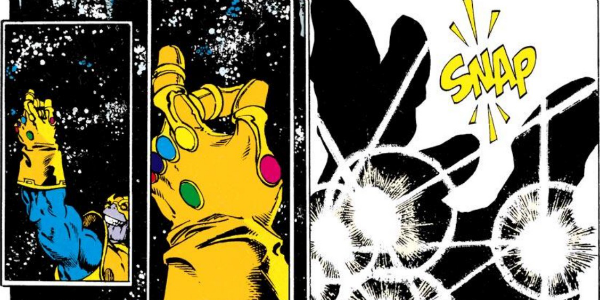
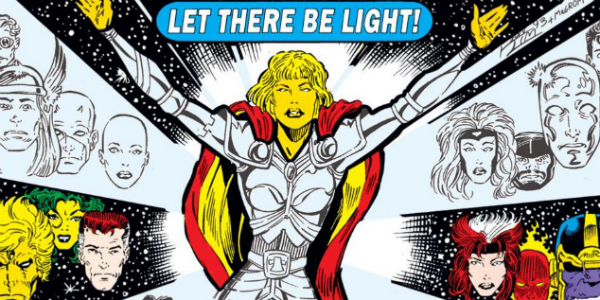
Could one of the most famous moments in comic book history actually be a lazy plot device that saved Jim Starlin the trouble from having to write a bunch of Marvel heroes into his story? In the opening chapter of The Infinity Gauntlet, Thanos, in a bid to impress his mistress Death, proves the infinite power of the gauntlet by wiping out half of the Marvel Universe with a snap of his fingers. Among the missing and presumed dead are a number of iconic heroes including the entire Fantastic Four, Hawkeye, Beast, Black Panther, Wasp, Hercules and Daredevil. And none of them end up making an appearance in the miniseries outside of a passing mention towards the end when they are all brought back into existence. While this criticism may be powered by hindsight, Thanos€™s bold, universe-erasing move is cheapened by the fact that Starlin repeats similar beats in The Infinity Gauntlet€™s two follow-ups, The Infinity War and The Infinity Crusade. In each of these series, a number of heroes are written out of the story early on thanks to some contrived plot device €“ whether it is evil doppelgangers, or a €œreligious experience€ that makes them mindless zombies. While undoubtedly a famous moment, the €œfinger snap€ is actually just an easy way to trim The Infinity Gauntlet€™s cast so Starlin doesn€™t actually have to characterize everyone and find token moments for them.

9. The Cheesy Wolverine/Hulk Moment

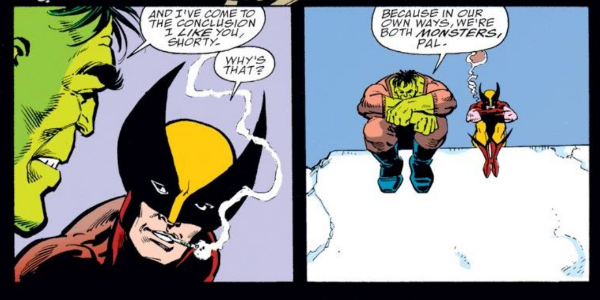
An €œevent€ comic series as overstuffed and crowded as The Infinity Gauntlet is bound to have some tone deaf character moments, and yet writer Jim Starlin manages to script one real cringe-worthy interactions that is incredibly awkward to read, even years later. In one scene, the heroes are preparing to battle Thanos and Hulk and Wolverine forge an out-of-nowhere bond where they express mutual admiration for each other. Hulk tells Wolverine €œI like you, shorty,€ before concluding that the two have a lot in common because they€™re €œboth monsters.€ This burgeoning €œbromance€ could have been an interesting character dynamic if Starlin actually went anywhere with it, but it€™s never touched upon again. Besides, it feels tonally out of place since the rest of the Marvel Universe is preparing for the battle to end all battles with Thanos and the gauntlet.

8. Jim Starlin Shows Too Much Favoritism to €œHis€ Characters

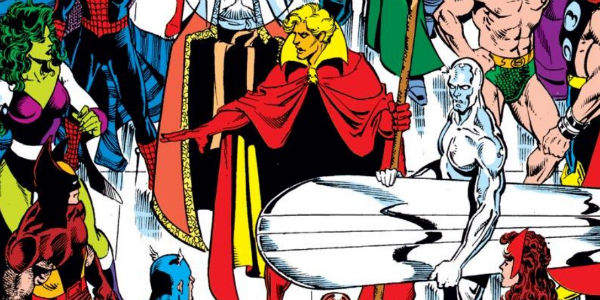
Writer Jim Starlin had every Marvel hero and villain at his disposal for The Infinity Gauntlet, but rather than try and build his story around popular characters like Spider-Man, Wolverine or Captain America, Starlin opted to focus almost exclusively on characters he either created or had extensive experience writing. Thanos was created by Starlin in 1973, and is unquestionably the protagonist of the entire series, while Adam Warlock, a lesser-known character that Starlin built a short-lived series around in the mid-to-late 1970s, leads the band of heroes. Warlocks€™ right-hand-man throughout the mini is Silver Surfer. At the time The Infinity Gauntlet was published, Starlin was scripting Marvel€™s Silver Surfer series. Thanos is arguably the most popular character of the bunch, but Surfer has long had the stigma of not being able to carry a solo series for extended periods. Meanwhile Warlock hasn't been a relevant Marvel character since the 70s. Sure, prior to the series, Warlock had some experience battling Thanos, but so did the likes of the Avengers and Spider-Man. Warlock is only considered an authority in The Infinity Gauntlet because Starlin tells the audience he is an authority. It seems odd that Warlock is the one calling the shots in this story.

7. The George Perez/Ron Lim Changeover
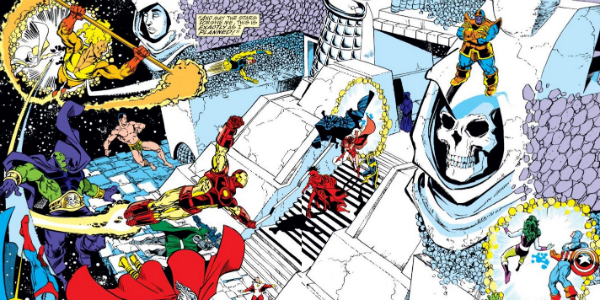
Individually, George Perez and Ron Lim are both excellent artists, but they have distinctively different visual styles. Perez, who became a star for DC in the 1980s, utilizes a more classic aesthetic that gives his work a more epic, operatic feel. Lim rose to industry prominence in the early 1990s as the entire medium€™s aesthetic was changing drastically thanks to the influence of more €œextreme€ artists like Todd McFarlane, Rob Liefeld and Jim Lee (aka, some of the founders of Image Comics). As such, mixing these two styles together within the same comic book storyline is a recipe for a complete tonal clash.
And yet, that€™s exactly what ended up happening in The Infnity Gauntlet. Perez had originally signed on to provide pencils for the project, but had to leave after issue #4 due to have too many other outstanding commitments. Marvel then brought Lim in, who had worked with writer Jim Starlin on his Silver Surfer series, to finish up the last two issues. As one might imagine, this transition from Perez to Lim was neither seamless nor unnoticeable. After four issues of Perez giving readers the Marvel version of Crisis on the Infinite Earths, Lim€™s sketchier, 90s-ified pencils look out of place and immediately take the reader out of the story.

6. Its Sequels Are Even Worse

Fans of the Infinity Gauntlet rarely speak highly of its two sequels, Infinity War and Infinity Crusade, and with good reason. Despite having the same creative team (Jim Starlin and Ron Lim) and continuing the story of many of the same characters (Thanos, Warlock and the Avengers), both of these series are far inferior to the original Infinity. It might be unfair to judge a storyline based on the shortcomings of its sequels, but when reading all three minis in succession, The Infinity Gauntlet€™s flaws become more pronounced and exposed. All three stories suffer from poor characterization, lazy plot devices and unsatisfying resolutions, yet the Infinity Gauntlet is put on a pedestal, probably because it€™s the first and thereby feels fresher and more unique. Perhaps if Infinity Gauntlet wasn€™t published during the peak of the comic book boom period in the early 1990s, Marvel wouldn€™t have tried to milk every cent it could out of the property and passed on War and Crusade. But that€™s not the case, and the three stories are connected well enough that it€™s dishonest to heap praise on Infinity Gauntlet without at least acknowledging its unsavory similarities with War and Crusade.

5. Heroes Never Get Their Revenge on Thanos
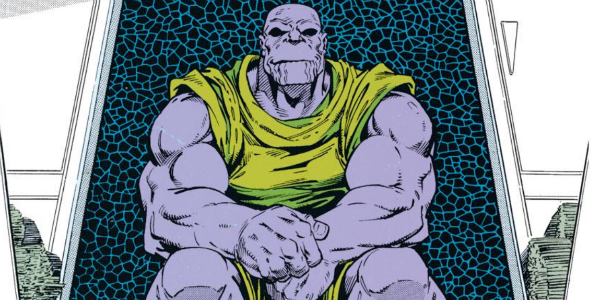
Over the course of The Infinity Gauntlet, Thanos wipes out half the Marvel Universe with a snap of his fingers, brutally murders the surviving heroes one-by-one, and then proceeds to conquer all of the deities like the Watcher and Galactus. One would think after watching some of their favorite heroes get so heinously tortured and abused, readers would at least be given the satisfaction of Thanos suffering an equally cruel fate. Instead, after watching Thor wallop Thanos with Mjorlnir, all of Marvel€™s superheroes seem quite content with just walking away and calling the conflict over. Naturally, Thanos turns out to be very much alive and the story ends with the Mad Titan sitting by himself, contemplating how in the end, he €œcame out ahead.€ Despite Thanos€™s popularity, after all of the death and mayhem he caused, he should have faced harsher consequences. Instead, Marvel was more concerned with setting up future Infinity miniseries that would feature Thanos, without any conditions or complications.

4. The Heroes All Look Like Chumps

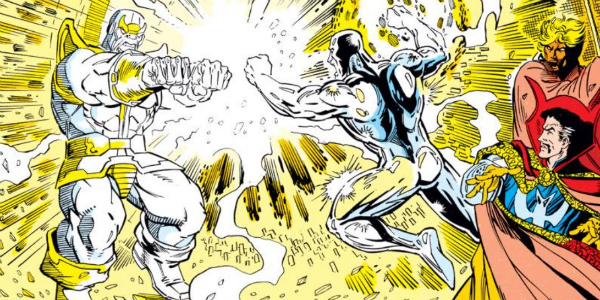
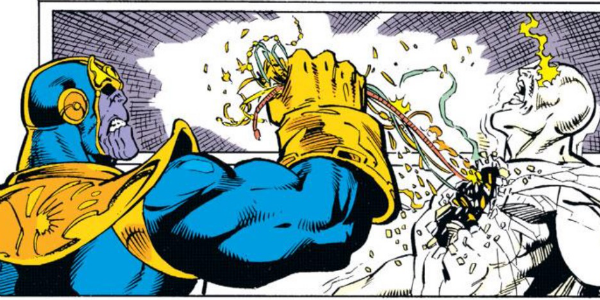
Under the leadership of Adam Warlock, the team of superheroes agree to attack Thanos one or two at a time despite the fact that he is in possession of a gauntlet that grants him unlimited power and omnipotence. Naturally, Thanos is able to systematically slay every one of his adversaries in brutal fashion, often turning the heroes€™ own powers against them (he destroys Wolverine€™s adamantium-laced skeleton, he encases Cyclop€™s head in a cube while his optic blaster is firing, he uses a Scarlet Witch hex against her, etc). Thanos never even breaks a sweat against these guys, which ultimately makes the entire Marvel Universe look like a bunch of ill-prepared wimps. As if that wasn€™t bad enough, Warlock observes the carnage with Silver Surfer and tells him to sit tight while his master plan unfolds. And what€™s Warlock€™s ingenious plan to defeat Thanos? As the Mad Titan fights Captain America, he yells at Surfer to glide towards the villain and just swipe the gauntlet off his hand. Surfer misses the gauntlet by a considerable margin, Thanos destroys Captain America, and Warlock is fresh out of terrible ideas.

3. The Carnage Is So Vast, It Cheapens the Drama
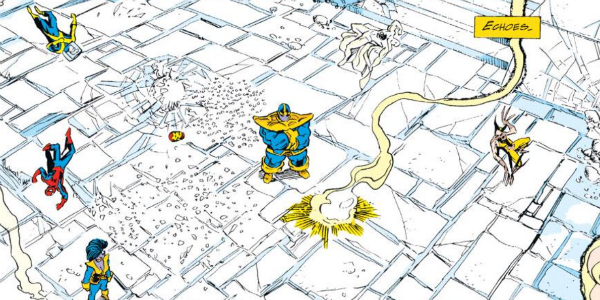
By the end of The Infinity Gauntlet #4, nearly every major Marvel superhero outside of Adam Warlock and Silver Surfer has been presumably killed by Thanos, and that€™s coming on the heels of the Mad Titan wiping out half of the universe with a snap of his fingers in the mini€™s opening chapter. It appears that the €œMarvel Age of Heroes€ has officially come to an end. Except nobody reading this miniseries actually thought that. Perhaps if only one or two major heroes were killed off during The Infinity Gauntlet, a la Supergirl and the Flash in Crisis on the Infinite Earths, readers would have bought into the drama that a very real shift in Marvel€™s status quo was unfolding. But nobody believed that Marvel was ready to kill off 99 percent of its most popular and recognizable properties and rebuild around the likes of Thanos, Warlock and Silver Surfer. With such a farfetched scenario, the creative team tipped its hand that one way or another, Thanos would lose the gauntlet and be defeated. It was just a question of when and how.

2. A Contrived Resolution

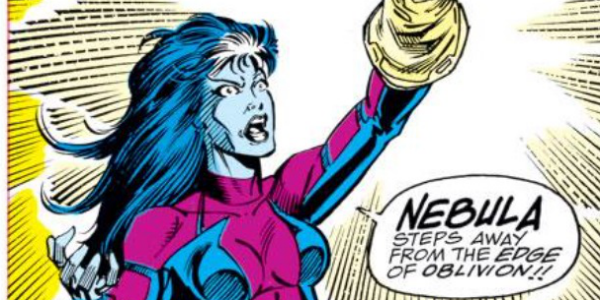
As The Infinity Gauntlet chugs along, Thanos proves to be so unstoppable and omnipotent, it becomes difficult for the reader to imagine how things could get resolved in a clear and creative fashion. Unfortunately, writer Jim Starlin never manages to get out of the corner he paints himself into with his story, and Thanos loses his power in a completely uninspiring way. In the mini€™s penultimate chapter, Thanos defeats Eternity and takes his place, which expands his consciousness into the universe and leaves his body comatose. At that moment, the space pirate Nebula, who had been under Thanos€™s control, manages to steal the gauntlet and undo all of the destruction the Mad Titan caused. She even resurrects the heroes Thanos killed earlier. It is quite a shock that someone as mighty as Thanos would lose the gauntlet without much of a struggle and the fact that a character as minor as Nebula unseats him (rather than one of the many A-list heroes featured in the series like Captain America, Hulk or Thor), just makes the plot development even more contrived and disappointing. As an added bonus, Thanos has to band together with the recently resurrected heroes to defeat Nebula. It€™s a blatant attempt by Starlin to tease Thanos as a tweener hero/villain rather than the evil force he had been characterized as for years.

1. It€™s Not Even Jim Starlin€™s Best Thanos Story

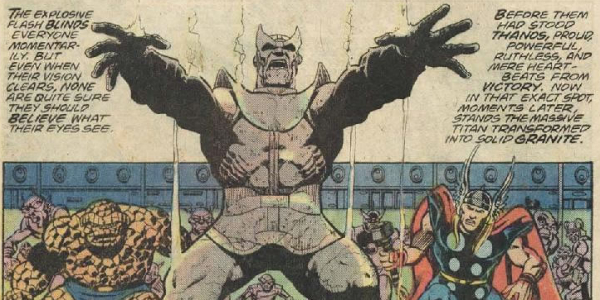
Jim Starlin first created Thanos in 1973 when the writer/artist was at the very peak of his creative powers. As such, the Mad Titan has been a part of a number of epic storylines involving the likes of Captain Marvel and Adam Warlock that are far more interesting than the Infinity Gauntlet and would make for some worthwhile film adaptations. But beyond Captain Marvel and Warlock, Thanos was also part of one of the best Avengers stories from the 1970s. In the two-part arc that traverses Avengers Annual #7 and Marvel Two-In-One Annual #2, Thanos kills Warlock and obtains the Infinity Gems (sans gauntlet) using that power to capture the Avengers. The villain is eventually stopped by Spider-Man and the Thing who free the Avengers and resurrect Warlock. Warlock uses his connection to the Soul Gem to trap Thanos in stone. This Avengers/Thanos arc is better constructed and features a much more satisfying conclusion (where Thanos gets his just desserts) than The Infinity Gauntlet. While The Infinity Gauntlet is more recent and thus, more recognizable for many comic book fans, the two-part Infinity Gems story would make for a more compelling, concise cinematic feature that doesn't resort to crutches and other plot contrivances.

Contributor
Contributor

Mark is a professional writer living in Brooklyn and is the founder of the Chasing Amazing Blog, which documents his quest to collect every issue of Amazing Spider-Man, and the Superior Spider-Talk podcast. He also pens the "Gimmick or Good?" column at Comics Should Be Good blog.