10 Hugely Influential Comics That Changed Everything

Which comics helped shape the comics industry we know and love?
2014 is a good time to be a comic book fan, for a variety of reasons. Superheroes are everywhere in popular culture, and have been for over a decade now. It seems you can't throw a stone in Hollywood these days without hitting a comic book adaptation: Marvel Comics had four released this year alone. DC Comics have been preparing the world for the impending debuts of their new television shows Gotham, Constantine and The Flash, all ready to join the already hugely successful Arrow on the air. Add the buzz for the next Batman video game, Arkham Knight, and it's clear that the general populace love superheroes almost as much as we hardcore fans do. But what of the industry that birthed these heroes to begin with? Naysayers have been decrying the death of the industry for years, but if anything, the comic book business in 2014 is in rude creative health and sales seem steady, with the advent of the digital comics market proving successful. Both DC and Marvel began grand movements in their universes a few years ago with The New 52 and Marvel Now respectively, focusing less on stories bound to years of continuity and more on innovative, invigorating storytelling. Image Comics have launched a genuine offensive against the big two publishers, with a number of critical and commercial hit creator-owned series'. There are also innumerable smaller independent publishers producing quality work, from Dark Horse to IDW to Boom! Studios to Oni Press and beyond. Creators such as Scott Snyder and Greg Capullo, with their generation defining Batman run, Rick Remender and Matteo Scalera with their science fiction odyssey Black Science and Dan Slott with his acclaimed Superior Spider-Man series are all creating the kind of scintillating material that will inspire and influence aspiring creators of the future. But what are the comics and creators that influenced them whenever they were fans and fledgling writers and artists? These are the 10 comics that changed everything and helped shaped the landscape of comics today.

10. The Walking Dead (Image Comics)

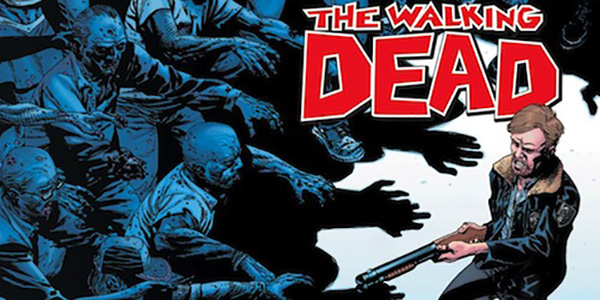
The Walking Dead is not only a long running and massively successful comic book series, but a viable franchise in many different media forms. The television show, which first aired in 2010, is a ratings juggernaut for the AMC network, and the series has birthed a prequel series of prose novels. There have been two different video games, one based off the comic continuity and one set in the world of the TV show. Fans can also buy Walking Dead t-shirts and hoodies and action figures. Basically, The Walking Dead is a very big deal. Series writer Robert Kirkman couldn't have had any conception of the future unprecedented success of his black and white zombie comic when it was first published by Image in 2003. Along with artists Tony Moore and Charlie Adlard, Kirkman wisely focussed the stories on the human survivors in this post apocalyptic world, as they fought and clawed every day to survive in a land overrun with 'walkers'. The Walking Dead is influential not because it launched a thousand different zombie related imitators (although Kirkman did write Marvel Zombies in 2005), but rather that as Image Comics' flagship title, the tremendous revenue generated from it can be funnelled into other creative ventures. Image may not have been able to produce so many quality series in 2014, from so many creators at the top of their games, if Kirkman's zombie opus hadn't hit so big. Kirkman himself is now a partner at the company and runs his own imprint, Skybound. Image is clearly on an upward trajectory, with many of their trade paperbacks routinely cracking The New York Times Best Seller lists for graphic fiction, and this sort of mainstream respectability might not have been possible without The Walking Dead.

9. Green Lantern By Geoff Johns (DC Comics)
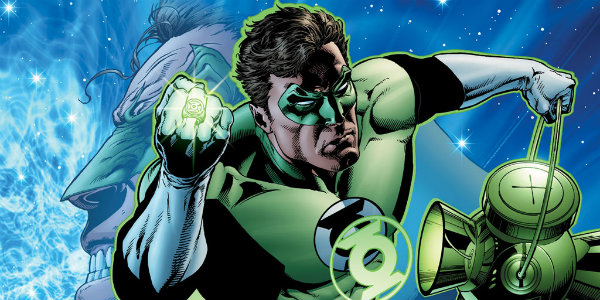
Writer Geoff Johns is the reason that Green Lantern is now the third most prominent franchise within the DC Universe, it's that simple.When DC launched The New 52 in 2011, it was with four Lantern related titles, something that would have been unthinkable before Johns' revitalised the character in 2005. Kyle Rayner had proved a popular Lantern for DC, after being introduced in 1994, but by the mid 2000's the character was languishing somewhat, with very little fanfare surrounding the title. Johns was handed the reigns with 2005's Green Lantern: Rebirth, which re-introduced the Hal Jordan character to modern audiences, and from then on Johns set about re-thinking and re-defining every aspect of the Green Lantern mythos. Johns gave the world revamped versions of villains such as Black Hand and Hector Hammond, modernised Hal Jordan's origin story with 2008's Secret Origin, and introduced the (frankly, genius) notion of the 'emotional spectrum' of power rings. This meant that there were no longer simply Green Lanterns, but also, for example, Red Lanterns (based on harnessing the power of rage) and six other coloured lanterns, based on the colours of the rainbow. Johns' Green Lantern work helped shape the DC Universe as we know it today. Blackest Night, a company wide crossover from 2009, is written by Johns and has it's roots in his Lantern work. Johns has also revamped elements of The Flash and Justice League in his career, and written several other crossovers, such as Infinite Crisis, Flashpoint and Forever Evil. It's no wonder he was appointed DC's Chief Creative Officer in 2010.

8. Sin City (Dark Horse Comics)

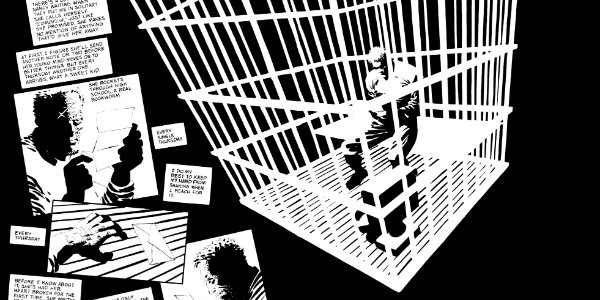
With the August 25th UK release of Robert Rodriguez and Frank Miller's Sin City movie sequel, A Dame To Kill For, now is as good a time as any to throw a spotlight on Miller's highly influential comic book series. The first instalment of Sin City debuted in 'Dark Horse Presents Fifth Anniversary Special' in April 1991, and as further stories have been published over the years, it has really shown itself to be the purest form of Frank Miller's work. Harder than hard-boiled crime stories, filled with tough, broken men prone to extreme violence, existing in the crime ridden Basin City alongside sexy dames and dangerous femme fatales, it's Miller distilled to his very essence. With black and white, stark and stylised artwork and gritty, pulpy dialogue, Sin City is film noir in comic book form. The influence of Sin City can be keenly felt in nearly every crime comic book that has been created since. Brian Azzarello's epic 100 Bullets series, published by DC imprint Vertigo, would have struggled to be greenlit in a pre-Sin City world. It is a supremely constructed and complex tale, weaving in the fates of several seemingly disparate characters and groups into one cohesive narrative, a trick which Miller pulls off in Sin City. Similarly, Ed Brubaker and Sean Phillips Criminal series, detailing the lives of different characters operating in the fictional Center City, owes a great debt to Miller. Both these series' managed to simultaneously wear their Miller love on their sleeves and yet transcended the status as imitators and became defining works of their own.

7. Arkham Asylum: A Serious House On Serious Earth (DC Comics)
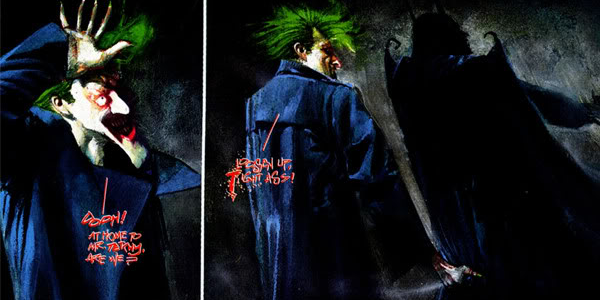
If you have ever owned any hardcover graphic novels over the years of your comic book fandom, any oversized Absolute Editions or Marvel Premiere books, then you have Arkham Asylum to thank for popularising the form. These gorgeous, expensively produced coffee table volumes that can be shown to family and friends, as if to say 'Check this out, comics are classy now!', can be traced back to this haunting, weird and scary story, written by maverick Scotsman Grant Morrison and painted with terrifying verve by Dave McKean. Released in October 1989 at the height of 'Batmania', in the wake of Tim Burton's ludicrously successful Batman movie, Arkham Asylum was a mega success and made Morrison a superstar writer virtually overnight. Fans hadn't seen anything like it before, and in many ways the idea of publishing a $20 hardback comic with impressionistic painted artwork was a big risk for DC, but it paid off in a big way (it is estimated to have sold at least 600,000 copies and counting, according to Morrison's website). Arkham Asylum was also one of the first comics to delve deeply into the scarred psyches of Batman and his rogues gallery, and it does it to exhilarating effect. Many Batman writers in the years since have taken this idea and went even further, making Batman, The Joker, Two-Face, Catwoman and company some of the most psychologically complex and studied characters in all of literature.

6. The Sandman (Vertigo Comics)

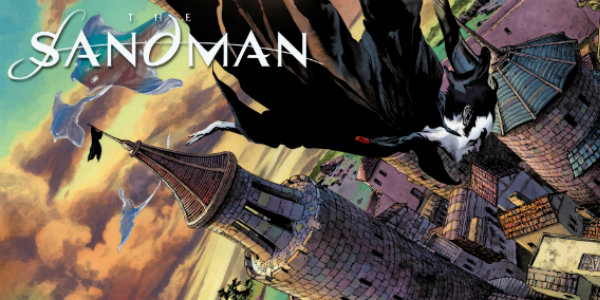
The Sandman, written by Neil Gaiman (American Gods) was first published by DC Comics in January 1989, and ran for 75 issues. It, along with titles such as Hellblazer and Swamp Thing, were instrumental in bringing about the creation of DC's Mature Readers imprint Vertigo, and thusly, it is hugely influential in the proliferation of creator owned comics that have been published in the wake of Vertigo. The Sandman is credited as being one of the first comics to bring literary credibility to comics. It is a series that can be studied in universities and book groups, rich with themes and allegories. One of the first comics to mix the horror, fantasy and humour genre's, The Sandman attracted a readership vastly different from any other comics: many fans were female, in their twenties and might not have read any other comics at all. This was graphic literature, and one of the first comics to break into the New York Times Best Seller list. It's influence can be felt directly in the output of Vertigo, which for many years, was THE place to go in comics to find stunningly interesting stories outside of the superhero genre. Without Sandman, would series' such as Transmetropolitan, The Invisibles, Preacher and Fables have found a home? Who knows. Creators of today will have been heartened when reading a series such as Sandman, safe in the knowledge that their left of centre, odd yet beguiling and compelling stories could find an audience in comics.

5. Daredevil - Guardian Devil (Marvel Comics)
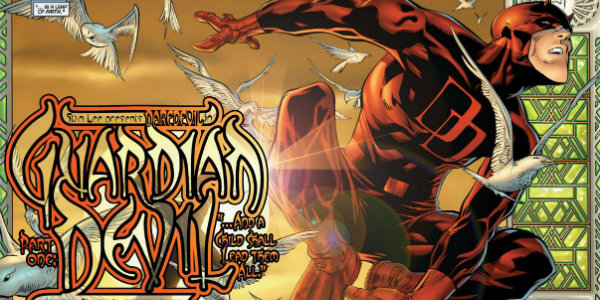
Filmmaker and massive comic book fan Kevin Smith's first stab at writing comics is a much more influential piece of work than some might realise, especially given that Smith's star has waned somewhat in the last number of years. But a quick re-examination of the state of comics in 1998, when Guardian Devil was first released, reveals a series that revitalised a beloved character and also just may have saved Marvel Comics as a whole. When Smith was brought in by Marvel to write his first comic book, he chose Daredevil, a character that he loved but who had fallen on hard times, disappearing completely off the Top 300 sellers list. Teamed with artist Joe Quesada and released under Quesada and Jimmy Palmiotti's imprint Marvel Knights, Guardian Devil was a stratospheric success, catapulting ol' Hornhead back to the top of the sales charts. Smith brought a dedicated fanbase and a celebrity following with him to comics, all eager to see what he could do in the medium he always talked about with such reverence. This raised the profile of the series tenfold and would have made it a financial success even if the stories had been terrible, which fortunately, they weren't. Smith's entry into comics also paved the way for more writers from other mediums to make the jump. Without him, we mightn't have had novelist Brad Meltzer's DC work on Green Arrow and Identity Crisis, or Buffy creator (and eventual Avengers director) Joss Whedon's Astonishing X-Men run, for example. There is also the factor of the artist on the series, Joe Quesda, who you may have heard of. He is currently Marvel Comics' Editor In Chief, a position he was awarded only two and a half years after starting Marvel Knights. It could be said that Quesada saved Marvel and without him we wouldn't have the current prosperity that Marvel Studios is enjoying, as whenever Quesada launched Marvel Knights, Marvel had filed for bankruptcy. This rescue job, as grand and hyperbolic as that may sound, had it's foundations in Guardian Devil, that much is for sure.

4. Crisis On Infinite Earths (DC Comics)
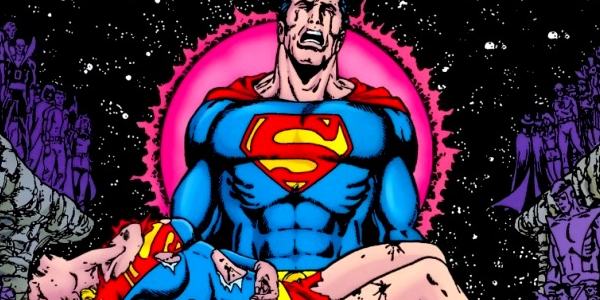
Readers of the current Marvel Comics crossover event Original Sin, or DC's recently concluded Forever Evil storyline, may not be aware of the seismic impact of a 1985 series named Crisis On Infinite Earths, but without it, event comics may not exist in their current form. Whether or not one is a fan of this type of story (they do have their detractors) is immaterial when looking at the influence of the series, as company-wide events have become an extremely important and profitable style of storytelling for DC and Marvel over the years. Crisis functioned as a method of DC simplifying their overly complicated and intricate 50 year continuity, that by the mid-1980's incorporated the Multiverse (multiple universes that existed at the same time, each with different versions of the same characters). Creators found being bound to this continuity stifling, and so writer Marv Wolfman and artist George Perez were hired to create a huge story that give reasons and moments to nearly every character from every parallel universe in DC's history, before most of them were removed from the timeline. The series is memorable for featuring the deaths of Supergirl and Barry Allen's Flash, resonant demises that stuck with readers for years after. Of course, in the years since, both Supergirl and Barry Allen have been brought back from the dead...and the Multiverse now exists again. In fact, just this month Grant Morrison started a new miniseries, The Multiversity, which will define the Multiverse in New 52 continuity, which is enough to make even the most ardent fans head hurt! But regardless, the influence of Crisis On Infinite Earths is there for all to see in the business practices of DC and Marvel to this very day.

3. Ultimate Spider-Man (Marvel Comics)
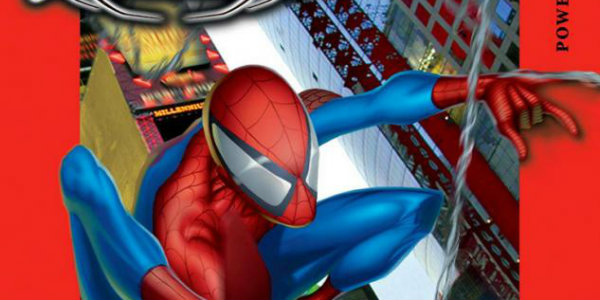
Brian Michael Bendis is the Joss Whedon of comics (or he was, until Joss Whedon came into the medium and became the Joss Whedon of comics). His work has long been famed for it's snappy and snarky dialogue, his deft and authentic handling of teenage characters and his superb gift for long-form storytelling. Of course, whenever he launched Ultimate Spider-Man, along with artist Mark Bagley, in the year 2000, he was an indie creator known for black and white crime comics like Torso and Jinx, so Ultimate Spider-Man is effectively ground zero for the Bendis we know today. The Ultimate Marvel line was created as a way to tell modernized re-imaginings of the stories of Marvel's core characters, dispensing with continuity in a slightly different style than DC had done with Crisis On Infinite Earths. Ultimate Spider-Man was the first series out of the blocks and quickly became a big seller. Bendis brought Spider-Man back to his awkward teenage years, and always excelled at Spidey's trademark quips. One of the finest aspects of the series is that it is genuinely funny, laugh out loud stuff at times. Bendis also created a genuine portrait of Peter and his life and loves, with the series proving very emotionally affecting. Ultimate Spider-Man is influential as the progenitor of the Ultimate line, an incarnation of which still exists today. But it also was a key text for Sam Raimi's Spider-Man movies, and especially Marc Webb's current Amazing Spider-Man movie franchise, featuring a teenaged Spidey, filled with snark and street smarts but also a romantic heart. Bendis also became Marvel's go-to-guy for many years in the mid to late 2000's, writing just about every event they had going, including his celebrated relaunch of The Avengers, entitled New Avengers. This led to a renewed focus from Marvel on Captain America, Thor and Iron Man, who previously had lagged far behind the X-Men and Spider-Man in sales. It could be argued that this renewed focus then led to Marvel Studios' current output of record breaking movies.

2. Batman: The Dark Knight Returns / Batman: Year One (DC Comics)
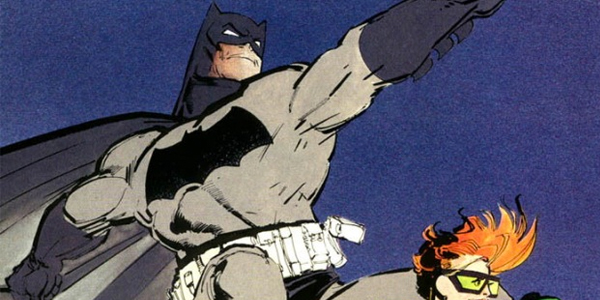
Admittedly, by including two separate comic book stories in this entry, we may be cheating a bit, but hear us out. Frank Miller's 1980's Batman work is seminal, informing nearly everything fans have known about the character since, and it is hard to separate the influence of The Dark Knight Returns and Year One. To us, they are both every bit as important. Batman is, without doubt, the most popular character in comics. While his comics mightn't have always been at the top of the sales charts (although they are always there or thereabouts), sometimes being usurped by the likes of X-Men and Spawn over the years, Batman is THE icon of comics. Scott Snyder and Greg Capullo have returned him to the top of the charts in the last few years, and in any interviews with Snyder, he always points to Frank Miller's work as being 'his' Batman that he grew up with. In fact, we reckon it'd be hard to find too many creators working in comics today whose Batman isn't Frank Miller's gritty, tough and stoic version. The Dark Knight Returns is the ultimate future Batman story, a grim but yet operatic vision of a Gotham thrown into chaos and an ageing, hardass Batman being brought out of retirement to bring justice to the city by any means necessary. Year One, conversely, is the accepted Batman origin story (at least until Snyder's Zero Year becomes the origin fans point to). For our money, it is the best Batman story ever told, simple yet effective, dark yet hopeful. It heavily influenced Christopher Nolan's version of Batman in the Dark Knight trilogy (the scene in Batman Begins with the bats following the sonar gizmo in Batman's boot is almost straight out of Year One). We'd also be shocked if elements of Jim Gordon's characterisation aren't included in the upcoming Gotham TV show. Basically, the Batman we know today may have been a very different beast if Frank Miller hadn't done such sterling work in the 80's. Mercifully, this means we can even forgive him for his Batman work in the 2000's, the less said of which the better, because his influence is still so large in Gotham.

1. Watchmen (DC Comics)

Here we are, the number one most influential comic book that changed everything. You probably figured out what it would be a few entries back, so this shouldn't be much of a surprise. It's actually easier to talk about Watchmen in terms of what it didn't influence (i.e. not much), because Alan Moore's seminal 1986 masterpiece is likely the most significant comic book work ever published. Watchmen is a reflection of it's time, born out of anxieties of the 1980's regarding politics (the Reagan administration in America and Thatcher in the UK) and also the desire to show what a superhero story would be like in the 'real' world. For instance, if a normal person was given God-like powers, like Dr Manhattan, would that person really immediately throw on a garish costume and become a crimefighter? Moore argues that this wouldn't necessarily be the case, as absolute power corrupts absolutely. Instead, this person could become isolated and cut off from the rest of humanity, struggling with how he simply can't relate to humans anymore. This psychological deconstruction of the superhero genre was revolutionary in the 1980's, and made Watchmen a critical and commercial success. Consequently, nearly every writer in comic books since has taken the attitude of treating the characters, heroic and villainous, as if they were real people. The genre has become more and more analysed and literary over time, to the point where readers are no longer used to a simplified, straight up, superhero adventure story. Readers from Watchmen onwards craved that complexity, loved that creators took the characters they loved seriously. Military funded superhero teams like The Authority and The Ultimates wouldn't have existed without Watchmen. Marvel Comics' 2007 crossover event Civil War is predicated on a very similar notion to one in Watchmen, that superheroes and costumed vigilante's had been outlawed or forced into working for the government. Who watches the Watchmen? Everyone who reads comics or works in comics, clearly. So, what do you think? Have we any glaring omissions from our list, any highly influential comics that we've managed to leave out? Do you disagree with anything we've highlighted? Sound off in the comments below.

Contributor
Contributor

Comics. Movies. TV. Wrestling. Video Games. Husband. Father. Geek.