WWE Goes PG | Moments That Changed Wrestling Forever
Two little letters that stood to change the biggest three in wrestling. How WWE went PG, and why...
In 2024, Paul Heyman was inducted into the WWE Hall Of Fame.
Triple H’s first headline pick having not quite had full control of things one year earlier, Heyman was a worthy addition to the Hall if either the institution or its real historical meaning are themselves worthy of such scrutiny. There’s no set criteria, no democratic process for induction, nor any new kudos from the live crowds for guys like Heyman, who can get it whenever they want in their capacity as a decades-long TV regular. And yet, on an April 2024 night in Philadelphia that looked mostly like WWE paying atypically generous tribute to Extreme Championship Wrestling, there was actually something more significant occurring when Heyman told his to detractors to “suck [his] f*cking d*ck”.
Per the Wrestling Observer at the time, this night and the roads that led to it was considered the death, RIP, of what remained of an era long-cursed by fans. The days of WWE being wholly PG were, as we all knew it, dead. The clues were already there. This was the year of WrestleMania 40, of Cody Rhodes finishing the story, of The Rock returning to swear up a storm and bloody ‘The American Nightmare’ up in the midst of a Chicago hurricane. There were more reasons why this looked nothing like the WWE of the decade-plus before, principle among them the disgraced departure of Vince McMahon. But rather than zooming out and casting an eye over the seismic changes that had occurred en route to to Dwayne Johnson’s potty mouth, Cody’s love of a good old fashioned territory juice job, and Heyman donning the cap and duster to eff and jeff his way to another pop, an inordinate number of people pinned it not on the birth of TKO, the rebirth WWE or even the re-litigating of ECW.
On the precipice of this boom, apparently, was a gravestone engraved with the letters P and G. The supposed reason for all that was bad, was now gone. The hysteria Parental Guidance had brought and wrought could at long last be put to rest. Not that it stood a chance of being eulogised…
1. The Before
Before WWE attempted to start playing it safe, the product got far too needlessly dangerous for its own good.
Not creatively dangerous of course. That would imply that, post-2001 monopoly, risks were being taken with new wrestlers, new concepts and new ideas. Retroactively, the company did a good job of stapling a "Ruthless Aggression" label to this period of time, even though Vince McMahon only cut two promos about it, John Cena only said it once or twice, and then it was gone forever. Branding works though, and when assessing the era starting with McMahon bollocking his talents into magically becoming the next Rock and Stone Cold Steve Austin and the 2008 PG classification, Ruthless Aggression became the shorthand. And what a stupid shorthand it was. What was Ruthless or Aggressive, really, about those years?
Ruthless was running every competitor out of business, and that job was completed right as the Attitude Era came to a close. Aggressive was being willing to bury talents that worked elsewhere in an effort to promote your own, and that had been way more prevalent in the New Generation, of all timeframes. Squashing up-and-comers before they've even up or come? Marginalising women? Pretending to shag a corpse? This was just crass trash. The Crass Trash era might not have had as catchy a ring to it, but it would have at least been accurate.
Ultimately, before PG, WWE was just the Attitude Era-but-grosser. Again, not one that rolls of the tongue, but at least not some complete bollocks that doesn't tell the story. The mindset wasn't uncommon for promoters - McMahon and his cronies were chasing the commercial and critical highs of a time that wasn't long ago, but already felt like forever. There were some real cake-and-eat-it years at the turn of the century that found the company riding a mainstream wave despite some over-the-line content that worried advertisers and parents alike. Monday Night was a war zone, but Tuesday morning was where the damage was really felt. Kids flipping birds, telling teachers to "suck it" and jumping off their roofs for home movie submissions to Titan Tower became the norm, reflecting a counter-culture movement across teen America that alarmed the middle class and middle age but played into the hands of the faux-rebels in Connecticut.
1980s living was already catching up with some tenured performers by then, but the excesses that flowed through the industry in the 1990s left a trail of broken bodies and lost lives and wrestling plodded on through the dire early-2000s. Raw and SmackDown were bad way more often than they were good, and if kayfabe was bad, reality was worse. Wrestlers dying in their 30s, 40s and 50s became so common that the company seemed to have a house style for a tribute show and stories of the passing barely stayed atop gossip and newz sites for longer than a day before the wrestling universe simply moved on. Personal demons, the dirge and drudgery of the product, the foreboding hopelessness of an industry denying a global decline; everybody was desensitised to everything. Until, perhaps, November 2005.
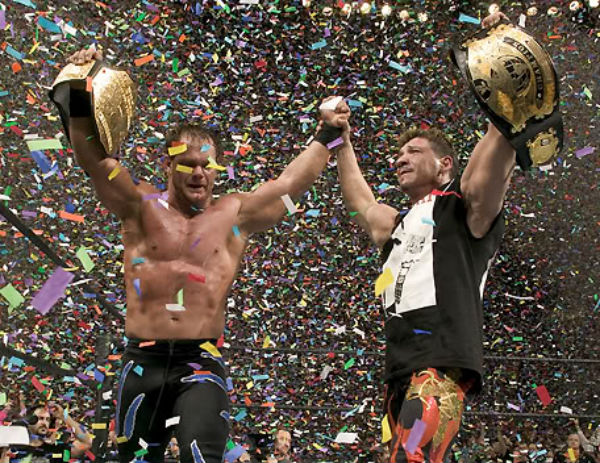
On November 13th, Eddie Guerrero died of acute heart failure at just 38 years old, leaving behind his wife and two children. He wasn't just an active wrestler, but an ostensibly healthy one whose ongoing main event push was an acknowledgement of the bold and impressive recovery he'd made in regards to his physical, mental and emotional health. Fired in 2001 when his drug and alcohol problems were out of control, he was rehired less than a year later having proudly put his life back together, was an unlikely can't-miss prospect for a WWE Championship reign in 2004, and was set to climb the mountain again right before he tragically and unexpectedly passed away. He was, for all the public were allowed to assume, an image of pro wrestling wellness in a time where the industry looked to have so little.
In response to the devastation, concern, and a sense of reckoning on the horizon, WWE loudly and publicly introduced a Wellness Policy in 2006, but it's effectiveness was roundly chastised before and especially after - less than two years in - Chris Benoit murdered wife Nancy and son Daniel before killing himself. Tabloid reports of the Benoit murders occurring because of a "roid rage" or associated red mist were inaccurate, but the horrific nature of the situation shone a light on the industry that hadn't been as justifiably abrasive since, fittingly, the early-90s steroid scandal. It felt as though performers were being suspended on a weekly basis thanks to the recreational and performance enhancing drugs they were found to be taking in subsequent checks, with the Orlando-based Signature Pharmacy becoming well known by wrestling fans as where many of the workers were going for their scripts. Physiques shrunk rapidly, and such events were no longer mocked, as had been the case in 2006 when the returning-from-suspension Chris Masters got on-screen abuse from Triple H due to how much muscle mass he'd lost.
By 2007, WWE was often a place that tried and failed to manifest chaos. In the months that followed the murders of June, the chaos was too real for a fake world to cope with. Creative plans were ripped up with such regularity it's a wonder one Raw ever linked to the next, but when John Cena's blockbuster return from injury at the Royal Rumble 2008 coincided with a company-wide move to High Definition, it felt as though the company were attempting the biggest ever "New Year, New Me" glow-up.
There was eventually a form of stability again, particularly following WrestleMania, when the company often fell into a weird, mutually agreed-upon lull. The chaos, scandal and ugliness of 2007 had subsided, but what remained was a product that remained no better and only slightly less grubby.
The philosophical shift had to be denoted by something real. And that something real had to result in real change.
2. The Day
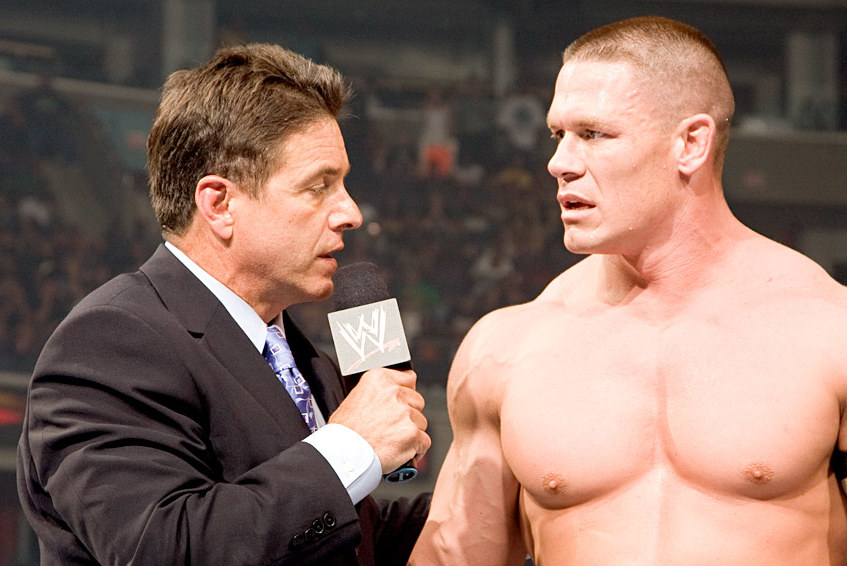
On July 21st, 2008, a very standard-for-the-times edition of Monday Night Raw occurred. It featured - to save you rushing back to watch it - Lance Cade defeating Paul London, Beth Phoenix beating Kelly Kelly, the trio of John Cena and Cryme Tyme going over Cody Rhodes, Ted Dibiase Jr and JBL, the team of Katie Lea and Paul Burchill defeating Mickie James and Kofi Kingston, a returning D'Lo Brown getting the win over Santino Marella and CM Punk and Dave Batista's World Heavyweight Champion match going to a disqualification.
The big angles featured 'The Animal' booking a title match for himself as an impromptu main event for the night, Chris Jericho sporting a suit and a monotone cadence for the first time as he entered what was to be a critically acclaimed next stage of his career, and - to be absolutely fair to everybody involved here - the brilliant first stages of awkward romance between Marella and eventual "Glammarella" partner Beth Phoenix. Up and down the show, it was a reflection of what had the chance of working, and an enormous slate of things that didn't. The Miz was barely two years into life as a WWE Superstar and was marooned on SmackDown to boot, but in contrast to the 'A-Lister's hyperbole about himself, the company had comfortably entered its must-miss era by then. There was nominal upward mobility, a near-psychopathic reliance on the audience-dividing John Cena as top babyface, and a monopolistic arrogance that resulted in a product that was simply dreary rather than outright bad. The traditional business metrics were highlighting this too - though WWE as an organisation had reversed course from a dire post-2001 period by the second half the decade, average television ratings continued to tumble, with 2008's 3.27 annual mean down from 2007's 3.61. There weren't even really spikes of note to haul the number in the other direction - WrestleMania 23 season ensured 4.0+ ratings on a weekly basis, but 12 months later, not even the prospect of Ric Flair's impending retirement or a miraculously-recovered Cena challenging for the WWE Championship again at WrestleMania 24 could achieve the same result.
In previous (and future) years, trends such as these typically resulted in sweeping, drastic changes. Some worked, others didn't, but with the rise of the Attitude Era specifically in the face of the New World Order-led WCW, those documenting WWE history were always keen to point out how creatively bold the company had been when they were in the trenches of a ratings war. Because of everything that had happened in 2007 though, WWE couldn't frame this the same way lest they acknowledge anything that disastrous actually happened. Trapped between needing to make a shift whilst pretending they hadn't, the company actually mastered the task at hand. July 28th's Raw was simply incredibly boring and ineffective too. But the rating at the start denoted a whole new world. Disney soundtrack run-in very much intended.
By by switching Raw from TV-14 to PG for the first time since things went in the opposite direction in 1999, the brand had made a seismic decision that stood to have a knock-on effect on every single aspect of the on-screen product. Or did it? Raw was anything but chaos, despite the weird call to make Mike Adamle the new General Manager. The first thing he did was book a John Cena/Dave Batista match for SummerSlam, which while fresh, wasn't exactly ripping the script up from what the product had looked like for the last few years. The show certainly wasn't anywhere near as obviously different as many confused critics might have you believe. Sudden removals of blood, headshots and unnecessary violence were inserted to play well with advertisers and sponsors, and to a lesser extent extend careers and lives by decades. It perhaps cut down on the odd painkiller addiction too, though wrestling is such a brutal living that it'd be naïve to assume such things ground to a complete halt.
WWE have always followed the money, and more on that coming up, but even the brighter lights were still undercut by the dark heart at the centre of the operation. At the post-Benoit congressional hearings, Vince McMahon spoke about reaching out to former/any talent that had experienced problems with drugs and alcohol and offering them free rehab. It married up with the new image the company were portraying, but the man at the very top didn't pull his punches when pressed on it. In his own words; “Two words: public relations. That’s it. I do not feel any sense of responsibility for anyone of whatever their age is who has passed along and has bad habits and overdoses for drugs. Sorry, I don’t feel any responsibility for that. Nonetheless, that’s why we’re [sending the letter]. It is a magnanimous gesture.”.
Magnanimous to ex-wrestlers, open-armed to sponsors, and cap-in-hand to parents to give the company another chance with some distance from yet another horrendous scandal. Tick, tick, tick.
But what of the hardcores?
3. The After
Hatred.
Misguided hatred, but hatred.
Lifers felt hatred for two letters, having finally been able to create a singular boogeyman to justify/explain away what was bordering on a decade of diminishing returns since the last boom. PG - a classification that had been in place back when the most audacious version of World Wrestling Federation boomed in the late 1980s as well as when it struggled to get out of high school gyms and the doldrums writ large in the mid-90s - was now the reason Raw and SmackDown almost always sucked. The fact that the shows still had occasional highs such as a celebrated Shawn Michaels/Chris Jericho feud, a bizarre career renaissance for Triple H when he agreed to a punting to SmackDown in 2009, and the rise and fall and rise again of Jeff Hardy, WWE remained too consistently bad to ever be thought of as all that good. This, per furious protests from disillusioned hardcores on forums, nascent social media platforms and increasingly in buildings themselves, was down to an age classification rating changing overnight in 2008 rather than a product that had declined dramatically in quality since 2001, or if you want to scrutinise it even further, around October 2000.
It's easier to say with the benefit and wisdom and hindsight, but what got lost in the discourse and ultimately quite rudimentary assessment of the situation was a discussion about the profile of the fan complaining the loudest. It revealed something of a universal fan experience for WWE fans of a certain age, that was fast becoming a reckoning. People speak of how different generations view the world (boomers, Gen Xers, millennials and so on) and what it's offered them in life, but this had never been applied to a significant portion of the wrestling fanbase before this point.
WWE in its true original post-Vince McMahon Sr form first exploded in popularity in the 1980s, capturing millions of fans the world over that were also born in that decade. Many - not all - fans that got in deep with the product stuck with it through a mid-1990s malaise. Perhaps they diversified their engagement with the industry, broadened their horizons and even took small breaks, but you never forget your first, and as the market leader, WWE was exactly that to many that were still watching in 2008. But the people that were children in the cartoonish Hulkamania-adjacent superhero era, tweens for the uneven developments of the New Generation and perfectly-placed edgelord teens in the Attitude Era were well into their 20s or beyond by the time John Cena in particular was effectively requiring everybody to reset the clock to the time of training, saying prayers, taking vitamins and believing in yourself. This experience wasn't universal of course, but it did apply to a sizeable majority of the existing WWE Universe. The rap against 'Big Match John' in particular was that the women and children loved him but the longstanding male audience couldn't stick his shtick. It was never quite as binary as that obviously, but the noises from audiences suggested that the dividing lines could mostly be drawn across those groups. To the angry lifers, this was a stick to beat Cena (and, again, PG) with, but even a little bit of introspection might have revealed that this was a good thing. Women had traditionally been ostracised, boxed in and/or marginalised by the business, but that was at long last changing. And pushing a guy the kids love, as will have happened to literally every fan that found it in their childhood? Sacrilege!
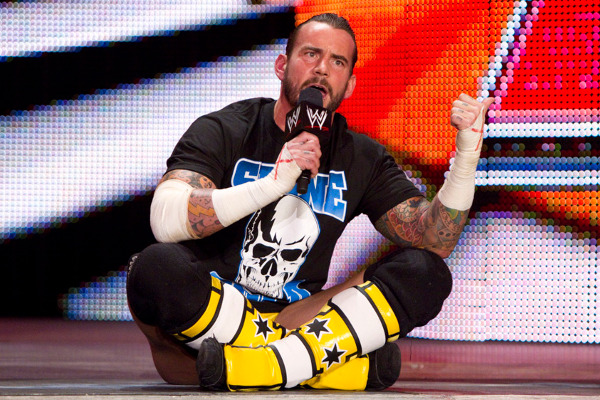
WWE was still PG when CM Punk dropped the pipe bomb in Las Vegas, but as the 'Straight Edge Superstar' tried to change the world by sitting on the 'Sin City' stage, he was in fact walking a tightrope attempting to satisfy several different audiences. It's little wonder the carefully-chosen words turned out to be so powerful in 2011. Punk was 32 when he cut the promo, right around or just a little older than the age of the most vociferous against what WWE had come to represent. He also found the best way to colour outside the lines of what had become an even more dreary, overly-scripted stage-managed production by then. "PG" was still the shorthand for the bleak state of the average Raw or SmackDown, filled to the brim with unconvincing, over-familiar performers delivering unconvincing over-familiar material. The iconic promo was none of these things, and widened the chasm between the audience without really expanding the depth of thought as to why the divide existed in the first place. Punk - a paid up WWE Superstar, remember - was now one of a handful that the annoyed audience could perceive as being one of them, as opposed to John Cena and the rest of those PG losers.
That relationship was never recovered. The squashed success of another audience avatar in Daniel Bryan across 2013-14 left even deeper wounds, to such an extent that within just three years of his WrestleMania XXX WWE Championship win, the American independents were as healthy as they'd been in decades, New Japan Pro-Wrestling was commercially and critically thriving on either side of the Pacific Ocean and so many wrestlers were building careers without even involving WWE in their lives that whispers became shouts that there was space for a new promotion. But more on that shortly.
In the 2010s, Stephanie McMahon became Chief Brand Officer and set about making WWE the acceptable face of Americana, with the guiding principal revealed in her mask-off "Philanthropy is the future of marketing" tweet in 2015. By then, the company had worked with various charities and community projects in the interest of reshaping what the brand represented, echoed by a safe and solid product on television that wouldn't serve to undermine any positive messaging. In the real world, wrestler deaths and stories of dire decline thankfully diminished, and while WWE softening its style guide couldn't be held entirely responsible through it, a good majority of those that worked through this era are around and in decent enough fettle to tell the tale as opposed to many of the men and women that gritted their teeth in the brutal periods that came before.
WWE, steered by several initiates that had little to do with Vince McMahon's warped creative, financially and politically benefited to an enormous degree. Toy giant Mattel gained the master license for the WWE in 2010, having started negotiations in a 2008 that suddenly looked more palatable than the years that came before it. In 2009, Linda McMahon left WWE to run for a seat in the United States Senate from Connecticut as a Republican. She lost to Democrat Richard Blumenthal. She was the Republican nominee for Connecticut's other Senate seat in the 2012 race. She lost to Democrat Chris Murphy. But when the political press and public in general went reaching down the sofa for a disgusting moment or segment to attack her with, she was able to craft a past tense narrative around their clips and barbs. It got her seen, got her known, got her in the Connecticut State Board of Education and eventually got her into Donald Trump's teams for both of his Presidential terms. There could be no greater statement of the power of PG, even if it had absolutely nothing to do with the content of the average edition of Raw or SmackDown.
Ratings continued to go down, attendances rarely spiked other than for the biggest events, and pay-per-view buyrates circled the drain for so long that Vince McMahon himself declared the very medium dead while bigging up the launch of the WWE Network. Meanwhile, the changes the PG guidelines made to the product became indistinguishable from the rest of the toothless garbage McMahon was re-writing 10 minutes before air on a weekly basis. Like everything, time normalised the supposedly seismic change, but protests also quietened down because half the people making them simply stepped away. When All Elite Wrestling formed in 2019, it revealed that the frustrated millennial American wrestling fan was still around, just no longer prepared to tolerate what the marker leader was serving up every Monday. Early AEW was as much about doing what the opposition didn't, resulting in countless quick hits of adrenaline as blood and bad language flowing freely, all to the unbridled joy of reinvigorated live crowds. These were cherries on massive trowel-loads of icing on incredible cakes, of course. AEW thrived from the off because the creative underpinning all of the old stuff was incredibly strong, as opposed to destructively nonsensical. The new wrestling war brought about an entire new set of ebbs and flows, changing shape in a way most unexpected when Vince McMahon resigned in disgrace in 2022 and again in 2024. 2023, not coincidentally, was WWE's best creative year since 2000, with new energy in just about every room and revived joy in the wrestlers going through the curtain. From January 1st through to December 31st of the year, the product was PG. The problem there hadn't ever been two letters, but three - VKM.
Television wrestling has found a new normal in the 2020s to such an extent that F-Bombs slip out on B-shows rather than being debated in advance between creatives and ad reps in meeting rooms. Both majors use blood. AEW is the substantially more liberal of the two, but WWE has gone there often enough that the occasions no longer feel like rule-proving exceptions. WWE skews slightly more child friendly in tone, but neither show goes the distance without at least one segment skirting "family-friendly" lines. As of writing in 2026, Netflix have seemingly tightened up on what they're prepared to broadcast on a standard issue Raw, but even then there are inconsistencies to such an extent that it seems pointless trying to work within whatever the censorship actually is. Perhaps most notably, at absolutely no point during the highs and lows of either company in the last few years has debate centred around what TV Parental Guidelines rating the show gets. Not least when there's Cagematch ones to discuss.
While "The PG Era" has more validity as an actual period of time than "Ruthless Aggression", it would be nice to think that sooner or later, both will be condemned to the dumpster of branding exercises, rather than held aloft as golden days. WWE was useless for too long for nostalgia to work its magic on all the slop. The barometers of good taste and decency change all the time anyway, but a wrestling fan's desire to actually enjoy the show remains mostly insatiable. As long as companies cater to that, the age of admittance - wrestling is for everybody, after all - will hopefully never be particularly relevant again.