WWE: 5 Ways Sports Entertainment Has Influenced Sports & TV

5. Athletes' Background And Upbringing
4. Entrance Music And Videos
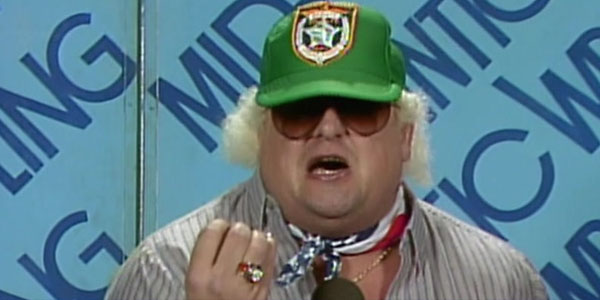
https://www.youtube.com/watch?v=F3T8eXWKCuI The origin of entrance music is somewhat disputed. Some say Sgt. Slaughter was the first to use entrance music while historians point to Gorgeous George's use of "Pomp and Circumstance" decades earlier as the origin. What is not disputed is wrestling popularized, if not innovated the practice, adding videos to the entrances by the 1990s. A wrestler is easily identified by his/her theme or video and other sports have picked up on the practice. The Chicago Bulls' entrance during their two "three-peat" National Basketball Association championship runs in the 1990s is a prime example.. Major League Baseball is another culprit. Nearly every pitcher and batter for every home team at nearly every major, and even minor, league level of the game has some semblance of entrance music that will play when they step to the pitcher's mound or home plate. Some baseball players, such as St. Louis Cardinal Matt Holliday even use professional wrestler's theme songs as their "walk up" music. Longtime Padre closer, Trevor Hoffman would always come out to AC/DC's "Hell's Bells." Longtime New York Yankee closer Mariano Rivera would come out to Metallica's "Enter Sandman." Now of course, the movie "Major League" could be contributed to this rise of entrance music, but we'll stick with wrestling for sake of the article. However, nowhere is the thievery more evident than in the Ultimate Fighting Championship. When the UFC was first introduced, it was just fighters coming out to fight. No big show, no theme music. Just the fighter and maybe a training team or his buddies. But when Ken Shamrock departed the then WWF and returned to the UFC, he brought the glitz and glam with him. Fighters came out of walkways, walked down ramps and some even had pyro, something also borrowed from WWE entrances. Now, it's much simpler. The fighter coming out of his/her respective locker room to a light show and music, getting the crowd excited for what's about to take place. Seemingly every major professional sport has used these practices as they have proven successful in instantly building anticipation and excitement in the fans as their favorite team or athlete makes way to the arena floor.3. Embracing The Villain
2. Crossovers
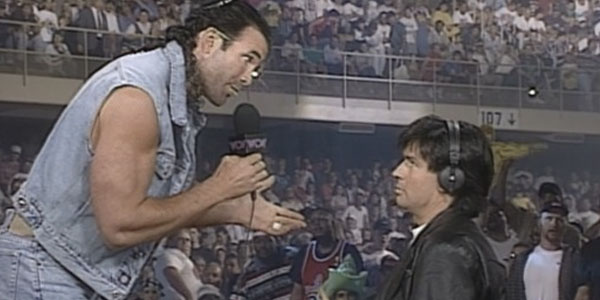
https://www.youtube.com/watch?v=_SI6CibgbxM Almost every broadcast, at one point or another the cameras will pan to the throng of fans in attendance and invariably, usually near the front rows, there will be sitting one if not several celebrities or professional athletes taking in the night's festivities. Celebrity appearances and involvement have long been a hallmark of wrestling. How often while watching a football or basketball game do we hear the commentators say something about another player "bodyslamming" an opponent "like in the WWE," and sometimes still referred to as the WWF? Even on ESPN and Sports Center, the guys will make a connection. Jonathan Coachman and Todd Grisham, now ESPN anchors, were both long time backstage reporters/commentators for WWE. Professional athletes have made the jump from their sport to professional wrestling. In WCW NFL stars Steve 'Mongo' McMichael, Kevin Greene and Bill Goldberg. From the NBA came Dennis Rodman (as noted above) and Karl Malone. Rodman and Malone even took it onto the court with them during the NBA Finals between the Bulls and Jazz. UFC fighters including Shamrock, Tank Abbott and Dan "The Beast" Severn made the jump into the professional wrestling world. When Mike Tyson made his WWE debut in early 1998, it was one of the most talked about and watched moments in cable television history and on seemingly ever major news broadcast almost immediately after Tyson and Steve Austin tangled. The professional wrestling industry would further push the envelope when the same attention was paid to Jay Leno when he took part in WCW's affairs later that year in August.1. Presentation
 Television has been an important tenet in all four of the major professional sports in the United States and is a large reason why a fifth, soccer, is gaining headway in the country. Nationwide coverage is a large reason why football is consistently one of the most watched features on television every year. But once again, wrestling paved the way for that as well, with professional wrestling promotions having shows on each of the three major networks in the dawn of the television era. Almost thirty years later when Ted Turner was looking for a weekly stable for his TBS Superstation he found it with Georgia Championship Wrestling and later Jim Crockett Promotions (a precursor to WCW). After the success seen with wrestling on Turner's cable station, USA Network then began airing Prime Time Wrestling, starting a relationship with WWE that continues to this day. When NBC TV executive and icon Dick Ebersol was looking to fill open Saturday night slots in the '80s, he and Vince McMahon created Saturday Night's Main Event. NBC also airs parts or the whole of the WrestleMania broadcast on a somewhat annual basis as well. Other television features, now commonplace in broadcasts were first practiced widely in professional wrestling broadcasts. Picture-in-picture features showing either an interview with a superstar or an instant replay, name tickers, even that annoying little logo bug on the lower corner of the screen, all innovations of the wrestling industry. With the advent of the WWE Network in the coming days chances are people will continue to see the sports entertainment industry change television coverage.