Why WWE Will Use Wembley Stadium In 2020
London's Burning?

"The time zones are the big kicker - we have to go where the most people can watch. I always hear about Wembley, I always hear it was such a massive success: It was not. From a business standpoint, it was not. That's why we didn't come back and that's why we're still trying to figure it out." - Triple H, 12th October 2018.
B*llocks, mate.
'The Game' might be the babyface boss figure of WWE in the modern era, but his odd heel turn on SummerSlam 1992 during an interview with The Mirror late last year was a narrative rewrite too far for those that lived through the iconic event or even simply those that lived with the consequences of the company's incredible takeover of the UK at the time.
Hunter was presumably pointing to the buyrate, but one doesn't need a nose as big as his to sniff out the reasons beyond "time difference" complaints as to why it tanked domestically. Yes, it was down an almighty 125,000 buys on the prior year's event, but WrestleMania (-10,000) and Survivor Series (-50,000) also advertised similar decline. The Royal Rumble's gulf between the 1991 number was even bigger that the Wembley supercard. 180,000 passed on the PPV compared to the year before, despite the WWE Championship itself being on the line in the titular main event.
He didn't make this point while burying the show, but 1992 was the year where WWE's commercial decline across virtually every metric could no longer be masked. SummerSlam, in the United Kingdom was in fact the only time they managed it.
CONT'D...

SummerSlam 1992 was the first pay-per-view the company had ever promoted outside of the United States and Canada. It was the first pay-per-view the company had ever promoted without the mammoth raft of stars that f*cked off under a cloud after a WrestleMania doused in salacious scandal. It was the first pay-per-view the company had ever promoted without Hulk Hogan.
It was, without Wembley, destined for disaster.
Discussions had gone on for months about the location of the show before the company passed on Washington D.C to take the trans-atlantic gamble on a market that appeared on the surface to be in rude health. A triangulated assault on the United Kingdom via regular live arena shows, increased Sky Television coverage and, of all things, sticker albums, had resulted in WWE achieving popularity that somehow surpassed the first wave that jumped on with Hulk Hogan and The Ultimate Warrior years earlier.
With remaining Golden Era holdovers Warrior and WWE Champion Randy Savage promoted as the top match on television, the company steered into the Bret Hart/British Bulldog match as a co-headliner Davey Boy Smith's homeland. It was, by some margin, the biggest crowd he could ever lay claim to have drawn.
A sellout attendance of 80,676, merchandise sales going into the millions and a footprint deep enough to create generations of wrestling fans this side of the water justified the faith the company had in the British audience. Triple H's complaints about a time difference weren't even valid on their own terms - the show didn't air live as result of the location, taking place in a time before rapidly-shared results spoilers would have completely killed it.
It's the site of one of WWE's biggest legitimate success stories. Yet, unlike virtually every other old ground they beaten below the surface, it's a site they've never returned to. Why not? And why now?
CONT'D...

Triple H's rationale parrots the company's own for the last quarter century. Pay-per-view, as they saw it, was a format not really to be messed with. Certainly not for a show that apparently mattered such as one-hit wonders Fatal 4 Way or Breaking Point or Great Balls Of Fire. Definitely not for a SummerSlam again. And categorically never for a WrestleMania, the one UK fans campaigned fervently for with the promise of the 80,000+ attendance WWE wouldn't have to artificially inflate.
It started to feel futile campaigning for the concept until WWE cannibalised it with the advent of the Network in 2014. Only then did the possibility become a visible reality. A year on from its launch, 'The Game' brought his beloved NXT across the pond for a house show tour culminating in a white hot TakeOver: London show. It mirrored much of WWE's 1992 excursion but on a micro scale - the interest was gauged and accounted for before the group went big with a blockbuster payoff.
Crucially, the show kicked off in the evening in the UK, meaning American viewers wishing to watch live had to be at their screens at a different time of day, or avoid spoilers until watching it at their evening leisure. It's a reality millions of fans of World Wrestling Entertainment have coped with their entire lives, but not one the company are accustomed to forcing American fans into. The Saudi Arabia deal's commencement in 2018 provided the same problem, but billions of dollars did away with pithy concerns. As in this case they should have - actual start times haven't ever mattered less. What could possibly be changing WWE's mind ahead of a vital 2020?
For those not already utterly enraged with having to click three times, permission granted to now be incensed that your writer almost made it to the fourth page without mentioning AEW.
Because it's AEW.
CONT'D...
All Elite Wrestling, the scourge of panicked WWE fans and toast of many craving an alternative are not going to sell out Wembley Stadium any time soon, but were able to massage their ALL OUT ticket figures to shrewdly imply that they could have.
The Chicago supercard sold itself all the way the f*ck out in 15 minutes, but Dave Meltzer and others reported the astonishing numbers of those that weren't fortunate enough to get a ticket. Screenshots and stories proved it too - there were thousands of people giving it a bash. Tens of thousands that theoretically might have still given it a bash in a bigger venue. Hundreds of thousands that queued online considering it.
Meltzer reported a figure of 130,000 speculative punters noting - with some absurdity he must have been aware of as he typed - that it would have been bigger than any show in history had everybody got their tickets. The Wrestling Observer scribe knows better than most that the All Elite guys haven't yet gone big for this very reason - the hype is becoming as valuable as the gate. WWE's tepid Stomping Ground sales were "revealed" by a "random" "fan" just days before ALL OUT's certain sell-out too - it was delicious narrative for those picking sides.
But is it powerful enough to cut through the walls in Stamford? Triple H sold the f*ck out of the group at this year's Hall Of Fame, Sami Zayn was scripted to spit their initials out on Raw and Nigel McGuinness dragged NXT into it by dragging them at the start of TakeOver: XXV. Outside of petty wrestling squabbles, AEW have all-but promised to host a major show in the UK and are also dropping nuggets about potential stadium shows. If they get to Wembley before Vince McMahon, it's a far worse look than 'The King Of Kings' calling them p*ssants.
CONT'D...
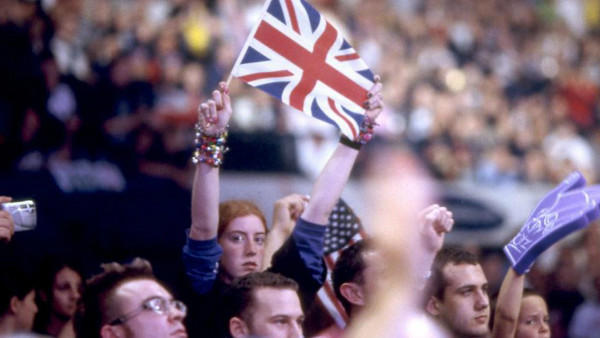
WWE haven't killed the towns in the United Kingdom, but they've landed a fair few significant blows. All tickets were automatically upgraded on the most recent tours, Raw didn't sell out and SmackDown photos resembled some of the horror shows at home. It had to have been unsettling for the company, not least as they prepared to move from their TV homebase, terminating a near-30 year relationship in the process.
Sky Sports were presumably f*cking livid when, one month after locking the company in for a five-year deal in 2014, the WWE Network launched and bantered off every Box Office purchase ever again. For those that may not be familiar, the company charged UK punters between £15-20 (around $18-25) for the monthlies whilst Raw, SmackDown and the rest came as part of a monthly subscription service. It wasn't cheap to watch all of the shows, but Sky's reach was such that they could justify squeezing the money out of those that were willing to invest in it.
The tenner-a-month Network deal was suddenly a no-brainer in Great Britain (when the f*cking thing actually launched), and Sky's Box Office buys were binned. As too was the deal when it expired. The approximate 22.9m Sky Sports subscribers will now have to join BT Sport's substantially smaller 6.6m peak. Both figures are perpetually changeable and mean less than ever with YouTube offering global audiences first-run clips hours after broadcast, but Vince McMahon will no longer have the first-run reach he once commanded.
AEW, meanwhile, have gone in the opposite direction. They have no Network or obvious streaming option for UK viewers as yet, meaning premium pay-per-views are currently the only option. If they can convince even a small percentage of the 66.04m in the UK that potentially have access to the weekly show on terrestrial channel ITV4, they'll pop numbers bigger than WWE in their pomp. And they too, would fancy finding 80,000 people willing to book a night in London to watch their show.
2020, without WWE making changes to old habits, could ironically change everything. The company have potentially had red carpet offerings from Wembley Stadium for years before now - they may have to walk it and talk i sooner rather than later before Tony Khan and co pull the rug out from under them.