On Thursday, June 12th, WWE released ten in-ring superstars. Anytime WWE decides to release talent en masse, it is met with considerable amounts of criticism from the WWE Universe as fans usually have particular under-pushed favorites who get the axe. However, unlike other firing sprees, this particular cycle was met with less hubbub and cynicism than others. For once, WWE may have actually fired ten performers who were truly expendable. Thus, on levels of expendability, the ten releases will be ranked, and as the list shrinks, stars who at this moment have minimal potential worth to the company, but could have worth at a later time, will be highlighted as well.
10. Aksana
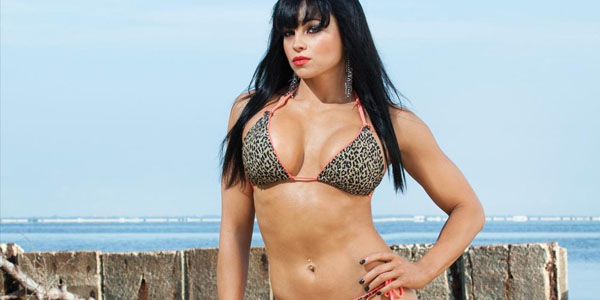
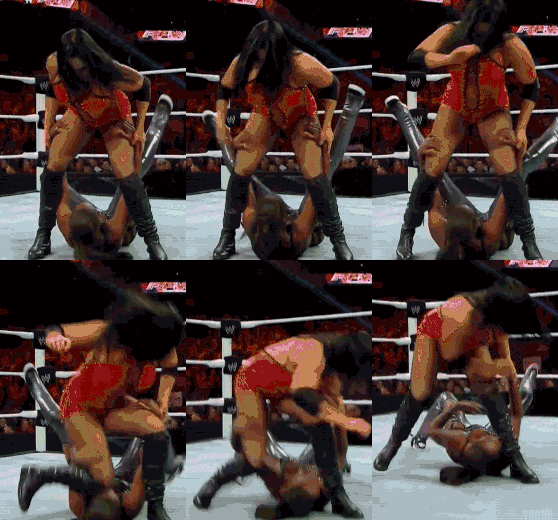
Well, when she injured Naomi - and given that Naomi was slated to win the Divas Championship at Wrestlemania - Aksana inadvertently set back WWE women's wrestling for six months to a year. Wrestlemania's cluster of a women's "battle royal" and the sudden emergence of Paige being rushed from NXT to WWE television all occurred due to one very unsafely delivered kneedrop by Aksana to Naomi's orbital bone. When realizing that the company has a lot invested in Naomi too - she and Cameron (along with Natalya, Nkki Bella and Brie Bella) are the only divas to appear on every season to-date of Total Divas - her release makes sense. Furthermore, Aksana hasn't clicked as either an in-ring performer or character. As a wrestler she's tried hard and hustled, but her knowledge of wrestling is minimal and her ability to emote character has been minuscule as well. The writing on the wall for Aksana should have been when CJ Perri was re-branded as "Lana" - a blonde Russian clone of Brigitte Nielsen's Rocky IV character - and debuted as the prideful "Ravishing Russian" mouthpiece for the "Bulgarian Brute" Rusev. When the company thinks so little of your level of talent that they find an American to play what should have ostensibly been your role, your time on the roster is short.
9. JTG
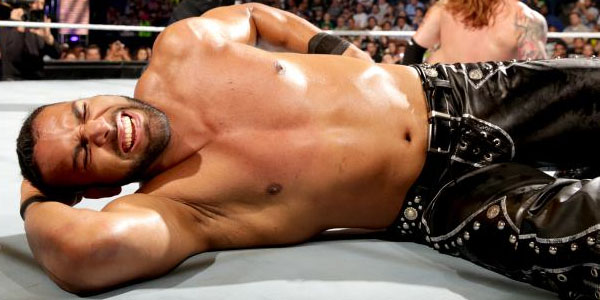
From Cryme Tyme's "Money, money, yeah yeah!" to the Prime Time Players' "Millions of dollars, millions of dollars," it's been a rough eight years for established stereotypical African-American tag teams in World Wrestling Entertainment. And now, with the release of JTG (and current injured status of Darren Young and long-released Shad Gaspard), Titus O'Neal is the only one of the four left standing. Jayson "JTG" Paul was a charismatic wrestler. However, there's an issue that arises when a wrestler is stuck in a character that has never gotten over to a significant degree for entirely too long. That wrestler, no matter how talented, is only seen as that character and his talent is branded alongside the level of engagement the crowd has in the character. It's one of the most unfair notions of pro wrestling that ultimately makes it the bizarre and oftentimes unfair industry that it is. When the internet begins to lampoon of how long you've been employed, one can only imagine that WWE's uber aware and socially plugged in from office notices, too, and the countdown to when your contract is up and you can be released is on.
8. Jinder Mahal
In the future, it will be possible to be a fan of WWE and sit around and openly wonder why Jinder Mahal was employed for almost five years. Even Mahal himself has stated that he was hired because " needed an Indian ." This is one of those ideas that seems brilliant in theory, but oh so flawed in execution. By comparison to signing Jinder Mahal, WWE could have easily snatched say, Sonjay Dutt from TNA. However, because Mahal is easily eight inches taller and 50 pounds heavier than Dutt, the idea of hiring the already over in India Dutt never materialized. WWE's at a place right now where they're learning as a company how to get over themselves and pre-conceived notions of "what a wrestler looks like." Between CM Punk being the WWE Champion for 434 days and signing Kevin Steen, there's sea change afoot. The release of Jinder Mahal is intriguing if only because it os one of the best showcases of WWE realizing a mistake they made in basically trying to make their own version of another performer and failing in a most incredible manner.
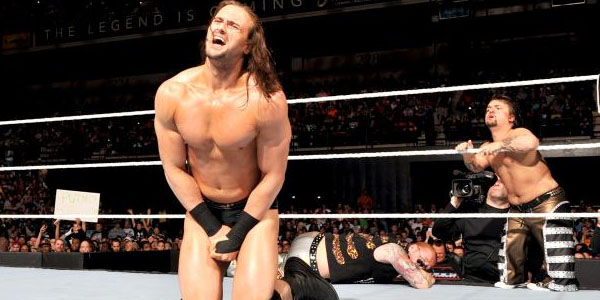
7. Drew McIntyre
The former "Chosen One," Intercontinental Champion and 3MB member McIntyre is proof that lightning doesn't strike twice in the same place. There was once a time that McIntyre and Sheamus were both stars of the UK's Irish Whip Wrestling. Thus, once Sheamus was signed to WWE in 2006, it's feasible to believe that WWE would obviously sign the other tall, handsome and athletic big man the promotion had to offer. As well, largely based on the idea that he was tall, had long hair, was athletic and had great presence about him, he was pushed out of the gate as a top star, but sadly lacked the in-ring goods and presence on a larger level to truly get over to the WWE audience. As well, he went through a difficult divorce in 2011, which led to him being de-pushed, and the placed in 3MB with the similarly gifted yet missing "something" tandem of the aforementioned Jinder Mahal and Heath Slater. In a way, 3MB was never really meant to be a situation for a talent to get over in, but rather as a placeholder spot for the trio to work hard, hustle and regain in-ring confidence. It was a daunting task for certain, and given that both McIntyre and Mahal were released, ultimately a task not met with success.
6. Curt Hawkins
There's something to be said about a guy who just "knows" how the wrestling business works and accepts their fate long before even getting released. In a different era, the team of Hawkins and Ryder would have been easily comparable to the team of the Young Stallions, Jim Powers and Paul Roma. Roma and Powers were 1987's hot young team, but after an initial run, lost steam, broke up, and moved on to singles careers largely spent as enhancement talent. Ryder is similar to Roma, a handsome young babyface given the opportunity of a lifetime (Roma's 1991 Four Horsemen induction being similar to Ryder's big-time run as "Long Island Iced Z"), while Hawkins is similar to Powers, a skilled grappler able to make other talents look tremendous, but not favored enough by the office to get a major push. Having opened the Create-A-Wrestler Training School in March 2014, it's clear that Hawkins (the recipient of numerous start-and-stop pushes (and thus the owner of some of the sweetest gear in the company) saw the writing on the wall and was un-surprised by his release. A case of a solid talent getting caught up in the numbers game, his release may actually be a great asset to his new business aspirations.
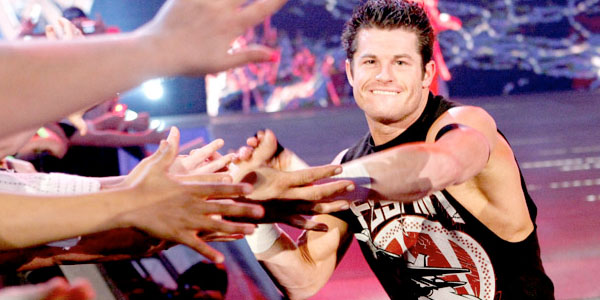
5. Evan Bourne
The first of the high-profile indy high-flyers signed to WWE, Evan Bourne's career took a pronounced downward spiral in November 2011 when he was suspended for 60 days for testing positive for synthetic marijuana. Yes, pro wrestling is an inherently difficult job, and without the use of muscle developing (and strength building) anabolic steroids, or the use of marijuana, alcohol or other prescription and non-prescription drugs, recovering from the wear and tear of in-ring competition can be difficult. Thus, Bourne's use of synthetic marijuana makes sense, and his suspension an unfortunate side effect of working in a company that must ban certain substances as a corporate entity, but still make very non-taditionally corporate demands of it's employees. Two major moments stick out from Bourne's run. His June 2, 2010 Raw match teaming with John Cena versus Edge and Sheamus (ending with Bourne's shooting star press to Edge for the win) as well as Bourne's "Air Boom" tag team with Kofi Kingston were terrific fun. However, when Adrian Neville was signed to the company while Bourne was convalescing after breaking four bones in his foot after a car accident, Bourne's time in WWE was certainly growing shorter by the second. In a company where they appreciate having one of everything so that everyone is unique, Bourne being branded as merely a stupefying high-flyer with his shooting star press was easily overshadowed by Adrian Neville's Red Arrow. Thus, Bourne became expendable.
4. Yoshi Tatsu
As Naofumi Yammamoto, Yoshi Tatsu was not exactly impressive in New Japan Pro Wrestling. However, he was six foot one inches tall, and has wrestled admirably against then ex-WWE talent Giant "Jason Albert" Bernard and then-recently released Tyson Tomko. Tatsu's signing was a case of being in the right place at the right time. Similar to the signing of Jinder Mahal, at a certain point (say, between 2006-2009) there was a clear desire for WWE to sign a coalition of foreign talents. However, in looking for foreign talents who fit a standard of what WWE wanted at the time from all wrestlers (over six feet tall, well over 200 pounds) a number of other grapplers were overlooked. It's intriguing to note that as Tatsu is being released that rumors abound about WWE's interest in signing Pro Wrestling NOAH stalwart KENTA. Imagining WWE between 2006-2009 signing Sheamus, Adrian Neville, Sonjay Dutt and KENTA instead of Sheamus, Drew McIntyre, Jinder Mahal and Yoshi Tatsu is an amazing notion to consider. However, Yoshi Tatsu ranks so highly on the list because he had actually started turning the corner somewhat as an underdog babyface in NXT. Becoming a fan favorite, it would have been intriguing to say, see him continue to learn the craft of how to be a pure babyface and evolve into the position that say, Santino presently has on the WWE roster.
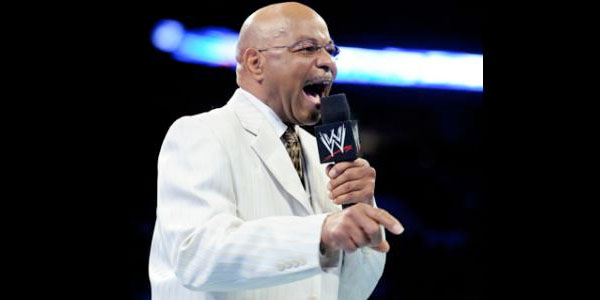
3. Theodore Long
In 29 years in the professional wrestling industry, Teddy Long has probably forgotten more about pro wrestling than most superstars could hope to ever learn. Long got his start in wrestling at the age of 37. A man has already lived a lot of life by 37, so, the rigors of road travel endemic to pro wrestling probably are a lot to handle, and likely allowed him to peaceably part ways with WWE. But gosh, Teddy Long was great in his World Wrestling Entertainment run. From getting us to be "down with the Brown," "Back the Mack" and "Holla Holla Holla," as a heel or babyface he was always surprisingly more than effective. Though nobody reading this article likely realizes it at this moment, everyone will have a moment in the next 12 months when watching WWE television when they're going to miss Theodore Long. There will be a heel getting over on Smackdown that you're going to wish could face "Theeeee Undahhhtakuhhh," and, among many things, there's sadly no longer a general manager for a random diva to fall madly in love with for no apparent reason. The greatest boons to the wrestling business aren't the wrestlers who consistently have "five-star matches" or have superhuman physiques. No, the people who are the most important are those who make the best sense out of pro wrestling's most nonsensical of moments. In that regard, Teddy was one of the best and will be sorely missed.
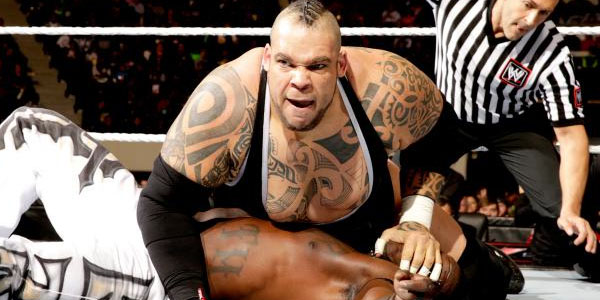
2. Brodus Clay
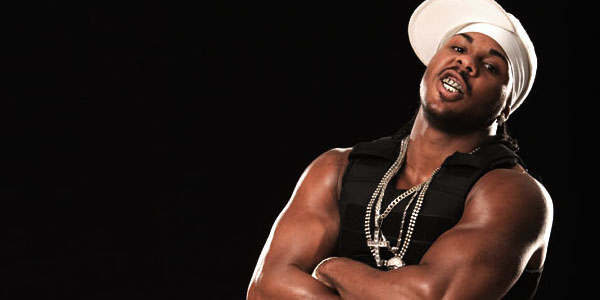
It's taken Mark Henry 18 years to learn his best value as a professional wrestler. At year eight of being a wrestler bearing a strange similarity to Henry, WWE actually threw in the towel too soon. George Murdock was a bodyguard for Snoop Dogg. Mark Henry was an Olympic-level bodybuilder. Both got into the wrestling business because of their size, and early on showed minimal knowledge of the psychology and killer instinct that WWE requires of its plus-sized brawlers. Similar to Henry, it's not as if WWE really ever gave him any considerable assistance in learning that skill, as similar to Henry, Clay was a bodyguard for Alberto del RIo, then taken off of TV for awhile, re-packaged as a jovial, dancing fat man, and when that showed no staying power, put in a tag team with the then Tensai, now Jason Albert. WWE is not a kind environment for newcomers to the wrestling industry. If brand new, it requires more than you know, and oftentimes much more than you can learn with mastery at any given time. If put in situations because of size and charisma that don't actually allow you to hone the skills ACTUALLY required to succeed in the role in which the company would ideally want one to succeed, it's an uphill battle. There's ten years of growth, development and promise left in the Brodus Clay story. Here's to hoping that he's able to find the space and drive to master certain abilities and make it back to WWE.
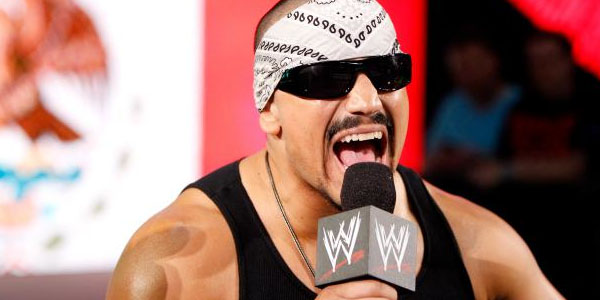
1. Camacho
There's absolutely nothing technically wrong with Camacho, and he's actually the one released wrestler who will likely come back to WWE after being gone for some time and make the company sizable dividends. There were numerous issues with Camacho's run in WWE: He's not Latino. He's actually Tongan, and the son of Haku. His tag-team partner was Hunico, and when the original Sin Cara was released (and plans were made to retain the gimmick), the fact that Hunico was once Incognito and had wrestled under a mask in AAA, Hunico was promoted to the main roster as Sin Cara. Arguably, anything Camacho ever did as a "Latino" in NXT was solidly terrible. Unfortunately, with the Usos as "hip, urban men of island descent" on WWE television, he was the odd man out and stuck in a lose/lose situation. I actually can't wait for what should likely come next for Camacho post-WWE. Camacho's brother wrestles as Tama Tonga in New Japan Pro Wrestling, and is a member of the incredibly gifted "NWO"-styled "Bullet Club stable. Tama Tonga hasn't quite broken out as a member of Bullet Club, and though the tag team of Karl Anderson and Luke Gallows are the IWGP Tag Champions, just the idea of "Camacho" getting chance to develop himself as himself is enticing. What "Camacho" could evolve into with significant time working with the deeply-talented roster of New Japan could be a story to watch, as again, there's absolutely nothing at all, whatsoever technically wrong with his wrestling. In granting him the space to grow, wrestle and develop, it's a move that the WWE Universe should watch, mainly because we should all be absolutely certain that WWE's offices are watching with rap attention, too.
Besides having been an independent professional wrestling manager for a decade, Marcus Dowling is a Washington, DC-based writer who has contributed to a plethora of online and print magazines and newspapers writing about music and popular culture over the past 15 years.