One MIND-BLOWING Secret From EVERY Month Of The WWE Attitude Era
11. June 2000 | Scrapped Kurt Angle Plans
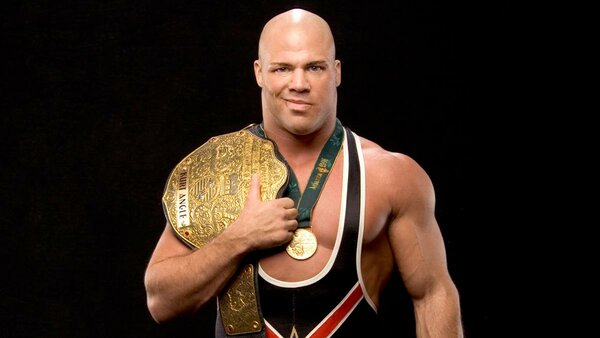
Certain wrestlers simply cannot be buried, but their political shark peers will test this hypothesis with great enthusiasm. Look at Kurt Angle.
Fully Loaded 2000 was loosely premised on the idea that the WWF main event scene was there for the taking; three established headliners wrestled upper midcarders on the cusp of breaking out. This was all well and good until the Undertaker slaughtered Kurt Angle and, treating him like he might as well have been Just Joe, lifted his shoulder off the mat to beat his ass some more, just for fun. Later in the year, Angle - who was so good that he broke out regardless - was put in his place by Triple H. Well, Triple H tried. The Angle/Triple H/Stephanie McMahon love triangle was the best thing going in the summer of 2000, almost incontrovertible proof that wrestling is indeed simply a way for males to watch a soap without the stigma of watching something “for girls”.
About the only person who wasn’t crazy about this storyline was Triple H, who purportedly sabotaged it because nobody would buy that Stephanie McMahon would go for Angle, what with his classically handsome square jaw, rippling physique, and extravagant success in two separate fields. Angle was Bob Backlund in Triple H’s eyes.
This doomed angle nearly didn’t happen at all; per the June 26 edition of the Observer, Angle was poised to play a “darker” heel - perhaps something closer to the absurdly intense ‘Wrestling Machine’ persona he developed in the early-to-mid 2000s. What’s better: that, or Triple H telling you that his hog is formidable?
Impossible to say.
10. July 2000 | You Are Joking…Not Another One?!

The WWF’s main event scene was loaded in 2000 - so loaded that the promotion was unable to resist the temptation of shoving loads of them in one match and telling them to just smash their signatures and finishers until a McMahon appeared and one guy simply won.
Where WrestleMania 2000 was a McMahon-infested elongated TV main event, Armageddon was as much a celebration of the Attitude Era as the vaunted WrestleMania 17. Steve Austin, the Rock, Triple H, Kurt Angle, the Undertaker and Rikishi in Hell In A Cell: short of positioning a jumbo-breasted woman in a shark cage, it was the most Attitude-themed match ever.
Somewhere in the middle was SummerSlam 2000, which ended up being the biggest possible version of every booker’s favourite cop-out match. The Rock Vs. Angle Vs. Triple H main event featured the three biggest deals in the company and advanced its hottest story. As Triple Threats go, the Fed gave you the biggest one possible on the second biggest show of the year. A fair compromise, really, but this was not the original plan.
You almost got a No Mercy-ass Fatal Four-Way, if the July 10 issue of the Observer is to be believed.
That planned and tweaked match was the Rock Vs. Triple H Vs. Chris Benoit Vs. Kane. There is a version of WWE, almost legally old enough to drink alcohol in the United States, that spent its entire lifetime trying to cram Kane into World title matches that nobody really asked for. It’s not all bad, though, because Kane wasn’t the only choice as fourth man. The other option?
The Big Show.
9. August 2000 | Fat Chance

This one feels likely and unlikely at the same time.
According to the August 7 edition of the Observer, the WWF, during an early meeting designed to throw around tentative WrestleMania 17 plans, had Triple H Vs. Chris Benoit in mind.
The idea was to give Benoit something “big” on the Grandest Stage. The pitch made sense for a wrestler of Benoit’s talents and lack thereof. Respected as he was, he got over big towards the end of his matches without first generating a big pop. He couldn’t spout some catchphrase and get a big reaction because he was so awkward and stilted by the standards of an Attitude Era character. A big match at a big show guaranteed to be very, very good at a minimum was the best vehicle for him. But was Triple H really going to do such a big job less than 18 months into his run as a bonafide main event star?
That seems highly doubtful. Maybe the WWF had something adjacent to WrestleMania 13 in mind. Maybe something far less flattering was in play, and the match was pitched because Triple H wanted to beat the guy those loser smarks he definitely didn’t care about thought was the best wrestler in the world.
To underscore how chaotic and significantly less productive things got when Chris Kreski was overthrown by Stephanie McMahon - sorry, when very experienced professional writer Stephanie McMahon earned the job on merit - Benoit’s match was only decided onscreen the week of WrestleMania 17. Angle complained that he wasn’t on the ‘Mania card, and a match with Benoit was made on the basis that it was going to be good.
Cinema?
8. September 2000 | Media Spin
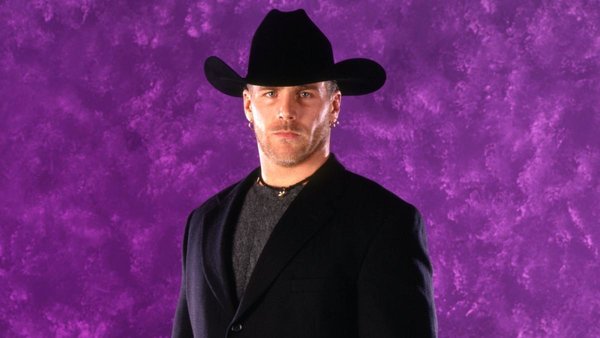
In September 2000, another update emerged on Shawn Michaels. It was either grim, or a load of complete b*llocks. One of the two.
Throughout the entire Attitude Era, the condition of Shawn Michaels was shrouded in mystery. Was he injured? To what extent was he injured? Did he want to jump to WCW? Did the WWF continue to pay his talent contract purely to prevent him from doing so? Did Shawn raise hopes of an in-ring comeback so that the bag remained secure? Here’s another question, prompted by an excerpt from the September 2000 issue of the Observer: did Shawn prompt the media and fandom into asking these questions because he wanted the publicity?
Per the September 25, 2000 issue of the Observer, it was reported that Shawn was no closer to making a comeback; any noise to the contrary was all Shawn’s making because he wanted the publicity.
This is just a report, one that was contradicted by the Observer itself later in the year, but it might illuminate the four year-long mystery. It makes sense that Shawn wanted to keep his name in the mix. He was still struggling badly with addiction. His self-esteem issues informed much of his awful conduct in the mid-to-late 1990s. The staggering success of the Attitude Era must have destroyed his mental state because, after all that transgressive, cutthroat behaviour, the WWF didn’t even need him. Working the “sheets” into thinking he was making a comeback, just so that some fans might get excited about the prospect?
It’s not beyond the thin-skinned pro wrestler, is it?
7. October 2000 | The WWF Held Talks With The Next Kurt Angle

Following the path of Kurt Angle in 1996, Wyoming-born Rulon Gardner won the Olympic gold medal in Greco-Roman wrestling at the 2000 Summer games in Sydney.
Naturally, the WWF also took note of the comparisons and quickly sought to negotiate with him. Those negotiations ended just as quickly; per the October 16 issue of the Observer, Gardner - who was right to do it, since his value would never be higher - requested an eye-watering annual downside guarantee of $2 million after a one-off $1 million signing bonus. Did the WWF have a nightmare here, in missing the next Kurt Angle?
Probably not. By November 1999, the month of Angle’s full WWF debut, wholesome patriotic sentiment was dead. “The man” was a target of rebellion as nu-metal and pop punk went mainstream. The slow-burn new American dark age had been lit by the Columbine tragedy. This is why Angle was presented as a heel. His values and his smug sense of achievement were heel qualities in a cynical and uncertain time.
Gardner could have played a heel who happened to have won a gold medal, yes, but he wasn’t an amazing physical specimen. Most elite athletes tend to be pretty boring, too. There are far more Gable Stevesons than Kurt Angles in the field, and Gable was so tedious and awkward, and so definitively uninteresting, that it would be easier to grieve a loved one than engage him in small talk.
According to Wikipedia, in 2002, Gardner narrowly survived hypothermia and frostbite but lost a toe after going missing on his snowmobile and falling into an ice-cold river. Is that better or worse than doing a job for Hugh Morrus on Jakked?
6. November 2000 | You What, Chico?

According to the November 6 issue of the Observer, Scott Hall was “hinting to friends” that he was going to make a shock return to the WWF under the Razor Ramon gimmick.
The report does not specify whether Hall actually held talks with the WWF, but you’d have to imagine that the answer was no. The WWF didn’t want to even sign Kevin Nash on a hypothetical basis, with business going so well, and Hall had an equally disruptive reputation within wrestling in addition to alcohol issues that, sadly, rendered him almost completely unreliable.
This fanciful return to the WWF didn’t happen, of course, but perhaps whichever source relayed this information misinterpreted Hall’s allusions - because Hall did in fact mount a comeback just days after the issue was mailed out. Hall worked two dates for ECW - just two - and yet he was so cool that his awesome entrance, backed to Fugees’ moody cover of ‘Ready Or Not’, still makes Reddit threads to this day. So this feels like a “nothing in it” rumour for a traditionally quiet period of the wrestling calendar - but the WWF could have done something great were they ever to reintroduce the Razor Ramon character.
You hear the tyres squeal. That laid-back drum track follows. The beautiful synth line. Rick Bognar strolls out to a booming chorus of groans. He does his Razor Ramon impression, but for the purpose of the bit, it’s even worse - and then the music hits again, double pop, Scott Hall comes out and kicks his ass.
5. December 2000 | New Signings Discussed

Jim Ross was never shy throughout the Attitude Era. Quite the opposite; if he felt that somebody needed to lose weight because they were not motivated enough to make it, he’d call them a right fat porker in his Ross Report column and sanction their relegation to Ohio Valley Wrestling, which functioned as both developmental territory and a weight loss camp.
Ross would also freely volunteer which wrestlers that the WWF was looking to, willing, or not willing to sign. This is odd in retrospect, reading it through a 2026 lens. The modern equivalent would be Triple H saying that he wants to sign Chris Jericho at the Elimination Chamber post-show, but those yahoos down in Jacksonville are too busy freezing his contract.
Ross held a media conference in December, during which he revealed that the WWF held no interest in Juventud Guerrera nor Scott Hall. Incredibly, given that A) she eventually was signed and B) Jim Ross and Vince McMahon alike were physiologically wired to goon over her, Ross said they didn’t want Torrie Wilson, either.
Around this time, poor Chris Chetti of mild ECW fame tried to get a WWF gig the Peter Odemwingie way: he basically drove to WWF shows and kept asking. Ross was less than diplomatic in his response to that rumour, saying that he wasn’t getting signed yet, but if he was, he’d probably get packed up to Memphis for full-time work.
Ross also very casually let slip that he’d been talking with Marc Mero and Sable of late, but residual locker room heat was likely to prevent those returns from happening any time soon.
4. January 2001 | The WWF Was High On Who?!

Here’s something very weird.
By January 2001, ECW was done. The death had not been announced, but Tommy Dreamer had already reached the first stage of grief: denial. Paul Heyman, having reached the acceptance stage by August 1999, talked with the WWF about coming in as both a writer and a commentator. Dreamer meanwhile held meetings with various investors in a desperate plea for a cash injection.
The top ECW names knew what was actually happening, and held discussions with the WWF, since WCW’s future was looking equally ominous.
In an interesting note, Meltzer in the January 15 edition of the Observer - echoing what Jim Ross himself said in his December media conference - said that the WWF was more interested in Jerry Lynn than Rob Van Dam. Lynn was barely used by the company when the signing actually happened; meanwhile, although it took several years and lasted mere days, Rob Van Dam eventually became WWE Champion. It’s cited that the WWF was low on Van Dam not because of his obvious and distinct talents, nor his ability to get over, but because many of “the boys” who shared a locker room with him in ECW gave him bad reviews.
A cynic might say that this isn’t true - various old heads were probably just worried about their spot, considering that Van Dam was the most fashionable wrestler in the U.S. around this time - but he proved them right across 2001. When Van Dam eventually signed, he was dishing out superficial injuries on a near-weekly basis.
3. February 2001 | The Last Rumoured Jump

Across the Monday Night Wars era, talents jumped between promotions rather a lot. It was one of the coolest aspects of the time period, something that went virtually missing from mainstream U.S. wrestling between 2001 and 2019.
The second a wrestler made the jump, it was often the most interesting they were ever going to be. Wrestling fans get accused of being cynical, but if a wrestler jumps from one promotion to another, they can become World champion now that the booker isn’t gonna hold them back any longer. With the vultures looming over whatever remained of WCW’s dying body, there was time for just one more jump rumour. It wasn’t a very good one.
Billy Gunn, according to the February 19 Observer, hopped on a radio show and announced that his New Age Outlawz tag team partner Road Dogg was set to sign for WCW. He was in a position to do it, having been indefinitely suspended and subsequently released from his WWF contract in January 2001 as a result of ongoing personal issues. Eric Bischoff denied any knowledge of an apparent deal.
Road Dogg purportedly tried to force the issue, but discovered that the process was far from smooth af. He is said to have turned up to the March 26, 2001 WCW Nitro taping in Panama City, Florida. He had no idea that it would be the promotion’s last.
If nobody from WCW said to him “Oh, you didn’t know?”, that would be a huge opportunity missed.
2. March 2001 | This Would Have RULED

While March 2001 saw WCW finally die, the WWF was set for a chaotic period of turnover.
Many WCW talents were set to arrive imminently, but the stars of WCW were another matter. All but two of the major names correctly refused to make the jump, knowing that they could earn the money contractually owed to them by doing absolutely nothing. The other two, Booker T and Diamond Dallas Page, were punished for their naivety. Booker T fared a lot better, in that he was only reduced to a punchline, but poor DDP. He was recast as a stalker who wanted the Undertaker to make him famous. DDP had appeared in that awful movie ‘Ready To Rumble’. He never did anything worthy of WWE’s Criterion Collection, featuring ‘No Holds Barred’ and ‘Behind Enemy Lines: Colombia’. Counting the ECW guys, the 2001 WWF roster was stacked with about 400 names, all of whom had to answer to someone with the surname ‘McMahon’ - and they were nearly joined by one of the coolest ass-kickers of all-time.
Don Frye was a feared badass who made his name in the near-lawless early era of the UFC. He had minimal experience in pro wrestling, in that he was basically a harbinger of New Japan’s doom. He was selected as the man to wrestle Antonio Inoki’s last match - before Inoki inevitably reneged on his vow - foreshadowing the reviled era of Inokism.
According to the March 12 Observer, Frye visited a WWF show backstage, seeking work. While he never worked a single date, his influence over WWE is quite sizeable: Sami Zayn and Kevin Owens don’t batter each other at the start of their matches if Frye’s legendary fight with Yoshihiro Takayama doesn’t happen.