9 Best Eras Of The Biggest WWE Superstars

When the best were at their greatest.
A career retrospective, like a greatest hits, is generally something carried out either at the tail end of an interesting career or when things are about to change fairly radically: either way, when it€™s time to put a full stop to the sentence and consider moving on. In compiling a short summary of the best moments €“ and matches €“ in the career of a WWE superstar, it€™s important to establish a few ground rules€ or there€™d be forty entries, each one around the length of a good sized novella. This article discounts wrestlers who may be in their prime right now, like Brock Lesnar or Seth Rollins, choosing to also leave aside ace performers currently on the roster who are very likely to have some of their best work ahead of them, like Cesaro, Dolph Ziggler or any of the NXT standouts. There are others that could be on this list, of course: €˜Stone Cold€™ Steve Austin and Edge, for example: did their career-ending injuries force them into retirement in their prime? There€™s an argument to say that John Cena is now settling into graceful middle age as a WWE performer €“ maybe the time is right for a look back at his career. Has Kurt Angle delivered the best of his work in WWF/E or in TNA? There are easily cases to be made for Owen Hart, Andre The Giant, even Hulk Hogan. Those are stories for another article. Let's kick off this one...

9. Bret 'The Hitman' Hart (1992-1996)
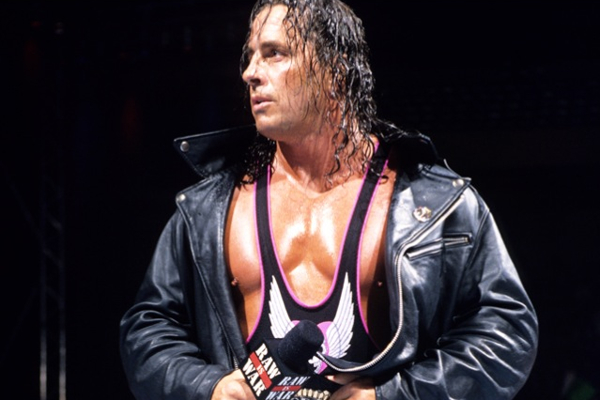
The Excellence Of Execution; the Best There Is, Best There Was, Best There Ever Will Be. If you were a WWF fan back in the nineties, before Attitude and the Monday Night Wars, you were probably a fan of Bret €˜The Hitman€™ Hart. Hart brought technical superiority and an eye for the in-ring aspects of professional wrestling psychology to the WWF at a time when the company was a far more cartoonish place, and every other gimmick was a pro wrestling version of a basic occupation: wrestling garbage collector, wrestling sailor, wrestling soldier, wrestling taxman, etc etc etc. Never much on the mic, Hart preferred to quietly, efficiently tell his stories in the ring. His unflashy style meant that it took him a little longer to get over, but when he did, he was over like clover. The notoriety of the Montreal Screwjob, his disappointing run (more of a brokenhearted stagger, really) in WCW, and his untimely retirement due to a couple of career ending concussions have unfairly affected how people see his career. His greatest run was probably 1992 through 1996: but if you want highlights, look to his recurring wars with €˜the Heartbreak Kid€™ Shawn Michaels, including the WWF's first ever ladder match; his victory at the first ever pay-per view King Of The Ring 1993 tournament, facing Razor Ramon, Mr. Perfect and Bam Bam Bigelow; and definitely his miraculous match carrying a drugged out, sluggish and terrified British Bulldog, putting over his brother-in-law for the Intercontinental title in England at Summerslam 1992. There are many, many more €“ but how about his classic barnburner against his younger brother Owen at Wrestlemania 10, widely considered to be one of the greatest matches ever contested at Wrestlemania? http://www.dailymotion.com/video/x1cybdl_owen-hart-vs-bret-hart-wrestlemania-10-swogglemania_sport

8. Mick Foley (1992-1996)

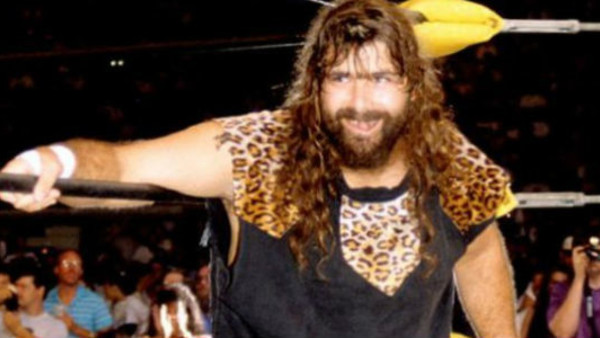
Whether as Cactus Jack, Mankind, Dude Love (god help us) or as plain old €˜Mick Foley€™ €“ who€™d usually be played as some weird Cerberoid combination of all three of them €“ Michael Francis Foley can lay claim to being one of the greats simply because of the number of moments he gave us. Taking a cue from his mentor Terry Funk, Foley would unretire, retire again and unretire a fair few times over the course of his long career. His finest work would probably be between 1992 and 1996, the year he left ECW for the WWF. Almost everything after that (with the notable exception of his exceptional stunt show in Hell In A Cell at King Of The Ring 1998 against the Undertaker, and a storming performance against Edge at Wrestlemania 22) is a case of diminishing returns - while he'd reach his greatest fame as Mankind, the work he was putting in wasn't at the level it had been before, and he'd make his name as the Hardcore Legend, a lovable, shambling loser with a fantastic tolerance for pain, not as a great wrestler and in-ring storyteller. His greatest promo work would probably take place at ECW €“ remember the heelish anti-hardcore interviews? €“ while his best in-ring performances were probably in WCW, despite the poor quality of most of the angles he participated in: Foley was younger, less broken, and noticeably slimmer in his first run as Cactus Jack, and it showed. So while it€™s as Mankind that everyone will remember him, it's worth digging back into his pre-WWF days for the real best of Mick Foley. The image of Hell In A Cell's first fall from the top of the cage through the table is engraved on the inside of the eyelids of every pro wrestling fan there is€ which is why we don€™t feel the need to repost it. So here€™s Cactus Jack versus Vader from Halloween Havoc 1993 instead, a match that set new standards for brutality in WCW. http://www.dailymotion.com/video/x21yhnk_wcw-halloween-havoc-1993-cactus-jack-vs-vader_sport

7. Eddie Guerrero (2000-2001, 2002-2005)

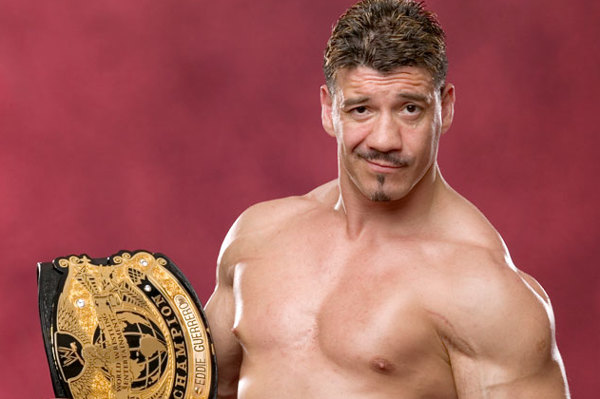
There are few wrestlers that occupy a position in the hearts of fans quite like Latino Heat. Eddie Guerrero is, to this day, probably one of the most loved and respected WWE alumni in history €“ and that€™s ten years after his untimely death. The youngest, and probably the most talented, of the Guerrero family, Eduardo Gory Guerrero Llanes had been a WCW mainstay for five years before he, Perry Saturn, Dean Malenko and Chris Benoit decided to leave at the beginning of 2000. It was the WWF that would make Guerrero€™s name and turn him into a major star, however. A stiff, intense technical standout in the ring almost on a par with Benoit and Malenko, Guerrero had something that the other two didn€™t, something you can€™t teach€ sheer, gonzo charisma and chutzpah. Coupled with an ability to talk, the only thing that got in Eddie€™s way (apart from Eddie himself) was his size. The WWF, later WWE, simply didn€™t know how to book smaller men in heavyweight main events without running the tired €˜underdog€™ cliché. Eddie€™s best years in the business in terms of performance were twofold. Firstly, between 2000 and 2001: his drink and drug problems would cause his release from the WWF in 2001, but he€™d return clean and sober the following year, leading to his second period of true greatness between 2002 and 2005. Always magic in the ring, Guerrero managed to intensify the crowd€™s connection with his character following his successful rehabilitation, and never lost it, even after a notoriously disastrous heel angle with Rey Mysterio. Throughout the crapfest of a feud, the crowd were practically begging Eddie to turn babyface again. His matches for the title against Lesnar and with Chavo Guerrero as Los Guerreros are well documented, so here€™s a bona fide classic you may never have seen: Eddie Guerrero versus Ric Flair at the 2002 King Of The Ring pay-per-view. http://www.dailymotion.com/video/x1294w0_ric-flair-vs-eddie-guerrero-king-of-the-ring-2002_sport

6. 'The Macho Man' Randy Savage (1987-1990)

In a career spanning three decades, Randy Savage would win twenty championships, including the WWF world title on two occasions €“ WWE have also named him the greatest Intercontinental champion of all time. It€™s true that the glory days of the IC title are synonymous with phenomenal workers like Savage, Bret Hart, etc. These days, the Intercontinental belt is the kiss of death for an up-and-coming WWE superstar: back in Savage€™s day, he€™d help elevate it to a step below the world title, holding the belt for fourteen months until Ricky €˜The Dragon€™ Steamboat took it from him in what€™s widely considered to be one of the greatest Wrestlemania matches of all time, at Wrestlemania III in 1987. The best years of The Macho Man€™s career were undoubtedly when headed towards the main event in the WWF. He was considered one of the biggest free agents in wrestling when he signed with the WWF in 1985, and went from strength to strength with the company: scuttlebutt (like gossip being pushed to the main event) has it that at one point he was drawing money roughly equivalent to his friend/enemy/rival Hulk Hogan. Winning the WWF championship in a tournament at Wrestlemania IV, he'd hold it for a year, dropping it to Hogan at Wrestlemania V. The following year saw him drop back to the upper mid-card again, rocking the 'Macho King' gimmick after his 1989 King Of The Ring victory. He would only appear sporadically for the company after 1992, sitting on colour commentary for most of 1993 and 1994 until his contract expired and he jumped ship to WCW. It€™s worth checking out our article here if you want to immerse yourself in memories of one of the all time greats. For a match not many remember, try his sublime Wrestlemania VI intergender match with Sensational Sherri against Dusty Rhodes and Sapphire: http://www.dailymotion.com/video/x1w6sq6_wwf-wrestlemania-vi-dusty-rhodes-sapphire-vs-randy-savage-sherri-martel_sport

5. Daniel Bryan (2005 €“ 2009)

While we don€™t want to poop the party, given the way Daniel Bryan€™s 2014 turned out and the way his 2015 is going it€™s fairly certain that the passionate, exciting performer that captured everyone€™s hearts in 2013 isn€™t coming back to the WWE. Even if Bryan is able to pull off a Shawn Michaels level of recovery and come back to perform a full schedule for the company again at some point, it€™s very likely that, like €˜Stone Cold€™ Steve Austin before him, he€™ll need to significantly modify his style to prevent future complications. That being the case, his inclusion in a retrospective-style article is entirely appropriate (if desperately sad) if, like us, you€™re still holding out hope for the medical equivalent of a hot tag. This isn€™t just about some kinda-sorta authentic €˜yes movement€™, and this isn€™t just about sticking it to Cena, Reigns and the (Mc)Man: Bryan Danielson has been this damn good for around a decade. He€™s the American Dragon, the legit best in the world, and although it sucks (hard) that his unrelentingly physical style has probably caught up with him so young, holy crap will you look at the legacy he€™s left behind. There€™s the dramatic masterpieces in Ring Of Honor with independent wrestling all-stars like Samoa Joe, Austin Aries, Chris Hero and Nigel freakin€™ McGuinness. Sad that the newer talent coming in to WWE won€™t ever get the chance to lock up with Daniel Bryan? Bryan Danielson has already killed it in the ring with Tyler Black/Seth Rollins, with Kevin Steen/Kevin Owens, with Sami Zayn/El Generico and with KENTA/Hideo Itami. Wistful about what might have been when you think about Bryan entering a proper feud with CM Punk or with Cesaro? Dragon took care of business with Punk and Claudio Castagnoli long before he was Daniel. This isn€™t to knock the level of performance that he€™s managed in the WWE as Daniel Bryan: just to let you know that there€™s far more to him than you€™ve seen on RAW. http://www.mgoon.com/ch/y2jericho/v/2905229

4. Triple H (1999-2005)

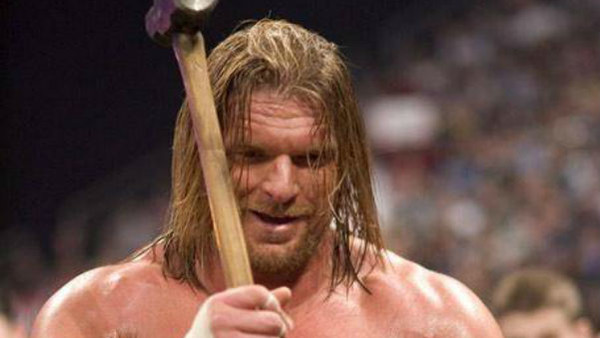
Despite what Bret Hart may think of the in-ring prowess of Paul €˜Hunter Hearst Helmsley€™ Levesque, there€™s very little mileage in attempting to deny the mark he€™s made on the WWF/E since his arrival in a midcard heel gimmick in 1995. It took him a couple of years to ditch the regressive Connecticut blueblood gimmick, abbreviating his nom de lutte to €˜Triple H€™ and co-founding D-Generation X with Shawn Michaels in 1997. Triple H didn€™t come into his own until taking over the stable from Michaels when he was forced to retire due to injuries sustained in the ring: he€™d really begin to excel, justifying the office€™s faith in him as a future main eventer, when he turned on D-X to go it alone in 1999. A lot of disparaging remarks have been flung about concerning Levesque over the years, but the man has a great look and he can talk and work: more than that, he can go like a freight train when he wants to, and in the six years between 1999 and 2005, he really wanted to. Ambition is still one of the finest motivators there is €“ it got him through the eight-month recovery period after tearing the quadriceps muscle in his left leg during a match in May 2001, when he was told it was likely he€™d never wrestle again. After putting over Batista like he owed him money in 2005, Triple H went on a four-month hiatus to rehab a nagging injury, and when he returned he€™d cooled off considerably. He€™s gotten some of the old mojo back in the last few years, working a successful heel authority figure gimmick with his wife Stephanie McMahon and wrestling like a man ten years younger than he is on the occasions it€™s needed€ but if you need confirmation of just how good he was in his prime, here€™s an excellent example €“ his storming Summerslam 2002 grudge match with his former partner and real life best friend, Shawn Michaels. http://www.dailymotion.com/video/x1521h8_triple-h-vs-shawn-michaels-summerslam-2002_sport

3. The Undertaker (1997-2003)

While a large proportion of the Undertaker€™s matches in the early nineties were plodding snoozefests, that was entirely due to his gimmick. When you€™re playing a giant mute zombie, that tends to limit the speed you can move at, the moveset you apply, and what you say and how you say it. Anyone who€™s seen clips of €˜Mean€™ Mark Callous matches from WCW knows that the younger Calaway could still go like the clappers, and was incredibly agile for a 6€™9€, 6€™10€ guy. Initially hampered in the ring by his character€™s lethargic movements, unable to sell €“ barely allowed to work at all - Calaway was able to introduce a faster-paced style as time went on, and the quality of his matches improved immeasurably. By 1997, he was more or less wrestling at full speed and with a proper moveset, even selling his opponent€™s offense where necessary. Always a little breakable, the harder and faster he worked the more often it seemed he€™d injure himself: but every return from injury seemed to add a quality to his character, enhancing what had come before. The exception was his return as €˜The American Badass€™ in May 2000, where a pectoral injury sustained during rehabilitation of a groin injury had prevented him from properly exercising, causing him to balloon in weight. Once he€™d dropped the extra flab, Calaway€™s character and work improved again at a rate of knots. The Badass, later Big Evil after a classic heel turn, was an almost completely horror-free variation on the Undertaker theme that saw him arrive to the ring on a motorcycle and kick ass like the scarily huge biker he was in real life. Although it remains the man€™s favourite era for the Phenom, and some of the best work of his career took place in this non-demonic role (including proper promos in a normal voice with a real human person€™s cadence to them), the character wouldn€™t prove as popular as his old school supernatural schtick. He returned from injury in 2004 under the current Dead Man persona, a loose hybrid of every iteration of the Undertaker that had come before. Part time for years now, only appearing as a special attraction at Wrestlemania and very occasional guest spots on RAW or Smackdown, The Undertaker€™s defences of his vaunted winning streak at €˜Mania became one of the highlights of the card, as if the man saved up every ounce of strength, stamina and agility to deliver as if he€™d never been away on that one night of the year. But one big fight a year doesn€™t define a career. Calaway€™s best had slipped behind him. If, like most other people, you were disappointed by the Lesnar/Undertaker match at Wrestlemania XXX last year, here€™s something to make you smile: their infinitely superior bout from No Mercy 2002. Ripped, fast and working his ass off, Calaway tears up the joint with Lesnar in the most brutal Hell In A Cell match that doesn€™t involve Mick Foley trying to end his own career. http://www.dailymotion.com/video/xz6p71_brock-lesnar-vs-the-undertaker-no-mercy-2002-hell-in-a-cell-match-wwe-championship_sport

2. CM Punk (2002-2005, 2010-2013)

Wrestling purists will tell you that Phil €˜CM Punk€™ Brooks did his best work in Ring Of Honor, long before he set foot in a WWE ring. There€™s definitely an argument to be made for that: but you can€™t tell the story of Punk€™s pro wrestling career without detailing his peerless heel work in the Straight Edge Society in 2010, the Second Summer Of Punk in 2011, and his 434 day reign as WWE champion from 2011-2013. After 2004€™s stellar performances against Samoa Joe, the Summer Of Punk in 2005 saw CM Punk sign a developmental contract with WWE to attempt to take his wrestling career to a higher, more lucrative level. He and Ring Of Honor would run a deliriously popular angle over the signing, with a heel Punk winning the ROH world championship after agreeing to leave, and then signing his WWE contract on the title belt, teasing that he€™d take the title to OVW with him and defend it there. The five-year fallow period in Punk€™s fortunes between 2005 and 2010 is representative of the way that the WWE office would see him throughout his run with them. His immense popularity with the fanbase was matched by his unpopularity with the ruling political class at WWE: but Punk simply couldn€™t be buried. He was too over, and he was too damn loud. In 2009, when McMahon told him he was considering turning him heel for the first time (in WWE), and wondered aloud whether he had what it took, Brooks was livid: he€™d worked for the man for three years, and he still had no clue what CM Punk was all about. He might not have what it took to be a top heel? He€™d show him. Punk ripped it up turning heel on perennial fan favourite Jeff Hardy, and then took it to a whole new level as the deluded messianic figure at the heart and head of The Straight Edge Society, a heel stable that more closely resembled a cult, but the angle was cut off in its prime. Furious, frustrated, Punk was given the go ahead to voice his anger as part of an angle, and he cut that worked shoot promo. The rest is history: literally, when it comes to his WWE title reign. But everyone knows about that €“ here, have yourself a cuppa Joe: https://www.youtube.com/watch?v=-qFcFP72s2U

1. Shawn Michaels (2002-2010)

The Heartbreak Kid wrestled for the WWF from 1988 until retiring from in-ring competition for the first time in 1998, mostly due to what was considered to be a career-ending back injury caused in a casket match with the Undertaker. He€™d make a triumphant return to the ring in 2002, and never really looked back. If the Shawn Michaels of the old days €“ the bad old days of drug addiction, the Kliq, the Montreal Screwjob and self-destructive selfishness €“ was a fantastic worker, then the Heartbreak Kid that returned, sober, happy, consistent and selfless, was a whole new ball game. His long, epic feud with Triple H upon returning was magnificent, a tour de force on the part of both men. The less said about his 2006 with Triple H, the better €“ the PG comedy stylings of D-Generation X burying the younger talent all year isn€™t either man€™s finest hour. He carried John Cena to his best ever Wrestlemania match in 2007. His match at Wrestlemania XXIV retiring Ric Flair is a masterpiece in carefully working around Flair€™s limitations while providing a dramatic, if sentimental climax. His work with Chris Jericho in 2008 remains just about the best thing that Jericho€™s ever been involved in. There€™s a case to be made that both of his matches with the Undertaker at Wrestlemania, including his own retirement match, are in the top five of all time. For those who€™ve forgotten, here€™s that Wrestlemania 23 match versus John Cena: http://www.dailymotion.com/video/xw7mnd_wwe-wrestlemania-23-john-cena-vs-shawn-michaels-hq-wwe-championship-full-match-promo_sport Who would you have included in this article? Let us know in the comments, and we€™ll see about writing a further list in the near future €“ and if you disagree with the eras we€™ve chosen, tell us about it!

Contributor
Contributor

Professional writer, punk werewolf and nesting place for starfish. Obsessed with squid, spirals and story. I publish short weird fiction online at desincarne.com, and tweet nonsense under the name Jack The Bodiless. You can follow me all you like, just don't touch my stuff.