8 Things We Learned From WWE Untold: ECW’s 2nd Coming
Alternative title: how Shane McMahon could have saved ECW...

The original ECW was a cocaine overdose of alternative pop culture, high spots, pushing the envelope and sleepless nights. To Paul Heyman, it meant everything, and that comes across immediately in WWE's new Untold: ECW's 2nd Coming documentary. Indeed, Paul E talks about the place like it was a loved one suffering from terminal illness that eventually gave up.
In the same 25 minutes, WWE's spinsters decide to put a positive slant on their ill-fated full-time revival of the dead brand in 2006. Surprisingly, they're not totally wrong, and you won't find yourself tut-tutting at the screen or wondering how they could turn disasters like the December To Dismember pay-per-view into a long-term plus.
For every WWE silver cloud, there's admittance that they got things wrong. This, make no mistake, is a story of ultimate regret rather than a claim that everything ran as expected. Talking heads like Heyman, Shane McMahon and Big Show lay the honesty on thick, and it makes for a likeable, almost sympathetic tale.
Here's everything we learned, and every reason why you should take the time to check this hidden gem out on the Network...
8. People Still Drink The Kool-Aid

First up though, Tommy Dreamer's bold claims need to be addressed.
According to Dreamer, a long-time Paul Heyman apostle, the original Extreme Championship Wrestling would've been pro wrestling's number one powerhouse in the 1990s had it had the funds to compete with the WWF or WCW. Without any hint of sarcasm, Dreamer says ECW would have taken over had it secured national TV.
Heyman, to his credit, is a bit more realistic. After Tommy's decidedly deluded rant, his old boss points out that ECW's style would've had to evolve had it landed on a worldwide TV outlet. In other words, it couldn't have been the extreme, controversial and counter-culture promotion it was, and they wouldn't have been able to get away with half the stuff they did on late-night syndication.
Dreamer's opinion is exactly that, but it doesn't bother to mention the slicker take on their rebellion by WCW's nWo faction, or Steve Austin's riotous run as 'Stone Cold' that blended talent few in ECW had with corporate might. To say ECW would've taken over with more money is to ignore that the company was hardly perfect.
7. The Zombie Was A Last-Minute Change

It's rather fitting that a chap called Tim Arson played ECW's Zombie character in 2006, because WWE might as well have burned the place to the ground and called it quits after his debut.
To ravenous ECW fans hungry for some of the old-school magic, a character like this was heresy. It also got WWE's relaunch of the brand off on the wrong foot, and not even a frenzied caning from The Sandman could save things. Before Arson wandered onto the set dressed like the least convincing zombie since Resident Evil on PS1, WWE had something else in mind.
Their new ECW show was airing on Sci Fi (now SyFy), and so they believed some sort of extraterrestrial character was needed. Initially, that meant old Tim was an alien, not an undead moron. 20 minutes before the show was due to start, creative switched and decided to go for The Walking Dead rather than E.T.
Looking on, The Sandman said he laughed his ass off and knew the project was doomed to fail. The writers were too out of touch with what the audience who'd be paying attention wanted, and they were missing the entire point of an ECW reboot.
6. John Cone Got Heckled At Live Events

One of the fatal flaws in WWE's plan for the 'new' ECW was that they tried to establish some new rules. Spare a thought for newcomers like John Cone, because he was the patsy who had to take the brunt of fan criticism when he called for disqualifications or rope breaks. That wasn't ECW to fans, and it make Cone a heel by default.
When he called for the bell after Sabu put Justin Credible through a table in Minneapolis, poor John thought someone might leap the barrier and kick his ass.
After that televised stunt, Cone was regularly heckled on house shows for daring to enforce the rules. He was only doing his job to the best of his ability, but fans wanted a throwback to the days when Jim Molineaux and John Finegan would let pretty much everything slide in the 90s.
Talent were annoyed by the strict ruleset too. To them, it was important that ECW was different to other WWE brands like Raw and SmackDown; Sabu, The Sandman, Tommy Dreamer and others vented their frustrations over the rules. Who can blame them?
5. Shane McMahon Wanted ECW To Be Online Only

How's this for a scoop: it was Shane McMahon who repeatedly went to bat for ECW as a third WWE brand to his father.
Following the then-one-off One Night Stand pay-per-view in June 2005, Shane-O badgered daddy dearest about capitalising on the craving a niche audience had to satisfy their passion for the extreme. When TV networks expressed some interest, any and all control over the direction of a fledgling third wing to WWE's televised output was taken out of Shane's hands.
This is where the story gets depressing. Before Vince took charge, Shane wanted to keep ECW off traditional TV and make it an online only product. His gut feeling was that TV execs wouldn't give enough them freedom to make the show worthwhile, and so he fancied trying out a streaming service via WWE.com instead.
That'd let WWE see if streaming weekly was possible (back before such things were common), and it'd make ECW true to Paul Heyman's original vision. It was a genius idea that was ahead of its time, but it wasn't meant to be. Dad, perhaps rightly seeking concrete dollars for licensing, went the usual TV route.
4. CM Punk Got A (Brief) Mention

Despite holding WWE's version of the ECW Title for 143 days in 2007-2008 and becoming a rising star in the company via that brand, CM Punk is only handed around 1.5 seconds of screen time in the doc. This, as if anybody didn't already know, shows what WWE think of the 'Straight Edge Saviour'.
Knowing Paul Heyman, he probably threw Punk's name in there to play devil's advocate.
Heyman gives Punk his sole mention during a lengthy rant about how WWE's ECW had one legacy; this is one of the better parts of the short film. When Paul E discusses how turning ECW into a breeding ground for fresh talent was more in-step with the old promotion's ideology, then compares it to NXT today, one believes he's right.
Still, it might've been nice to see Punk holding the ECW Title, or wrestling another man who benefitted (like John Morrison) for the strap. All we get instead is Punk rubbing his hands together for a few frames before the documentary rolls on.
3. Big Show's Honesty

"You Both Suck", "Boring" and, "Change The Channel" were all things a cheesed off Hammerstein Ballroom crowd chanted at Big Show and Batista on the 1 August 2006 episode of ECW. A mere two months in, the show had already become WWE-lite, and that didn't sit well with an audience who lusted after Heyman's rousing blend of sex, violence and rock n' roll.
What did Show and Batista do? The only thing they could: work the match.
In the doc, Show admits that he didn't have a clue how to win fans back in '06. That's an honest admission from someone who had been in the business for over a decade at that point, and it shows that the giant had been used to fans playing ball until ECW came along. He was totally embarrassed by the reaction.
It's also notable that Show refused to throw WWE under a bus for booking the match in the first place. Looking back, they shouldn't have. ECW devotees wanted Sandman, Dreamer, Sabu, Taz and other originals, not two established WWE stars.
2. The Miz Was Told ECW Was His Last Chance
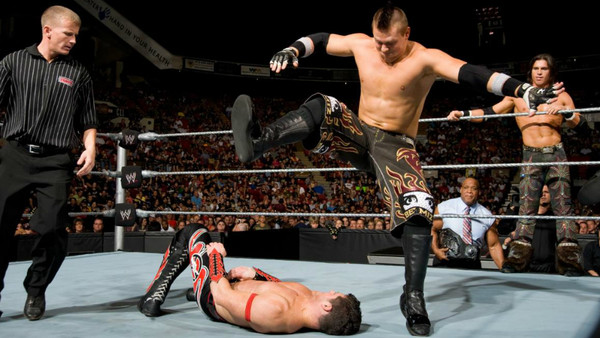
The final 10 minutes of the doc put a positive spin on things. They depict a brand swimming upstream without a hope in hell of succeeding, and a success-starved locker room of young wrestlers and main roster failures desperate to make it work. That, to WWE at least, sums up ECW between 2008-2010.
The Miz is a prime example.
When he was traded from SmackDown to ECW in 2007's supplemental draft, Miz was pulled aside by a WWE producer and warned this was his last chance. He'd been on Tough Enough, he'd been on Raw and then on SmackDown. Nothing had worked, and now he had to start right from the bottom again to prove his worth.
Forming a tag-team with John Morrison rebuilt Miz's confidence to the point that he realised he could become someone the company was proud of. Without that shot in the arm (or, being honest, slap in the face at being supplementally drafted), Miz isn't sure he'd be the made man he is today.
1. The Other Side Of The Coin
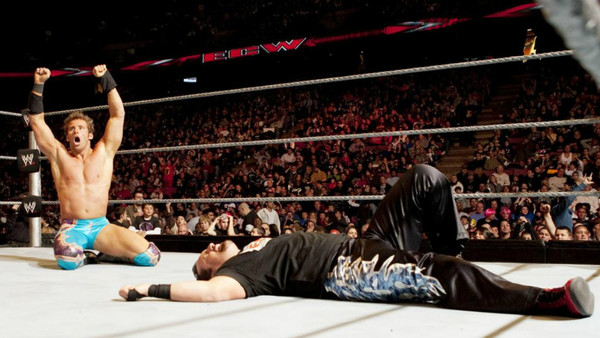
Other stories are even more inspiring.
It's easy to look at WWE's watered-down version of ECW and scoff, but it meant a whole hell of a lot to young talent who were getting significant TV time on a weekly basis. Sheamus, Kofi Kingston, The Miz and Zack Ryder are all grateful for the platform, 'C' show that trailed behind Raw and SmackDown or not.
Ryder, who was in attendance as a fan for the 2005 One Night Stand show, is particularly engaging here. He credits ECW for building his confidence and giving him the chance to work longer matches against guys like Christian and Tommy Dreamer. It also enabled him to find himself as a character and exhibit some creative freedom.
He knew he'd never get that on Raw or SmackDown, so ECW still has a big place in his heart. It's the same for referee John Cone. ECW was his starting point, and he has his old ref shirt hanging up in his home office to this day as a nod towards that first foray into WWE employment.
That's the hidden side of WWE's ECW nobody really acknowledges.
What else did you learn from WWE's Untold documentary on ECW? Let us know down in the comments section below!