8 Stupidest Banned Words In The WWE

...and he's a WWE Superstar, not a pro-wrestler!
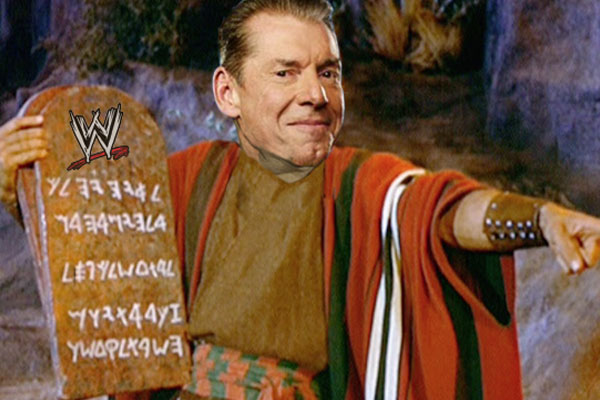
This past summer was an interesting one within WWE. In the ring Seth Rollins continued killing it as the WWE World Heavyweight Champion, Finn Bálor defeated Kevin Owens to win the NXT Championship and both The Undertaker and Sting made their first appearances on WWE television since WrestleMania 31. A lot also happened outside of the ring as well, with Josh Bredl and Sara Lee being offered $250,000 WWE contracts as the winners of the Tough Enough reboot and, on a much sourer note, WWE cut all ties to the man regarded as perhaps the biggest name in their history, Hulk Hogan. However, one of the most interesting thing thats happened over the summer (which received a fair amount of attention) was that Reddit user KINGJOBBAH leaked eight pages of what are thought to be WWE guidelines written by Vince McMahon himself to advise the WWE announcers. These guidelines contained rules on almost everything, from how the announcers should dress and how they should sit, as well as various pieces of advice for calling matches and also quite a long list of Do€™s and Don€™ts. One of the most interesting pieces of information included within these guidelines was a list of words that the announcers were told to avoid using. Whilst some of the words that appeared on this list make sense, most were actually quite bizarre. This article lists 8 of the stupidest banned words to appear on this list.

8. Hospital

Believe it or not, the leaked guidelines suggest that WWE announcers have been banned from saying the word €œhospital€. They are told to instead use the phrase €œmedical center€. Something that perhaps makes this entry on the banned words list seem a bit more logical is that in recent years a lot of hospitals have actually started rebranding themselves as medical centers due to the worry that the word €œhospital€ is deemed to be too old fashioned. However, WWE are a wrestling company, not a healthcare provider, and so this choice of using one term over the other, rather than just allowing either phrase to be used, just seems a little bit too pedantic.

7. International

The word "international" is banned because, well€ I€™m not quite sure. The guidelines state that the word €œglobal€ should be used instead. One possible explanation for this is the slight differences in the definitions of the two words. The word €œglobal€ refers to matters concerning the entire earth, whilst the word €œinternational€ is defined as something that concerns two or more nations. Therefore, describing the WWE as having a €œglobal appeal€ as opposed to having an €œinternational appeal€ does actually seem to make a more impressive claim. But let€™s face it, prior to reading that last paragraph how many of you would have actually ever distinguished between the words €œglobal€ and €œinternational€ rather than just using them interchangeably? I for one wouldn€™t have (I had to Google the difference between the two for the purposes of this article), so I€™m assuming that I wasn€™t alone on this. Whilst there is a slight distinction between the two words, the word €œinternational€ is arguably the more accurate word the WWE should be using in most instances. When referring to their fan-base they can accurately state that they have €œinternational appeal€ whereas they can only speculate that their appeal is €œglobal€. Given the number of €œinternational€ Superstars that have fought for the WWE over the years, it also seems particularly odd to take away one of the words that could be used to describe them. After all, the term €œglobal Superstars€ doesn€™t really make as much sense.

6. DQ / U.S.

I€™ve included two in one here for this entry because I€™m assuming both were banned for the same reason, i.e. they are banned for being abbreviations. That€™s right, the company that continually refers to itself as the WWE (as opposed to World Wrestling Entertainment) has banned the use of abbreviations for other words and phrases. It€™s not as if these two banned terms would have been banned because fans might not understand what the abbreviation means, so it€™s not quite clear why they have been. Perhaps the WWE thinks it seems lazy to use abbreviations as opposed to the actual words? But that doesn€™t really seem like enough of a reason to ban their use altogether. With regards to the term U.S., it might be that this abbreviation has been banned as a sign of patriotic respect, although given that the fans have been known to chant U.S.A. on a fairly regular basis, it's unlikely that WWE higher-ups would make this assumption. Essentially, it doesn€™t make much sense to ban either of these abbreviations and, if anything, not allowing their usage could even potentially have negative effects on the pacing of the announcers€™ commentary.

5. Sports Entertainment

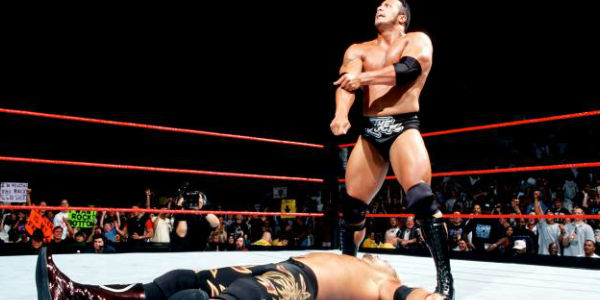
For years WWE advertised and promoted itself as €œsports entertainment€ to the extent that many of their superstars and fans started referring to it in this way. Even one of the biggest ever superstars, The Rock, incorporated it his act by referring to himself as €œthe most electrifying man in sports entertainment€, with his signature move The People€™s Elbow also referred to as €œThe most electrifying move in sports entertainment€. So why then did the WWE spend so long promoting itself in this way to just turn around and ban the phrase €œsports entertainment€? It is stated in the guidelines that the word €œentertainment€ was to be used instead going forward from the date on the memo, 10/16/08. Whilst this potentially makes sense in terms of trying to rebrand the company going forwards if the WWE isn€™t a €œsports entertainment€ company, then what kind of €œentertainment€ company is it supposed to be? Surely if you€™re going to describe wrestling as a form of entertainment then the only thing that makes much sense is €œsports entertainment€, or perhaps if you want to be even more specific €œpro wrestling entertainment€ (although even this description would have its own problems as you€™ll later see).

4. Faction

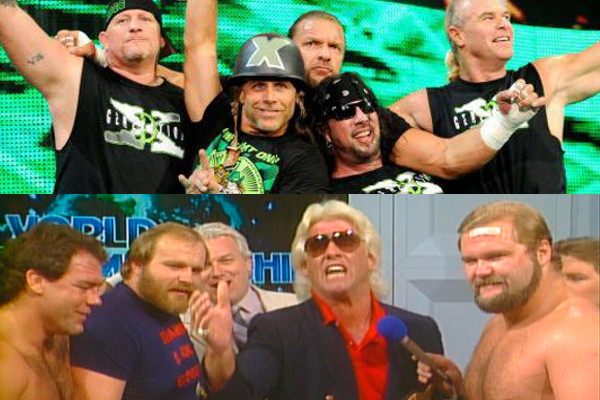
When you consider that many of the banned words on the list only really seem to be there because there is perhaps a slightly more impressive term that can be used in its place, then the inclusion of the word €œfaction€ on the list seems a bit strange, particularly when the alternative suggested is the arguably much less grandiose word €œgroup€. What makes this entry on the list seem strange is the fact that describing a team of superstars as a €œgroup€ doesn€™t imply the same level of cohesion and unity that the word €œfaction€ does. For example, in a lumberjack match you could describe the superstars outside the ring as a €œgroup€ of lumberjacks, but the same couldn€™t necessarily be said about describing them as a €œfaction€. This is because there is rarely much of a team-mentality between most of the lumberjacks in these kind of matches and they often just tend to be a random gathering of individual stars and tag-teams. Whilst I€™m only speculating, I would also imagine that when most people think of some of the biggest coalitions in the history of wrestling, such as The Four Horsemen, Degeneration X and Evolution, they would be more likely to use the word €œfaction€ to describe them as opposed to the word €œgroup€.

3. Interesting

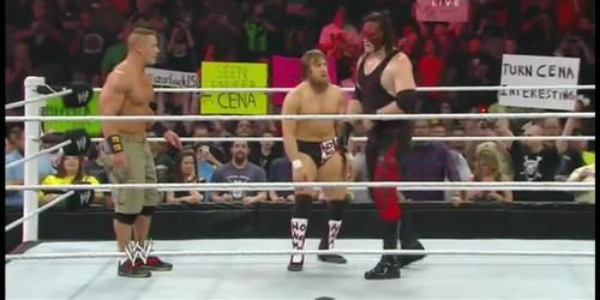
Given the declining standards of Raw and Smackdown over this past few years it€™s perhaps ironic that the word €œinteresting€ should appear on the list of banned words. Nonetheless, on the increasingly rare instances that something worth watching does occur on a WWE show it€™s unlikely that you€™ll hear the WWE announce team refer to the occurrence as being €œinteresting€. What is particularly strange about this word being included on the list though is that it€™s a word that can surely only be used to describe events in a positive way (with the possible exception of the Cena sign in the picture above). I mean, it€™s not like Michael Cole is ever going to say something along the lines of €œI find it interesting how terrible this match has been€ (although given how bad an announcer Cole can be, you never really know), so can someone please explain to me the logic behind banning this word?

2. Belt

This one is particularly stupid when you consider the way that it is mentioned within the guidelines. The guidelines state that the WWE doesn€™t have €œbelts or straps€, but instead has €œChampionships€ and €œTitles€. However, the next line then goes on to say that €œthe belt represents something€. What belt is this? I thought WWE didn€™t have belts. You just said this two sentences ago. Make your mind up, please! Okay, I€™m perhaps being a bit pedantic here, but given the level of nit-picking going on in the guidelines themselves, I think I€™m allowed to be. You can sort of see the point they€™re getting at in the guidelines, though. Using the word €œChampionship€ or €œTitle€ does possibly sound a bit more impressive than using the word €œbelt€. However given that that there many combat sports around the world in which the competitors compete for belts then surely talking about someone winning a belt is just as meaningful as talking about someone winning a championship/title? It€™s disrespectful to competitors within these other sports who hold their respective belts in such high esteem to suggest that the word €œbelt€ isn€™t a grand enough term to use. Banning the word also shows how little regard the WWE has for its own fans that they assume that we€™ll not understand the significance of the belt unless the announcers specifically refer to it as a championship/title.

1. Pro Wrestling/Pro Wrestler

There couldn€™t have been any other choice for the number one entry on this list. The fact that the world€™s biggest pro-wrestling company, a company called World Wrestling Entertainment no less, has banned the use of the term €œpro wrestling€, is frankly too stupid to even explain. Pretty much all the banned words listed within the guidelines come across as very patronising to the fans, but this one takes the cake, especially when you consider the number of fans who would actually refer to themselves as €œpro wrestling fans€. The reasoning behind the banning of these two terms becomes a bit clearer when looking at the rest of the guidelines and noticing the emphasis on the show being an entertainment event rather than a sporting event. Yet no matter what way you look at it, it will still always be a €œpro wrestling€ entertainment event, featuring €œpro wrestlers€ and being watched by €œpro wrestling€ fans. So why ban these phrases?

In this post: 
John Cena
 
Posted On: 
Contributor
Contributor

Sports betting enthusiast whose main interests are rugby, football and MMA. Also a huge WWE fan and a self diagnosed TV & movies addict, with a particular love of anything Marvel or Dan Harmon related.