With the launch of the WWE Network, World Wrestling Entertainment has found itself with a bit of a conundrum: They now have a 24-hour channel of their own in which they can broadcast anything they want in addition to the countless hours of previous productions they can make available on demand. Sure, they have WWE NXT, Superstars, and Main Event... and perpetual reruns of those shows for the week they first air. But while more original programming such as Countdown and Rivalries have an indefinite shelf life, other shows such as Legends House and The Monday Night War are proving to have much more finite lifespans. So the question is "What else can they fill the airtime with?" As with many other things, the answers lie in the company's past. More than just repeating the mantra of "the good ol' days" and "bring back the Attitude Era" (though we'll touch on that), WWE has had many, many different shows throughout the years with unique contributions and formats, some of which were ahead of their time. Reviving and updating these ideas for today's audience and their needs would not only help to nicely pad out the schedule of their enormous investment, but might add enough diversity to help attract new subscribers as well. With the company constantly chasing variety in their programming and a new network chock full of hours to fill, here are eight distinct WWE shows from the past we would like to see revived in some way, shape, or form on WWEs lineup of programming.
8. WWF MSG Classics
https://www.youtube.com/watch?v=CEKrclmnfPw Vince McMahon considers Madison Square Garden in New York City to be the home of the WWE, and numerous shows both televised and house have taken place there over the years. This show, which appeared on the MSG Network, served to highlight many of these matches for a respectable 76-episode run from 2006 to 2008. This concept could stand to simply be rerun on the WWE Network, or they could update it as necessary. Either way, there are numerous matches to be seen here that would have a new audience by being aired on the WWE Network
7. WWF Prime Time Wrestling
https://www.youtube.com/watch?v=AiUwcLI00a8 Before the World Wrestling Federation got Raw on Monday nights, Prime Time Wrestling was- as the name implies- the company's primary prime time offering from the years of 1985 to 1993. In addition to featuring matches shown on other WWF programming of the day coupled with analysis from hosts such as Gorilla Monsoon and Bobby "The Brain" Heenan, this was an outlet for rare house show matches to be seen on television as well. The show also featured interviews and promos with WWF Superstars of the day, an outlet which no doubt helped many of them stay in practice and perfect their characters- an opportunity many would agree that a number of today's Superstars don't often get and could really use. They would also update viewers on and progress current feuds, which- despite having five hours between Raw and Smackdown- is something that again, several Superstars and their feuds could probably use today.
6. WWE Saturday Morning Slam
https://www.youtube.com/watch?v=OkdoXUUvC-E For a mere 38 episodes running on CW Vortex between August 25th, 2012 and May 11th, 2013, Saturday Morning Slam was a more youth-oriented program from World Wrestling Entertainment which managed to garner its fair share of fans both young and old. But if you thought that operating under a TV-PG rating was tough, just imagine doing it with a TV-G rating! Being aired amidst some of the last Saturday morning cartoons ever, WWE Saturday Morning Slam was even more kid-friendly than the company's current product. As a result of this, certain moves were banned from SMS matches, particularly those which would target the head or neck. Interestingly, while some Superstars struggle with the TV-PG rating, adhering to TV-G led to some fun and creative matches that you wouldn't normally get to see otherwise. For instance, just after the 4:57 mark in the footage above, watch how Daniel Bryan manages to evade being pinned by Tyson Kidd. Closer to something you'd see at a house show than on Monday Night Raw, it manages to be uniquely entertaining.
5. WWF Maple Leaf Wrestling/WWE Super Astros
https://www.youtube.com/watch?v=LQUxPrZrNHs For a company called "World Wrestling Entertainment," if there is one thing to be said about much of its programming, it would be that it's distinctly American- right down to the constant repetition of the WWE Network's price of "only $9.99" as you look at the $11.99 charge (among other prices) on your non-American cable bill. In the past, though, WWE has shown a more worldly flavor beyond its occasional tours of Europe, India, or Japan (of which the latter two only see brief recaps on the other shows). In 1984, the then-World Wrestling Federation took over Jack and Eddie Tunney's Maple Leaf Wrestling promotion, and used the branding for shows taped in cities from southern Ontario, Canada. Eventually, the show would become a more localized version of WWF Superstars of Wrestling (though still with some Canadian footage) before becoming what would be known as WWF Wrestling Challenge. Similarly- sort of- WWF Super Astros ran from 1998 to 1999, promoting the organization in Latin America countries and featuring Superstars of foreign descent, such as those from Asistencia Asesoría y Administración, Consejo Mundial de Lucha Libre, and other foreign wrestling organizations. It even had its own Spanish announce team of Carlos Cabrera and Hugo Savinovich, with interviews performed by Maria Felipe. As one might expect, the show featured its own storylines with the performers at hand, independent from the main WWF roster- not unlike how NXT operates for the most part today. With World Wrestling Entertainment trying to sell the WWE Network to more foreign markets, once again catering to local interests in addition to their normal suite of programming would not be the worst idea. Of course, it would be better still if anyone could watch the programs from anywhere, allowing wrestling fans the world over to see what their friends abroad are watching.
4. WWF Confidential
https://www.youtube.com/watch?v=Vzf7RsAKZMs Kayfabe is dead, or at least as good as. Even programming on the WWE Network tends to acknowledge this in some way or another. As a result, why not bring back the show which helps take fans behind the scenes of the goings on in WWE? WWE Confidential had a fairly short run- May 25th, 2002 to April 24th, 2004- but is well known for some of the deep-digging stories it did into such subjects as the Montreal Screwjob (with Shawn Michaels' first admission of being in on it), "Stone Cold" Steve Austin's abrupt departure from the company in 2002, a report on the death of Miss Elizabeth, and even a story on how the Superstars of the day felt when people would say "wrestling is fake"- the first time a WWE program explicitly said that what they do was a work. Other segments, such as the history of the Monday Night War or the World Heavyweight Championship, have been approached in greater detail since the show left the air. Still other segments would highlight life on the road for several of the WWE talent, including overseas tours. All in all, it was a fun potpourri of wrestling news, facts, and trivia that seems in line with other WWE Network programming.
3. Tuesday Night Titans
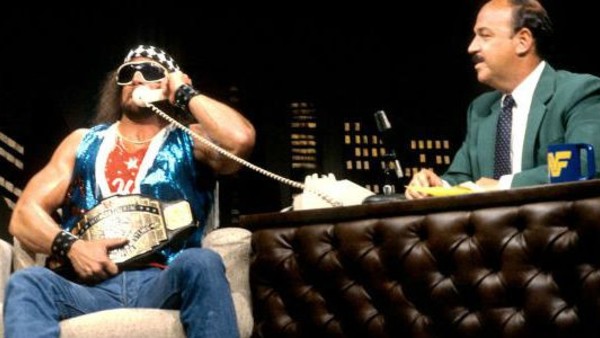
https://www.youtube.com/watch?v=36b1u9zTp1I What do you get when you cross The Tonight Show with World Wrestling Entertainment? You get Tuesday Night Titans, of course! Tuesday Night Titans, aka "TNT" for short, was a talk and variety show which aired on some night of the week from 1984 to 1986, and was hosted by Vince McMahon himself (and later "Mean" Gene Okerlund), accompanied by his sidekick, Lord Alfred Hayes. In addition to showing footage from matches, various World Wrestling Federation talent would appear as guests on the show for interviews and skits- in-character, of course. From Hulk Hogan introducing his new protein drink to Fred Blassie feeding Kamala a "live" chicken, there were plenty of odd and memorable moments from the show's run. Granted, there is a certain level of cheesiness present that may not go over as well today, but the idea of a wrestling-oriented talk show on which Superstars can talk about current and upcoming matches, feuds, and projects they're doing, as well as furthering their characters and the storylines they're in, would be beneficial for a lot of the talent- especially the lower-card guys who don't get much air time otherwise.
2. WWF Livewire
https://www.youtube.com/watch?v=tibDfZ0llJQ For all of the pandering and boasting WWE does about social media, it's a wonder that they haven't revived this concept already. Originating in a time when America Online was still considered a viable means of communication, WWF Livewire ran from 1996 to 2001 and was a show in which fans could call in, fax, or e-mail questions and comments they had for the hosts or the featured Superstars who appeared each week. In some cases, even other Superstars would call in to help further a storyline they were involved in. WWE.com even has their own feature about the show, dubbing it "the most uncensored show in WWE history," and well over a decade before Vince McMahon appeared on the Stone Cold Podcast, he spoke candidly about World Championship Wrestling and Ted Turner during a time when the company did little more to acknowledge them than the "Billionaire Ted" skits. Extreme Championship Wrestling head Paul Heyman would also call in under the guise of "Bruce from Connecticut" to confront and accuse McMahon of stealing from his ideas and talent on live television. WWF Magazine editor Vince "Vic Venom" Russo also made his first on-air appearance there, while Ron "Faarooq" Simmons debuted the concept of a little something called "The Nation of Domination" as well. Throw in fun such as the "Stone Cold" Steve Austin segment above, or Jim Ross and Russo dismissing unprepared callers (and WCW's older talents such as Savage, Hogan, and Piper) below, and you had a fan-interactive show that any WWE fan could hardly afford to miss. Combine it with today's more connected than ever online social media culture, and you could have a recipe for success. https://www.youtube.com/watch?v=4eA1ZrmdmoA
1. WWF Shotgun Saturday Night
https://www.youtube.com/watch?v=V97uYoTwrUY Most may remember Shotgun Saturday Night as being the late-night alternative to WWF Superstars during its syndicated run from January 4th, 1997 through August 21st, 1999; however, during the first six weeks of its existence, it was something else entirely, and something today's older fans of WWE might appreciate. The Attitude Era had not yet begun, and the World Wrestling Federation was still feeling its way through The New Generation as they faced off against WCW's edgier product featuring the New World Order and the growing popularity of ECW. Going for a more "adult" approach of their own, the WWF took their shows to various nightclubs around the United States, filming live before those in attendance with a smaller ring. In the debut episode (seen above, at 26:32 in), Goldust's valet Marlena even interferes on her charge's behalf by removing her top to distract his opponent, The Sultan (she was wearing pasties, just so you know). People keep calling for a return to The Attitude Era, but short of another WCW rising to challenge WWE, it's just not likely to happen- they have no reason to turn away the sponsors and Mattel partnerships they now have. However, if they offered their older fans something a bit edgier in an exclusively late-night time slot as they did with Shotgun Saturday Night? Perhaps that would be a way to make everyone happy, including some Superstars who might thrive in such an environment. Also, if "Stone Cold" Steve Austin fighting Terry Funk into a beer tap in Texas and The Undertaker Tombstoning Triple H on an escalator in Penn Station are any indication, there is plenty of fun to be had with their surroundings, too... once the kids are tucked away in bed, of course. Those are the eight shows- or at least their formats- revived for a new era in World Wrestling Entertainment. The WWE Network has a lot of hours to fill and a lot of underutilized talent, and they should definitely make the most of it. But which of these ideas would you like to see brought back? Or perhaps you know of a WWE program not shown here which had a distinctive feature which set it apart from all the others? Either way, tell us in the comments!
Former Nintendo Power writer, current Nintendo Force writer. Wrote the book on Mega Man (The Robot Master Field Guide). Was once fired by Vince McMahon. Dabbles in video games, comic books, toys, and fast food curiosities. Once had a new species of exotic bird named after him. It died.
You can find more of his writings, musings, and other such things on his websites at Nyteworks.net.