7 Things WWE Can Learn From Saturday Night Live

WWE and SNL is a more logical connection than you might think.
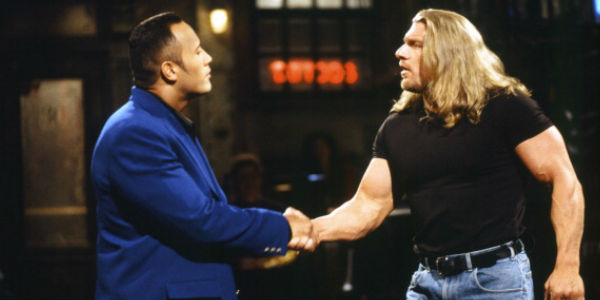
At some point in 1984, WWE Chairman Vince McMahon probably met Saturday Night Live creator Lorne Michaels as NBC chairman DIck Ebersol began the process of brokering the deal that brought Saturday Night's Main Event to broadcast TV. Then ten years into SNL's iconic 40 year run, there are those who are TV pundits (in the way that What Culture writers are wrestling pundits) who would claim that Michaels is to TV what McMahon is to wrestling. Both are leaders who are synonymous with their brands and oftentimes referred to as creative geniuses. As well, the businesses of wrestling and comedy are similar in that both are unique disciplines that require a particular skill set that can only be honed with time and experience. Therefore, WWE taking lessons from SNL not only has historical context, but also a more logical connection, too. Over Saturday Night Live's 40 year run, the company has had as many ebbs, flows, successes and failures as World Wrestling Entertainment. However, due to some very key differences between WWE and SNL, the late night programming juggernaut may be able to right itself, whereas WWE may be in for a bumpy ride ahead. There are likely much more than seven things WWE can learn from Saturday Night Live. These are likely the best seven of those lessons.

7. Controversy Should Be Expected And Should Be Embraced With Open Arms

Chris Rock Snl Part of the reason why Saturday Night Live is broadcast from 11:30 PM - 1 AM EST is because the time falls at an hour wherein the rules of broadcasting are relaxed. SNL was created in order to reflect a notion in American popular culture in the 1970s that television viewers felt that broadcast options were insulting to their intelligence. Thus, NBC's late Saturday evening program was intended to reflect a change in that expectation, and the broadcast time reflected an acceptance of this sentiment. In being controversial since its inception, SNL has always painted outside of the lines of the mainstream, accepting criticism and changing very little of the broadcast content, instead more changing the style of topic to reflect the times. Dissimilar to SNL, WWE went corporate after the financial success of the Attitude Era, a change that has neutered the company's ability to be wild, progressive and controversial. Instead, unlike SNL, WWE does a poor job of accepting product criticism, has changed much of its broadcasting content and not changed its style of program delivery to match the times. Whereas Saturday Night Live is always a sketch away from potentially catching fire as a program, WWE is instead solidly behind the times and in not being able to be "controversial," currently finds itself in a less-than-successful position.

6. Better Guest Hosts (And Guest Appearances, Too)

Jonah Hill Snl One of Saturday Night Live's hallmarks is that throughout the show's 40-year run, the show has always been able to book timely, relevant and eye-popping guest hosts, guest appearances and musical appearances, too. Similarly, when WWE booked Mr. T for the first Wrestlemania, Mike Tyson to appear at Wrestlemania XIV in 1998, or even Jersey Shore's Nicole "Snooki" Polizzi at Wrestlemania 27, they were on the cusp of cultural relevance and cool. WWE's last two "big name" appearances? Instagram-famous "Grumpy Cat," and less than relevant star of Jingle All The Way 2 (featuring Santino Marella) Larry The Cable Guy. In falling short in this regard, WWE could learn something from SNL here as well.

5. The Key To The Program's Success Lies In The Balance
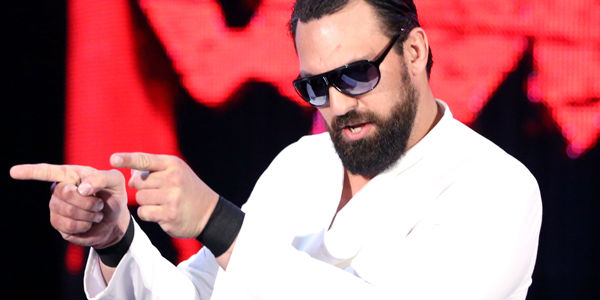
Just as with wrestling, comedy is an entirely subjective art. An episode of Saturday Night Live could involve a few pratfalls, some high-art style joke-telling, a poop joke and maybe some stand-up style comedy. It's a smorgasbord of laughs, something for everyone. Of course, there are those who may feel as though the more lowest common denominator humor may not be their cup of tea, while yet others will feel that a sketch that aims to a demographic with a drier sense of humor isn't very funny at all. Of course, the same goes for professional wrestling, wherein an episode of Smackdown may feature Cesaro's pure wrestling, Damien Mizdow's inanity, the high flying of the Usos, muscle-bound performers like Ryback and maybe a giant or two with Kane and Big Show. If any one part of the program is not in balance, the show oftentimes feels flat and less-than-entertaining. While pure wrestling fanatics would probably want to see Tyson Kidd versus Sami Zayn in every segment, the people who love pro wrestling for the "sports entertainment" aspect need some Mizdow in their lives, too. Just as SNL must balance their humor, WWE must always balance their in (and out of) ring presentation, too.

4. Handling The Internet Age Is Difficult

Saturday Night Live When it came to broadcast television's era of dominance, many contenders to Saturday Night Live's 40-year run of TV dominance came and went. Fox, ABC and CBS all have made attempts at ensemble-style comedy, but none have had SNL's staying power. However, in the digital age, between cable, Hulu, Netflix and Youtube, there's now a plethora of options for top-tier comedic presentations. If an American viewer, there's now literally a world (and history) of laughs at your fingertips. Of course, similar to WWE, SNL has made its entire history of programming available on Hulu, while also breaking down its collection into a series of streaming and DVD options. However, while SNL's ratings continue to dip, the brand has expanded into the global and digital sectors enough to off-set any significant losses of net income. Similarly, when WWE purchased WCW and ECW, it effectively ended the era of major-league competition in pro wrestling. However, with New Japan Pro Wrestling planning to air the Wrestle Kingdom PPV in America on January 4th, Lucha Underground's successful launch, and independent organizations making strong efforts to break even in the iPPV and online content markets, WWE's market share is not as strong as it once was. As well, it's notable to mention that WWE has revolutionized it's own content with the WWE Network, as well as nearly wholly divesting itself out of the physical DVD market, too. WWE's recognizable place as dominating the global pro wrestling marketplace has offset the stateside failings due to evolving into a streaming product, as well as a decline in ratings and net revenue.

3. A Strong Developmental System Is Key

Saturday Night Live Cast If contemplating talent development, one could look at WWE's state-of-the-art system between the Performance Center and NXT as representing a top-of-the-line concept. However, if wanting to look at Saturday Night Live's relationship with Los Angeles' Groundlings and the Second City comedy troupes, there's a level of development that could be envied by Vince McMahon and company. Since being established in 1974 (intriguingly enough the same year that SNL took to the air), The Groundlings comedy troupe (alongside the Second City troupes in Chicago and Toronto) have placed 16 of their legendary performers onto SNL, the most significant of those being Will Ferrell, Phil Hartman and Jon Lovitz. Second City have placed 28, with Dan Aykroyd, the Belushi Brothers, Mike Myers, Chris Farley and Tina Fey among that lot. Overall, of the 130 cast members in SNL's 40 year history, 34% have come from these two key developmental outposts. Since loosely starting affiliations with developmental promotions in 1996, 10 of the 26 men to hold the WWE World Heavyweight Championship had experience in WWE-run developmental promotions. Of course, when one considers that the number of people both employed by WWE in the developmental ranks that have been called up to TV in proportion to the number of people performing on TV overall is a number far greater than 130, the percentage of success rate for SNL "main roster call ups trumps WWE's by a long shot. Is WWE doing something wrong in their developmental hiring process? Possibly. Maybe the company casting a narrower and more defined net insofar as discovering successful future talents is required.

2. Putting Superstars In Movies Inevitably Leads To Problems
Ever since WWE has become not just a pro wrestling organization, but a filmmaker, too, there have been numerous instances wherein the company splitting their priorities between wrestling and filmmaking have proven troublesome. Foremost, there's the issue of The Rock. There are those still employed in WWE like John Cena who feel as though The Rock in many ways left the company to become an actor on not-so-good terms, especially given that he didn't "put over" the company's then rising talents like himself, Randy Orton and Brock Lesnar while he was still in his prime. At present, WWE has solved that issue with WWE Films acting as a talent broker for larger films, purchasing scripts and developing film franchises for their talents so that they are able to satiate the acting bug but still remain employed by WWE. John Cena and The Miz have excelled as The Marine, and everyone from Bad News Barrett and Santino Marella to the Big Show and Triple H have acted as well. This bears a striking resemblance to what occurred when early era Saturday Night Live stars like Dan Akroyd, John Belushi, Chevy Chase and Eddie Murphy caught the acting bug and left the SNL cast between 1975-1984. That era was a groundbreaking "Attitude" type era for the NBC program, those four performers key to the program's indie-to-mainstream success. Similar to how The Rock left for Hollywood and did not allow for an easy transition to a talented new crew of performers, Aykroyd and Belushi becoming The Blues Brothers on film, Chevy Chase only appearing for one season and Eddie Murphy departing after 48 Hours and Trading Places, placed SNL into a difficult few years between 1984-1990. Of course, similar to WWE, SNL became it's own movie making vehicle, Lorne Michaels-as-Vince McMahon working with his cast on films starting with 1992's Wayne's World and taking a far more active role as a direct intermediary between his cast and the film industry. While not quite completely similar to WWE, the issues regarding the movie business interfering with the quality of the programming certainly parallel.

1. Filming Weekly Episodic Television Is A Difficult Task
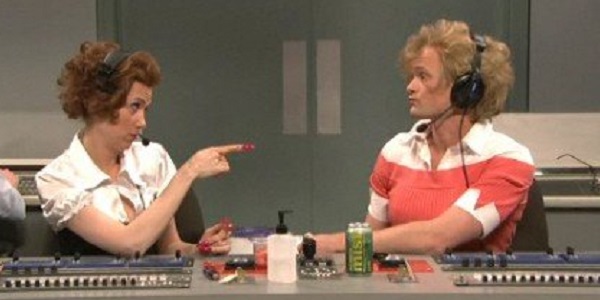
While not the nearly ten first-run hours of TV per week that WWE airs 52 weeks a year, Saturday Night Live has been aired live for 770-plus episodes over 40 years. The level of scrutiny placed on SNL by mainstream media and television fans is entirely comparable to the pressure smart marks place on WWE. When SNL isn't funny, it's pilloried in the media and television fans call for the heads of the writers, the creator and the actors themselves. Working out of a creative rut on SNL is oftentimes as simple as hiring a new cast between seasons and perfecting the mix. By comparison, WWE's situation is more difficult as pro wrestling has no "downtime," so the ability of the company to scrap it's entire roster and hire all new wrestlers up and down the card is impossible. If there were ever a case to be made for a wrestling off-season, this comparison would be it.

Contributor
Contributor

Besides having been an independent professional wrestling manager for a decade, Marcus Dowling is a Washington, DC-based writer who has contributed to a plethora of online and print magazines and newspapers writing about music and popular culture over the past 15 years.