6 Wrestlers That Visibly Hated Working For ECW
In ECW, Paul Heyman was a master manipulator. Most of the time, anyway…
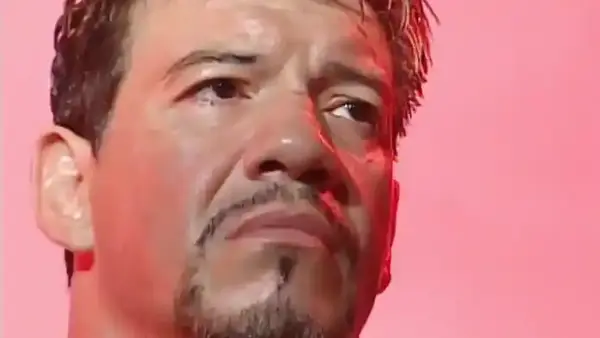
A lot of wrestlers had the time of their lives working for ECW.
Many were considered too limited or out of shape to get a gig in WWE or WCW - until ECW became an underground sensation, at which point the bingo hall endured monthly raids. Many of the wrestlers were worshipped as Gods by the bloodthirsty Philadelphia hardcores - and since the fans were very quick to take a gigantic sh*t on those they did not rate, the guys who did get over felt invincible. Afforded creative freedom, strutting into the ECW Arena knowing damn well they were embarrassing the richer, snootier competition, the roster was amongst the coolest and most futuristic ever assembled. Even in 2026, Tommy Dreamer remains so moved by the good old days that he can’t talk about them without bursting into tears.
Dreamer isn’t just blinded by nostalgia; at the time, Paul Heyman was such an effective glorified cult leader that he was able to convince his guys to run through brick walls - or, at least, the brutal wrestling spot equivalent. An unbelievable motivational speaker, Heyman wasn’t paying these guys particularly well, nor on time, and yet he still possessed the ability to make his wrestlers go above and beyond almost all of the time. The wrestlers who did end up leaving grappled with their conscience for the cardinal sin of accepting better, guaranteed money in what is a very short and dangerous career. Taz could only go through with his WWE debut at Royal Rumble 2000 after he had received Heyman’s blessing - which only happened the day of, in a car phone conversation, when he was en route to Madison Square Garden. It’s therefore difficult to arrive at the few names who were not brainwashed by Heyman’s incredible rhetoric.
Some people, however, could not abide Heyman’s bullsh*t after a while - visibly…
6. Rob Van Dam
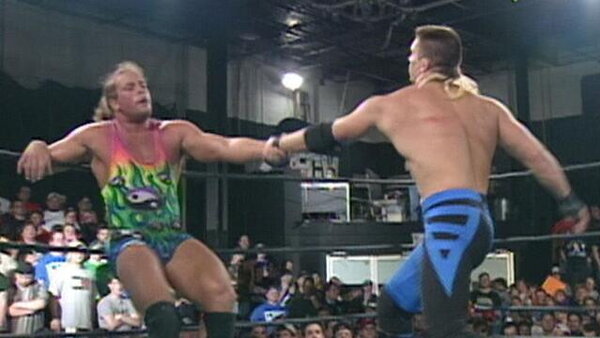
Virtually everybody agrees that Barely Legal, the inaugural ECW pay-per-view, arrived at least a year too late.
By April 1997, the WWF had already started to push Stone Cold Steve Austin as an antihero. Bret Hart had sworn on television. The commentary table was getting wrecked frequently. WCW, meanwhile, had raided ECW’s main event and midcard scenes several times. Barely Legal, purportedly the dawn of a new era, was in fact the beginning of the end. The smarter, more prescient wrestlers had grasped this. Raven was months away from leaving; Rob Van Dam reportedly wished to join him.
Prior to his match against Lance Storm, which wasn’t originally scheduled for the card, fans pelted RVD with chants of “You sold out!” The ECW fans were in-the-know. They knew Van Dam had been negotiating with WCW; it was widely believed that this was essentially a done deal.
The resulting match was a vapid and often-botched procession of moves. It was pretty crap. A decent effort to begin with, it went off the rails towards the finish. Storm was never comfortable wielding a chair, and was heavily jeered for obviously holding back. Van Dam, meanwhile, was hardly at his most motivated. He shot to fame as the most cocksure dude in the entire industry. He was beyond smug. He radiated little of that energy at Barely Legal.
After the match, he cut a promo, acknowledging that he was a substitute who did not want to appear on the show, but had swallowed his pride. In ECW’s defence, they thought he was done, and wanted to provide a platform - the biggest in its history - to somebody who was ready to contribute.
This was miserable business all round - an ominous glimpse into ECW’s doomed, untenable future.
5. Raven

Raven was the coolest wrestler in the United States during his initial ECW run. One of very few wrestlers to capture the times in which he wrestled, his look, demeanour and presence were outstanding. A dark and creative mind, Raven was such an effective heel that he achieved the impossible: when he crucified the Sandman, he actually outraged the ECW fanbase.
His WCW run wasn’t all that great in retrospect, a red-hot spring of 1998 aside, but the very idea of Raven was so captivating that people deem it a disgrace that he wasn’t in the main event scene. Raven himself believed he was capable of more, requesting and receiving his release from the company in August 1999 - a condition of which prevented him from signing with the WWF for nearly a calendar year. Via loophole, Raven found himself back in ECW in a dreaded marriage of convenience.
The night of his shocking return was handled brilliantly. Raven, unbeknownst to Tommy Dreamer, helped his former blood rival win the ECW World Tag Team titles. If Raven was the grunge wrestler in the self-styled grunge promotion, this night, August 26, 1999, was ‘Dam That River’ by Alice In Chains. It rarely got louder. Watching Raven, of all people, crack a smile was surreal and beautiful. It did not get louder, nor better.
It was difficult to tell that Raven was checked-out, since he played a miserable, misanthropic character. It was practically his job to project minimal emotion - but the fact that he formed a reluctant tag team with Dreamer was a bit on-the-nose. An air of reluctance cloaked everything, and the genius of the Raven character was in those rare times he did express feeling. There was very little of that in 1999 and 2000. Raven was clever. He knew ECW was without a purpose all the way back in 1997. Things had not changed in the interim; if anything, Raven’s premonition of the WWF swooping into ECW’s creative nest had become even more true.
In a recent interview with Chris Van Vliet, Raven softened his stance, claiming that he was “really happy” to be back in ECW - but if he was so happy, he wouldn’t have counted down the days until he was contractually free to join the WWF.
4. Mick Foley
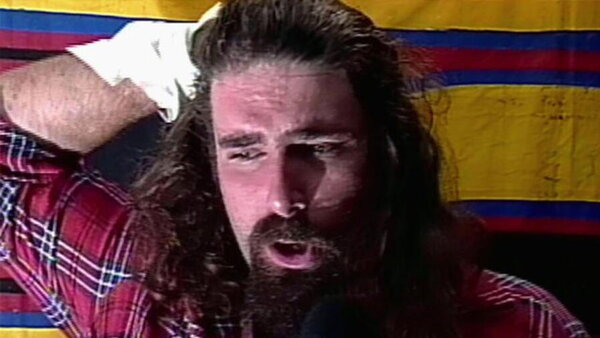
Just because Mick Foley was a perfect spiritual fit for ECW, that doesn’t mean he was overjoyed to work there all of the time.
There were incredible moments, sure. His feud with Terry Funk was legendary; the famed moment in which chairs were thrown into the ring a staple of every highlight reel. His partnership with Mikey Whipwreck was a charming glimpse of the wholesome quality with which Foley would connect with WWE fans at the main event level. He didn’t just wrestle Triple H and Randy Orton in career-best efforts; in January 1995, Cactus Jack worked his magic with the Sandman, who could never hope to do anything that great again.
Foley was a hardcore legend. He sacrificed his body and took that masochistic role very seriously. His minimum expectation was to be respected for his efforts. On two gross landmark occasions, he almost fell out of love with the sport forever.
At Wrestlepalooza 1995, JT Smith’s face collided with exposed concrete after a dive gone awry; in response to this medical emergency, the ECW fans shouted “You f*cked up!”
Foley was revolted by this response. He was sickened enough as an empathetic individual; he really showed his incendiary disgust when spotting a sign in the crowd that urged the Sandman to ‘Cane Dewey’. It was personal now. Dewey was his toddler-aged child. Foley, in response, cut the most real and impassioned promo in wrestling history. Foley turned this into a gimmick - in his defence, he was a professional wrestler - but for those several minutes, the man was in the midst of a red mist-fuelled philosophical crisis.
Foley and the ECW faithful forgave one another at the last minute, but “visibly hated” almost under-sells the haunting intensity of that iconic promo.
3. Mike Awesome
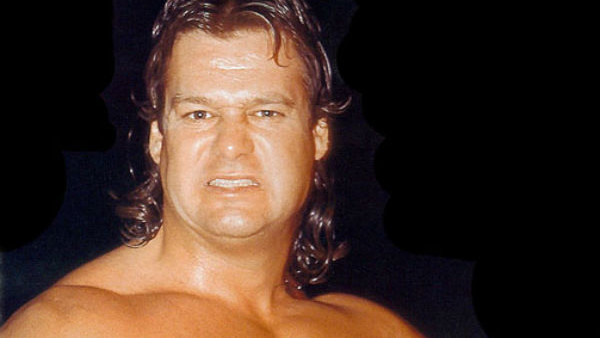
God, has there ever been a more aptly named professional wrestler than Mike Awesome?
He wasn't just good, or excellent; everything he did inspired awe. The fact that he did those unspeakable things to his opponents without injuring or even outright killing them was impressive.
Awesome wasn’t just an absolutely jaw-dropping spectacle of a performer; by the spring of 2000, he was one of ECW’s few remaining hopes. ECW fans had dealt with departures before, but with the promotion’s identity subsumed by the WWF, each one felt more like a betrayal. An existential threat, even. When Awesome jumped ship to WCW, he did so as the reigning ECW World champion.
Awesome’s motivation was really as fair as it gets. He was not getting paid in time to put his body on the line. And he did put his body on the line; even by ECW standards, his matches were unhinged. The ECW fandom however bought into Heyman’s outsider cult mentality. To them, the wrestlers did not sign a deal that was often not even honoured; they had signed a blood oath of sorts.
Awesome jumped to WCW while still recognised as ECW champion. This went down about as well as you’d expect. Awesome agreed to drop the belt, on April 8, 2000 in a wild scenario in which the WCW-contracted ECW champion lost to a WWF-contracted wrestler in Tazz.
Ordinarily, Mike Awesome was pumped the f*ck up. He’d make his entrance pointing at himself and screaming his head off, like he couldn’t do anything else with the adrenaline surging through his body. This didn’t happen in Indiana; he got in there, looking shaken, and immediately vaulted over the barricade, flanked by WCW security personality, after tapping to the Tazmission.
2. Eddie Guerrero
Virtually everybody involved in and a fan of the professional wrestling industry was blown away by and in disbelief at the inaugural WWE-produced ECW One Night Stand pay-per-view.
It was a euphoric, shockingly authentic night. This did not happen, but it was as if Vince McMahon handed over the reins to Paul Heyman and let him and his ungovernable brand of psychos go wild in the Hammerstein Ballroom. The Sandman’s entrance was anthemic, joyous. Mike Awesome and Masato Tanaka wrestled what might be the best ever entry of their legendarily violent series. And, as ugly as it was, the JBL and Blue Meanie brawl incident was quintessentially ECW, in that it was dangerous, something that was not meant to happen, lawless. Officials were so thrilled that the decision was made, effectively then and there, to reboot the brand on a permanent basis. About the only person who did not have a great time was Eddie Guerrero, who was not best pleased to be there.
He was visibly miserable during his entrance, wearing one of wrestling’s more infamous boo-boo faces. A very snippy report from PW Torch at the time read that the “often grumpy” Guerrero was “very unhappy” about the finish to his match against Chris Benoit - he lost while he was in a very high-profile rivalry with Chris Benoit at the time - and was said to have never got into the event to begin with. He was only in ECW for around five months. It was a gig to him, as opposed to the life-changing experience it was for, say, Tommy Dreamer.
Eddie was in a bad place at this point. Bob Holly described in his book how every time he glimpsed Eddie, he was constantly doubled over in pain. When Eddie hurt his nose early in the match, this hardly contributed to his foul mood. Eddie at least recognised how below-standard the match itself was, apparently mouthing “I owe you one” to Benoit in the aftermath.
1. Paul Heyman
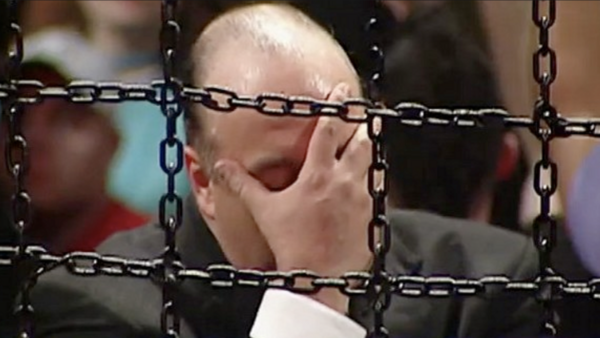
Paul Heyman, at ECW December To Dismember, sold his dismay at Bobby Lashley’s ECW World Heavyweight title win. In a hack and ancient development ripped straight from 1998 - and 1999, and 2000, and 2001… - Heyman tried to prevent Lashley from winning the belt because that’s what heel authority figures did. Heyman covered his face with his hand in the infamous closing shot of a diabolical pay-per-view. Technically, he was performing under the guise of his fictional character - but since Heyman quit in protest of ECW’s direction almost immediately afterwards, it required very little in the way of acting.
The kicker here is that Paul Heyman was the guy who worked people. He prided himself on his ability to manipulate everybody around him to his advantage.
In 2006, Paul Heyman got worked. He was humiliated. He fell for what was becoming one of the oldest tricks in the book. He had few options, but he went along with the ECW reboot anyway. He could have walked. He didn’t; he might have thought that Vince McMahon had it in him to actually hand over a WWE-owned wrestling brand to somebody else who wasn’t part of his family. This happened with NXT and Triple H, but it was never, ever happening with ECW and Paul Heyman. Everybody knew that, except the man, Heyman, who once knew everything that Vince didn’t about the direction of travel in the mid-1990s. A decade on, and Heyman was no different to the hardcore fans who, for example, thought Daniel Bryan might get pushed ahead of Roman Reigns because he generated louder reactions in the building.
This acute sting of embarrassment was written on his face, and it was obvious even underneath his hand.