6 Promising Wrestling Talents RUINED By Backstage Politics
Only those wrestlers who actually stood a chance.

Across social media and message boards, you’ll often find posts and threads discussing the same subject: which WWE wrestler would have made it to the main event, if bad booking and backstage politics did not destroy their career?
As you get older, you begin to realise that this is perhaps too simplistic an explanation. Vince McMahon was so profoundly inept that he nuked several careers, many of whom later proved him wrong. As an example, Dean Ambrose was a laughing stock in 2018 under Vince’s goofy, hateful creative, where from 2019 onwards, Jon Moxley became AEW’s top star and fulcrum. But did Vince truly ruin multiple generations of wrestlers who were rendered worthless before AEW afforded them the chance of reinvention?
Dolph Ziggler’s name often crops up in these threads, and he was the victim of office politics to an extent. Producer Arn Anderson raved about him, too often, to Vince McMahon. Vince resented the idea that he was doing something wrong and Ziggler, possibly as a result of this petty bickering, was forever doomed to midcard purgatory. Did he really have the stuff to make it, though?
A superb hand for his era, in which there is zero shame, Ziggler was ultimately too preoccupied with performing the most spectacular, praise-worthy bumps possible. In a way, you could argue that he perfected the art of getting his ass kicked, which is a very dumb method of trying to become a dominant main event wrestler.
Was Mr. Kennedy’s career really ruined by Randy Orton, who was very much right to be furious at his recklessness? Or was he a great catchphrase masquerading as a can’t-miss prospect in a barren period? Did Karrion Kross really get punished by the office for unapproved comments about the direction of his character, or was he simply incapable of getting over in front of live crowds?
What follows is an attempt to resist easy, sweeping narratives - a bid to really identify who could have achieved so much more, were it not for the murky sabotage of backstage wrestling politicians…
6. Paul London

There are different games to play in the political arena of professional wrestling.
A paranoid and defensive top guy might intentionally fail to jump when his opponent needs him to go up for a move. A promoter can spot this from a mile away, but who are they going to side with? A wrestler might offer advice, very publicly and loudly, knowing full well that they are making their opponents look like anxiety-riddled greenhorns in front of people of influence. A wrestler might disregard subtlety entirely, and outright tell the promoter who they think doesn’t deserve a spot. Another way to play the dirty game of getting ahead is to brown-nose the top guys. This, if you believe Bam Bam Bigelow, is how Triple H did it: Bigelow was the first to claim that he saw Triple H carry the Kliq’s bags.
During his infamous shoot interview with former friend and tag team partner, Brian Kendrick, Paul London told stories of the riding culture in WWE during the 2000s. It sounded nightmarish. In one tale, when riding with Chris Benoit and Jamie Noble, Benoit ordered London to stop a group of drunken men from harassing a waitress. When the waitress offered her gratitude, Benoit insisted that London “f*ck her”. London also expressed his disgust at the way in which his peers would suck up to the Undertaker out of pure fear for their spot. ‘Taker himself earned London’s scorn for making certain members of the women’s locker room burst into tears during the Wrestler’s Court process.
Wrestlers are a very different breed of people these days. It used to be that they’d be wild men and or sociopaths, carnies mostly in it for the money or the opportunity to live out their pathetic tough guy fantasies. Now, in a far more sanitised environment, the average wrestler either grew up watching WrestleMania or as a tape-trader, and wants to build a legacy of their own.
London was caught in the generation between; a guy who loved wrestling, but entered the business when it was still vile and toxic. London was never going to get pushed in WWE during that era on the basis of his size alone, but for a guy who was once so unbelievable as a hard-working, spirited babyface - his name really should get more of a mention among the first generation of Ring Of Honor legends - the fire went out when he was released by WWE in November 2008. He never made a real go of it after that. It was as if he was permanently spooked and grossed out by his experience in the big time.
On the subject of Bam Bam…
5. Bam Bam Bigelow
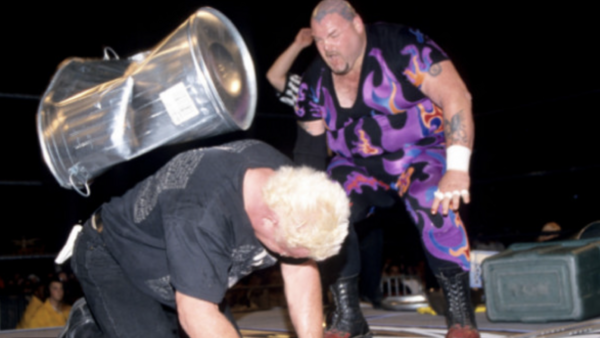
Bam Bam Bigelow had headlined WrestleMania 11. He was one of the most agile big man workers ever, basically the prototype for the modern variant. He was awesome on his best nights.
One uncomfortable truth about Bam Bam is that he was never as over as you remember throughout the New Generation Era. This seems absurd, because he was one of the few heels who wasn’t completely useless, but there was a reason why Mabel was King Of The Ring - not because he himself was a decent draw, but because Bigelow wasn’t, and Mabel was a lot bigger. In his ongoing pursuit to push big fellas…legally, Vince replaced the gas with mass during that wretched summer.
“Promising career” is still very much apt, though, because look at what Bigelow achieved after he voluntarily left the WWF in late 1995. His ECW run was outstanding, particularly his series with Taz, which set the template for some of WWE’s favoured stunts. It helped that Bigelow looked even more gigantic in that ECW ring. Bigelow earned another run in the mainstream, but unfortunately for him, he went to WCW the month before they beat Goldberg for the first time. Even with the company on its absolute arse, Bigelow grafted, and was a credit to a promotion that didn’t deserve that level of effort. Bigelow Vs. Hak from Spring Stampede 1999 was one of the best and most fun offerings from dying-days WCW. He’d have made a great opponent for Steve Austin in the Attitude Era, with arena-wide brawls all the rage, but it wasn’t to be.
Bigelow left the WWF on bad terms, citing the Kliq’s outrageous politicking as his primary reason. In a shoot interview conducted by Title Match, Bigelow alleged that the Kliq’s treatment of Chris Candido almost drove him to suicide. More generally, Bigelow said that the Kliq would mess with guys for the hell of it, urging Vince McMahon to fire them so that they could hold onto their spots.
Bigelow also claimed that he was resented by the Kliq for headlining WrestleMania. Bigelow didn’t cite too much in the way of personal mistreatment - would you have messed with him? - but was so appalled by the toxic culture that the group created that he wanted nothing to do with it.
4. Monty Brown
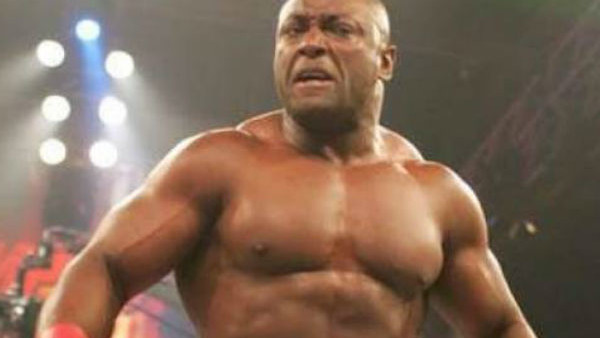
Wrestlers of a certain profile or with a certain persona only really get one crack at the big time. Fans simplified the death of WCW in many ways, one of which was the defeat of Goldberg by Kevin Nash at Starrcade 1998. A few questions on that:
Was Goldberg going to remain undefeated forever? How would that have worked, narratively, in year two or three? Wasn’t it best to beat the guy when fans thought he was invincible, to elicit the maximum emotion?
Who was Goldberg really going to lose to? One of the fashionable cruiserweights? Or Chris Jericho, even though A) Goldberg wouldn’t work with him, much less job to him and B) Jericho, one of few actual rising stars, had made it clear he wanted to jump?
Goldberg was a sensation who lacked the range and thus the longevity to draw over the long-term.
He was significantly cooler than the Ultimate Warrior: another wrestler who enjoyed massive success and a World title before his lack of staying power was exposed. Some don’t get the World title - AEW’s Wardlow being a great example. TNA’s Monty Brown falls under that category.
The point, though, is that you absolutely might as well make the fans happy, and hope that they literally buy into the idea of a short reign, rather than squander the hot hand. You can always slow-build a wrestler with more depth in the meantime. You only really get one shot with a Goldberg, a Warrior, a Monty Brown - and politics undid the latter permanently after the events of Final Resolution 2005.
Monty Brown was closer to Goldberg than the Warrior, in that he was a superb one-dimensional wrestler, and his pounce, while nowhere near as iconic as the spear, was an innovative way of making the fans lose their minds. Brown was as much of a sensation as it was possible to be in TNA, but because he apparently was not “ready”, Jeff Jarrett beat him - the same Jeff Jarrett who had the power to do as he pleased.
Brown fell out of love with the business thereafter, packing it in after a poor WWE stint in 2007.
3. The Nexus

This one might be tenuous. Let’s consider the actual promise held by the individual members of the Nexus:
Darren Young: Generic as humanly possible between the ropes, a hardly unique issue in an era during which virtually every new WWE wrestler was trained by the same coach in the same school under the same playbook.
David Otunga: More clumsy than Darren Young. Actively bad even by the standards of a developmental promotion, in fact. A look, and nothing else.
Heath Slater: An obvious buffoon-type character who didn’t fit the profile of a disruptor group at all.
Justin Gabriel: His high-flying ability set him apart, at least, but he was only relatively and marginally “spectacular”.
Michael Tarver: The greenest of the lot.
Skip Sheffield: Striking look, dumbass face, a quasi-effective goon.
Wade Barrett: He was considered a future WrestleMania headliner, but the bleak and star-bereft era in which he emerged meant that fans were more desperate than discerning when fantasy booking. Still, WWE did not have the luxury to, you know, massacre one of the very few guys who might be worthy of the spot.
The group worked as a hivemind with a single objective. People bought into the vision of the group through its M.O. and the graphene strength of the iconic formation angle. Nobody reasonably thought that Tarver was going to headline WrestleMania. The Nexus, at the time, were not perceived in the same way the Shield were a year later - but as a vehicle for Barrett and that alone, the Nexus should have been protected. The group was not protected.
To the infamous disgust of Edge and Chris Jericho, who registered their disbelief on the Talk Is Jericho podcast, John Cena purportedly lobbied to beat the Nexus at SummerSlam 2010. At the finish of the Nexus Vs. Team WWE seven-man tag main event, Cena recovered from a DDT to exposed concrete in under two minutes to defeat both Gabriel and Barrett in a handicap scenario. The Nexus cooled down significantly. The audience retained their belief in Barrett, purely out of hope, rather than expectation and real belief, but he was defeated by John Cena to end the whole deal at TLC.
If you take a less histrionic look at Barrett’s subsequent WWE career, you might revise one of the day’s most fervent controversies. Barrett was the umpteenth victim of the dirt-worst booking imaginable, but he didn’t excel in spite of it. Still, the stigma that calcified probably ruined him forever.
2. Shane Douglas

People forget how good and how innovative Shane Douglas was in ECW. Did you ever wonder when the entire vernacular of pro wrestling changed?
Wrestling in the United States mainstream is long past the era of an entirely fictional morality play, in which exaggerated characters commit violent acts warranting vengeance to drive the plot forward. Now, the wrestlers operate as self-aware in the business of it all. They don’t question one another’s guts or balls, but rather their ability to carry the brand. How did we arrive at a point at which almost every big match build is a volleyed exchange of worked-shoot insults? A point at which plot doesn’t really exist, replaced by a wordy game of meta oneupmanship?
It probably all started when Shane Douglas threw the NWA World’s Heavyweight title to the ground and buried its ancient, past-it lineage of holders before starting a one-sided grudge programme with “Dick” Flair.
Douglas was never a super-worker, but he was smart enough to portray himself as the more pure wrestler in the garbage promotion, carrying a sort of relative elegance. When this bit was exposed - the man was fixated with adding several useless minutes to his matches - he was confident enough to reclaim his aura with his incandescent promo skills. The man had convinced himself he was the best thing going; sometimes, that’s enough. Shane Douglas was lumbered with an awful, failed gimmick during his massively ill-fated WWF run of 1995. But then, so was Steve Austin. Douglas might have overcome that, had he not run into the Kliq.
Douglas has buried the Kliq several times over the years on the shoot interview circuit. Douglas claims that Razor Ramon, upset that he wasn’t going over clean, sandbagged Douglas in one of his first WWF matches. Razor, Shane claims, also played a dirty game where he’d tell Shane he could lay his punches in one night before saying “not that stiff, mate” the next. Shane also reckons that Shawn Michaels would deliberately call the opposite spot seconds after Douglas, who was leading, called his, leading to “choppy” matches that made the new guy look like he couldn’t make the step up. After all, the Kliq members could have great matches with everybody else. Shane is also firm in his belief that Shawn Michaels overstated the effects of the infamous concussion he suffered in Syracuse in order to get out of dropping the Intercontinental title to him.
It might scan as idiotic, in 2026, to state that Shawn Michaels was threatened by Dean Douglas - but Shane Douglas put ECW on the map, and the Kliq basically spent years urging Vince McMahon to shift the WWF into a more ECW-leaning direction. It is also impossible to look at Triple H in 1999 and not see a silhouette of Shane Douglas.
1. Jack Perry

When AEW launched, it did so with an unprecedented and unique opportunity: fans were able to follow the mainstream careers of virtual unknowns from day one.
This held enormous potential. In English football, fans chant “He’s one of our own” at local, academy-produced players. This was roughly the wrestling equivalent: the chance to watch a talent develop and become the best version of themselves, and feeling a weird sense of both pride and the vindication of spotting that talent early.
Jungle Boy was ideal for this. An exciting worker with a wholesome quality and sympathetic backstory, while the gimmick predated the promotion, his ring name alone was perfect for this arc: he was going to headline AEW one day as a man. Nobody wanted to acknowledge, however, that this process is always preceded by awkward adolescence.
He got very over initially, The rough outline was stencilled in perfectly. World Tag Team title wins. Tony Khan’s investment in his ‘Tarzan Boy’ theme, a strong cue that your support was going to be worth it. A storyline association with Christian Cage that was always going to mutate into his breakthrough blood feud. Though this was delayed, which didn’t help, Jungle Boy avenging Cage’s despicable psychological torture at Revolution 2023 was fantastic. This was meant to be Perry’s first step into the main event. It might have been his career peak.
Perry could not shake his PWG sensibilities throughout his feud with fellow ‘Four Pillars’ MJF, Sammy Guevara, and Darby Allin. A heel turn, usually such a reliable means of reheating a cold wrestler, did not work. Perry seemed to learn nothing from his storyline mentor Cage, nor real-life mentors the Young Bucks, about how to work as an undersized heel: Perry too often tried to control his opponents rather than scarper and stooge. All of which is to state that Perry might not have made it to the main event, even if he did not engage in a career-defining shoot feud with CM Punk - but he was inextricably associated with the man forever after August 2023.
Overshadowing the inaugural All In: London, Perry blasted HOOK against a car windshield and said “That’s real glass: go cry me a river”. Punk confronted and attempted to choke out Perry backstage in response. This was because Punk - who might have responded disproportionately through his hatred of the Bucks - had admonished Perry for his pitch to use real glass in a heat angle with HOOK on Collision.
Did Jack Perry do anything that was enormously wrong? Did Jack Perry threaten to tarnish the pure wrestling sanctity of Collision with the idea - which was not remotely dissimilar to the type of thing Punk’s mate Darby Allin is almost defined by?
Perry’s conduct at Wembley Stadium, while totally unprofessional, could be rationalised and forgiven. It was his first reported transgression. Also, he was hardly the first AEW wrestler to crack a real jibe on TV. Hangan Page beat him to it by a full year; Punk himself weeks before All In had buried Page in an off-air Collision segment that Punk knew full well was going to get captured on a smart phone.
Perry was suspended, and when he returned in the spring of 2024, he did so under the guise of the ‘Scapegoat’. This was an attempt to capitalise on his notoriety, but he was resented in a counterproductive way. AEW was haunted by Punk; Perry’s character was a weekly reminder that things had gone to sh*t, and that escapism was impossible.
By late 2025, Perry had turned babyface and reverted to his old persona. He was in far better form, and the highlight of the awesome Mile High Madness 10-man tag on the February 25 Dynamite - but it wasn’t the same. It always feels like Perry should have grown up by now.
He’ll always be the guy who said that thing on that show, fairly or otherwise.