20 Things You Didn't Know About Wrestling In 1996

So much happened in such a short space of time...

1996 was an interesting and notable year for wrestling. It was the first full year of the Monday Night Wars, it witnessed the birth of Austin 3:16, Hulk Hogan turning heel, the formation of the nWo, the infamous Brian Pillman gun angle, the Curtain Call, the defection of top stars between WCW and the WWF, Vince McMahon offering guaranteed contracts to his roster for the first time, and monthly pay-per-view events from both of the big two. So much happened in such a short space of time, but what was the real story behind some of those events? What are the misconceptions that are commonly parroted and what are the real facts? And what are those bits and pieces of information that have not been widely reported? From grandstand matches that never happened, defections that didn't pan out, significant changes to booking, and originally proposed gimmick ideas, we have it all covered.

20. Vince McMahon Did Not Want To Do The Iron Man Match

One of the most talked about €“ and polarising €“ matches of the year saw Shawn Michaels dethrone Bret Hart to win the WWF Championship at WrestleMania XII and achieve his much-vaunted €œboyhood dream€. Some love the match, considering it a mat clinic and a classic for the ages. Others feel it was a self-indulgent bore that lacked drama. The latter was Vince McMahon€™s concern prior to booking the match. The bout was originally proposed by Pat Patterson, who was a big fan of both grapplers and was excited at the prospect of seeing them wrestle each other for a solid hour. But the concept was initially rejected by McMahon, who thought it would be too long for a pay-per-view main event and would struggle to retain his audience€™s interest. While he eventually changed his mind and decided to go with the bout, he still had his reservations. They were proven correct in part by a significant percentage of the audience filing out of the Anaheim Pond before the match reached its conclusion, with the majority of the audience only there to see the return of The Ultimate Warrior. It would be four years before the WWF presented another Iron Man match, a rip-roaring affair pitting Triple H against The Rock at Judgment Day 2000.

19. Kevin Nash Nixed Diesel Vs. Ultimate Warrior

When Kevin Nash informed Vince McMahon of his decision to leave the WWF for WCW, McMahon asked him to comply with the time-honoured traditions of the wrestling business by putting over a number of wrestlers on his way out. McMahon requested that before Nash went to Atlanta he lost to The Undertaker at WrestleMania XII, Shawn Michaels at In Your House the following month, and The Ultimate Warrior on Raw. Nash had no issue whatsoever laying down for Undertaker, who he was friends with and deeply respected, or his best friend Michaels. Warrior was a different matter. Nash told McMahon, €œHey, if he can take one on me, it€™s all his,€ suggesting that the only way he would lose to Warrior would be if he came out on top in a shoot. Vince decided the risk was not worth the reward and changed plans. Ultimately, a Diesel vs. Ultimate Warrior confrontation never happened, though few shed any tears about missing that 'dream' match.

18. Sable Was Only Hired Because Vince McMahon Was Smitten With Her

When Marc Mero was negotiating a deal with Vince McMahon he brought his wife Rena with him, but little did he realise how much that decision would affect the rest of his life. McMahon was immediately besotted with the former L€™Oreal model, crooning admiringly, €œWow, what a lady!€ to his staff once the meeting had ended. Vince decided on the spot that he wanted Rena to come in alongside Marc as part of a Mero package deal and instructed Bruce Prichard to offer her a guaranteed contract to go alongside her husband€™s. While the deal worked out well for Rena, who achieved global superstardom and a pair of Playboy covers as the salacious Sable, Marc having his wife along for the ride proved detrimental to his career. Sable overshadowed Mero and was clearly perceived as the star of the duo, with male fans resenting him for having bagged the blonde bombshell. She split off from Marc and forged her own path in WWE, becoming a millionaire in the process. The two divorced in 2004 and Sable soon entered a relationship with future husband Brock Lesnar. Talk about trading up.

17. Ron Simmons Thought Faarooq Asad Was A Rib

Hired by the WWF on the recommendation of Jim Ross, who was a fan from his WCW days, Ron Simmons attended a meeting at Vince McMahon€™s house shortly after he signed to discuss what his role in the WWF would be. He was shocked when McMahon laid out his vision. €œWe see you as this gladiator. This Spartan,€ McMahon told him. McMahon then produced a series of drawings that his team in Creative Services had provided depicting Simmons in a leather helmet and a cheap fancy-dress Roman gladiator costume. Simmons was so convinced that McMahon was ribbing him that he began to laugh. Then he realised he was the only one laughing and McMahon was serious. Torn between wanting the security of a long-term WWF job or looking like a laughing stock, Simmons had to make a choice. As is so often the case, money talks, and Simmons agreed to the character €“ named Faarooq Asad €“ telling Vince, €œI think it€™s great. It€™s absolutely fantastic! I think it will be the best thing that I€™ve ever done.€ The gimmick lasted less than four months before Simmons was repackaged as the leader of black militant group the Nation of Domination.

16. Sabu Was Booked For The 1996 Royal Rumble
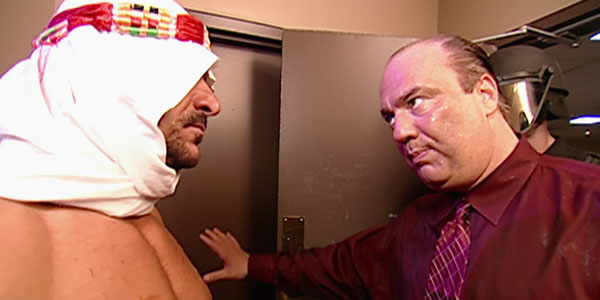
Upon scouring his roster, Vince McMahon realised that he was significantly short on talent to fill his annual 30-man Royal Rumble contest, so decided to cast his net wider than usual in an effort to bring in stars from outside of the WWF. One of those he tried to sign on a one-time-only deal was ECW€™s table-breaking, hardcore wrestling proponent Sabu. Sabu talked with the WWF and reached an agreement to appear in the match, with McMahon even making concessions to protect Sabu€™s aura by consenting to him performing his trademark table-breaking spot as a means to eliminate himself. The WWF began promoting Sabu€™s appearance on its hotline and television, but ECW owner Paul Heyman soon stepped in to throw a spanner in the works. Uncomfortable that the WWF was treating ECW as a feeder company he tried to talk Sabu out of doing the show, then craftily went public and discussed the situation with his ECW Arena audience. Now if Sabu appeared at the Rumble, the ECW fans were guaranteed to turn on him. The WWF tried to smooth things over by offering Heyman a number of undercard talents to appear on ECW shows in return, but Heyman rejected the proposal because he did not want ECW to be seen as endorsing the WWF when his product was positioned as being the antithesis of the major league promotions. Sabu finally relented and pulled out, leaving WWF officials red-faced and determined not to do business with Heyman ever again.

15. €œMind Games€ Was Originally Called €œSchool Of Hard Knocks€

By mid-1996, the WWF and Paul Heyman were back on friendly terms and willing to work together again. They soon came to an agreement that would see ECW stars turn up at the WWF€™s September pay-per-view event in ECW€™s hometown of Philadelphia and cause a ruckus. For ECW the deal gave them exposure and furthered their rebel outlaw image, while for the WWF it was seen as an unpredictable stunt that would get people talking. The WWF originally named the show €œIn Your House: School of Hard Knocks€ as a way to acknowledge the relationship. The original main event pitted what should have been the new WWF Champion Vader (he was originally set to win the belt from Shawn Michaels at SummerSlam €™96) and his manager Jim Cornette against Shawn Michaels and his mentor Jose Lothario. However, Vader€™s defeat to Michaels and complete neutering as a credible challenger caused the WWF to change plans. Mick €˜Mankind€™ Foley was drafted in as Michaels€™ opponent instead, with McMahon deciding to change the name of the show to €œMind Games€ in order for it to tie in better with the main event.

14. Vader Was Supposed To Be WWF Champion

What was that you just read about Vader being booked to win the WWF Championship? Well, originally Vader €“ after McMahon was convinced by Jim Ross and Jim Cornette €“ was pencilled in to defeat Shawn Michaels at SummerSlam €™96. McMahon was not yet sold on Vader, who he felt was in poor shape and had displayed attitude problems in a house show series with The Ultimate Warrior. Nevertheless, Vince agreed to the storyline, which was supposed to culminate at Royal Rumble €™97 in Michaels€™ hometown of San Antonio, where the returning babyface hero would finally conquer his mammoth foe. It was the same overwhelmed underdog booking that the WWF had mastered over the years, and McMahon was convinced it would work for Michaels and finally get him over with a male audience who were rejecting him. He booked Vader against Michaels around the house show loop so they could get familiar working together, but it only caused problems. Vader was used to working stiff and getting away with it, which elsewhere would have been fine. In the WWF with a much tougher schedule, wrestlers were far less inclined to allow their bodies to take such a beating. During one match, Vader stiffed Michaels so hard that the grumpy Heartbreak Kid warned that if he hit him again, he would have him fired. Michaels did not have him fired, but he did have the main event program changed. Concerned about the prospect of working with Vader for the next six months, Michaels nixed the program and suggested Sycho Sid step into the role of resident monster instead. The way Michaels saw it, Sid was a clumsy lunk, but at least he worked light. Ultimately, Vader never did win the WWF Championship, though his replacement Sid would have two runs with the belt, one of which afforded him a place in the headline spot at WrestleMania 13.

13. Michael Hayes Gave Steve Austin The Stone Cold Stunner

After Steve Austin reinvented himself as €˜Stone Cold€™, there was still one piece of the puzzle missing: a new finishing move. He was still using the Million Dollar Dream sleeper hold, a remnant of his ill-fated spell as Ted DiBiase€™s Ringmaster. Wanting to disassociate himself from DiBiase and feeling an impactful move was better than a submission, Austin racked his brain trying to come up with something. On May 27, 1996, Michael Hayes came up to Austin and told him, €œI think I have come up with a better finishing move for you.€ He then demonstrated what would later become known as the Stone Cold Stunner, the perfect sudden-fire impact hold for Austin€™s brash, in-your-face character. However, Hayes had not come up with the move at all. He had actually stolen it from Johnny Ace (John Laurinaitis). Ace had sent in a tape of a match of his from Japan with the intention of securing a WWF job, but Hayes had stole his Ace Crusher finisher and gave it to Austin. €˜Stone Cold€™ had a new finishing move that helped catapult him into the stratosphere, while Ace never did get that WWF wrestling contract. He did secure a top-level office job with the company years later mind, so it did not work out too badly for him in the end.

12. Dory Funk Jr. Was In The Royal Rumble As A Favour To Giant Baba

Veteran former NWA World Champion Dory Funk Jr. was one of the 1996 Royal Rumble€™s elder statesmen at fifty-five years old. His inclusion in the match came about due to a working relationship that the WWF were attempting to forget with Giant Baba€™s All-Japan Pro Wrestling. Vince McMahon had witnessed the success Eric Bischoff was enjoying working with AJPW rivals New Japan and he wanted a piece of the action. Funk€™s inclusion was a personal favour to Baba, with the idea being that the ageing grappler would serve as a liaison between the two promotions. However, the WWF had a poor track record working with others and the talent trading agreement with All Japan never got off the ground. A shame, as the prospect of Mitsuharu Misawa, Kenta Kobashi and Jun Akiyama clashing with the likes of Shawn Michaels, Bret Hart, and Vader in WWF rings is a tantalising one.

11. The British Bulldog Nearly Signed For WCW
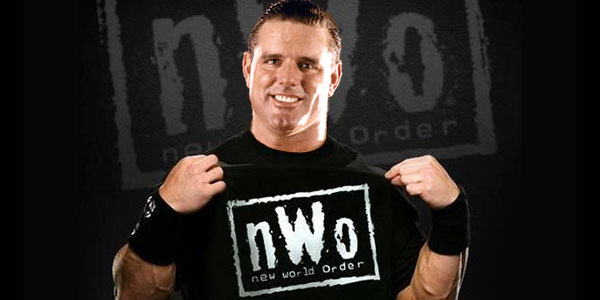
Two days after he headlined the WWF€™s infamous Beware Of Dog pay-per-view opposite Shawn Michaels, Davey Boy Smith faxed Vince McMahon his ninety day notice. His intention was not to leave the WWF but rather to force McMahon€™s hand into giving him the main event level contract he felt he deserved. However, once Eric Bischoff got wind of his availability he was eager to make a deal. By the time Bischoff came to the negotiation table he had debuted the nWo angle on television to a phenomenal response, with the success driven by the unpredictable nature of recent former WWF stars turning up and pledging their allegiance to the renegade faction. Smith would fit the bill perfectly as the group€™s latest addition, and WCW were so confident that he had been wooed by their deep pockets that they earmarked his debut for the September 2nd edition of Nitro. But Smith did not want to return to WCW. He had suffered a torrid time there in 1993 and had actually been fired by Bischoff over a monetary dispute, so he had little interesting in working for him again. Davey Boy€™s loyalty was to the WWF and upon surveying the wrestling landscape he realised he was in a better position in New York than he would be in Atlanta, despite personal assurances from Hulk Hogan that he would be looked after. Eventually Smith turned down the WCW offer and re-signed with the WWF for $250,000 per annum guaranteed. Little over a year later due to the fallout of the Montreal Screwjob, he was forced to pay $150,000 out of his own pocket to tear up the contract and quit the WWF to follow Bret Hart to WCW.

10. Brian Pillman Tricked Eric Bischoff Into Giving Him His Contract Release
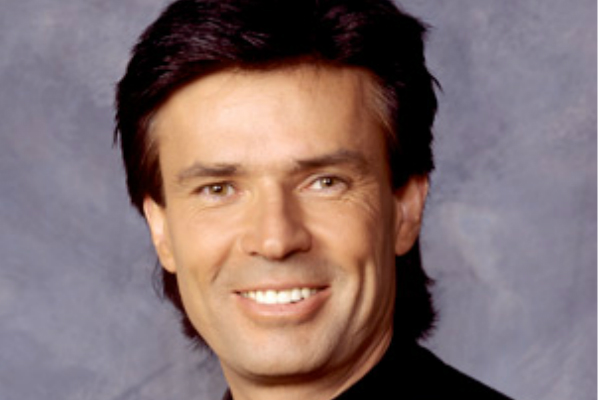
In 1996 Brian Pillman set the wrestling world on fire with his unique, outside-the-box Loose Cannon persona, blurring the lines between fantasy and reality with his worked-shoot promos and erratic behaviour. The only people in Pillman€™s home promotion WCW who were aware that the whole thing was an elaborate ruse were booker Kevin Sullivan and company chief Eric Bischoff, who had authorised Pillman to run with the angle. What they did not realise was that they too were being worked by the master manipulator. Pillman€™s real motivation for the gimmick was to enable him to make such a name for himself that he would be the hottest commodity in wrestling and thus able to generate the sort of main event money that would allow him to be set for life. Pillman wanted to pit WCW and the WWF against one another in a bidding war for his services, but there was a problem: he was tied to a long-term WCW contract. Pillman had a plan for that too. He convinced Bischoff to €œfire€ him for shooting during a match with Kevin Sullivan and allow him to go and work for a few months in ECW. Bischoff agreed that if it helped the angle he was happy to go along with it. But the crafty Pillman wanted more. He wanted Bischoff to grant him a genuine release from his contract to stop word getting out that he was been sent to ECW with WCW€™s blessing, thus killing the conceit. Poor, gullible Bischoff agreed and Pillman was cut from his deal. A few months later he accepted a deal from the WWF, leaving the hapless Bischoff red-faced.

9. Vince McMahon Wanted To Rename Vader €œThe Mastodon€

When the WWF entered negotiations with former WCW Champion Big Van Vader in early 1996, the first thing Vince McMahon wanted to do was repackage and rebrand him. Feeling his marketing machine could not fully get behind a preexisting character from another company, McMahon came up with something else. After taking a good look at Vader he declared, €œLook at him! He€™s a big Mastodon! He can be The Mastodon.€ Jim Cornette thought the idea was preposterous. €œIt€™s f*****g Vader!€ he half-yelled, €œHe€™s a former WCW World Champion. Everyone in the world knows who he is!€ Vader was similarly aghast at the prospect of becoming a new character after years of success playing Vader and rejected the proposal. He later noted that he regretted that decision and felt it may have held him back in the WWF. €œVince wanted to create a whole new character, and you know what? I should have done it,€ he rued. €œThe WWF would have owned it, but Vince would have marketed if it was his. That was a mistake, and that was stupid on my part. I should have said yes.€

8. Tracy Smothers Buried Himself With Two Locker Room Power Players

Tracy Smothers was hired alongside a number of other former Smoky Mountain Wrestling talent on the recommendation of Jim Cornette, who had suggested that McMahon bring in some well-travelled wrestlers to work with and put over his top stars. The Monday Night War had rendered squash matches obsolete, and fresh blood would support a thin roster who were working with each other week in, week out. Smothers was repacked as hackneyed country bumpkin stereotype Freddie Joe Floyd, a rib name based on the real names of Gerald (Floyd) and Jack (Freddie Joe) Brisco. On his first night with the WWF he managed to make a powerful enemy in locker room leader The Undertaker. Smothers, who knew Undertaker from years back and considered him a friend, listened to the €˜Dead Man€™ rant about the latest whacky edition to the WWF roster, the Body Donnas€™ transvestite manager Cloudy. Taker grumbled, €œSome guys will do anything to get in this f*****g business.€ Smothers, noting the irony, quipped, €œYeah, I hear ya man. So, how long you been dead now?€ Undertaker didn't say anything in response, he just silently seethed as his face went beetroot red, shooting Smothers a glance that said more than any words could have. Two months later he sealed his fate when he irked Shawn Michaels. His crime? Looking competitive for twenty seconds en route to a quick defeat to Vader. Michaels was irate that a guy as low down on the totem pole as Smothers had managed to get any offence in against Vader, a man he had worked with at SummerSlam the night before, as he felt that Vader looking vulnerable made him look vulnerable. Smothers apologised, but he knew the writing was on the wall. He was gone from the WWF a few months later having barely featured on television at all in those final days with the company.

7. Vince McMahon Signed Bret Hart€™s Contract At The Last Minute

Having being coerced into agreeing a big-money deal with Bret Hart far in excess of anything he had guaranteed an employee prior, Vince McMahon suffered an immediate bout of buyer€™s remorse. In fact, he began regretting the deal before he had even signed it. Bret was set to return on the October 21st edition of Monday Night Raw, which McMahon intended to announce on the previous week€™s show, but there was a snag. Bret would not sign the contract he had been faxed because it was completely different to what he and Vince had discussed. Hart refused to agree to the October 21st appearance until the correct deal was sent, signed, and sealed, causing McMahon to miss out on promoting what should have been a ratings-moving appearance. McMahon sent another contract to Hart on October 18th that was so different to what they had agreed on that Hart€™s lawyer told him, €œOnly an idiot would sign that contract.€ Hart told McMahon he was not appearing on Raw three days later until it was resolved. Eventually Hart€™s former business manager and then Head of Operations in Canada Carl Demarco was drafted in to finalise the deal. He advised McMahon to lock Hart down quickly otherwise he would leave for WCW, leaving the WWF in tatters. McMahon finally relented, offering Hart an apology and agreeing to even better terms than they had originally discussed, thanks to the machination of Demarco. The deal was only signed an hour before Raw went live, with McMahon looking pensive as he put pen to paper, clearly anxious about committing so much money to one wrestler. As history tells us, he was so anxious that he eventually broke the deal a year later, leading to the Montreal Screwjob which eventually, inadvertently, turned the WWF€™s fortunes around.

6. Shawn Michaels Had A Tantrum In The Middle Of A PPV Main Event

May pay-per-view Beware Of Dog was a disaster for the WWF. An electrical storm knocked out the power to the show mid-way through the broadcast, causing much of the live action to be missed. The uncertainty about whether the card would resume on television caused a number of changes to the Shawn Michaels-Davey Boy Smith main event, leaving Michaels in particular at his wit€™s end. The power came back on in time for the match to go ahead, by which point Michaels was in a foul mood. With the crowd quiet due to the unusual show in the dark they had witnessed for the past hour, the shouts of one heckling female could be heard above the masses. Michaels was sat in a Smith chinlock when he finally snapped, breaking character and yelling, €œShut up you fat skank!€ Referee Earl Hebner was visibly uncomfortable with Michaels€™ vitriolic assault, so he was less than thrilled when a message came over his earpiece that due to the power outage, the match had to be cut short. Hebner now had the unenviable task of informing the wound-up WWF Champion, who predictably took the news badly. He immediately stopped selling, shrugging his shoulders impetuously, then began to sabotage the match with unusual, unrealistic selling. He and Smith took the match home soon afterwards, before Michaels rounded off his eventful 15-minutes by yelling at a hapless ring technician for failing to cue his music in as timely a fashion as he wished.

5. Nash And Hall Were Working Without Contracts In WCW

Such was WCW€™s incompetence that Kevin Nash and Scott Hall spent the first five months of their run in Atlanta working without official contracts, but rather on deal memos. The confusion came because WCW were cutting it fine with Nash and Hall€™s WWF deadlines and had no time to finalise official contracts before the pair€™s WWF deals rolled over. So they gave them deal memos to secure them to the company, then forgot to change them. When the WWF announced that Diesel and Razor Ramon would be coming back to WWF programming in September 1996, WCW officials realised their mistake and began to panic. Worried that Nash and Hall were heading back to the WWF, killing their hot new nWo angle dead, they brought them into a private room at the next television taping and placed hard copies of their contracts on the table in front of them. Such was WCW€™s desperation to keep the pair that they offered them $400,000 per annum apiece more than their initial agreement. Nash and Hall signed immediately because they had no intention of going back to work for the WWF. They were as surprised as anyone about the WWF announcement of Diesel and Razor€™s returns. All became clear a few weeks later when Glenn Jacobs and Rick Bognar were wheeled out as the €œnew and improved€ Diesel and Razor Ramon, causing collective groans from WWF fans and Eric Bischoff to pull his hair out. He had just paid almost $1,000,000 to sign two of his wrestlers to contracts they were already under.

4. The USA Network Approved The Pillman Gun Angle

When the WWF and the USA Network reached an agreement to shift Raw€™s start time in an effort to counter WCW€™s increasingly-popular Nitro, executives from both sides agreed that they needed to start with a bang. It was one of Vince McMahon€™s closest aides, Bruce Prichard, who came up with the idea they would run with. He pitched that Steve Austin would storm Brian Pillman€™s house with the intention of finishing what he had started during an angle on Superstars where he broke his former tag partners ankle, and Pillman would respond by invoking the castle doctrine and bringing out a pistol to defend himself. It was new ground for McMahon, who had always been against the use of guns in his programming, but it captured the spirit of what he wanted Raw to be and he agreed to the angle. USA officials agreed to let Vince run with it provided he made some concessions to the script (which had initially called for Brian€™s wife Melanie to take a tumble, and for Pillman to fire the gun onscreen, both of which were removed at the network€™s request). Most were expecting a hokey wrestling angle, however, what they received was one of the most controversial, expletive-ridden, and realistic angles the WWF had ever done. Despite the USA Network having given the piece the go-ahead, McMahon found himself hauled into the office of network president Kay Koplovitz and given a stern warning to tone things down and make the content of Raw lighter. In typical McMahon fashion he ignored them completely and made Raw edgier and more raunchy, a tactic which eventually worked in 1998 when the WWF regained the lead in the Monday Night War. It never looked back.

3. OJ Simpson vs. Roddy Piper At WrestleMania XII?
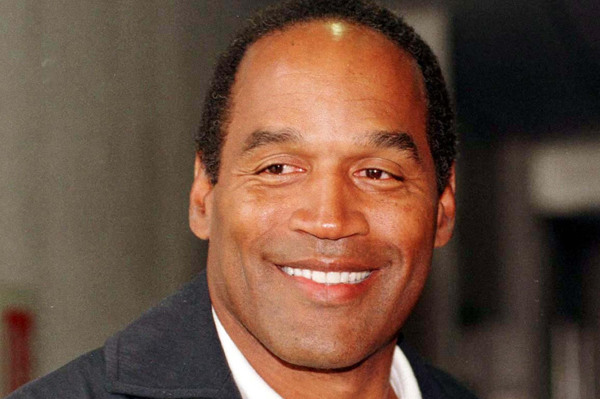
Despite the failed experiment of football player Lawrence Taylor wrestling in the main event of WrestleMania XI, the WWF were not put off by the idea of putting celebrities in the ring to square off with their wrestlers again. In early 1996, Bruce Prichard (him again) pitched one of the most out-there ideas in company history: OJ Simpson versus Roddy Piper at WrestleMania XII. While Simpson €“ like Taylor €“ originally made his name playing football, he was far more renowned for being accused of murdering his ex-wife Nicole Brown Simpson and waiter Ronald Lyle Goldman. For a while in 1995 the court case was the most talked-about thing in the entire world, and it would not be a stretch to say that for one year, Simpson was the most (in)famous man on the planet. Prichard wanted to capitalise on Simpson€™s notoriety by putting him in the ring with company icon Piper, which he figured would make WrestleMania XII the most watched pay-per-view event of all time. Evidently Vince McMahon agreed and authorised his team to enter negotiations with Simpson€™s representatives. They talked, briefly, but no agreement materialised, leaving Piper without an opponent. As luck would have it, Scott Hall flunked a drug test and was out of WrestleMania, so the WWF inserted Piper in his place for a bout with resident androgyne Goldust. Piper beat the snot out of him at €˜Mania in a Hollywood Backlot Brawl, during which the WWF cut to footage of the OJ Simpson car chase and claimed Piper and Goldust were behind the wheel of the vehicles. No doubt, they would have done something similar had the real OJ wrestled on the show, because in the world of the WWF, nothing is off limits.

2. Vince McMahon Approved The Curtain Call

The most commonly recited version of the infamous Curtain Call story is that the Kliq went into business for themselves in the hallowed grounds of Madison Square Garden, violating kayfabe for their own ends and seriously irking Vince McMahon. But that is not what happened. The truth is, McMahon not only knew about the planned Curtain Call, he approved it. While Vince was in his temporary Garden office making one last pitch to Scott Hall for him to stay with the WWF, Shawn Michaels burst in and asked, €œHey Vince, do you mind if Raze€™ and Hunter come out after my match?€ Vince was distracted dealing with Hall and told Michaels to do whatever he wanted. The problem came with the reaction of McMahon€™s staff, who were apoplectic with the Kliq going into business for themselves at the Garden. Triple H was stood next to McMahon when Hall, Nash and Michaels were already in the ring and asked if he was allowed to go and join them. Because Gerald Brisco and others were pitching fits, McMahon played dumb and didn't respond, so Hunter went out anyway. Seeing the negative response around him, Vince realised he had no choice but to publicly punish those who remained in order to save face. Because Shawn Michaels was his WWF Champion the onus fell on Triple H to take the brunt. During a meeting the following week at Beware Of Dog he told the pair, €œI know I kinda said okay, but it became something I didn€™t think it was gonna be. Now the image is out there. It€™s made me look terrible. I didn€™t know it was going to go that far.€ Then he told Hunter he had to punish him by taking away his planned King of the Ring win and having him job to everyone, and that they needed to apologise. Realising McMahon was backed into a corner, they complied with his wishes. As a reward for taking the blame, Hunter was given the Intercontinental Championship before the year was out.

1. Hulk Hogan And Randy Savage Were In Talks For A WWF Return

Often wrongly claimed to have occurred in 1997, Hulk Hogan and Randy Savage were both in talks with the WWF towards the end of 1996. Having recently turned heel for the first time since the birth of Hulkamania, Hogan was red hot following a difficult few years in WCW and McMahon once again saw the value in having him as part of the WWF. The pair met in Denver and discussed terms, with Hogan later claiming that McMahon offered him $5 million per year to return in the Royal Rumble match - a bout he would win €“ before going on to lift the WWF Championship for a record-extending sixth time at WrestleMania 13. As with every Hogan claim, the fee and the scenario are fanciful at best, but the rumours that they were negotiating and Hogan was close to signing a deal to return were true. Randy Savage intended to come with him. He and Hogan were involved in WCW€™s main event feud at the time working opposite one another, and Vince wanted to neuter WCW by snapping up both members of their top program at once. However, Hogan did not fully trust Vince and suspected he would be punished for testifying against him in the steroid trial, so he backed out of the deal, robbing fans of the chance to see him in dream matches opposite the likes of Bret Hart and 'Stone Cold' Steve Austin. He had been using Vince for leverage more than anything, cleverly increasing his perceived worth to Bischoff by openly discussing McMahon€™s interest with his current boss. With the Hogan deal off, Vince€™s interest in Savage waned. He had not seen the value in Savage as a main event star in 1993, never mind three years later, so he refused to offer him anything other than a short term wrestling deal which transitioned Randy into an office position. Savage was not interested in that and the deal broke down, with Savage too committing to WCW for another three years. It was the final time he and the WWF negotiated and he never wrestled or appeared for them again.

Contributor
Contributor

The author of the highly acclaimed 'Titan' book series, James Dixon has been involved in the wrestling business for 25 years as a fan, wrestler, promoter, agent, and writer. James spent several years wrestling on the British independent circuit, but now prefers to write about the bumps and bruises rather than take any of them. His past in-ring experience does however give a uniquely more "insider" perspective on things, though he readily admits to still being a "mark" at heart. James is the Chief Editor and writer at historyofwrestling.co.uk and is responsible for the best-selling titles Titan Sinking, Titan Shattered, and Titan Screwed, as well as the Complete WWF Video Guide series, and the Raw Files series.