12 Bad Wrestling Stories That Wasted Great SWERVE Ideas
The classic wrestling twists you never saw coming, then didn't really want to see at all...
Have you ever considered where the term "angle" actually comes from?
Consider it at its most literal and the simplicity reveals itself. A character is walking down a straight path, or a storyline is progressing in the expected fashion, before an angle - a twist, a turn, a development in the route ahead - occurs that changes the trajectory.
A promo exchange isn't an angle unless a development happens within it that drives change. A post-match beatdown isn't an angle unless the actions have consequences that transform the future. An entire feud isn't an angle, but should be furnished with angles in order to keep itself interesting.
The aforementioned twist, the turn, or even the swerve, bro, is there to keep people guessing, keep everything from going stale, and to that point ideally keep a story from hitting a wall or a dead end before it can be financially milked for all its worth. In contrast to a standard angle though, the swerve historically reflects an air of desperation.
The swerve takes the angle and diverts it yet again, creating a whiplash effect so shocking that it feels as much like a distraction from something gone wrong as a dramatic storyline gone right. Vince Russo loved them because confounding expectations was his bread and butter even when adopting the mindset proved bad for business. He helped craft a couple of incredible ones before it all went wrong, but more often than not...
12. The Shoot Becomes The Work Becomes...The Greater Power?
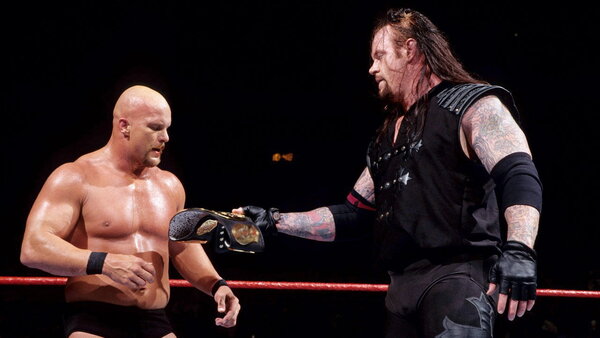
In the summer of 1998, The Undertaker rather gradually (well, gradually for the lightning quick times) turned heel over the summer, first (worked) shooting on how he'd been overlooked for opportunities to justify linking up with his estranged brother Kane before offering their services to Vince McMahon to take down WWE Champion Stone Cold Steve Austin.
For 'The Deadman', it was "just business" until that didn't work, and he made it personal. When Plan A (simply beating Austin fair and square) failed, and Plan B stuttered (the deadly duo won a Triple Threat, but McMahon himself held on to the belt), Plan C brought about an unlikely reunion between The Undertaker and Paul Bearer that existed to get the gold and remove Kane from the picture too. It almost worked, but when the belt remained out of his reach, 'Taker went off the reservation with a power-mad turn as the leader of the Ministry Of Darkness and decided to go for the whole organisation rather than the title itself.
He spoke of a higher/greater power acting as his guiding force in all of this, and that becomes important later.
In the meant though, he targeted McMahon's family, stealing Stephanie McMahon's childhood teddy bear and setting it on fire to illustrate that he was prepared to colour outside the lines to get what he wanted. The bizarre side effect of this was a face turn for Vince, who looked sympathetic trying to protect his daughter over worrying about whatever hell-raising Stone Cold Steve Austin was up to.
And then.
After months of Undertaker's cryptic comments, the overlord figure driving his plan for domination over McMahon was...Vince McMahon, who wanted to keep screwing with Stone Cold Steve Austin because he'd won the World Title back at WrestleMania XV. The swerve resulted not just in half the characters' last three months not making any sense, but also in a genuine lack of faith in the future of the McMahon/Austin programme. McMahon was the perfect heel in 1998, but was simply a relied-upon-one in the absence of anybody better one year year later.
11. Grayson Waller's "Pipe Bomb"
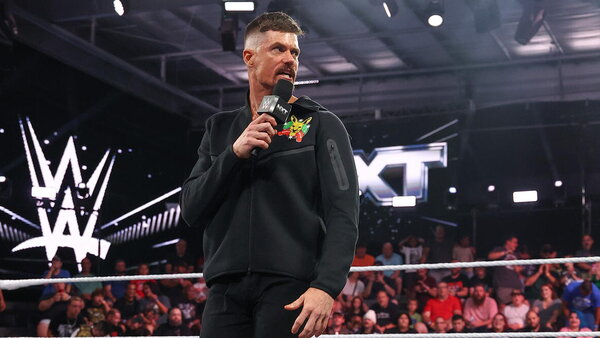
On July 28th 2026, former NXT star Grayson Waller made his return to the developmental brand after several years trying and failing to gain a foothold on the main roster beyond an unremarkable Tag Team Championship run alongside blowhard smug-a-like Austin Theory. Or as he called him, "240 pounds of idiot".
"A-Town Down Under" as an act had nothing going for it beyond the aforementioned WrestleMania XL title win, and Waller admitted as much when he turned up with fighting words for his Raw and SmackDown bosses, the current NXT roster, and the viewing audience. His latest doomed run was alongside The New Day before they decided to bet on themselves and leave for pastures new, and with nothing left to lose, he went somewhere where he could at long last be booked to get a win.
That's where this "Pipe Bomb" (their words) went wrong. Yes, Waller performatively raged against the machine from within it, echoing just enough of CM Punk's famous missive (more on that later) that he scanned as a guy that could be considered enough of a wronged party to earn a second chance. But he'd not really done quite enough with his first one for the rant to feel real.
The speech had made all the right noises in all the right order, and some of the barbs towards allegedly complacent talent were sharp enough to pop the NXT locals. But the promo never once felt transgressive.
Quite the opposite in fact - Waller felt as though he was simply introducing a new page of his character's script rather than tearing one up. Because he was - the Aussie became NXT Champion and settled into the same structure of over-familiar, matches, skits and promos as always within weeks of supposedly shocking rebrand.
10. Paul Heyman Justifies The Entire Invasion

Former ECW boss Paul Heyman was sweating profusely by the time reached the climax of the exhilarating promo he cut on Vince McMahon on the Survivor Series 2001 go-home SmackDown. That pay-per-view was the end of the Invasion as we all knew it, and what a shame nobody got to know the one Heyman laid out in a scathing diatribe.
He ripped into McMahon for his cold and ruthless attitude to the wrestling business and in doing so took a freezing cold storyline and almost heated it all the way back up. WWE and The Alliance weren't at war, and nobody felt it, but McMahon had been at war with the industry for years and for a split second, that felt as though it lay at the heart of the saga.
Heyman was only too happy to make it personal when given the chance to get in the Chairman's face one last time too. Laying out a fairly truthful version of how McMahon's world domination tour took hold in the mid-80s, he said; "Your father went around the country and shook the hand of every promoter in this country and swore to them he'd never compete against them... and when your father DIED you competed. With your ruthless, merciless take-no-prisoners attitude you ran them all out of business didn't you Vince?!"
The future "advocate" was unbelievably adept as a television talker before he permanently entered his hack years in the 2010s, and with his potted history of McMahon's autocratic journey to the top of the industry he made complete sense of a storyline that had otherwise been business-killing slop.
Nobody expected this. Within a week of it airing, nobody needed to remember it. The swerve in the road was anything but too little, but it was too late. WWE won, WWE had already won, and the wrestlers still clinging on to their "WCW" t-shirts wore different ones for their Sunday Night Heat jobs instead.
9. What?

When Stone Cold Steve Austin turned heel at WrestleMania X-Seven, WWE weren't to know that it would turn a gradual business decline into a rapid one as the bloom came off the company's turn-of-the-century rose once and for all.
When Stone Cold Steve Austin turned heel at Invasion, three months later, WWE should have known that they were taking a bad idea and somehow making it even worse.
The July pay-per-view earned and kept a record as the most purchased B-Show in company history thanks to the genuine enthusiasm around a WWE Vs WCW match happening at long last. So much so that the paying customers were prepared to look past the fact that the evil WCW/ECW alliance team featured The Dudley Boyz; men that were coming up on two years with the market leader but rebadged as avengers for shuttered Philadelphia operation.
That mattered little by the go-home Raw though, particularly when Steve Austin reverted to his former ass-kicking babyface self to bring back "The Old Stone Cold" and ensure victory for the good guys once for all. Until he swerve-turned and joined the heels, revealing on Raw the next night that he wanted to go somewhere where he was appreciated.
This did at least tie in to his fractured relationship with Vince McMahon over the prior few weeks, but that couldn't compete with years of conditioning by performer and promotion about how Austin was "fired over the phone", misused and under-appreciated by World Championship Wrestling.
In the months that followed, the increasingly maniacal Austin simply had more wrestlers to berate, with Raws and SmackDowns often being gobbled up by him bollocking them for one reason or another. They didn't exist to take over WWE anymore, but to cater to his weird whims. The worst of times were here, and the best ones weren't coming back any time soon.
8. Seth Rollins Betrays The Shield

As a member of The Shield, Seth Rollins once found himself more over than just about any other babyface on a show that had just recently crowned Daniel Bryan as WWE Champion in the main event of WrestleMania XXX. He used this adoration to maximise the heartbreak of his actions when he turned on Dean Ambrose and Roman Reigns on the June 2nd 2014 edition of Monday Night Raw.
Big actions are supposed to have dire consequences, and after the future 'Architect' bulldozed his own house with such visceral hate, it was electrifying to think of what might happen to and for the sell-out now that he'd joined forces with Triple H's Authority. The strength of emotion (something badly missing from 2010s WWE in general) was such that some felt it was too soon to sever ties within the group whilst still riding a new wave at the top of the card. What next for any of them?
If you said "heel toadie getting splattered in the face with goo", you're too cynical and also a survivor of many, many lost years trying to find something good in a very very bad version of WWE.
It was all so numbingly rote. Seth donned the suit. Seth was neutered by his relationship with Hunter and Stephanie McMahon, going from killer to coward as his promos got boring and his in-match offence no longer really made sense. And Seth coasted to winning Money In The Bank.
The payoff for that is rightfully lauded as an all-time great WrestleMania moment, but before that case was cashed in, it was booby-trapped by Dennis The Menace-era Dean Ambrose. This was 2010s WWE. Nothing good came without lashings and lashings of bad alongside it.
7. Vince McMahon Signs Eric Bischoff

Most wrestling fans will experience a "never say never" moment that warps their perception of the possibilities of pro wrestling forever. To plenty of a certain age, Eric Bischoff arriving on Monday Night Raw in 2002 was the one.
Millions had fallen off by the time 'Easy E' shared a handshake and hug with Vince McMahon that would have been unthinkable just two years earlier, such was the decline in popularity that was expedited by World Championship Wrestling's closure. McMahon pressed every button and pulled every lever in 2002 to spike things, and while none of them worked longterm, the hiring of Bischoff rivalled the re-signing of Hulk Hogan, Kevin Nash and Scott Hall in terms of ambition.
Of course, just about everybody from WCW's main event scene made it to the market leader once the 2001 Invasion (and their healthy Time Warner contracts) wrapped. McMahon was desperate to stave off a doomy down-cycle that was easy to forecast around WrestleMania X8 earlier that year, and giving on-screen rule of Monday Night Raw to the man that booked Nitro to crush it for 83 weeks was as bold a strategy as any other on offer at the time.
It was funny - the wider wrestling world had viewed the pair as contemporaries all that time, even if the hubristic Vince genuinely felt as though Ted Turner was his actual business rival. With the war won, McMahon could force people into thinking he was correct all along. Rather than actually shaking the product up, Bischoff became a pasty and a punching bag for the former Chairman, like everybody else who served the show underneath him.
The potential shock of the decade was just another false dawn. To his credit, Bischoff never had an ego about this. He took his licks but he took his wage, gleefully accepting that it was simply less stressful at this point to be a performer than somebody calling the shots.
6. The New Blood Vs The Millionaire's Cluib

For all his flaws (and plenty of them surfaced on a weekly basis in 2000), Vince Russo was remarkably generous with his creative attention. Mid and lowercard wrestlers appeared to get just as much time as others, which fed into a New Blood/Millionaire's Club feud in World Championship Wrestling that was supposed to kickstart a new era for the company but in reality expedited its decline.
The elevator pitch was sound enough - everybody knows the old guard have been on top in WCW, so form a group that intend to take the spots by force. As with many Russo concepts though, it unravelled rapidly. The concept couldn't exist within the confines of kayfabe without the rich lads on top working heel and showing vulnerability, which they didn't need to do. Meanwhile, the put-upon young guys needed to be likeable in their quest for dominance, which they weren't. Some of them weren't even that young - between shoot ages and how long they'd been on television, half the midcarders had been mainstays as long if not longer than those that had been propelled to the top.
The main headlines from the doomed saga included Billy Kidman getting kicked all over by Hulk Hogan, Eric Bischoff and Shane Douglas raising ancient beefs with Sid Vicious and Ric Flair respectively, another over-egged Jeff Jarrett push and a heel turn so desperate to salvage the swerve that it ended up finding another coffin nail down WCW's sofa...
5. The Insanity Of Heel Bill Goldberg
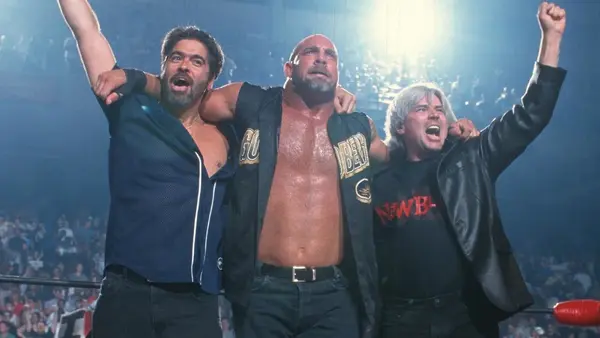
Vince Russo and Eric Bischoff were so confident that Bill Goldberg's heel turn would be shocking enough to turn the tide in their war with WWE that, on the June 11th weekend ahead of the 2000 Great American Bash destination, they promised something so earth-shattering that those in Stamford would feel the aftershock.
The June 12th ratings? Raw's 6.8 to Nitro's 3.0, one of the biggest deficits of the year, the biggest in months, and the joint-widest margin between the two shows for the rest of the year. Leaping almost immediately into recovery mode when it became clear how much just about everybody hated the idea, Russo...made it worse by morphing the Goldberg villain character into a sort of anti-wrestling industry guy who hated his job and hated doing the job.
Heel Goldberg defeated Kevin Nash to block Scott Hall making a return to WCW. Nash, in a worked shoot on TV said that if all this were real, he'd "go over". This all built to a three way with Scott Steiner at the New Blood Rising pay-per-view in August, where Goldberg pulled away from a Jackknife attempt, stormed to the back, screamed "f*ck you!" at an ostensibly enraged Vince Russo before Nash instead pinned Steiner as commentators spoke of the wrestlers "improvising" and 'Big Poppa Pump' "going up" for the move. A total mess, beyond the realms of whatever storytelling universe the company still attempted to reside in.
The worst thing about this swerve wasn't even the execution, or performer's unwillingness to really follow it through, or even how short term the thinking was. It was how the swerve was barely even a swerve, bro.
The "never saw it coming" element was only true to a point too. As soon as Russo, Bischoff or anybody else promoted something this seismic in the flattest era of WCW maybe ever, the only possible outcome was a Goldberg heel turn. The only thing working against that, was the acknowledgment of the obvious and aforementioned baked-in flaws. Even those who couldn't see it coming could see pretty quickly how doomed to fail it was.
4. Vince Russo Saves WCW From Hulk Hogan, Or Does He?

There was no incident more infamous in Vince Russo's tenure than the controversial departure of Hulk Hogan from the company following the events of Bash At The Beach 2000. Though not as inherently stupid as the Goldberg heel turn, it was directed at the very same audience. AKA, the smallest and least likely to make a difference to your bottom line.
Four years on from the formation of the New World Order and in the very same building, the booked and promoted WCW World Heavyweight Title clash between Hogan and Jeff Jarrett never happened. Instead, 'The Chosen One' lay down under orders from Vince Russo and allowed to Hogan to get the win. The multi-time World Champion and potentially biggest star in the history of the industry called the whole thing "bullsh*t" and left with his belt.
All of this - or at least the core details - was actually planned, even if it too looked business-killing. The swerve, bro, occurred when Russo arrived to re-book the evening's main event as a Jeff Jarrett/Booker T match for the real belt (still part of the storyline, keep up) and used the extra mic time to launch into a scathing attack on Hogan the person as well as the professional wrestler. He spoke about "bullsh*t politics" and mocked the "big bald son of a b*tch" while promising that fans would never see him in WCW again.
He was inadvertently telling the truth there, but the two sides were kept together in court as a result - an infuriated Hogan sued the company for defamation and breach of contract in a case that wasn't settled for another three years.
3. Roman Reigns Plays The Game
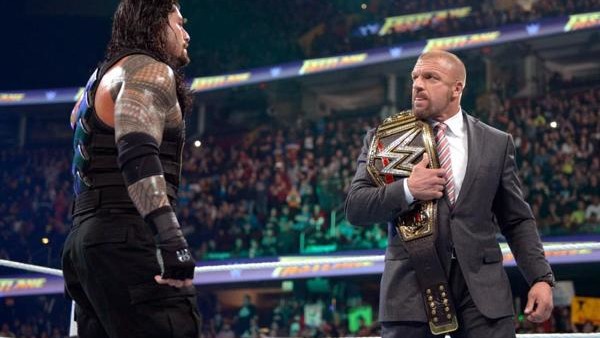
Not since 1999's Vince McMahon victory had WWE arrived at such a promising scenario for their great Royal Rumble swerve.
After both 2014 and 2015's titular battle royals alienated audiences on an unprecedented scale, WWE tried to do something different to break the cycle in 2016. Then-Champion Roman Reigns was getting nowhere in terms of winning over audiences that neither wanted nor needed to embrace him as their top babyface, but as an out-of-touch fogey, Vince McMahon could only think of old fixes to new problems. He inserted himself in the story as an authoritarian villain, lined up his family and some stooges as heel associates, and attempted to fix the Rumble as a way to displace 'The Big Dog'.
This was to culminate in Roman's belt being on the line in the Rumble match itself - a prize that matched 1992's critically acclaimed effort, and generated some renewed uncertainty and disarray. The chaos necessary thanks to an injury crisis at the top of the card at the time, and just to try and manufacture some unpredictability amidst some bleak and boring television.
Roman fell two places short on Rumble night itself, as surprise entrant #30 Triple H took the suit off to claim the strap, last eliminating Dean Ambrose. This is where things (already) stuttered - rather than gaming the system and just adding a 31st place to win from an unfairly advantageous position, Hunter won the thing fair and square. Furthermore, Ambrose as runner up only heightened the interest in him getting the top spot rather than Reigns.
Hunter didn't help matters when he blew the roof off the building with a crotch chop after tossing Roman to the floor, but WWE were blowing what might have worked as a much-needed fork in a stoic road to WrestleMania 32. Nothing helped, nothing change, and order was punishingly restored by the 'Grandest Stage'.
2. "They"
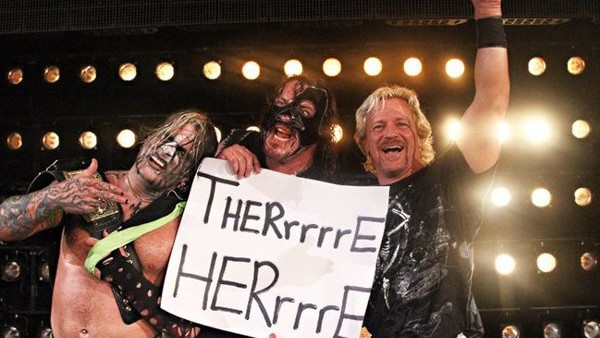
Regardless of the rhetoric they spewed upon formally debuting for TNA on an infamous January 4th 2010 edition of Impact Wrestling, it was always fairly apparent that Hulk Hogan and Eric Bischoff saw the company as an opportunity to rebuild their own brand rather than that of the company itself. It was equally apparent that they only really had one was of doing that.
Recycling the New World Order was a go-to in the dying World Championship Wrestling before it actually passed on for good. Between the reintroduction and reformation of "The Band" with Kevin Nash, Sean Waltman and Scott Hall (before the latter pair's personal problems got the better of them) and Aces & Eights' mystery-laden attempted takeover of TNA, Hogan and Bischoff tried it three times in less than three years. The teasing of "They" for Bound For Glory 2010 was the biggest swing of the lot, and was - what else? - comfortably the biggest miss.
In the summer of 2010, Abyss started mentioning that "They" were coming during promo exchanges with Hulk Hogan. The two were mates before 'The Monster' appeared to crack under the strain of hearing the voices, but the 10.10.10 date of the TNA's biggest show of the year became the destination of the big reveal. Meanwhile, Hogan and Bischoff were babyfaces, but old rivals Sting and Kevin Nash didn't buy it, and - as situational heels - were sure that a big plan was brewing from the two old friends.
They were right, but the biggest swerve was saved for the the grand reveal. At Bound For Glory, after Jeff Jarrett had screwed over storyline pawn Samoa Joe on the undercard, Jeff Hardy became TNA Champion thanks to the help of Abyss, Jarrett, Hogan and Bischoff, turning heel as a top singles star for the first time in his career.
It kickstarted yet another "we're takin' over" story led not by the wrestlers but by the familiar figureheads, and this was compounded when Hardy had to depart screens after the events of Victory Road 2011 a few months later. By this time, the new "Immortal" group had merged and split with another stable, taken on new members, lost a few, and were mostly just bedded in to the average episode of Impact rather than changing everything about it.
Sound familiar?
1. The Summer Of Punk

The 2010s were the worst of times in WWE.
Yes, the bulk of the 2000s sucked too, but they started with a commercial and creative boom so powerful that the next two decades were spent chasing the highs before finally arriving at some new ones in the wake of Vince McMahon resigning in disgrace. With nothing to get hyped about at the start of the decade and a promotion in complete and utter disarray by the end of it, the 2010s were, without debate, the worst of times in WWE.
CM Punk's "Pipe Bomb" remains both rule-proving exception and devastating reality check.
There was nothing happening below him and no chance to change what was going on above, so CM Punk scorched the earth to see if whatever remained could be moulded into something closer to the picture he painted as he sat cross-legged on a Las Vegas stage. The excitement of the hypothetical was comfortably the most exhilarating aspect of the promo once he'd finished cutting it. The reality that unfolded in the weeks that followed proved why a) the words were needed, b) how the words came to be and c) how the words would realistically change nothing.
Swerve bro, The "Summer Of Punk" didn't materialise in WWE, or not without losses to Triple H and aura-killing side quests to the likes of Alberto Del Rio and Awesome Truth anyway. It laid the foundation for change, temporarily hooked new and lapsed fans back for a closer look, and genuinely did serve as Punk's personal ticket to the top. But the other stuff fell to the actions rather than words of others.
Punk left in 2014 before returning in 2023 via remarkable 2021 return in All Elite Wrestling. Everybody knows all that. But now perhaps even more than before, he remains a "spoke in the wheel" that has proven it can turn without him.