10 WWE Experiments Which Failed To Win Over Fans

Throwing things at walls to see what might stick...
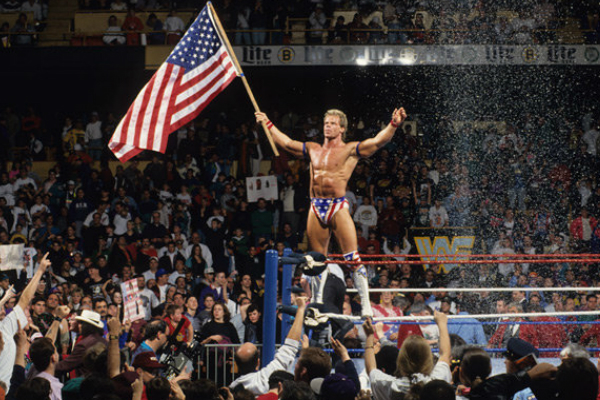
Even before it was known as World Wrestling Entertainment, the biggest company on the wrestling landscape had to produce a lot of television. Looking back to the 1980's and 1990's reveals that the then-World Wrestling Federation has always been a machine which moves quickly. There's no real breathing space for those in charge of concocting storylines, characters and TV programs. This all adds together to create an environment in which the people working for WWE must be prolific. Ideas are needed in abundance, and they're needed in rapid fashion. Credit must be given to many of the folks involved in the creative process, because they have come up with many winning ideas over the years. As a result, they have made both individuals and the company they work for millions of dollars in revenue. There are occasions where ideas were lacking however, and therefore not everything hit the intended target. The following examples make this crystal clear, because all of them ended up accurately being dubbed as failed experiments. Often, they didn't have a truly harmful impact on the promotion, but they can still be considered times when the WWF/WWE got things wrong. Fans were not enthused by these ideas, and they ended up fading away rather than having any real lasting appeal.

10. WWE's Own Version Of The nWo

When it launched in 1996, the New World Order turned out to be the idea which helped WCW claim the top spot in wrestling. It was brilliantly simple in theory, and even better in execution. Everything came together perfectly, from the unnamed threat of WWF stars invading the company, to Hulk Hogan unthinkably turning heel. In 2002, Vince McMahon was locked in a power struggle storyline opposite Ric Flair. The story was that McMahon felt he was losing his grip on the WWF, so he was forced to "inject a lethal dose of poison" which would surely kill his creation. That "poison" turned out to be the nWo. Initially, fans were excited by the prospect of seeing the group in the WWF, but the novelty quickly wore off. Something WWF big wigs hadn't banked on was that fans were genuinely excited to see Hulk Hogan back in the promotion. The nWo were supposed to be heels, but people greeted them like returning heroes. A later incarnation also featured Shawn Michaels, another star fans welcomed back with open arms. The nWo was quietly disbanded in July, and didn't have the same impact it did in WCW.

9. This Tuesday In Texas

Fans tuning into the 1991 version of Survivor Series would have noticed the WWF were talking a lot about 'This Tuesday In Texas'. Taking place less than one week following the Series, this was an attempt by the promotion to establish themselves further on the pay-per-view scene. Big matches were held off of the Survivor Series card, including Jake Roberts vs. Randy Savage. At the beginning of the Survivor Series, on screen WWF President Jack Tunney appeared and signed the match for the supplementary show. Also promised for the event was a rematch between The Undertaker and Hulk Hogan for the WWF Heavyweight Title. It was a failed experiment to hold a pay-per-view on a Tuesday evening, fans simply weren't that interested. People had already paid for the Survivor Series show, and many were unwilling to splash the cash again for another so shortly afterwards. The company didn't learn their lesson, and tried again in 2004 with 'Taboo Tuesday'. The event pulled a lowly 174,000 buys. For This Tuesday In Texas, the WWF had felt the red-hot Savage vs. Roberts feud would be enough to sell. Despite the fact the brawl was exciting, it didn't draw money the way officials hoped.

8. The Undertaker vs. The Undertaker

The Undertaker is one of the most beloved characters in WWF/WWE history. Rightfully so, people cherish the character as one of the best ever, but that doesn't mean he hasn't featured in his fair share of failures. In 1994, Undertaker had been buried in a casket by a slew of heel wrestlers at the Royal Rumble. Promising a rebirth, 'Taker wouldn't return until the Summer. During the Spring, Ted DiBiase started claiming that he was now in charge of The Undertaker. His 'Deadman' was played by Brian Lee, but few fans were fooled by the heel's claims. Paul Bearer brought the genuine article back in time for SummerSlam, where both Undertakers were set to do battle to see which one would stay in the WWF. It would wind up being a poor main event. Following a storming Steel Cage Match between Bret and Owen Hart, The Undertaker vs. The Undertaker felt positively pedestrian. Fans hadn't really taken to the storyline in general, they just wanted the real Undertaker back on television. The match was short, going less than 10 minutes, and moved extremely slowly. This was not a successful feud for 'Taker, people didn't care for it at the time.

7. Changing DDP's Winning Formula

WWE have long had a habit of refusing to admit WCW were responsible for anything good. Perhaps for that very reason, Vince McMahon hasn't liked the idea of wrestlers who were successful in that company playing the same characters they did in WCW. When Diamond Dallas Page was signed in the fallout of WCW's demise, there was excitement regarding what he could do in the then-WWF. Sadly, the McMahon family had a terrible character in mind for DDP. In WCW, Page was a babyface who connected with the fans greatly. His charisma was instantly noticeable, and he had worked hard to become good in the ring. Instead of capitalising on his strengths, the WWF creative team forced DDP into a scenario whereby he was stalking The Undertaker's wife, Sara. This was not a fruitful character change for Page. He had taken a financial hit in order to be part of the company in the first place, agreeing to give up his lucrative deal with AOL/Time Warner. Enthused to be part of the WCW 'Invasion', DDP must have regretted the decision when he witnessed what role he'd play in the WWF. Right from the off, his new employers killed any momentum the guy had.

6. McMahon's 'Million Dollar Mania'

Publicity stunts can be beneficial for companies on occasion. In 2008, WWE were in the midst of a change. Shifting to a more child-friendly 'PG' product, the promotion were looking for things which might draw attention to what they were presenting. For that very reason, Vince McMahon decided to start giving away bags of cash on episodes of Monday Night Raw. Starting in early-June, McMahon hosted 'Million Dollar Mania', instructing people to watch Raw because they could be in with a chance of bagging a lot of money. All in all, WWE gave away around $500,000 before the PR stunt was canned. After just 3 weeks, parts of the Monday Night Raw set collapsed on top of McMahon, and he was said to be in critical condition. The storyline was never really given a satisfactory conclusion, rendering it pretty pointless. 'Million Dollar Mania' didn't up the Raw ratings as WWE had hoped, because fans demanded more satisfying storylines, matches and wrestling in order to tune in. There's little doubt that the money frittered away by McMahon could have been better used by WWE, it didn't even have an impact on how many people watched WWE programming.

5. Mike Adamle

It's fairly common knowledge that WWE were looking for way to replace Jim Ross as the lead announcer long before he retired. As far back as the 1990's, the promotion were interested in hiring a younger, fresher face who could present programming. There was just problem, Jim Ross was the best commentator in the organisation, and replacing him was no easy task. In 2008, WWE hired Mike Adamle. Internally, he was viewed by the McMahon family as the kind of guy who could eventually become their lead presenter. Unfortunately for them, Adamle didn't have any product knowledge to speak of, even mispronouncing wrestler names (Jeff 'Harvey', instead of Hardy) with alarming regularity. Debuting at the Royal Rumble, he was then installed as ECW's main announcer in April. There was unintentional hilarity any time Adamle appeared on screen. He seemingly made no effort to learn about the WWE product, or basic wrestling terminology. Infamously, he couldn't even remember what the ring ropes were called, and Tazz had to quickly cover for him. A short stint as Raw General Manager didn't help, and Adamle was gone from WWE by the end of the year. He was definitely a failed experiment.

4. Curtis Axel As A 'Paul Heyman Guy'
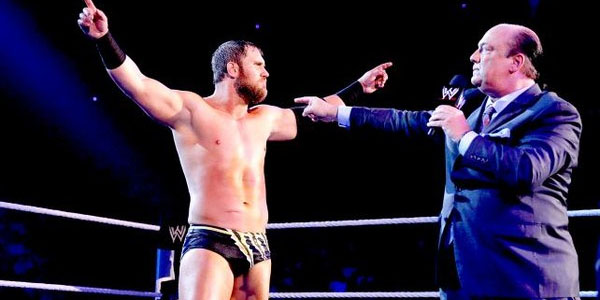
Paul Heyman is one of the greatest talkers in pro wrestling history. Following the return of Brock Lesnar in 2012, Heyman was by his side, delivering excellent promos. This didn't go unnoticed in the company, who started to believe that the former ECW head honcho had somewhat of a 'Midas Touch'. In other words, he could turn anything the promotion handed him into gold. So staunchly did WWE believe in Heyman that they handed him Curtis Axel as an on screen client. Creative's thinking was that if anyone could get Curt Hennig's kid over with the fan, it would be Heyman. Even though he's good, Heyman is no miracle worker, and Axel didn't provide much for him to work with in 2013. Try as he might, Paul's promos were not enough to entice fans to take the former Michael McGillicutty seriously. Around the same time, Ryback was also booked to be one of the manager's 'Paul Heyman Guys'. That experiment also failed, but not quite as badly as Curtis Axel. Despite being handed a reign as Intercontinental Champion, along with one of the best managers in the industry, Axel bombed with fans. It seems WWE have finally given up on the idea of making him a headliner.

3. WWE's Own Vision For ECW

Beefing up their weekly programming lineup, WWE expressed interest in launching their own version of ECW in 2006. The 2005 'One Night Stand' event had been a rip-roaring success, and the McMahon family saw merit in making money from the more hardcore leanings of the extinct promotion. Thus, ECW joined Raw and Smackdown, becoming a third brand the company could promote. The idea was curious to fans, who were willing to give the new brand a shot. Things turned sour quickly however, when it became clear that this version of Extreme Championship Wrestling would be nothing like the one which garnered rave reviews and a cult following in the 1990's. Even Paul Heyman himself, 'Mr. ECW' quickly went cold on WWE's vision for the show. The December To Dismember pay-per-view late in the year was an aberration, one Heyman distanced himself from. Within just 6 months, WWE had made ECW look tame and redundant. Without Heyman's involvement, ECW became a 'C' show each week, home to little excitement and stars the promotion had no big plans for. The brand was discontinued in 2010, and not before time.

2. The Original Sin Cara

Triple H is regarded as the man who had the foresight to reinvent WWE's developmental system. NXT is generally viewed as one of the most solid wrestling programs on television, and 'The Game' deserves praise for creating a hotbed of enjoyment for fans. That said, he also must be taken to task for other decisions he has made. Notably, Sin Cara being the one which simply didn't work out as intended. Signed amidst much fanfare in 2011, Luis Urive was treated like a big deal by World Wrestling Entertainment. Known as Mistico in his native Mexico, Urive promised to be an exciting addition to the WWE roster. As soon as he signed, industry critics started likening him to Rey Mysterio, even stating that he was a better in-ring performer. WWE fans quickly found that out to be false. Botched entrances and moves permeated Sin Cara's initial appearances. There were communication problems, due to Urive not speaking English, and the whole hullabaloo surrounding his arrival dissipated hastily. Today, Sin Cara is played by Jorge Arias, and Urive was released by WWE in 2014. Before he was terminated, Arias had already started using the gimmick. Far from being the 'next' Rey Mysterio, Urive couldn't even be a decent Sin Cara.

1. Lex Luger As The 'New' Hulk Hogan

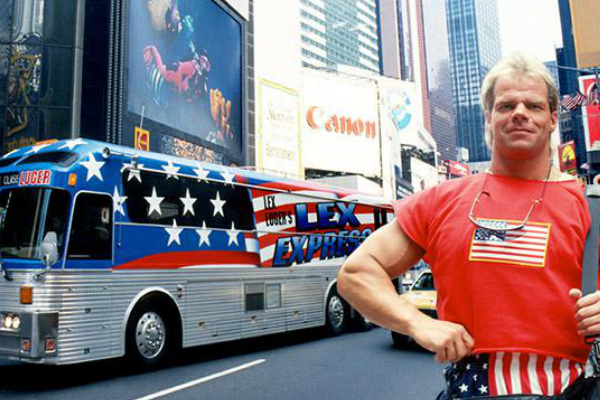
Speaking of wrestlers who were supposed to be the second coming of successful characters, Lex Luger is the most notable. At first, Luger wasn't even intending to wrestle in the WWF. Instead, he signed a contract to be the face of Vince McMahon's new World Bodybuilding Federation in the early-1990's. When that experiment failed, Lex moved on to another one. Following a brief period as the 'Narcissist', Luger was shifted from heel to babyface and given a colossal push. In July, 1993, he hit Yokozuna with a body slam, trading his villainous character for the red, white and blue of North American patriotism. The WWF pushed him hard, and it became clear that McMahon felt Lex could be a replacement for Hulk Hogan going forward. Fans disagreed, taking to the dynamic performances of Bret 'Hitman' Hart instead. People didn't seem to want another Hulk Hogan, they wanted something different. That became abundantly clear when both Luger and Hart were announced as co-winners of the 1994 Royal Rumble match. Fans in attendance cheered more loudly for Bret, making Vince keenly aware that his pet project was not destined for the top of the card. Following WrestleMania X, Lex was shunted down the ladder of importance. He'd later grow frustrated and leave for WCW in 1995.

Contributor

Lifelong wrestling, video game, music and sports obsessive who has been writing about his passions since childhood. Jamie started writing for WhatCulture in 2013, and has contributed thousands of articles and YouTube videos since then. He cut his teeth penning published pieces for top UK and European wrestling read Fighting Spirit Magazine (FSM), and also has extensive experience working within the wrestling biz as a manager and commentator for promotions like ICW on WWE Network and WCPW/Defiant since 2010. Further, Jamie also hosted the old Ministry Of Slam podcast, and has interviewed everyone from Steve Austin and Shawn Michaels to Bret Hart and Trish Stratus.