10 WWE Angles Everybody Gets Wrong
You're either Nexus, against us or totally confused...

The best wrestling angles are those that immediately grip the audience and are easy to understand.
It makes sense. If people can identify with a character's story, what they're trying to achieve and why, then they'll be more inclined to come along for the ride. The challenge comes in writing these gimmicks and angles consistently, or at least consistently enough in the main event (money) spots.
When things aren't laid out clearly, it gets confusing and the fans tend to make up their own narrative. Conversely, some wrestling fans have a tendency to look at things a little too plainly, and they take things at face value when there's so much more to them than first meets the eye. That's the subject here; these 10 entries deal with storylines and creative direction that were either so poorly explained or presented that people got the wrong idea.
This led to misunderstandings that would've been avoided had the writers put a bit more effort in or the fans not jumped to conclusions. Please note: why some of these angles were booked in the first place isn't necessarily defensible. They are, however, misunderstood...
10. Katie Vick

What people think: Amidst the bone-headed wave of controversial booking like 'Hot Lesbian Action' and faux-gay weddings, WWE thought it right to have Triple H molest a corpse. This was done to promote his upcoming pay-per-view match with Kane, who had also allegedly done the deed with Katie Vick's dead body years prior.
How it really was: No, Hunter wasn't indulging in some extra curricular necrophilia, he was just playing mind games with his rival. This doesn't explain why WWE believed this was a good idea at all, but it does clear one thing up. Katie's "corpse" was a mannequin, and Trips was mocking Kane's real-life tragedy.
The thing is, WWE never shied away from the fact that "Katie" was a dummy. When fans should've been outraged about the insensitive implication that Triple H would poke fun at something so foul, they were too busy taking his funeral home vignettes literally.
There was no actual necrophilia.
9. 'Fake' Razor & Diesel

What people think: After watching both Kevin Nash and Scott Hall bolt to guaranteed money in WCW, form the nWo with fellow ex-WWF star Hulk Hogan and turn the tide, Vince McMahon panicked. Someone mentioned he owned the rights to the Razor Ramon and Diesel characters one day, causing the boss to draft in journeyman pros to play those gimmicks. Fans were incensed and millions have laughed at it ever since.
How it really was: It's conveniently forgotten in all of this that then-heel Jim Ross was the one who introduced 'Fake' Razor and 'Fake' Diesel to the WWF. Maybe, just maybe, this was "Good Ol' JR" rebelling against McMahon's detached humanity and need to move on from people when they didn't do his bidding.
Remember that Jim's promos were full of references to his Bell's Palsy and how he'd been deemed too unsightly to appear on camera. Tricking the fans by using standard WWF hype and then disappointing them with cheap knock-off replacements might've been JR's way of getting back at Vince for constantly trying to supplant him.
Much deeper than Kane cosplaying Diesel, isn't it?
8. The Stolen Jacket
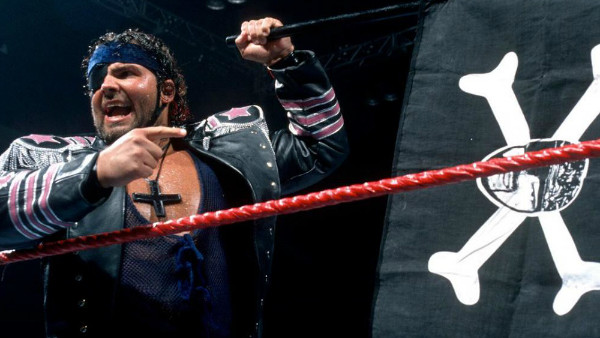
What people think: Crummy, mid-90s gimmick hell pirate Jean-Pierre LaFitte stole Bret Hart's ring jacket because WWF creative couldn't come up with anything better. The 'Hitman', who was one of the promotion's top stars, was then forced to pretend he couldn't buy 100 more of the things and slap LaFitte around anyway.
How it really was: This was about more than a simple ring jacket for that dastardly seaman Jean-Pierre.
In promos before the feud started, he spoke about avenging what North American people had done to his ancestor, the legendary pirate Jean LaFitte. They used him, and now he wanted to do his roots proud by wreaking havoc on the world, starting with the WWF. To do so, he'd have to target the best and make a statement.
So, perhaps Jean-Pierre wasn't just stealing Bret's ring jacket. Maybe he was seizing a valuable piece of WWF iconography and holding it hostage to send a message that he was deadly serious. Sure, it was handled clumsily, and the company could've put more emphasis on this narrative, but it's an interesting thought.
7. The Japanese Shampoo Commercial

What people think: Bang in time for the biggest show of the year, a former 5-time WCW World Champion and 2001's King Of The Ring were put in an angle that sees them war over a fictional Japanese shampoo commercial. By the time they got to WrestleMania X8, Booker T and Edge were laughed at for the backstory to their rivalry and had a throwaway six-minute match.
How it really was: Professional wrestlers are prize fighters. They care about winning titles because of the money and prestige that comes with them, and they also want to strut their stuff as the biggest stars. When put like that, the shampoo gig (however cheesy) isn't actually so bad.
Booker T and Edge believed they should be the face of an emerging international brand and get the swollen bank balance that came with it. A lucrative commercial opportunity such as this has long been a part of celebrity culture, and that should've been the focus instead of comedy.
"They're Fighting Over Shampoo," said a sign at 'Mania. It should've said, "This Feud Could've Been More".
6. Kane & Spilled Coffee

What people think: That stupid idiot Chris Jericho dozily failed to pay attention after making a cuppa' and accidentally spilled it all over walking man mountain Kane. The result was a feud that, on the surface, began for the most childish of reasons.
How it really was: Pay close attention to Kane's backstory (which, to be fair, has changed more times than the chameleonic Jericho), and you'll see that he was the victim of horrific facial burns which left him disfigured. That was the original reason for his mask, and it must've caused mental and emotional damage to his mind as well as physical wounds to his body.
Jericho may have reopened some of that mental fragility by pouring a hot beverage over Kane. Unhinged and having still not dealt with his childhood issues, the big man could be forgiven for flying off the handle and attacking Y2J.
There wasn't a, "They're Feuding Over Coffee" sign at Armageddon 2000. Or, well, perhaps there was.
5. Perry Saturn & Moppy

What people think: After pasting helpless jobber Mike Bell for real in a squash match on C-show Metal in 2001, former WCW fave Perry Saturn was repackaged as someone who was in love with a mop. The easy guess was that this was a punishment for his behaviour and an attempt to humiliate Saturn.
How it really was: This, doghouse or not, was an opportunity for Perry to finally show some personality in the WWF. That's something he hadn't done since jumping over from WCW with fellow Radicalz buddies Chris Benoit, Dean Malenko and Eddie Guerrero the year before. 'Moppy' was silly, but it got Saturn over.
Surely that's a good thing?
His promos went from standard tough guy nonsense to hilarious vignettes fans looked forward to, and Perry made the whole deal work. As ridiculous a notion as it was, Saturn made more of teaming with an inanimate object than he had Terri Runnels. There's a joke in there somewhere.
4. 'Real Man's Man' Steven Regal
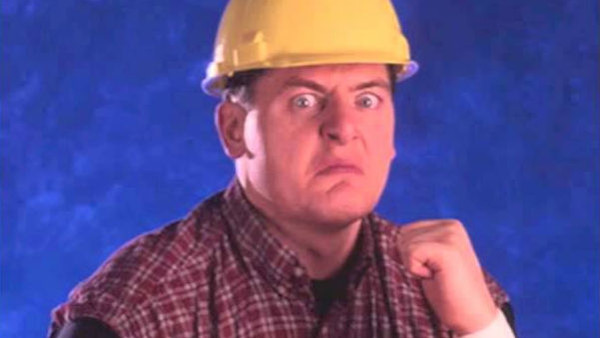
What people think: Serious pro wrestler and all-round smashing gent Steven Regal was plucked from WCW and given a Village People gimmick. He became the 'Real Man's Man', and busied himself chopping down trees, working construction and generally being a proper bloke. It all seemed like one giant rib at his expense.
How it really was: Personally, Regal's life was in an absolute state between 1998-99. Suffering from addictions that were killing his career, the Englishman was in no shape to show his best when he worked the 'Real Man's Man' gimmick. Still, as horrendous as it was creatively, it was an attempt to give Regal some direction.
That has to count for something.
It was also very much tongue-in-cheek. Regal couldn't work the matches he had in WCW before when he arrived in the WWF, and Bruce Prichard later admitted on his podcast that his friend passed out during meetings before signing with the company. For better or worse, they were trying to help by giving him a low-pressure spot on shows.
3. The Ultimate Warrior's Babbling Promos

What people think: The easy target of his generation, Warrior cut some of the most nonsensical, pointless and rambling promos in WWE history. When he wasn't talking about the cosmos or some other supernatural-tinged b*llocks, he was vaguely referencing Native American spiritualism and breathing like he'd worked an Iron Man match.
How it really was: It was absolutely fascinating, and The Ultimate Warrior was over.
Watching back to almost any of his promos (including his wonderful WrestleMania VI hype) makes it clear that the man had something captivating about him. Rewinding that YouTube video to watch Hulk Hogan's overblown hype also reveals something else: Warrior wasn't any more out there than his contemporaries of the late-80s and early-90s.
People like to rag on his interviews and call them total nonsense, but they're no more goofy than Hogan's, or those cut by Randy Savage. Back then, what was said wasn't nearly as important as how one said it, and Warrior's back catalogue is a classic example of that.
2. CM Punk Taking Over Nexus

What people think: Stuck in a post-'Straight Edge Saviour' rut, CM Punk suddenly became the new leader of Nexus as Wade Barrett splintered off to form The Corre. Most fans viewed this as lazy booking and a last-ditch attempt to save the dying faction's importance by tying them to a credible star people took seriously.
How it really was: Punk's hostile takeover of Nexus was completely in-character for a lost leader struggling to find his next big gig. He'd been floundering since the end of his last group, and had even worked a few shots as a guest commentator. That was never going to do for someone who had lofty ambitions and a definite dictator complex.
By assuming control of Nexus, a group who had already fired warning shots against WWE poster boy John Cena and the promotion's methods as a whole, Punk was giving himself another chance at autocracy. He wanted to run things his way, not WWE's, and that was the hidden beauty behind his Nexus revolution.
Of course, WWE did a poor job of explaining this on TV.
1. Muhammad Hassan & Islamophobia

What people think: In the aftermath of the fear 9/11 had caused, WWE debuted Muhammad Hassan. His outspoken views against American culture were taken as thinly-veiled terrorist threats. There were no shades of grey here. As an Arab-American wrestler looking to chastise people for their broad stroke mentality when it came to Muslim faith, Hassan was vilified from day one.
How it really was: Hassan, beneath the 'Old Glory' patriotism WWE present, was a slightly more sympathetic figure.
He spoke of growing up in America but never feeling like he truly belonged because of his heritage. Then, when atrocities were committed without his blessing, he was outcast as an 'evil foreigner' in his own homeland, and forced to watch as people used the hatred of others as justification for their own xenophobia.
In the end, Hassan's original pleas for acceptance (wrapped up in bitterness upon being rejected) made sense. He couldn't stand back and watch as his faith was boiled down into terrorism, and he wanted to take a stand against that view. WWE, for their part, didn't help by casting him as a straight heel who they asked fans to boo.
-
What other angles do you think people always get wrong? Let us know down in the comments section below!