10 Wrestling Gimmicks That Went Way Over Everyone’s Heads
Right to censor... or right to catechise?
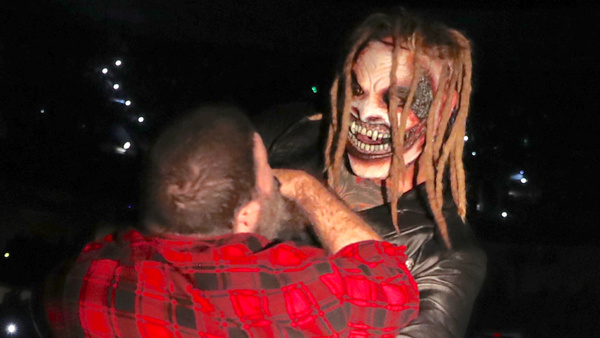
Only time will tell the true nature of Bray Wyatt's 'Fiend' gimmick. Is he a fully-in-control megalomaniac who revels in toying with the emotions of others, or is he an unhinged horror movie monster without empathy suffering from a nasty bout of split personality chaos? The subtle nuances and finer points of Wyatt's new persona are yet to be fully revealed.
That's what makes him such a compelling character - but there is a chance it could end up flying over everyone's heads.
Wrestling history is rife with complex gimmicks that were taken at face value. Behind the most obvious parts of their characterisation were ingenious layers that help them stand out in retrospect; sometimes, it's only after the fact that fans collectively say, "Oh, the penny has dropped". All 10 examples on this list are indicative of that reflective realisation.
All had immediate purpose to them and (often) hidden roots. They were all successful in their own rights too, albeit not always for the intended reasons. Amazingly, each one's true meaning was hidden in plain sight, and that's what makes them so enchanting to revisit now...
10. TJP (Retro Video Game Character)

What People Thought: High-flying T.J Perkins is another Cruiserweight wrestler who likes flips, kick pads and dabbing. The first WWE Cruiser Champion of the modern era had a catchy, 8-bit beat as entrance music, but didn't stand out amongst the crowd. He was just another generic indy-riffic worker.
What He Actually Was: Perkins did have a gimmick beyond his indy stylings, and that Nintendo-ish music was there for a reason. His initials, TJP, were the kind you'd find lighting up leaderboards in the arcades, and his ring gear was often a cool mix of gaming styles and other pop culture phenomenons like Pokémon.
The sad fact is that WWE never fully explained why Perkins was played to the ring by tunes that wouldn't sound out of place in classic NES titles like Contra or Mega Man. As a result, his keen love of retro video games was completely lost on the audience, and they thought he was a low-rent Skrillex wannabe who liked high spots.
9. The Truth Commission (South African Military)

What People Thought: The Commandant's military task force seemed like something from WCW circa 1991, and they (they being Kurrgan, Tank, Recon and Sniper) failed to land with WWF fans in '97. It didn't take long before the lifeless military gimmick lost members, gained a new leader in The Jackyl and ended up on lower-end shows like Shotgun. They were flat out boring and lacked any depth.
What They Actually Were: When Bret Hart met Robin B. Smith on a trip to South Africa, he believed the actor was perfect to play an international dictator character. So, inspired partly by the racial segregation of Apartheid, Smith was hired by the WWF despite having zero willingness to do anything physical. He was put together with the pre-existing Truth Commission boys working in Memphis' USWA.
Mere months into the run, the tripped-out Don Callis, playing the role of Jackyl, nonsensically replaced The Commandant as leader of the group, presumably because he needed something to do and was also friends with Hart.
Instantly, the South African military element was lost in favour of some borderline supernatural sect sh*t from The Jackyl. His grunge look didn't fly with the combat gear worn by his wrestlers, and the whole thing became a 'C' show nightmare nobody could wake up from. Fans just didn't get it, and the gimmick tanked.
8. Akeem (Walking Rib On Dusty Rhodes)

What People Thought: Almost overnight in 1988, the One Man Gang went from street fighting bad-ass to dancing like someone's dad down the pub after one too many pints of Guinness. The drastic change in gimmick appeared to occur because Gang had lost his marbles and believed himself to be an African dude called Akeem.
What He Actually Was: A rather unnecessary rib at NWA star Dusty Rhodes' expense.
Akeem's manager Slick assured fans that his man was only embracing his African roots and would henceforth be known as the 'African Dream'. This, deep down, was a dig at Dusty's voice and the way the 'American Dream' delivered his promos.
Fans who didn't watch much NWA or view Rhodes through the same silly lens as Vince McMahon weren't in on the gag. To them, One Man Gang had been changed for no good reason, and the loud colours, cringeworthy dancing and thin-as-all-hell backstory Slick gave wasn't enough to help them understand Akeem's purpose.
7. Waylon Mercy (Max Cady)
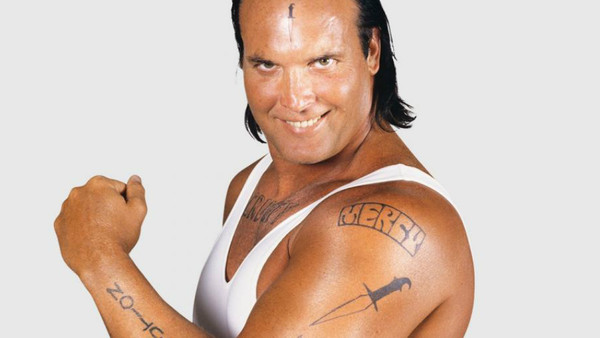
What People Thought: 1995 experiment Waylon Mercy was never properly explained. The deceptively big Dan Spivey assumed the role, one most thought reeked of the dreaded 'jobber to the stars' presentation, and he did his best to make the gimmick more than it first appeared. Sadly, as with most of the examples on this list, he was sorely let down by creative.
What He Actually Was: Mercy was actually one of the most interesting, multi-faceted characters the WWF had created in years. He wasn't a simple heel, nor was Waylon the kind of character fans could predict. At least, that's how Spivey tried to spin things during his performances. He could be a kindly Southern gent one minute and a sadistic son-of-a-b*tch the next.
Think Max Cady from 1991's Cape Fear. That was the obvious inspiration behind the gimmick to movie buffs, and Spivey's erratic psychological nightmare of a man played up the same unnerving instability as Robert De Niro's criminal sociopath.
It went way over everyone's heads.
6. Right To Censor (Mormons)

What People Thought: At the height of Attitude era excess, Stevie Richards went formal, started calling himself Steven, enlisted the help of an ex-porn star, pimp and violence-obsessed correctional officer, turned Ivory against the WWF's women and relentlessly preached about how the company needed to be cleaned up. It was blatantly a dig at the PTC (Parents Television Council).
What They Actually Were: Many fans figured out the PTC parody, but there was more to Richards and his Right To Censor gang than that. Their outfits, for a start, were deliberately black and white; in the conformist world of RTC, there was no room for shades of grey. The white shirt, black tie and black slacks combo, and their ludicrously strait-laced views, also made them seem like cliched mormons.
That particular element of their gimmick wasn't as obvious as the stuffy, suited anti-WWF theme though. The company were very careful not to tread too far into religious territory too, which is interesting given wrestling's questionable fascination with the subject.
5. The Brood (Lost Boys)

What People Thought: Resident bloodsucker Gangrel surrounded himself with his 'Brood' of Edge and Christian to help him take over the WWF. Aside from the vampiric gimmick, it was all presented as serious heel stable stuff, but wrestling fans could both see and appreciate the attempt to introduce a young tag-team in interesting fashion.
What They Actually Were: The Brood was Gangrel's idea, not creative's, and he didn't want it to be 100% serious either. The core idea wasn't something Vince McMahon was even that keen on. He failed to see the thrill of three fun-loving vampires running around giving everyone blood baths at all, meaning ol' Gangers had to repeatedly fight his corner and crow about E&C getting over despite losing.
He got the idea about lovable, blood-drinking leeches from 1987 comedy horror The Lost Boys.
Obviously, The Brood lacked some of the comedic touches Gangrel wanted, but he was able to present himself as an over-the-top cult leader who had brainwashed youth into thinking he was the sh*t. His vision for the stable took direct inspiration from Joel Schumacher's '80s hit.
4. Billy Kidman (Heroin Junkie)
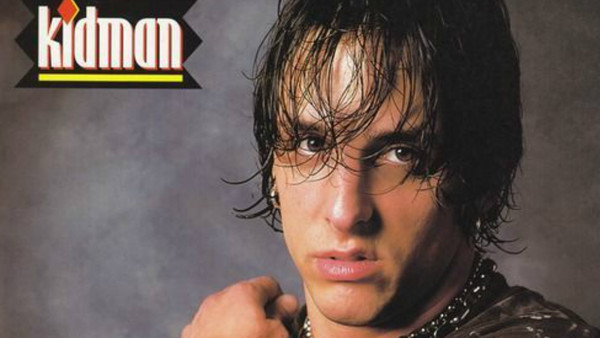
What People Thought: Despite Eric Bischoff admitting on his podcast that he failed to see the appeal, Raven was a late-90s midcard sensation in WCW. The best thing about his detached cult leader gimmick was that it gave other talent, like Perry Saturn, Van Hammer and a rookie Billy Kidman, some purpose. In the 'Flock', Kidman was a young prodigy. That was it.
What He Actually Was: Look back to any of Kidman's performances as Raven's lackey and you'll find a sinister message lurking behind his youthful dirtbag persona. Rather controversially, Kidman scratched himself, appeared unwashed and had dead eyes.
He was a lost, impressionable drug addict, one Raven had taken under his wing.
Kidman rarely spoke as a 'Flock' member. When he did, he'd echo his master's coldness by asking people to leave him alone in between clawing at his skin. The insinuation, hidden beneath the lost soul stuff, was that Billy was hooked on heroin and had a "Seven Year Itch" relationship with life. The buzz had worn off.
3. Razor Ramon (Drug Dealer)

What People Thought: A tough, rugged street fighter from Miami, Razor Ramon was introduced to fans by way of classic vignettes. His immediate association with top names like Randy Savage, Ric Flair and Bret Hart gave him credibility, and it didn't take long before Razor became a fan favourite. His Latino cool and 'Machismo' was intoxicating.
What He Actually Was: The key word there is 'intoxicating'. Everything about Ramon was painstakingly ripped directly from Al Pacino's boozy, drug-fuelled Scarface character. He originally wore garish colours and white suits, dripped with gold chains and was shown leaning on expensive cars.
His wardrobe, lavish lifestyle and street-taught toughness implied that Razor was known to shift a key or two of cocaine and/or other drugs. Cast a glance at the pic above for a second. Ramon looks like the living embodiment of coke-touting drug lord.
Of course, that didn't fit in with the WWF's child-friendly atmosphere in the early-90s, and so it was never expressly said. This 'Bad Guy's' loudest words went unspoken. The name 'Razor' alone also suggested drugs; the implement itself was a popular way of separating lines of the white stuff in the '80s.
2. Ludvig Borga (Environmental Warrior)

What People Thought: Opposite pro-American caricatures like Lex Luger and his 'Lex Express' bandwagon, Ludvig Borga was considered a straightforward "foreign menace" heel. The Finnish brawler had MMA touches, and he was keen to let everyone know that USA sucked, and it sucked hard. This was an easy heel failsafe in 1993.
What He Actually Was: Borga didn't despise the United States because he was from Finland. He instead hated the hedonistic excess of American culture, how it was poisoning our beautiful planet and leaving the next generation to pick up the pieces. In other words, he was an environmental warrior more than 25 years before Daniel Bryan was.
Early promos for the big European showed him bemoaning the "filth and pollution" America had caused.
That was quickly ignored in favour of playing up the idea that Borga hated American wrestling fans because he thought he was a better wrestler than their heroes. His initial story wasn't quite so dull. It was actually pretty thought-provoking.
1. Mankind (Child Prodigy With Parental Issues)

What People Thought: Post-managing The Undertaker, overweight, shrill-voiced ghoul Paul Bearer needed new charges to help him destroy 'The Deadman'. One of the first was Mankind, a masked terror who shared the same supernatural design as his predecessor (and was, rather conveniently) someone 'Taker could finally have great matches with.
Many fans took him at face value as another monster The Undertaker would despatch.
What He Actually Was: Fans of the WWF would eventually get used to Mick Foley's depth and range as a performer. Nothing was ever as it seemed with him on the surface. Dude Love was a teenage dream come true, Cactus Jack represented his sadistic side and the macabre Mankind was cleverly profound.
At the start of his stint under the mask, Mankind could be found yelling, "Mommy" at Bearer, The Undertaker's urn and various other inanimate objects. The soft, gorgeously-played piano music that rang out after his matches contrasted vividly with the disturbing tune that played before they started, and those elements all combined to make him some sort of childhood piano prodigy with disturbing parental issues.
The WWF, ever keen to keep things simple, neglected the child genius story and overlooked cries of "Mommy" fairly quickly, leaving Mankind as a more direct, traditional wrestling freak.
-
What other gimmicks do you think went over everyone's heads initially? Let us know down in the comments section below!