10 Wrestlers You Won't Believe Were Once Paul Heyman Guys

Paul Bearer wasn't The Undertaker's only manager back in the day...
With Brock Lesnar€™s stunning one-sided destruction of John Cena at SummerSlam, Paul Heyman has once again become the manager of the wrestler at the very pinnacle of World Wrestling Entertainment. Heyman is once again on top of the world in 2014, but it€™s been a long and storied journey for the lifelong wrestling fan from Scarsdale, New York. While Paul Heyman, the character (formerly known as Paul E Dangerously), is a man with the gift of the gab and an eye for making money, Paul Heyman, the real life person, is, well, pretty much the same. Like so many good wrestling characters, the Heyman we see on screen is, from all accounts, just the real man with the volume turned up. After starting a business from home selling sports memorabilia aged just 11, Heyman dipped his toe into the wrestling waters by becoming a wrestling photographer and journalist, even managing to talk his way into get accreditation to get backstage access at the hallowed Madison Square Garden. He made his way into wrestling management at the tender age of 17 and never really looked back. He€™s travelled the country and worked for many, many promotions, both national and territorial. He€™s run his own promotion, the groundbreaking original ECW. Along the way, Heyman has worked alongside some real characters. Some of them went on to become global superstars and legends, while others faded into obscurity. We€™ll start with the latter.

10. Nathan Jones

In 2002, Vince McMahon was looking at breaking into new global markets. The WWE had already been touring the UK twice a year for over a decade, and he saw Australia as a country with huge potential. An English speaking country that once had a thriving wrestling scene of its own as part of the NWA, Australia had tailed off into nothing by this time. McMahon knew that the key to tapping into the Australian market was to follow the British template. Davey Boy Smith had been the central figure in the UK boom, and McMahon wanted to find a native Australian to lead the charge Down Under. He found Nathan Jones. Jones was a huge man, standing 6€™11€ and weighing 320 lbs. He had previously been Australia€™s Strongest Man and had previously dabbled in MMA and wrestling, working for the short-lived World Wrestling All-Stars promotion. Oh yeah, he€™d also served seven years for armed robbery in the maximum security Boggo Road jail in Australia. Not being the most experienced or fine-tuned performer in the WWE€™s history, he was made The Undertaker€™s protégé in storyline as a way of introducing him to fans in a positive light and keeping his involvement to a minimum. At Survivor Series 2003, Jones was a member of Paul Heyman€™s heavyweight team, consisting of Lesnar, Matt Morgan, A-Train (Tensai) and Big Show, facing off against Kurt Angle€™s Team Angle. Jones was dispatched by Angle after falling to the Ankle Lock. After the Survivor Series, Jones was used as a hired gun for Lesnar and Heyman, but his star was clearly falling as the WWE realised that Jones was no British Bulldog when it came to ringwork or even just understanding the wrestling business, despite having Heyman around him to learn from. https://www.youtube.com/watch?v=mIi7cN-cOYM In December 2003, while ironically on tour with the WWE in Australia, he quit the promotion, unable to cope with the travel schedule. After wrestling a handful more matches, he retired in 2005, never to be seen again in wrestling circles. You can put Nathan Jones down as a failed experiment in global marketing.

9. Tommy Rich

https://www.youtube.com/watch?v=b-a0wmuRLz0 Tommy Rich is the answer to one of wrestling€™s great trivia questions, being one of the shortest-reigining NWA World Heavyweight Champions of all time, beating Harley Race in April 1981, only to drop it back to Race a mere four days later. However, Rich had a long and successful career, and one territory that he shone in was the notorious Memphis area, run by Jerry Lawler, the perennial headliner there. Rich€™s path crossed with Heyman€™s way back in 1987. Heyman was managing another Memphis icon, €œThe Universal Heart Throb€ Austin Idol, in a headline feud with Lawler. In April 1987, Idol and Lawler€™s feud was due to come to a climax with a hair vs hair steel cage match. After much previous interference, the cage meant that nobody could get in or out of the ring, and there had to be a winner. However, Tommy Rich hid under the ring FOR THE ENTIRE EVENT before emerging during the main event and helping Idol defeat Lawler. Heyman€™s master plan had come off, and not only did Lawler lose, but he had to face the humiliation of having his head shaved. The fans in Memphis were livid and one of the most famous nights in Memphis was etched into history. Another perennial Memphis legend, Bill Dundee, sided with Lawler in a tag team feud with Heyman€™s team of Rich and Idol, culminating in a tag team scaffold match where Heyman legitimately broke his arm falling off the scaffold. Rich left the promotion soon afterwards, which was usually what happened to headlining heels in the territorial days, but Heyman never forgot him. In 2000, Rich turned up in Heyman€™s ECW promotion as €œThe Don€ of the Full Blooded Italians stable, despite not having a drop of Italian blood in him. He retired in 2012, with his last match being against former ECW World Champion Steve Corino.

8. The Original Midnight Express

https://www.youtube.com/watch?v=2Fdc6Zfv2Lg OK, pay attention, because this one gets confusing. In the late 1980s, Paul Heyman would famously collide with a man so similar to him that they still hate each other to this day. Jim Cornette, like Heyman, was a wrestling fan who got into the business through wrestling photography and journalism. Like Heyman, he wasn€™t famed for his athletic prowess, but for his quick mind and microphone work. In 1981, Dennis Condrey formed a stable called The Midnight Express with Norvell Austin and Randy Rose in Alabama€™s Southeast Championship Wrestling. In 1984, Condrey arrived in the hugely influential Mid South Wrestling promotion, where he formed a new Midnight Express team with Bobby Eaton, under the management of Jim Cornette, winning the NWA World Tag Team Championship at one point. However, Condrey literally left the promotion overnight in 1987, giving zero notice to anyone. Condrey was replaced in the Midnight Express team by Stan Lane, forming the most successful and recognisable incarnation of the Midnight Express. However, Condrey signed with the AWA shortly afterwards, and reformed The Original Midnight Express with Randy Rose, claiming the rights to the Midnight Express name. Like the new Midnight Express in the NWA, they also had a manager: Paul E Dangerously. The temptation was too great, and the NWA eventually brought in Condrey, Rose and Dangerously to the NWA to play out the natural feud: Dangerously€™s Original Midnight Express versus Cornette€™s new Midnight Express. It was heated to say the least. The Original Midnights showed up in the NWA in November 1988, jumping a bloodied Cornette before Bobby Eaton could make the save. The feud was on. The two managers clashed verbally and physically, with a six man tag where both managers wrestled taking place on pay-per-view. However, a change in booker in the NWA meant that Condrey€™s card was marked due to his previous disappearance. A loser leaves town match was booked to end the feud, but Condrey decided to leave town again, rather than wrestle the match. The Midnights vs Midnights feud was over, but the Cornette v Dangerously feud would roll on, as you will see later€.

7. Eddie Gilbert

https://www.youtube.com/watch?v=2vGVK7u-TCc While these two occasionally crossed paths in front of audiences, this was far more of a behind-the-scenes deal. In fact, it would be fair to say that Paul Heyman was an Eddie Gilbert guy. In 1987, following the epic Lawler feud, Heyman resurfaced in the Continental Wrestling Federation out of Alabama. Here he was a part of Gilbert€™s Hot Stuff Inc. stable. Gilbert was the booker in CWF and appointed Heyman as his assistant. Gilbert was an innovative booker, often pushing the boundaries and involving wild arena-wide brawls into his storylines. A good Eddie Gilbert booked storyline would be utterly chaotic. One of Gilbert€™s most infamous angles was in 1990 in Memphis, where, on live TV, he actually ran Jerry Lawler over in the parking lot after being fired earlier on the show. This prompted some viewers at home, watching aghast as their hero was knocked down, to call the police and report a crime. Lawler was forced to come clean to the police and had to appear on TV much sooner than he€™d have liked to show that his condition wasn€™t life threatening, saving Gilbert from legitimate arrest from Memphis€™s finest. In 1993, Gilbert and his brother Doug showed up in the latest NWA promotion, Eastern Championship Wrestling, where he once again was booker. ECW became infamous even in these early days for wild brawls. It was great fodder for the Apter magazines, with photos of brawls all over bars and nightclubs during adult orientated wrestling shows being splashed across the pages. Later on that year, Gilbert handed the reigns of ECW booking over to Heyman. Eastern Championship Wrestling became Extreme Championship Wrestling, the antithesis to the family oriented WWF and WCW at the time. The Gilbert influence was clear to see in Heyman€™s booking, as ECW became arguably the most influential promotion in modern times, fuelling the Attitude era in the WWF and introducing numerous international stars to the mainstream US audience.

6. Bobby Eaton

One of the most admired and understated performers in the history of wrestling, Bobby Eaton was best known as one half of the Midnight Express team that feuded against Paul E Dangerously in the late 1980s. Eaton was never a great talker or a flashy, showy wrestler, which meant that he was usually put into tag teams or with managers where other people could do the talking. But in the ring, he was an absolute joy to watch: so slick, so smooth, everything he did looked effortless. Always regarded as a Jim Cornette guy, Eaton shocked the world by aligning himself with his former arch-nemesis in the Dangerous Alliance stable in WCW in 1991. Dangerously had formed easily one of the most talented and well-rounded stables in wrestling history. He was paired up with another legendary tag team wrestler, Arn Anderson, and the two quickly won the WCW World Tag Team Championship from the team of Ricky Steamboat and Dustin Rhodes. The Dangerous Alliance was the most dominant force in WCW in 1992, at one point holding every championship in the promotion except for the big one, the World Heavyweight Championship. That was held by Sting, whose life was made an utter misery by the Dangerous Alliance. The feud culminated in one of the most memorable War Games matches of all time at Wrestle War 1992, where Sting€™s Squadron defeated The Dangerous Alliance when Larry Zbyszko surrendered. The Dangerous Alliance fell apart soon afterwards, and Eaton was fired and later re-hired by WCW, though his career never reached the same heights again. He later formed The Blue Bloods with Lord Steven Regal (William Regal), filling the role that was originally set for Jean-Paul Levesque, who quit WCW to join the WWF as Hunter Hearst Helmsley. Eaton is now retired, having suffered some health problems in recent years which have required hospital treatment.

5. Jimmy Snuka

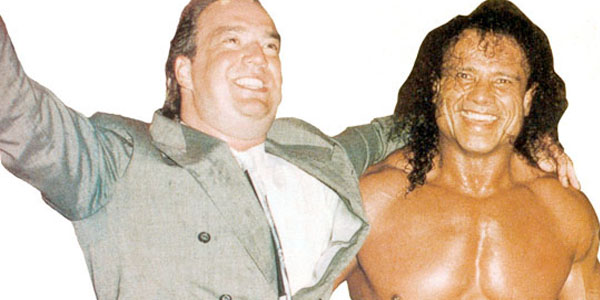
32 years after it happened, Jimmy Snuka is still best known as the man who leapt off the top of a steel cage at Madison Square Garden. Its status in wrestling folklore was later made even greater when footage showed that a young Mick Foley was in attendance that night, and that the moment he witnessed inspired him to become a professional wrestler. Snuka was involved in the main event of the very first WrestleMania and is a bona fide legend of the wrestling business. In 1996, Snuka was inducted into the WWE€™s Hall of Fame, becoming only the 18th person to be inducted. I had the privilege of working with Snuka when he visited the UK in 2006, and he was held in awe and respect by everyone he came across that weekend (he also discovered Ginster€™s Cheese and Onion pasties, but that€™s another story). But Jimmy Snuka was also a Paul Heyman guy, albeit briefly. In 1993, Heyman decided to form a new Dangerous Alliance. He took the same template as the WCW version, mixing experienced veterans who€™d seen it all and done it all, with younger talent whose careers were full of promise and potential. The first incarnation of The ECW Dangerous Alliance saw Paul E Dangerously bring together Snuka, Don Muraco, The Dark Patriot (Doug Gilbert under a mask) and Eddie Gilbert. Snuka had already become the first ever ECW Heavyweight Champion, winning a tournament in April 1992. By the time Dangerously came on board, he€™d already dropped the title to Don Muraco, and his tenure in ECW was coming to an end. While their in-ring relationship was brief, Jimmy Snuka is one of the most unlikely and high profile wrestlers to have been managed by Heyman over the years.

4. Taz

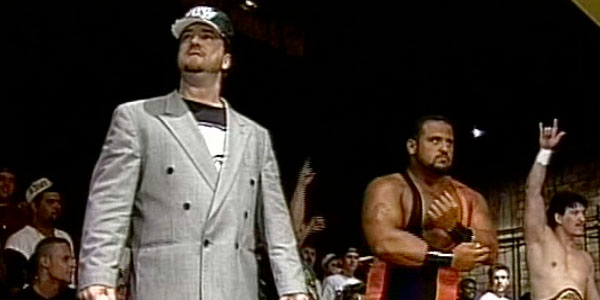
While he is now best known as the voice of TNA€™s weekly Impact Wrestling show, Taz had a stellar in-ring career before swapping a pair of boots for a pair of headphones. While he is best remembered as the hard-nosed, singlet wearing tough guy called Taz, throwing suplexes left, right and centre, and choking people out with his katahajime submission, his time with Heyman was in a previous incarnation. Before there was the tough guy image, there was the wildman image, when he was a long haired, face painted lunatic known as The Tazmaniac. First coming to prominence in the regional ECW, he was a tag team wrestler, usually with his partner providing him with guidance and direction, even if that partner was the usually unhinged Kevin Sullivan. In 1994, Dangerously brought together The Tazmaniac and Sabu in a wild pairing of two untamed beasts. As time progressed, the animalistic tendancies faded away and the two became better known for their wild matches, with Sabu€™s trademark high flying and table breaking. However, Sabu was then legitimately fired by Heyman by snubbing an ECW booking for one in New Japan, and Tazmaniac then suffered a horrific neck injury which forced him onto the sidelines for the best part of 1995. https://www.youtube.com/watch?v=GWQc7-qIE68 When he returned to action, he was repackaged as Taz, the orange and black singlet wearing tough guy with short hair. Eventually, Sabu returned to the now national ECW, and Sabu v Taz was presented as the most anticipated match of ECW€™s first ever pay per view, Barely Legal, in 1997. The match was hyped perfectly, and in typical Heyman fashion. The build up went on for months, and significantly, neither man was able to lay a hand on each other, which just meant that the actual match itself was received with much anticipation. Heyman may have been out of the picture on-screen, but his fingerprints off-screen were very much visible.

3. Rikishi / Fatu

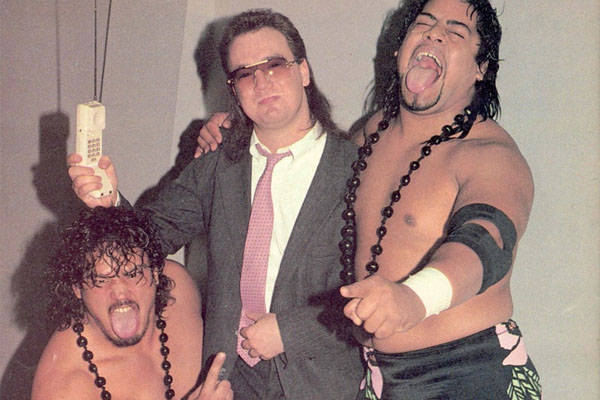
Solofa Fatu is best known to fans around the world as the smiling, dancing Rikishi, with his sumo style attire and bleached blond hair. But prior to that, Fatu had a very different image and demeanour. Going down the traditional Samoan route, he emulated his uncles, The Wild Samoans of Afa and Sika. Teaming with his cousin, Samu, they formed the Samoan Swat Team, barefoot and wearing black tights. Initially forming in 1985, they wrestled in Puerto Rico, Texas and the AWA before arriving in the NWA. After losing the Midnights vs Midnights feud to Jim Cornette, Paul E Dangerously brought in the SST to help him seek vengeance. While the Original Midnight Express were smooth, suave ladykillers, the SST were the polar opposite. These were two untamed savage beasts at the beck and call of their manager, elements which can be seen in the Lesnar/Heyman dynamic that we see today in the WWE. They targeted the Midnights and Cornette, leaving them laying on several occasions and defeating them at Clash of the Champions VI. However, by late 1989, Dangerously was replaced as their manager by €œThe Big Kahuna€ Sir Oliver Humperdink and Dangerously moved on to a new client, who we shall meet very shortly. Fatu and Samu continued in WCW for another year, before resurfacing in the WWF as The Headshrinkers. But they had little success as a team, and Fatu underwent several transformations: he became the streetwise English talking guy telling kids to €œmake a difference€ but this failed to take off. He then shaved his head and donned a mask and false ponytail as The Sultan, under the management of The Iron Sheik and Bob Backlund, unsuccessfully challenging Rocky Maivia for the Intercontinental title at WrestleMania 13, but again, this gimmick failed to grab the fan€™s attention. And then in 1999, he struck gold. Having gained some significant weight, he was repackaged as Rikishi, a sumo inspired look (the word rikishi is the Japanese word for a sumo wrestler) and paired up with Too Cool (Scotty 2 Hotty and Grandmaster Sexay). The fun loving, dancing trio was a world away from the SST and the fans took them to their hearts immediately. Still wrestling on the independent scene, his twin sons are current WWE stars The Usos.

2. Stone Cold Steve Austin

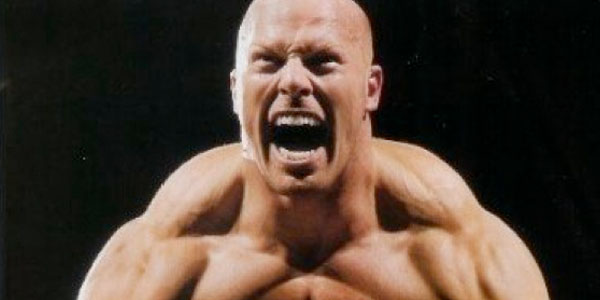
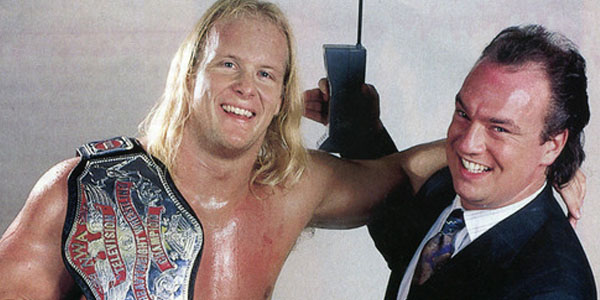
Initially the star pupil of the late Chris Adams€™ wrestling school in Dallas, Austin made a name for himself in the USWA before heading to WCW in 1991. Within weeks, he€™d won the WCW World Television Championship from Bobby Eaton. By the end of the year, Austin had joined forces with Eaton, along with Arn Anderson, Larry Zbyszko, Rick Rude and Madusa. Working with such experienced colleagues was a great learning experience for the already promising Austin. As well as being such smooth wrestlers who made everything look easy, these people possessed great wrestling brains, as did Heyman himself of course. By the time The Dangerous Alliance folded, Austin was being touted as a future superstar, something which was seemingly recognised by everyone except the powers that be in WCW itself. Put together in a tag team with Brian Pillman because the bookers had nothing for them, the two made The Hollywood Blonds into cult favourites. Eventually, he was released from his WCW contract in 1995 by Eric Bischoff, who infamously said that a man in black trunks and black boots wasn€™t marketable. Heyman though, knew that Austin was money and brought him in for a brief run in WCW, where he was able to show off his microphone skills. He oozed charisma as he slated WCW in segments, including the famous €œMonday Nyquil€ skit where he donned a black wig and impersonated Bischoff. https://www.youtube.com/watch?v=peBFc7LX4i0 But within a few months, he was in the WWF. Originally packaged as The Ringmaster under the management of Ted DiBiase, he failed to make an impact. Going alone as €œStone Cold€ Steve Austin, a nickname inadvertently inspired by a comment by his wife, he won the 1996 King of the Ring tournament after the original choice, Triple H, was scrapped after the infamous MSG curtain call incident. Austin won and coined the phrase Austin 3:16 in the post-match interview, which became the single biggest selling item of merchandise in wrestling history.

1. The Undertaker

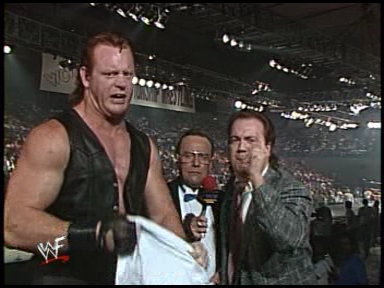
After losing the services of The Samoan Swat Team, Paul E Dangerously was after a new client. Having predominantly managed tag teams, he turned to singles competition and found a huge man. Standing 6€™10€, with manic eyes and red hair, Mean Mark Callous was a wrestler with uncanny agility for his size. His finishing manoeuvre, The Heat Seeking Missile, involved him walking along the top rope and unleashing a flying elbowdrop from the middle of the top strand. He enjoyed pay-per-view victories over Johnny Ace (John Laurinaitis of WWE fame) and Brian Pillman and really had momentum going into his US title match with long-time champion Lex Luger at The Great American Bash 1990. However, Callous came up short and soon afterwards, WCW decided in their infinite wisdom to not renew his contract in an Austin-like display of forward vision. https://www.youtube.com/watch?v=Yf-jj_k8fJY Callous travelled to Japan shortly afterwards, competing under the catchy name of Punisher Dice Morgan (he had previously competed under a mask in World Class as The Punisher) before signing with the WWF and debuting at the 1990 Survivor Series as The Undertaker, and the rest, as they say, is history. The Undertaker has become one of the most iconic and respected figures in professional wrestling, and at WrestleMania XXX this year, he and Heyman crossed paths one more time in one of the most historic matches ever in the WWE.

Contributor
Contributor

Dean Ayass is a well known name to British wrestling fans. A commentator, manager, booker and ring announcer who has been involved in the business since 1993, Dean's insight into the business is second to none.