10 Wrestlers Who Could Have Been Franchise Players For WWE
Few wrestlers become legends, but even fewer become franchise players.
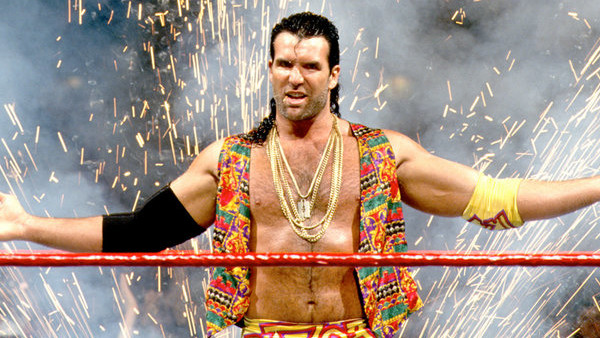
A franchise player isn’t just a team’s top performer, but the cornerstone around which a franchise is built. LeBron James at the Cavaliers, Cristiano Ronaldo at Real Madrid, Tom Brady at the Patriots: these are the players that define not only their franchise’s success, but their identity.
The term has been used in professional wrestling for years. It started with Hulk Hogan and WWE’s crossover to the mainstream in the 1980s, then continued with Stone Cold Steve Austin and The Rock through the Attitude Era and beyond.
These wrestlers were the face of WWE (and thus, the industry) for their respective eras. Their longevity, popularity, and drawing power helped carry the company to unparalleled success. John Cena inherited the mantle when Rocky and Austin abandoned their full-time schedules, and while he remains polarising, it’s a role he continues today.
It’s an incredibly difficult position to reach, and nobody has come close to knocking Cena from his ivory tower for close to ten years. Skill, charisma, dedication, marketability, the company’s full support: it takes a perfect set of circumstances to become a franchise player, and few ever get there.
WWE have only successfully created a handful of true franchise players over the years, but they’ve had plenty of options. Their history is littered with incredible talents who, if given the chance, would’ve risen-up to claim the role as their own, but never had the opportunity to do so.
Here are 10 wrestlers who could’ve been franchise players for WWE.
10. Cody Rhodes

Cody Rhodes’ May 2016 release may go down as one of the most disappointing in WWE history. Coming from a legendary bloodline, you’d have thought his sharp skillset, undeniable pedigree, and charisma would have made him a shoe-in for long-term WWE success, but it wasn’t to be.
Rhodes always outshone his partner Ted DiBiase Jr., in Legacy, and he was a midcard highlight throughout his “Dashing” and Rhodes Scholars days. Cody and his brother Goldust’s feud with Triple H and Randy Orton should have catapulted Rhodes to main event level: instead, WWE saddled him with the catastrophic Stardust gimmick, a decision that eventually led to Cody’s release a few months ago.
Though not exactly a Shawn Michaels-level performer, Cody could hold his own with anyone in the company. His microphone performances were always on-point, and by the time the Rhodes brothers defeated Seth Rollins & Roman Reigns at Battleground ‘13, their popularity was stratospheric.
Sadly, WWE opted to bury Cody under a cheap knock-off version of his brother’s gimmick. He has appeared for a number of independent companies since leaving WWE, but unless he returns, Cody will forever be remembered as one of the greatest what ifs in recent WWE history.
9. Christian

On paper, Christian had an excellent wrestling career. He’s a multi-time midcard champion, a two-time World Heavyweight Champion, and a nine-time tag team champion. Even when he left WWE, Christian was a highly-important figure in TNA’s development, and captured the promotion’s World Heavyweight Championship twice before departing in 2009. He retired quietly in 2015, but continues as a WWE Network personality.
The above doesn’t tell the whole story, though. Christian’s World Title reigns were no more than token gestures, and lasted a cumulative total of just 30 days. In the main event scene, Christian was a bit part player at best. Edge, his long-time tag team partner, came dangerously close to toppling John Cena’s “franchise player” status throughout his mid/late career, but Christian wasn’t even close.
He was the type of wrestler who could have a great match with anybody, and was always one of the company’s top mic workers. Christian’s Captain Charisma act was white hot in 2005, but WWE opted not to push him to the moon, and he was working for a completely different company by the year’s end. He achieved more in WWE than most could ever dream of, but Christian should’ve been so much more.
8. Ted DiBiase

Everybody knows the Million Dollar Man. Ted DiBiase is rightly remembered as one of the industry’s greatest heels, and he came with one of the most memorable gimmicks of all time. At his peak, DiBiase was one of the most charismatic men alive, and he drew great heat by flaunting his wealth, shoving money down his opponents’ throats, and parading the self-created Million Dollar Championships like it was the biggest prize in the business.
Despite all this, DiBiase amassed only a paltry list of accomplishments with WWE. He’s a Hall-of-Famer and former King of the Ring Winner, but aside from the Million Dollar Belt, DiBiase amassed just three Tag Team Titles and one North American Heavyweight Championship during his run with the company. He retired from active competition in 1993, and though he returned as a manager, DiBiase’s top-level career was over.
DiBiase was an incredible performer on every level. His character work was stellar, and his razor-sharp technical ability meant you were guaranteed a good match every time he donned his working boots. The Million Dollar Man once tried to buy the WWE Title, but that’s about as close as he ever got before retiring. DiBiase had a memorable run, but was shamefully never given the opportunity to be “the guy.”
7. Roddy Piper

Roddy Piper is rightly remembered as one of the all-time great heels, but he had a perfect babyface turn in 1986.
He was the biggest villain in the business at the time, but Piper’s performances were so strong that he was soon attracting cheers from the crowd. Roddy was an edgy alternative to fans who’d grown sick of Hulkamania’s inherent cheesiness, and his turn started when Roddy took a hiatus from his interview show, Piper’s Pit.
Adrian Adonis stepped into the beach. He didn’t just take the timeslot and concept, but also Piper’s bodyguard (Ace Orton), and when Piper returned a few months later, he was disgusted by what had become of his segment. Rowdy confronted Adonis & co. who beat the tar out of him, but Piper wasn’t deterred: he returned with crutches and a baseball bat later than evening, declaring war on Adonis.
The angle culminated in a huge WrestleMania grudge match, but it was impossible for Piper to become WWE’s franchise player with Hulk Hogan around. As successful as he was, Piper was never WWE’s poster boy, and he’s widely regarded as one of the best wrestlers to never become WWE Champion.
Piper’s unpredictability and dangerous edge made him the antithesis to Hogan’s squeaky clean showmanship. He lives on as one of the most influential characters in wrestling history, but things could’ve been oh so different had Hogan relinquished his status as the company’s franchise player.
6. Ethan Carter III

Ethan Carter III accomplished very little as WWE’s Derrick Bateman. A lowly NXT contestant, he’s best remembered for a brief romance with Maxine, and few tears were shed when he was released from the company in 2013. Unfortunately for WWE, he has since established himself as one of the most complete wrestlers in North America, and a guy who could be playing a prominent role in Raw or SmackDown’s main event scene at this very moment.
It’s a smaller stage, but EC3 has become the face of TNA. Even when he’s not holding the company’s top belt, EC3 is the rock around which Dixie Carter’s shaky company is built. TNA have their problems, but EC3 is their biggest asset, and a man whose performances have never wavered. Whether on the microphone or in the ring, everything Carter does screams “superstar,” and it’s maddening that WWE couldn’t see these qualities within him.
There’s every chance he’ll end-up back in WWE should TNA’s ongoing legal troubles result in bankruptcy, but there’s no guarantee they’ll use him any better. EC3 exudes star power - a quality that WWE’s current roster sorely lacks - from every pour. He’s great in the ring, even better on the microphone, and one of the best all-round performers in the world, and has now proven his ability to function as a franchise player in a sports entertainment environment.
5. Sting

Sting showed-up in WWE at least ten years too late. The company got just a single match out of the WCW legend before a back injury forced his retirement, and while his debut is remembered as one of 2014’s best moments, Sting’s WWE run was a fraction of what he deserved.
Once labelled the “Franchise of WCW,” Sting is one of the biggest wrestlers of the 90s. He was a six-time WCW Champion by the time Vince McMahon bought the company in 2001, but Sting, like so many of his colleagues, opted to sit-out his existing WCW contract rather than jump to WWE immediately. By the time it expired in 2002, Sting saw how poorly WWE had utilized his former colleagues and decided against making the move.
Sting was the last of WCW’s major players to join WWE, and he almost changed his mind on numerous occasions. He was originally pegged to come in and work with Stone Cold Steve Austin at WrestleMania XIX (2003), but instead opted to sign with TNA, and quickly became a major player.
2003 would’ve been the perfect time for Sting to come in. Austin’s WM XIX match with The Rock proved to be the last of his career, and as he drifted into retirement, WWE lost not only a franchise player, but its biggest anti-hero. Sting’s renegade “Crow” persona would’ve filled the void perfectly, but his staunch loyalty to WCW’s legacy proved decisive once again, and his 2014 debut came far too late.
4. Chris Jericho

Chris Jericho is the closest thing to a “franchise player” on our list. A six-time World Champion, Jericho has held all of the company’s major (and minor) championships, and is all but guaranteed a Hall of Fame induction when he retires. He’s widely considered among the most charismatic wrestlers of all-time, and even today, in the twilight of his career, Y2J is one of WWE’s most consistently enjoyable performers.
Despite all this, Jericho has never been WWE’s true franchise player. Whether it was John Cena, The Rock, or Stone Cold, there has always been somebody slightly ahead of him in the pecking order, and he has never been presented as the company’s most important wrestler. Yes, he’s had a legendary career, and yes, he’s rightfully considered among the greatest wrestlers in history, but he has never been the face of the company.
Jericho’s regular departures to tour and record with Fozzy had undoubtedly contributed to this, but it’s still a shame. He often disappears from WWE for months (and sometimes years) at a time, but nobody was better than Jericho in his prime. Y2J was the total package as a performer, and as a babyface, few could rival his popularity.
3. CM Punk

Though WWE will likely no-sell his existence until the end of time, CM Punk will be remembered as an iconic figure in pro-wrestling folklore. Always a divisive character, Punk sent shockwaves through the industry with his line-blurring “pipe bomb” promo, and though the “Summer of Punk” ended on a whimper, its start represented one of the hottest angles in recent WWE history.
CM Punk felt genuinely edgy in an increasingly sanitised environment, and that’s what set him apart. When he said his contract was up and he was leaving the company with the WWE Championship, you genuinely believed him. As Punk blew kisses at Vince McMahon and disappeared over the barricade at Money In The Bank 2011, nobody knew if he was actually coming back or not, such was the strength of Punk’s performance.
Punk returned, of course, and after recapturing the belt from Alberto Del Rio, he was WWE Champion for 434 days. This alone should’ve made him WWE’s franchise player, but it didn’t: John Cena was still very much the top guy, and even as champion, Punk played second fiddle. Though his reign was long, Punk was often treated like an afterthought as champion, which played a role in his acrimonious departure a few years later.
Regardless of who’s to blame for the split, WWE never developed enough trust in CM Punk to make him the undisputed company kingpin. Like Steve Austin before him, Punk became the voice of a generation of fans, and a perfect antidote to his era’s frustrations. Unlike Austin, Punk was never given the keys to the kingdom.
2. Owen Hart

His brother Bret might be one of the most successful professional wrestlers of all-time, but Owen Hart was quietly regarded as the better performer by some fans. Honed in the legendary Hart Family Dungeon, Owen was a master technician who supplemented his rock solid ground game with impressive high-flying skills, but his abilities stretched beyond that.
Owen wasn’t the most refined microphone worker, but he was far from uncharismatic, and delivered his promos with great energy. Though a former Intercontinental and Tag Team Champion, Owen was never given an extended run in WWE’s main event scene, and the company did little to present him as anything other than “Bret’s little brother.”
Owen’s death remains one of the most tragic incidents in wrestling history, and his career was deeply entrenched in midcard mediocrity by that point. Sadly, the company always saw him as a versatile wrestler whose skillset could be utilised in any way other than the main event push he deserved: a tragedy in itself.
Bret Hart was a five-time WWE Champion, a two-time King of the Ring, and one of the ‘90s most iconic wrestlers. Owen was at least his equal in almost every aspect of his performance, and had his brother not been around to steal the spotlight, there’s every chance Owen would have shone brightly as WWE’s pre-Attitude Era franchise player.
1. Razor Ramon

Scott Hall has had an up and down career, but few could touch him when he was at his best. Hall was the perfect combination of charisma, look, size, and wrestling ability, and he had the perfect gimmick as Razor Ramon.
A cool, cocksure Cuban-American villain, Razor was a tremendous heel in WWE’s upper-midcard scene, and found a permanent residency in the Intercontinental Title picture. His WrestleMania X ladder match remains one of the most lauded WWE matches of all-time, and by 1996, Ramon was earmarked as a future main eventer, and a guy who’d play a huge role in WWE’s fortunes for years to come.
It turns out that Hall did have a big impact on WWE’s fortunes, but not in the way Vince McMahon had imagined. He jumped ship to WCW in May 1996, and after being joined by Kevin Nash a few weeks later, Hall was at the heart of an angle that’d change the wrestling business forever: the New World Order.
The nWo kickstarted WCW’s success in the Monday Night Wars, and WWE was left struggling as Ted Turner’s company bettered them in the ratings for 84 consecutive weeks. Sadly, Hall’s demons slowly overcame him, and he wasn’t able to completely break his self-destructive pattern until years later.
The Bad Guy is largely responsible for derailing his own career, but who knows where he’d be if he and Nash hadn’t jumped to WCW. Both men were being set up as WWE’s next big main eventers, but Hall was always the more dynamic worker of the two. Had he stayed with McMahon’s company, there’s every chance Hall would be considered among the industry’s all-time greats, rather than one of its biggest also-rans.