10 Things You Learn Binge Watching Every WWE Raw From 2000
Is 2000 as good in retrospect when one takes off the 'WWF Attitude' tinted specs?

That Raw Is War intro from 2000 may never be topped.
The WWF's flagship exploded into living rooms worldwide by delivering an intoxicating mix of aggressive heavy metal riffs, pyro and enough 'Attitude' to get everyone amped for another two hours of must-see soap opera. Jim Ross bellowed out his welcomes, Jerry Lawler sneered at the babyfaces (in between talking about "puppies", of course) and fans went crazy with excitement.
Reliving such testosterone-fulled magic 52 times was a sheer joy, it really was. Then...the year progressed and one realised that not everything was as rosy as he remembered with the product back in those days. Logic often went flying out the window, and the company made several dumb decisions that might've bit them in the ass had WCW not been a weekly train wreck.
Things become even more fascinating upon realising that arguably the biggest star in WWE history wasn't missed at all, and that one of the best performers ever was totally trumped by somebody else in a coveted role.
Here's everything you can learn from binging a full 104 hours of Raw product. Strap in...
10. The War Took A Noticeable Turn

It'd be remiss not to talk about the absolute state WCW was in first, because that definitely had an impact on the WWF side. Being honest, it becomes very clear when binging that Vince McMahon knew his competition was knackered - by June/July, he was just doing his own thing.
Vinnie Mac knew 'Dubya-C-Dubya' would never turn the screw again.
Nitro was a mess, and that meant Raw was free to experiment a little more than in 1998 or 1999. New stars were thrust into power positions, at least temporarily, and some episodes turned into daytime romantic soap opera more than pro wrestling; this was never more true than with the Stephanie/Triple H/Kurt Angle love triangle.
It's amazing to look back on this and see the seismic shifts during the second half of 2000. The WWF crew blatantly didn't feel any pressure whatsoever, and that led to some borderline-lazy shows that didn't quite hit the highs of January-May.
9. The Radicalz Were Doomed To Fail

In retrospect, is anyone surprised that Dean Malenko didn't get a main event push?
Nothing against Deano here, because he was a technical wrestling fan's dream, but sod all about him particularly screamed "WWF main eventer". Thus, watching The Radicalz' arrival in the promotion almost 22 years on becomes an enlightening experience.
Chris Benoit was the obvious star of the group, and Eddie Guerrero eventually found his niche as a babyface alongside Chyna, but Malenko and Perry Saturn? Nah, they were always going to be lower-card fodder. Neither man had the personality to stand out on a roster as vibrant and cartoonish as the fed's.
Look back on their earliest performances and you'll hear fans respond to them as a group. Then, rather quickly, something changed; Benoit got big reactions, Guerrero less so, and the Saturn/Malenko combo end up being greeted with popcorn farts rather than booming cheers or boos.
Hindsight is 20/20 though, huh?
8. 24/7 Can Work

WWE's current 24/7 Title model is lame and played out. Some fans likely enjoy it, of course, but Twitter often blows up with criticism after episodes of Raw today. Those parkour segments Reggie works just don't cut it for those who remember Crash Holly's genius back during the 'Attitude' era.
Such skits are proof that 24/7 can work.
So, what was different? For one, Crash was an endearing underdog babyface who realistically scurried away from rivals and did everything he could to stay alert. The WWF's creative team also came up with fun and inventive scenarios (the Gerald Brisco sleeping bits are still a riot) that played to everyone's character strengths.
It's some laugh to watch guys like Brisco and Pat Patterson f*ck around backstage trying to take the Hardcore belt from Holly. The less said about their King Of The Ring match, the better though. At least the stuff on Raw was a gas.
7. Deceptive Doubles Depth

Fans immediately reach for top teams like The Hardy Boyz, The Dudleys or the beloved Edge and Christian duo when thinking about 2000's best tags. That's fair, but it doesn't quite tell the full story for the division. Others, (like APA, Kaientai, Too Cool, The Headbangers, T&A, Right To Censor etc) helped too.
The earlier months of 2000 still had some New Age Outlaws fun in them too - then, when they split, Road Dogg and X-Pac formed a solid team. Then, after that, Dogg went on to briefly run with K-Kwik before leaving the company. The tag division had quite ridiculous depth to it back then.
Compare that to today. In 2021, all but a handful of tag-teams rarely get any focus. It wasn't uncommon for duos to feud with each other outside the title picture in 2000, and that gave the impression that the scene was bustling and alive.
WWE really should go back to this way of doing things.
6. The Post-‘Mania Raw Made No Sense

Right, what was this all about?
Before WrestleMania 2000, both Shane and Stephanie McMahon aligned themselves with different wrestlers (Steph was with Triple H and Shane went with Big Show). Beyond that, they were keen to put daddy dearest out to pasture and scoop Vince's company out from under his nose.
Then, 24 hours after 'Mania, Vince came out at the top of the show and...hugged all of them. That ushered in another Corporation-style group, and strengthened the pre-exciting McMahon-Helmsley Regime. The problem? It barely made any sense, and actually came across as a last-minute swerve.
Crowds didn't seem to care much about Vince turning on The Rock to side with Triple H. They'd watched Steve Austin rival McMahon for years, so nobody was really up for another helping of that. Instead, people fancied seeing Rocky and Trips tear the house down on their own merits.
Vince's association with 'The Game', and that rushed reconciliation with his kids, felt unnecessary.
5. The Rikishi Turn Was So Senseless

You've gotta give the WWF creative team credit for thinking they could turn a fun-loving heavyweight who wore thongs, stuck his arse in everyone's face and danced into the promotion's hottest heel. The fact they figured this would happen without changing much about his look is astounding looking back.
Rikishi kept rocking those thongs.
Everyone rags on his "I did it for The Rock" promo, but that was the least of Rikishi's worries here. Watch enough Raw from 2000 and you'll notice that fans were still red hot for the big man by October - peeps weren't ready to boo him quite yet, or for their Too Cool associate to become a homicidal maniac.
The mini-feud Rikishi had with a returning Steve Austin failed to satisfy at all. In fact, it's pretty clear that the WWF were already moving on from 'Kish in favour of Triple H before he'd even had his blow off with Austin at No Mercy.
4. Mick Foley > Shawn Michaels

Was Shawn Michaels bad as WWF Commissioner? No, not really. He was certainly better than Sgt. Slaughter had been in the role, if only because ol' HBK carried bigger name value than Sarge. Even so, his sporadic appearances on Raw between 1999-2000 didn't really merit the role of an authority figure who called the shots.
Shawn was hardly on telly in 2000 (other than a few select showings here or there).
That's why the program took a sizeable step up in quality when Mick Foley replaced Michaels as the Commish in June. Mick was a tour de force in the role weekly, and he also acted as a breath of fresh air when playing babyface counterpoint to the overbearing McMahons.
Someone in the writing team deserved a raise for pitching that Foley replace Shawn. Whomever then decided that Mick should be on TV every week and work banterous skits with the roster also needed more power. That was a shrewd call.
3. They Should’ve Stuck With Jericho
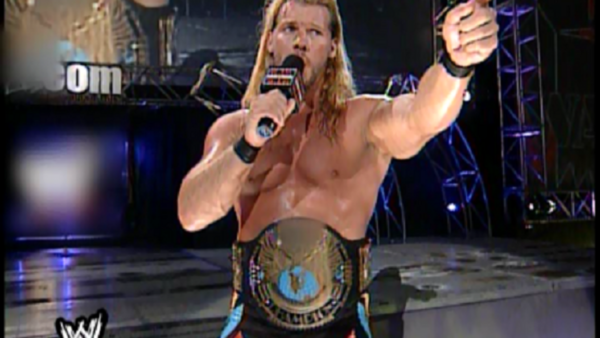
There's a famous story about Chris Jericho feeling like sh*t when Vince McMahon joked to The Undertaker in catering that business must be going down the toilet if they were making Y2J champion. That happened in late-2001, but Jericho almost bagged the WWF Title much earlier in his run.
They should've given that idea a proper go.
Jericho beat Triple H on the 17 April Raw, but the finish was overturned to put more heat on Trips and further his story with rebellious ref Earl Hebner. In retrospect (there's that word again), running with Y2J as champ for a while wouldn't have been a bad thing.
He was super-over with the audience already, which probs irked a few behind the scenes. Perhaps that's why the WWF only flirted with a Jericho title reign in April 2000. There's no doubt the guy could've pulled it off. He had the in-ring chops and the star power to make even a short reign credible.
2. Triple H Was Wrestling’s Best

2000 was the best year of Triple H's career, at least inside the ring.
His feud with The Rock speaks for itself (matches at Backlash and that 60-minute 'Iron Man' at Judgment Day are WWE essentials), but Trips also worked world class efforts against Jericho, Chris Benoit, Kurt Angle and even Taka Michinoku. The guy was a wrestling machine back then.
Still lithe, 'The Game' could bump around like a pro for his opponents, and was willing to do so even against smaller workers. His muscular, athletic frame looked like a million dollars - the man could bring it on the mic too. He was the total package, and deservedly reigned supreme for much of the year.
Even the most jaded Triple H critic would be hard-pressed not to acknowledge his body of work at the turn of the millennium. He was the WWF's heel MVP, and would never top that 12-month span (partly due to injuries, admittedly) afterwards.
1. Steve Austin Wasn’t Missed
Wait, what?
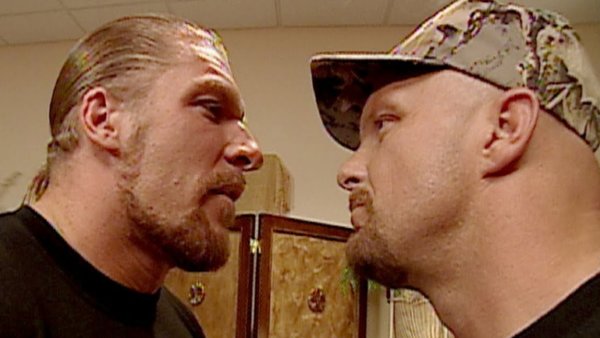
That's right. The WWF didn't miss Steve Austin as much as some might lead you to believe. Episodes of Raw zipped along nicely without him, which would've been impossible to think given his stature in 1998 and 1999. At one point, 'Stone Cold' was Raw Is War.
Not in 2000. The Rock came into his own and soared as top babyface, Triple H was smashing it in killer matches by the week, and an epic return (and repackaging) for The Undertaker kept things ticking along nicely. Austin, as strange as this is to say, wasn't exactly needed.
The WWF wanted him back though, and understandably so given his star power. Was that vital though? Nah, not really. If anything, Steve didn't start clicking again until winning the Royal Rumble in January 2001 anyway. 2000 didn't belong to him.
What caught your eye from Raw's 2000 on the WWE Network? For more like this, check out 10 Things You Learn Binge Watching Every WWE Raw From 1993, 1994, 1995, 1996, 1997, 1998 and 1999!