10 Things WWE Could Learn From Kenta Kobashi's Career
The legendary Japanese wrestling veteran may be retired, but WWE could still learn a lot from his career.
10. Creating An Underdog Babyface By Having Them Lose Their First Matches
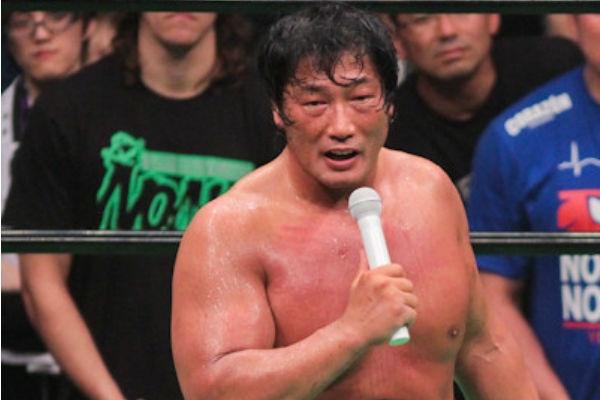
https://www.youtube.com/watch?v=Tz_4sZ4ekdE It might be hard to consider a legendary wrestler like Kenta Kobashi to be anything other than dominant. After all, he has made a career out of being extremely hard to keep down. But it wasnt always that way and, in fact, he lost his first 63 matches consecutively. Now, one might assume that losing so many matches would be a guaranteed ticket to a career as a jobber-to-the-stars (it would definitely end up that way in WWE). But Kobashi, with the help of Giant Baba, overcame that fate and became a huge star. In every match he wrestled, Kobashi would get a bit closer, gain a bit more momentum, show a bit more charisma. Slowly but surely, the crowd fell in love with this gutsy, never-say-die rookie, until he won his first match over a year later. And when he did, the crowd went nuts cheering for him, establishing Kobashi as someone the fans wanted to see. WWE could use this approach to build up a new superstar. Instead of debuting them in a random, insignificant match where they win without consequences, it would make more sense to build up that wrestler slowly over time, and keep track of their progress. That way, their eventual victory would have more of an impact, and WWE would be able to gauge that wrestlers popularity properly, instead of pushing them quickly without getting over with the audience organically.9. Giving Wrestlers Good Nicknames
https://www.youtube.com/watch?v=YYqUYC6LMgs These days, every top wrestler is given a nickname that helps give their character a bit more depth. Unfortunately, WWE arent following their Japanese counterparts (and Kobashi in particular) by giving their wrestlers truly unique and creative nicknames. Among some of the best Japanese wrestling nicknames include: Child of God/King of Strong Style (Shinsuke Nakamura), Ace of the Universe/One-in-a-Century talent ( Hiroshi Tanahashi), Daredevil (Hiroko Goto), and The Rainmaker (Kazuchika Okada). In Kobashis case, he has been known as Iron Man, The Absolute Champion, The Maximum Innovator, Mr. Puroresu, and one of the Four Pillars of Heaven/Four Divine Emperors. Contrast this with WWE nicknames like: Big Hungry/The Big Guy (Ryback), The Big Dog (Reigns), The Champ (Cena, even without actually being champion), the Party Pooper (Adam Rose), 'Prince Pretty' (Tyler Breeze), etc...you get the picture. In Kobashis case and in the case of other Japanese wrestlers, their nicknames are gimmick-specific and have a more creative edge to them. Kobashis nicknames amplified his reputation as a tough man, a dominant champion, a versatile wrestler, and as a high-quality wrestler. It was through these nicknames that Kobashi had a much easier time getting over with both new and old viewers. WWEs nicknames, meanwhile, seem lazier and void of any creativity, being based primarily on a wrestlers appearance or personality instead of for a deeper, more story-centric reason. If WWE were to give their wrestlers more unique and interesting nicknames, maybe, just maybe, more critical viewers would take their superstars more seriously as fighters.8. Booking A Babyface That Doesn't Get Boring Over Time

7. Adapting To Serious Injuries
https://www.youtube.com/watch?v=FaTXzeBuQSg By late 2000, Kobashi was a 12-year veteran and his knees were barely holding together anymore. So he underwent several major surgeries, which limited the kinds of things he could do in the ring. Now, under normal circumstances, undergoing extensive reparative surgery can end ones career (see Bourne, Evan). But not Kobashi. Instead of accepting that his career was over, he simply changed his style to better fit his new limitations. In doing so, he became a more straightforward chopping machine that used power moves and submission holds more often than prior to his surgery. The result? Not only did Kobashi still wrestle very a relatively full schedule for over five years, but he put one some of the best matches in Japanese wrestling history, too. Many WWE superstars would benefit from studying how Kobashi changed his wrestling style without suffering a decrease in his match quality. Its entirely possible for an older wrestler devastated by injuries to still come back while adopting a newer fighting style that does less harm to their bodies. Ric Flair did this by slowing down and telling simpler stories, Shawn Michaels began using more mat work and far fewer high-flying moves after 2002, and the Undertaker favoured striking and submissions versus lifting heavier opponents as his career went on. If these wrestlers could follow Kobashis example and adapt when their bodies were sending them warning signals, so too can more of todays top stars that keep getting injuries in the same parts of their bodies.6. No-selling Without Making One's Opponent Look Weak
https://www.youtube.com/watch?v=PeLZvZrj9y8 Why does Kenta Kobashi have 23 Dave Meltzer rated 5-star matches under his belt (more than any other living wrestler)? Because he was the ultimate example of fighting spirit and he no-sold his opponents offence on occasion to excellent dramatic effect. Kobashis matches would follow a simple yet highly-successful formula. Hed get dominated for a good portion of his matches, before suddenly getting a surge of burning spirit and would no-sell his opponents offense by getting up from everything they threw at him and kept kicking out from even the most destructive moves. If this sounds familiar, thats because it is; this is the same formula WWE uses with many of its babyfaces, most notably John Cena and Roman Reigns. But Kobashi did something that WWE doesn't. Those moments of no-selling would last only a fraction of his matches (perhaps only 40 seconds of no-selling a big Suplex, or something), and he would spend the rest of the match doing whatever possible to make his opponent feel like his equal. In doing so, his opponents would look like they have a genuine chance of winning, despite Kobashis legendary toughness. If WWE did this by changing how their matches are structured and added more subtle details that elevated all of their top wrestlers instead of only a select few, marquee matches would be more unpredictable and fans wouldnt be so quick to respond with phrases like Cena Wins LOL.5. How To NOT Treat A Universally-Respected Veteran
4. Showing Charisma Without Speaking

3. Building Up A Wrestler's Return
https://www.youtube.com/watch?v=Wo7UsdQrGAM WWE has this habit of making wrestlers returns from injury as surprising as possible by not mentioning them at all in the run-up to it. In doing so, theyre robbing themselves of the possibility to garner increased fan interest. Consider the following: Kenta Kobashi had to spend all of 2001 and part of 2002 on the shelf after extensive knee surgery. NOAH continued without him, but the promotion still showed videos of him in order to hype his return. They showed him rehabbing his legs, getting back into the ring, and training for his return. That way, when he did return in mid-2002, he received a standing ovation from the NOAH crowd, because they had seen just how badly he was injured, how much work he put into his return, and how much passion he had for wrestling. Imagine if WWE did that for one of their currently-injured wrestlers scheduled to return. The Usos appeared literally out of nowhere on RAW, when they couldve been built up to gain more fan excitement. Sami Zayn has been making appearances for EVOLVE, but little-to-nothing has been said about him on NXT. Itamis scheduled to return any day now, but we havent learned anything about exactly when hell be back, even though we want to see him back in an NXT ring ASAP. With WWEs videos being so good, its amazing they dont do this enough as it is.2. Being A True 'Dominant Champion'
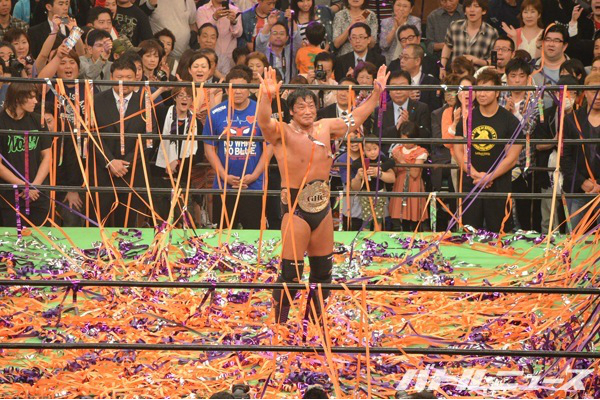
One of, if not the most successful periods in Pro Wrestling NOAHs history was Kenta Kobashis two-year reign as GHC Heavyweight Champion. It was an incredible title reign marked by amazing 5-star matches, consistently high ticket sales, and incredible fortune for the promotion and the champion. But what made him a strong champion, a real dominant champion, was the way he wrestled and won while champion. He constantly wrestled against opponents that had some sort of advantage over him, or were at least booked that way. Every single one of his opponents was treated as a credible threat, and so every match felt like he could genuinely lose the championship. WWE could learn from Kobashis booking during his world title reign by really booking their champion as strongly as possible, regardless of alignment. The world champion needs to be shown that he can take on all comers without being a coward or without needing outside help. That is the underlying necessity of bringing in viewers and convincing them that a champion is worth watching: if that champion cannot win by themselves or put on good matches for the championship, then theyre not world champion-caliber athletes in the first place.1. How To Book The Same Match-ups And Still Have Unique Results
