10 Remedies For An Ailing WWE Network

Ten small steps company can take to fix the expensive WWE Network.
On Thursday July 31, WWE will hold their quarterly conference call and review current business results. One metric many analysts will seize upon is the "number of WWE Network subscribers as of June 30, 2014". Due to the enormous start-up costs and large revenue cannibalization, investors and fans are looking for signs that WWE has turned around their sluggish start for the over-the-top subscription service. WWE signed up hundreds of thousands during first week and reported 495,000 subscribers as of 3/31/14 (which was the end of their First Quarter). During the build-up to Wrestlemania 30, that number grew by more than a third to reach 667,287 as of April 7, 2014. It was a reasonable launch, but fell well short of internal and external expectations. Compounded by securing a less-robust-than-expected Television Rights contract with NBCU (which sent the WWE stock crashing), the WWE Network has proven to be an costly venture which the company expects will generate millions in the losses for 2014. While the service and approach was innovative, WWE€™s launch strategy was built upon quickly building to more than a million domestic subscribers for the domestic service. Instead, WWE is limping along at a much slower adoption rate. Meanwhile, they€™ve begun seeing deterioration in the international PPV market which suggests that an significant number of overseas users have already adopted the domestic service. Investors are antsy. There is not a single, simple solution for fixing the WWE Network€™s woes. However, there are many smaller steps that WWE can adopt, especially now, which will provide some relief. Here€™s ten recommendations on remedying an ailing WWE Network:

10. Raise The Price, Quietly Drop The Commitment
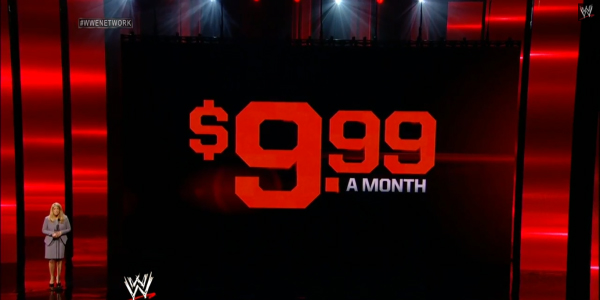
The price for the domestic WWE Network is currently $9.99 per month. When the Network launched, WWE positioned it as being a competitor to services such as Netflix and Hulu. After discussing various possible price points during the leadup, they decided that it was important to stay below the ten dollar ceiling. It's obvious now that they positioned themselves too low. The WWE Network is not like Netflix. It€™s more akin to a Blockbuster store where you can only rent Football videos. It€™s a niche service. So they need to price it like a niche service. Initially, WWE positioned the opportunity as capturing a small percentage of the millions of US Households with a €œWWE Affinity€. However, it€™s clearer and clearer that the demand for the WWE Network isn€™t far & wide. Instead, it€™s very narrow. You€™re reaching the hardcore portion of the WWE audience along with some percentage of more casual fans. Perhaps you€™re even capturing a small portion of older, lapsed fans. But any way you cut it, it€™s still primarily the hardcore and current fans who are watching. These people are the least likely to quit watching WWE due to a Network price increase. Therefore, you need to monetize these customers. Most of the current WWE Network customers were buying one to two PPVs each year. Those customers were accustomed to spending at least $45 per event. Now WWE is offering them the chance to access monthly live PPV events for only $10. It€™s a ridiculous discount. They have commoditized their valuable Pay-per-view product. It's not about the "annual cost". Wrestling fans are used to the monthly choice of either buying or not buying an expensive PPV. Raising the subscription price to $15/month or even $20/month still represents a serious discount to the original PPV price of $45-$55 per event. (If you price it, they will stay.) Historically, raising the price of monthly PPVs actually resulted in WWE generating more revenue achieving higher profit margins. That may seem counter-inuitive but that€™s because the base of customers watching WWE were price inelastic. yes, the dedicated fans would grumble about it, but they€™d end up forking over the money if it was something they wanted to watch. It's an attraction-driven business. Ultimately, the base popularity of the entire product drives the PPV business. It's hardly a function of the price that WWE was charging each month. In this circumstance, while raising the WWE Network price may or may not generate more revenue (there will be some customers that don€™t stick around and models are unclear how it will trade off), it€™s indisputable that a price increase will make each subscription far more profitable. Right now, WWE is operating dangerously close to the break-even point per subscription. That means that WWE sacrificed all of their domestic PPV profit (remember, it was nearly a 50% margin business) and started an expensive service which can barely pay to keep itself running. They are not regenerating the profit that has been cannibalized. It's a bad place to be. It's imperative that they raising the price. Furthermore, WWE needs to drop their 6-month commitment. There€™s a number of reasons for this. First of all, they€™re not enforcing it. There€™s plenty of stories of people who have convinced customer service to terminate their account without being charged the excess balance. There are others who have found ways to cancel the reoccurring subscription authorization through PayPal. Secondly, the "commitment" is an artificial barrier. There are some risk-adverse people who would subscribe to the network if they didn't feel "locked in€. Thirdly, once WWE drops the commitment requirement, they are free to raise prices without violating long-term agreements. The WWE could choose to raise their Network price for the first half of the year to reflect the optimal value of Royal Rumble and Wrestlemania. Or the WWE might raises their monthly price but offers discounted rates for people who commit to longer term subscriptions (by either enforcing the contract provisions or simply charging the entire amount upfront). While the 6-month commitment made a lot of sense at launch, it has outlived it's purposefulness. Originally it ensured there would not be a mass cancellation after Wrestlemania and it provided a steady base of subscribers while the WWE Network geared up to launch internationally. However, in accordance with the on-demand lifestyle, WWE has to move past their need to €œlock€ people into long commitments and trust that they can maintain a high monthly retention percentage. Ultimately, if they can't keep high percentage of their customers sticking around each month, the service can never be successful.

9. Fill Key WWE Network Executive Positions

During the past three months, WWE lost some key individuals who were strongly associated with the WWE Network. In particular, both Perkins Miller and Matthew Singerman no longer work for WWE. Perkins Miller was the Executive Vice President of Digital Media and he left WWE to join the NFL as their new Chief Digital Officer. Matthew Singerman, formerly the Executive Vice President of Programming, was removed in May after only six months. Singerman was responsible for launching and guiding the WWE Network €“ this included strategy, marketing, sales, publicity, programming, scheduling and more. What's clear is that the WWE Network is too enormous of a project for this company to just be a tertiary responsibility for the CEO, CFO or Chief Marketing Officer It€™s crucial that WWE fills these positions. WWE Network needs dedicated leadership and guidance. With the latest cost cutting objectives, WWE cannot afford to make uneducated purges. It€™s imperative WWE retains clear priorities and they don€™t continue to half-ass this endeavor. In the past few months, we€™ve seen some launch programs such as €œOld School€ stagnate. While the company may not care, it sends a message to the dedicated fans of that programming that WWE doesn€™t care about them as subscribers and fans. When Singerman was hired, he came with traditional television experience (NFL Network, Back9 Network, Nuvo TV, Reelz, TV Guide Network, Fox News Channel). This made sense since the WWE Network was originally being positioned as traditional television network (available either as a Premium channel or a Cable channel). Things changed. WWE made the decision to pivot and becmoe an Over-the-Top Network. Suddenly, there's a different experience level required for someone to lead the WWE Network. For their next hire, WWE needs to focus on people that have experience in digital media spaces. They'd do well to hire someone from a powerhouse such as Hulu, Amazon Prime, Netflix or even streaming arms of NBA, NHL, MLB or UFC. So much rests on the success of the WWE Network. There is a lot for this company to learn. They need to be willing to pay for the management talent that has the experience in turning around difficult ventures. And they€™ll need to give the creative and logistical space to those executives so that they can execute long-term and clear strategic thinking.

8. Limit Multiple Number Of Simultaneous Users

In one of the worst-kept secrets around, the WWE Network does not seem to be adequately enforcing any kind of restrictions on simultaneous streaming on multiple devices from several different locations. It€™s a serious problem. In the age of piracy, torrents, and IP masking, WWE cannot afford to just let many people piggyback on a single subscription. While it€™s admirable that the company is not instituting draconian limits, there€™s a profitable middle-ground. At this time, while it€™s unclear how widespread this phenomenon is, the end result is that there€™s a net loss to WWE. We know some percentage of these "piggyback fans" would be willing to pay for their own subscription. This one change will not be an instant panacea for the Network€™s financial woes, but it could generate tens of thousands of new subscriptions. This ought to be fixed immediately. Other services have had to address this quandary. Netflix, for instance, moved to a solution where users can select their plan (1 screen in SD, 2 screens in HD, 4 screens in HD) for different prices. This is exactly the sort of approach WWE ought to pursue. Striking the balance between clamping down on account sharing and offering a reasonable alternative will be critical for the future of the WWE Network.

7. Focus On Adding Attitude Era Footage (Raw, Nitro)
From the limited information that WWE has released, it's clear that Attitude Era footage represents the area of greatest interest for the majority of potential WWE Network subscribers. Yet, the majority of the programming from this key period of WCW and WWF history is woefully thin - simply Pay-Per-View events. For many fans, that's akin to only seeing every fourth episode of their favorite television series. Before the initial six-month commitment is up (and there may is the risk of a huge subscriber defection), WWE needs to make a concerted and serious effort to post more footage from the Attitude Era. The Monday Night Wars represented a pivotal period in the development of wrestling programming and creation of top stars. While new live content (namely monthly PPVs) remain the top priority, the Attitude Era content would quickly become the second building block in a successful WWE Network strategy. If they wait too long to add the footage, it may be too late.

6. Monetize Marque PPVs

Not every pay-per-view is created equal. Three PPVs always out-perform the rest of the cast of characters: Royal Rumble, SummerSlam and Wrestlemania. One danger of launching the WWE Network was that consumers now believe that the $50+ product is now only worth $10/month. While the lower price helps the weaker PPV events garner larger audiences, it damages the marque value of their biggest events. In addition, launching the WWE Network and putting ALL of the new PPVs on there seriously harmed the relationship between WWE and the MVODs (Multi-channel Video On Demand). Already both Dish Network and DirecTV stopped carrying WWE PPVs. Giant InDemand is wavering. WWE€™s pricing model for the Network ruined that relationship and those services understandably retaliated. Had WWE been able to offer a real carrot to this companies €“ such as quarterly non-WWE Network aired PPVs €“ they may have had a real opportunity to keep working together. Considering that €œnearly 400,000€ US Homes ordered Wrestlemania 30 via traditional Pay-per-view means, it€™s clear that WWE cannot afford to simply write-off all the existing PPV customers. Much like Monday Night Raw cannot simply be rebroadcast on the WWE Network immediately, it would be possible to pull certain events off being part of the WWE Network package. Fans understand that not everything is going to be immediately available. While the decision may be unpopular, the service is still new enough that it€™s possible to reshape expectations. Key learnings from UFC€™s Fight Pass have suggested that it€™s possible to have an adequate streaming service which provides replays and B-shows while still maintaining a robust and healthy traditional PPV business. A world where watching WWE Battleground costs the same as WWE Wrestlemania is a mistake.

5. Clarify International Rollout

From the start, WWE has promised they€™re going to expand the WWE Network internationally. They promised it would be €œend of 2014/early 2015€ and would roll out in UK, Canada, Australia, New Zealand, Singapore, Hong Kong and the Nordic Countries. However, since then, there has not been much more clarity. We don't know how much it will cost. We€™ve heard rumors they might also roll-out in non-English speaking countries such as Germany. We€™ve heard conflicting reports on whether or not the international WWE Network service will be identical to the domestic WWE Network service in terms of content and broadcasting live PPVs. We€™ve seen strong evidence that significant numbers (possibly representing 20%) of the current WWE Network base are actually overseas users accessing the service using a variety of work-arounds. It€™s a messy situation. And one that could use some clarification. Originally WWE published estimates of 1,000,000 US customers (out of €œ52M Broadband Fan Universe€) for the domestic WWE Network and 250,000 International customers (out of €œ27M Broadband Fan Universe€) as their low-end estimates. It€™s questionable whether WWE is going to hit a million subscribers as of 12/31/14. Will they revise their international estimates? Seeing that international PPV is already crumbling, will they acknowledge how large the existing international base is? How will letting those hardcore fans and €œearly adopters€ sneak into the existing domestic launch affect the rate of adoption in international countries? Investors (and fans) are anxious to know more and updated guidance on this subject could go a long way to easing fears and establishing realistic expectations.

4. Supplemental Content / Analysis

With the WWE Network you€™re able to relive exciting PPV moments. However, it has the potential to be so much more than just reliving moments. We can add to them. WWE could be developing new and interesting supplement content. Imagine secondary commentary tracks where current superstars discuss historical footage. Or a Royal Rumble where a wrestling analyst annotates the action with €œPop-Up Video€ style factoids. Anyone fascinated with the inner-workings of wrestling would love to see the WWE pull the curtain back on the wild world of producing weekly programming. Fans are aching to see footage from creative meetings and behind the scenes production. However, in the tightly scripted world of the WWE, it€™s unlikely we€™ll see Vince McMahon allowing such access to his world.

3. Microtargeting

For years, Cable and Satellite companies tried their best to prevent WWE from getting access to address information for fans that ordered their PPVs. The internet changed that. WWE€™s online presence allows them to connect directly with their millions of social media followers, and communicate directly to them. Now WWE is collecting large amounts of data about all of their network subscribers. They know what we€™re watching. They know what we€™re buying. They know what we€™re searching for. They ask your age, income and household demographics. It€™s time they really harness all of that big data and generate meaningful business decisions. Much like grocery stores target coupons and ads to their customers, WWE could be doing a lot more to target fans with information about upcoming events, new programming and merchandise offers. The OTT-nature of the WWE Network means that they€™ve cut out of the middle man and can interface directly with consumers. However, the current approach is still very video-on-demand and live channel and not a 21st Century Interactive Television experience. They€™ve got a long way to go to achieve and market the potential that the WWE Network has established.

2. Air Episodes In Order (Create Timeslots, Consistently Add Shows)
WWE could do a lot to make their schedule a lot more exciting. For one thing, consistency would add a lot. Originally, many pundits speculated that the WWE Network would revive specialized timeslot akin to TBS€™ Saturday Night Wrestling block. Instead, we€™ve had the requisite pre/post shows and weekly Main Event. Despite having years of footage that aired weekly and sequentially, they€™ve been uneven on how (and when) they€™ve posted new episodes. In the end, it gives the viewer the impression that footage is merely a €œgrabbag€ without rhyme, reason or theme. Attention to the small details is what separates good wrestlers from great wrestlers and the same is true with good wrestling networks and great wrestling networks. WWE needs to keep people engaged weekly - not just visiting once-a-month to see what's new.

1. Release Monthly Subscription Numbers
Every month WWE releases preliminary numbers about PPV buys, attendance trends, merchandise orders, website traffic and lots more. However, they stubbornly refuse to release information about the monthly number of WWE Network subscribers. Yet the WWE Network is what has revolutionized WWE€™s go-to-market model. So, now we€™re left with enormous speculation and little information. If the company does not want to suffer from serious quarterly spikes (and dips) as investors over-react to their subscription numbers, all they need to do is provide monthly guidance. Right now, the real subscription numbers are closely guarded and even top decision makers are left in the dark. It€™s an inefficient way to operate and needless. Why should the WWE be forthcoming with 80% of their key statistics, but hold back such a vital one? That€™s not in the investor€™s best interest and ultimately it€™s not in the company€™s best interests either. None of these recommendations will €œfix€ the WWE Network overnight. It€™s going to be a slow process. But each of these represent small steps the company can take which can seriously improve the health and well-being for this critical project.

In this post: 
WWE Network
 
Posted On: 
Contributor
Contributor

I'm a professional wrestling analyst, an improviser and an avid NES gamer. I live in Saint Paul, Minnesota and I'm working on my first book (#wrestlenomics). You can contact me at chris.harrington@gmail.com or on twitter (@mookieghana)