10 Really Strange Modern Wrestling Phenomenons
I don't feel so good.
Wrestling never ceases to bewilder. To underscore that point, consider the WWE landscape at this point just two years ago.
Roman Reigns, in the midst of what now appears to be his peak, drew almost reluctant praise as a result of his undeniably excellent series of matches with AJ Styles. John Cena hadn't yet departed for Hollywood, itself a shocking and hypocritical development, and wrestled an equally great WWE false-finish festival with the same man. Rusev, in a cold continuation of his great 2014 foreign menace bit, won the United States Title where he didn't, at WrestleMania 34, as a white-hot babyface. Titus O'Neill was deemed a worthy challenger to that United States Championship, stumbling into a PPV match at Money In The Bank. His former tag partner, Darren Young, was promised even Greater things. Big Cass and Enzo Amore were popular, as opposed to the two single-most despised men in all of wrestling, Roman excepted. Primo and Epico were repackaged as timeshare salesmen - baffling roles in which it was possible to generate heat only from the Puerto Rican sun.
But some things in wrestling are even stranger than WWE's mystifying approach to fiction...
10. The Continued Casual Fan Reaction To Randy Orton
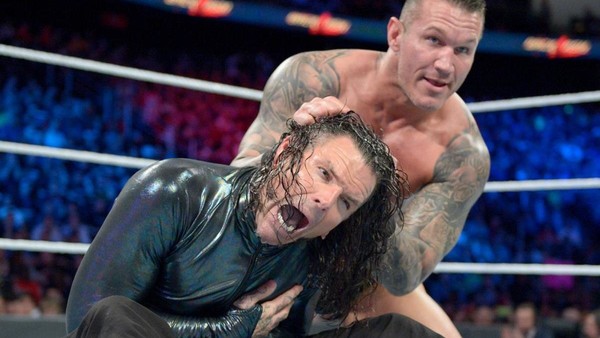
Randy Orton is committed to the banter, if not his performance level; if anything, the Viper has become almost defiantly tedious in 2018, with the glib grin etched over his face his sole remaining expression. His "Fast"lane match with Bobby Roode was almost a cliché of his antiquated, methodical style, and any notion that this resulted from the dynamic dissipated upon watching his next PPV singles effort - perhaps that isn't the correct word - opposite Jeff Hardy at Backlash. Mid-paced, middle of the road, this was the embodiment of average. It was well-worked, as most Orton matches are, but lacking in any drama or dynamism.
Once a brash upstart, a Legend Killer, an IED-afflicted psychopath, Orton's new role is that of a sturdy veteran with nothing left to prove. The man barely boasts any character. He turns up, drops somebody with an RKO to initiate a feud, and said feud plays out to no appreciable effect on the SmackDown landscape whatsoever.
And yet, Orton is not rejected by the 'WWE Universe', unlike so many of those accused of an immunity to change (Roman Reigns), wrestling boring matches (Roman Reigns) or enjoying a status as an unearned office favourite (Roman Reigns). Orton is an accepted - mildly cherished, on the basis of the pops he continues to generate - part of the furniture, and as immovable.
How can a 13-time World Champion, an incredible number, exist simply to make up the numbers?
9. Purposefully Boring Matches

WWE Backlash was a particularly rancid example of a trend developed in belated response to the death of the true wrestling heel.
With perhaps three inspiring exceptions - The Miz, the 2015 version of Sasha Banks and most prominently Tommaso Ciampa - we no longer loathe those who perform well in the heel role, but those deemed irredeemable between the ropes. WWE has grasped this mentality and used it to devastatingly - purposefully - tedious effect.
Big Cass - shudder - maintained wrist control over Daniel Bryan in an attempt to draw heat through his lack of dynamism. Carmella applied tiresome hold after tiresome hold, with the baiting, smarmy grin plastered over her face supplanting genuinely effective and absorbing heel work. This isn't a 2018 development; last year, Enzo Amore was instructed to play a similarly antagonistic role as Cruiserweight Champion. The heat didn't result from the work, but became the unexciting central premise of the laboured, antagonistic work itself - the in-ring equivalent of sustained prodding to the chest. This boring approach yields nought but boredom.
Wrestling isn't necessarily about moves - but using the space between them almost exclusively is a complete non-starter of a narrative that is especially stark in contrast to a relentlessly superb international standard.
8. Unjustified Jobbers

Wrestling jobbers, being jobbers, were never around for long. There purely to stare at the lights, in flattering big-bumping performances, their brief stints in addition to putting over the stars made a sort of fictional sense also. Defeated so comprehensively, why wouldn't a promotion give Chris Hamrick, wonderful bump notwithstanding, the heave-ho? He was, in kayfabe, a no-hoper at best, a liability at worst.
WWE's financial muscle in the years since has flexed and fostered the rise of the permanent enhancement talent, which manifests as monumentally tedious and pointless television. Some of these acts try to or are given something marginally entertaining to do with a nailed-on outcome. Curt Hawkins' losing streak yields the odd tragically optimistic and thus blackly comic promo. The Ascension were alright in the Fashion Files skits. But mostly, there is a fleet of undercard performers who contribute nothing to the product aside from defeats that are as inevitable as they are unoriginal as they are repetitive, impressive only to the broadcasters who generate money from segments that fundamentally exist to exist.
When you allow Vince Russo to complain with justification - he'd do something with Epico Colon, even if it is absolute trash - then something is wrong.
7. The Reemergence Of Bruce Prichard

"Tom Prichard, I'd take a bullet for. Bruce Prichard, I'd put a bullet in." - Mike 'Simon Dean' Bucci
That was the legacy of the former Brother Love after he ended his epic WWE association in 2008; Bucci was not alone in his perception of Prichard as a bullsh*t-spewing yes man. Apocryphally, this apparent compulsion to say yes to even the worst of Vince McMahon's impulses - imagine how bad the sh*t he decides isn't worth airing must be - is what compelled Stephanie McMahon to fire him. Of course, Prichard being Prichard, he'd write this off as "rumour and innuendo". Still, he writes this off in such entertaining fashion that he has, incredibly, become the king of the lucrative podcast game.
Full disclaimer: No, I wasn't there. But to put into perspective Prichard's...unreliable narration, the man refused to concede that there were, at least, racist overtones to a storyline in which Triple H kindly requested that Booker T "do a little dance" for him.
With his tall tales filtered through a bullsh*t detector - which Prichard helpfully telegraphs with his "And again..." tell - the man is great value. Depicting Bob Holly as a Goldberg-esque warlord capable of getting the belt - and beating everybody!; his ironic but no less funny moments of nerd rage at the mere mention of Dave Meltzer's name; chocolate t*tties: Bruce adds funny, fresh and fascinating minutiae to a period of wrestling otherwise cannibalised in this age of nostalgia-driven Network content.
6. Joey Janela's Renaissance Men
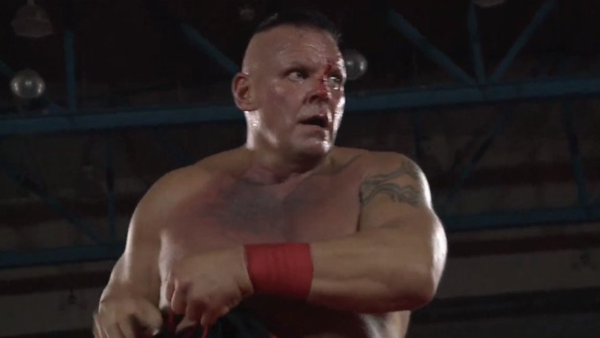
Over WrestleMania Weekend, the former Jean-Pierre Lafitte - both d*mn underrated talent and New Generation trivia question - stole several headlines despite virtually every wrestler in the world of any serious repute, bar Kazuchika Okada, performing somewhere in the vicinity of New Orleans. Affectionately known as PCO - enduring a blackened chest at the mercy of WALTER's sickening chops will earn that affection - a man once consigned to the WWE tributary fringes of the Independent circuit is now able to command a higher fee, glorified by the mad scientist context of Joey Janela's uplifting blend of banter and badassery.
Marty Jannetty, latterly known (criminally) as the dead weight of The Rockers tandem and (erm, criminally) as a daughter-banging, frazzled party animal, is another very skilled veteran Janela has helped repurpose years after he was deemed finished. So great is Janela as a promoter that, at last year's Spring Break, he was the man - not Vince Russo - with the ability to tap into Dan Severn's dormant charisma in an hysterical match with Matt Riddle.
Janela's dangerous work - and lighthearted approach - divides opinion, but the sense of fun glowing from these men would surely soften even the most staunch of curmudgeons.
5. The Three Man Commentary Table

Invariably, the third man of any given three-man announce team is redundant. That it is the norm all these years later remains astonishing, especially since the commentary is so nauseatingly over-produced. How many mouths must Vince McMahon speak through?
Jonathan Coachman adds nothing. How can somebody so flummoxed by the product add any insight into it whatsoever? At least Booker T was involuntarily entertaining. This is some indictment of the Coach, since Book's spats with Corey Graves distracted us entirely from the onscreen goings-on.
Byron Saxton adds nothing, aside from the odd guilty laugh at his expense. More earnest and in-the-know than Coach, he is nonetheless a hapless comedy figure as a result of his being the only person to take grave offence at the most impotent of heel deeds. He is also very weird and artificial even by WWE's glossy standards, with an ability to beam on cue mere seconds after solemnly registering a Big Cass sneak attack nobody else gave a toss about.
The odd nothing match on NXT TV excepted - and even they serve a purpose, for the inexperienced reaches of the roster - Percy Watson adds nothing. Literally nothing, at times; he emits a vaguely surprised murmur at various points, but that's about it.
Even Todd Grisham once mustered an "It's...Christian". It is impossible to recall anything Watson has ever said.
4. The Longevity Of Jeff Hardy
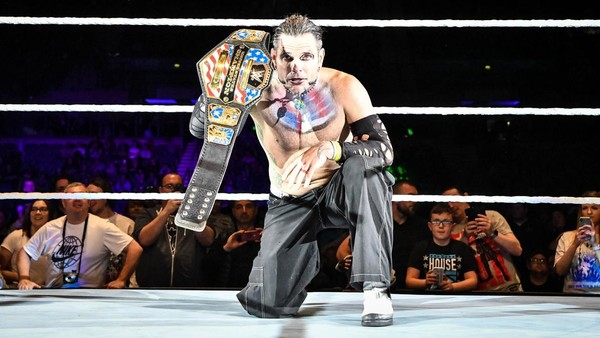
Jeff Hardy has no right to remain in the physical condition he somehow boasts in 2018.
As he rocketed to fame through careering from great heights, that was the metaphor widely used nearly two full decades ago. Hardy was an Apollo disaster in waiting, destined to crash and burn after a few short years wrestling a daredevil style on a punishing schedule. Throughout the multiple, brutal ladder matches with which he is now synonymous, Hardy has collided with steel more often than Goldberg has bumped on the ring canvas, and yet it was Bill who agonised to eventually pull off a four minute match at WrestleMania 33. On the same show, Hardy, making his grand return to the fold, did so in yet another ladder match in which he performed yet another lunatic bump. This was the second ladder match he wrestled in the space of 24 hours, having put over The Young Bucks in ROH the night prior. Hardy is a medical marvel, impossibly durable, having retained the ability to walk, let alone perform to a staggering standard on a full-time WWE schedule.
In many ways, personal and professional, Hardy's career arc may be among the most fascinating in wrestling history - certainly the most admirable.
3. The Death Of The Fan

As projected by Chris "Mookie" Harrington - who with respect to Dana Brooke is wrestling's preeminent statistician - WWE, by next year, will draw more revenue through corporate streams than via fan income.
What we think has barely mattered over the last few years, what with the inexorable, inexplicable onscreen lurch of Roman Reigns and the borderline extinguishing of red-hot acts Daniel Bryan and Rusev and the temerity they displayed to get over of their own accord. The Network Era secured a static audience willing to put up with artistic tripe, since the only substantial expenditure is patience. The eye-watering TV rights deals struck over recent weeks will only exacerbate this nihilism-generating paradigm shift.
This explains why the company is performing better financially with Roman on top than it did with Hulk Hogan and Steve Austin. In a sense, it doesn't matter who is positioned as talisman. The brand is the draw, if draw is even the applicable word. WWE no longer relies on drawing money, per se, but rather squeezing it from sponsors and broadcasters who could care less about the company's abysmal creative direction.
Content - any content - is king in 2018. That's why no one megastar wears the crown.
2. WWE's Abysmal Production Values

WWE, as one would expect from the most minted wrestling promotion ever, used to look amazing. Explosive, technicolour pyro; bespoke sets highlighting the theme of a pay-per-view with a sumptuous stylistic touch; dazzling, convoluted lighting rigs: even when the in-ring action was of minor quality, the production was major league.
Nowadays, despite its overstuffed coffers, WWE shows look. Like. Sh*t.
Performers shout banalities into selfie cameras, using techniques Independent shows must resort to for budgetary reasons. Mercifully, promos are no longer captioned with inexplicably awful WordArt graphics. Pyro is reserved exclusively for WrestleMania, depriving WWE of its once ever-present sense of occasion, which really doesn't help in its mirroring of a product at once mundane and inconsequential. Adding to the generic onslaught, the PPV arena is nigh-on indistinguishable from that of television. Since the matches across each aren't too dissimilar, this, allied with a Network model that excuses multiple rematches, homogenises the product to such an extent that nothing feels special.
Kevin Dunn also appears to have suffered from some sort of indeterminate affliction, at least one symptom of which is nausea-inducing seizures. His camerawork is an almost Lynchian nightmare at times, as his known hatred of wrestling manifests as frenzied inattention to it.
The glitz, like so much else in WWE, is gone - and yet, the money multiplies seemingly by the day.
1. Triple H's Incredible Internet Babyface Turn
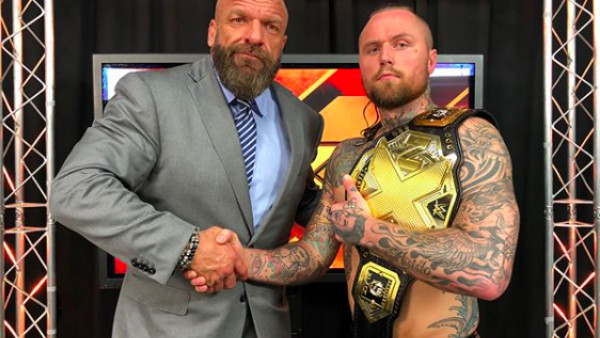
Triple H was persona non grata within the wrestling fandom in 2003. Buried with as much conviction as he buried a generation of emerging talent by fans who reacted to his ponderous, laughable Ric Flair 1987 tribute act with bored dismay, his matches, his promos, his ego - his very DNA was utterly interminable. He fared little better as the decade spluttered forth in his drastically unfunny DX 2.0 midlife crisis.
In 2018, Triple H is the creative figurehead of NXT, a brand so unbelievably brilliant that it is easily amongst the best wrestling products of all time. You could quite feasibly add virtually any TakeOver special to a Top 10 list of WWE's greatest productions ever. The same man who literally buried developmental in 2006 has handily, undisputedly surpassed the main roster with his glorious reimagining of it a decade later. The same man who defensively buried a generation has created - or at least, elevated - shifting, seemingly endless rosters of unique, next-level acts. Singles wrestling; tag wrestling; women's wrestling; stipulation bouts, most recently: Trips is near flawless in his role, bettering even New Japan's Gedo strictly in terms of wall-to-wall brilliance. The most destructive man in WWE is now the potential creative saviour of it
There's hope for Roman Reigns yet!
Well, there probably isn't.