10 Parallels Between Vince McMahon And Antonio Inoki

They’re worlds apart yet have so much in common.
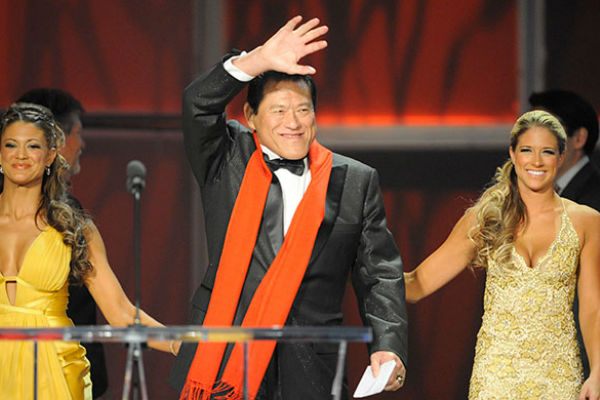
Vince McMahon likes to think that he doesn€™t have any equals on earth. He likes to think that he€™s the best in the world at what he does, that he€™s a god among insects, and that no one on earth can match him in terms of creativity or impact on the pro wrestling industry. Except there is one person who can: Antonio Inoki. As the founder and former owner of New Japan Pro Wrestling, Inoki is a legendary figure in Japan. He was trained as a wrestler by the immortal Rikidozan, and became a tremendous booker in his own right over the decades. He has served his country in many ways, and has become synonymous with professional wrestling in the orient. So beloved is Antonio (Kanji) Inoki in Japan that many people overlook his mistakes far more often than they would for other promoters. Inoki spent decades building NJPW into a top promotion in his home country (like Vince), and has also experienced major pitfalls as a booker (like Vince). In fact, thinking about it, these two actually have a lot in common with one another, from their career paths and on-screen presentation, to their mind-sets and business models, to the charitable and philanthropic missions they champion. It turns out that both Vince McMahon and Antonio Inoki have a lot in common as bookers, athletes, and victims of their own successes and mistakes.

10. They Were Both Prominent On-Screen Figures In Their Respective Promotions
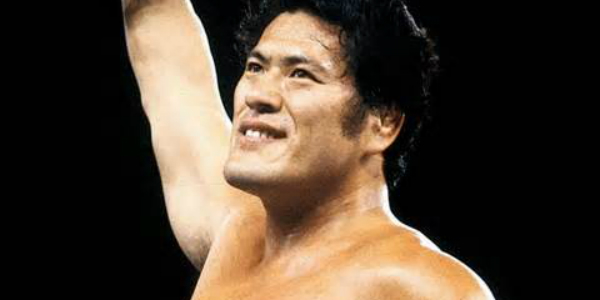
Both Vince and Inoki were crucial to their respective promotions' success, and regularly featured in top feuds. When Vince McMahon became the Mr. McMahon character, fan interest in the WWE product exploded in a way that hadn€™t been seen before. Tthe evil corporate boss became the target of fans€™ ire for both scripted wrongdoings and real ones as well. They loved to see him get his comeuppance, and watching him get demolished and/or humiliated in the ring provided fans with some wonderful moments. It was masterful storytelling. Inoki, on the other hand, is what Vince could€™ve been if he was actually a trained wrestler. As previously stated, Inoki was trained by the legendary Rikidozan, and he had a wealth of in-ring experience by the time he founded NJPW in 1972. From then on in Inoki was the centerpiece of NJPW€™s booking. He booked himself as an unstoppable force, and based his style on a realistic €˜strong style€™ of wrestling. Over the years, Inoki cultivated a reputation as a dangerous, unforgiving man who could take on any challenger from any discipline, transforming him into a hero in his native land. If Inoki hadn€™t done so much work to improve NJPW€™s global reputation, the promotion might not have had so much success in the 1990s through inter-promotional talent exchanges. And if Vince never embraced his evil boss character in the way that he did, there€™s a good chance that WWE would€™ve lost the Monday Night Wars to the incredible popular WCW.

9. Listening To Yes-Men Instead Of The Actual Geniuses That Work For Them

Both of these promoters have made questionable booking decisions that no one challenged them on, mainly because they had inner circles of yes-men that never challenged them, all while having other loyal wrestlers doing the heavy lifting for them. For Vince, his inner circle is composed of yes-men who do everything that he says without ever calling him out on anything. Because so many people kiss up to him or are too afraid to criticize him, Vince can pretty much do whatever he wants in his promotion, with no one willing to get in his way and stop him. He keeps booking the same things on RAW and SmackDown, while the workhorses of WWE do all the hard graft in making his bad ideas work as best they can, and Triple H does whatever he can to keep increasingly-jaded viewers entertained with NXT. As for Inoki, when he went overboard with the MMA craze in the early 2000s, his closest circle of friends thought he was a genius, and didn€™t challenge him mainly because he had built and carried NJPW by himself for many decades. But while Inoki was still promoting shoot fights with K-1 and Pride, smart wrestling bookers like Jushin Liger, Masa Chono and Riki Choshu were the ones who actually booked the wrestling matches that people wanted to see. And it was their direction that led to acceptable ticket sales, not Inoki€™s fixation on mixed martial artists.

8. Being Influenced By Powerful External Forces

Despite both men being considered masterful promoters, both McMahon and Inoki have to deal with powerful external forces influencing their decisions. In Vince€™s case, he has to deal with Wall Street. Ever since WWE went public, he has had to make certain business decisions that have catered more towards these investors (who see WWWE as nothing more than a stock valued at a certain price), than towards the wrestling industry and fans. These decisions have included: pushing certain €˜merchandise-moving€™ wrestlers more at the expense of building new stars, not allowing WWE to take any creative risks so that the same revenue stream can continue uninterrupted, and pushing the more €˜entertainment-heavy€™ aspects of the show instead of the actual in-ring action. Inoki, meanwhile, has had to deal with an external force of his own: the Yakuza. It has long been speculated that the Yakuza has had heavy involvement in the Japanese wrestling industry, with promoters, wrestlers and other parties allegedly being members. In Inoki€™s case, the Yakuza are allegedly involved with NJPW quite a lot, acting as back-up investors for the promotion (so that NJPW NEVER has to worry about bankruptcy, unlike Vince and WWE), and have been allegedly involved in €˜papering€™ (manipulating live ticket sales) NJPW events for years. So, even though both these promoters consider themselves masters of their respective worlds, it turns out that both of them answer to powers higher than their own.

7. They Have Both Served Their Respective Countries
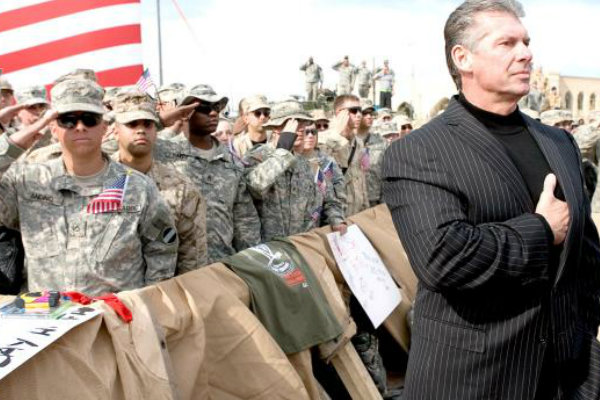
Although they€™re both known ruthless businessmen, both Vince and Inoki have put those aspects of their personalities aside in order to serve their respective countries in similar (yet different) ways. Vince has always had a profound respect for the U.S. Armed Forces. His own appreciation for the sacrifices the USAF is so profound that it led to the creation of the WWE Tribute to the Troops shows, which was one of the most popular and high-profile tribute shows available to servicemen and women. This mindset of his also extends to members of the military having access to free tickets to WWE shows, charity work for veterans, and extensive promotion of the values promoted by the military through such characters as John Cena. Inoki is also someone who has served his government, except unlike Vince, Inoki served directly. He was elected to the Japanese House of Councillors on two occasions, and served his country in that capacity. But despite being a public servant, he also served his own ego/interests on a few occasions. He went to North Korea against his country€™s wishes in November 2013 in attempts to forge peace between the two countries after tensions had risen recent years. He had acted as a hostage negotiator in Iraq, attempting to secure the release of Japanese hostages. He had even considered running for governor of Tokyo in 2014, demonstrating that there€™s no limit to his political aspirations.

6. Pushing Established Veterans Instead Of Rookies

If there€™s one problem that seems to manifest itself in every wrestling promotion on a regular basis, it€™s deciding between pushing a new wrestler to the moon in order to create a new star for the future, or playing it safe and pushing the same time-tested draws in order to maintain the status quo. Vince McMahon has been guilty of doing this on numerous occasions. Bringing back Hulk Hogan and Roddy Piper as high-profile superstars in the early 2000s despite their ages and injuries is but one example. He hasn€™t created a new top star in many years, and he insists on having part-timers and older wrestlers main-event marquee shows instead of giving new wrestlers opportunities to try and main event. Inoki, meanwhile, did the same thing in New Japan, as Inoki was insistent on pushing the same wrestlers for well over a decade, as well as keeping himself as the top draw in the promotion throughout two decades. He rarely created new stars during the 1990s and relied on outsiders to be the big draws for his company. The result for Inoki was that NJPW was in shambles in the early 2000s following the disastrous €˜Inokism€™ phase, while Vince€™s WWE is in a sort of purgatory right now, where younger talents still take a backseat to veterans and former MMA fighters.

5. 'Crazy Old Man' Eccentricities

Both Vince and Inoki are known for doing crazy things as they have gotten older and gained power. Vince has a hatred for non-controllable bodily functions like sneezing. He demands that people stay up while flying in his private plane because he himself doesn€™t sleep. Many of his ideas for storylines are manifestations of his erratic mental state: €˜Katie Vick€™, €˜Sexual Chocolate€™, creating his own church called McMahonism, his obsession with incest and toilet humor and more. The man's clearly off his rocker. He€™s also known to be woefully out of touch when it comes to pop culture. He denied Metallica€™s request to perform live at SummerSlam 2003 because he didn€™t know how big they were, he didn€™t know the Paul Burchill pirate gimmick was so similar to Captain Jack Sparrow, and for a long time, didn€™t know what a burrito was, despite eating one every day. As for Inoki, the stories of his eccentricities are well-documented. He once bought an his own island with NJPW profits because he thought gold was buried there. He has also slapped many people, from politicians to celebrities, to the Japanese ambassador of Pakistan. He has also insisted on many occasions that all of his decisions were correct, even going so far as to do a mock crucifixion. Clearly, not even geniuses like these guys make good decisions all of the time.

4. Bitter Rivalries With Some Promotions & Cooperation With Others
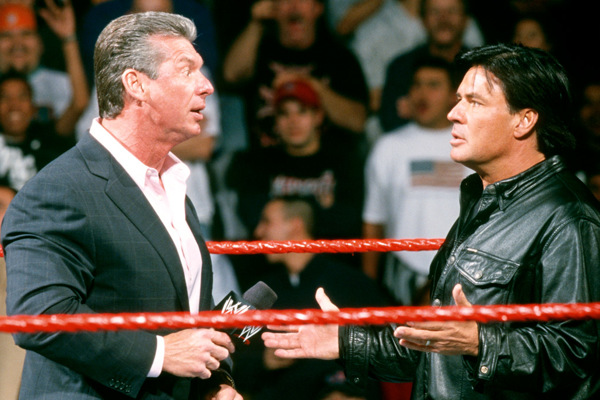
Inoki and Vince have never enjoyed competition. They both viewed their respective promotions as the biggest and the best, and have sought to prove this as fact on several occasions. To that end, they€™ve both gone to great lengths to eliminate their competition, which has in some cases required them to cooperate with lesser enemies. Vince expanded WWE into a national promotion in the early 80s by poaching the top talent from other territories. But when WCW became a major threat in the 90s, he supported and organized a talent exchange with ECW in order to change fan perceptions and take viewers away from WCW. As for Inoki, he was involved in a major war with All Japan Pro Wrestling for decades. Inoki and Giant Baba had cordial relations over the years, and constantly strived to dominate the other during a back-and-forth rivalry. To accomplish his mission, Inoki opened NJPW up to the world and partnered with WCW and other American promotions in order to increase interest in his product. In both of these cases, the bookers in question managed to overtake their biggest rivalries, even if it meant cooperating with lesser competition. Both Vince and Inoki managed to swallow their pride and use other promotions for their benefit.

3. Letting Top Talent Leave

Both Vince and Inoki are guilty of not doing enough to keep many of their top tier talents from jumping to other promotions or staying loyal to them, mainly down to their stubbornness. Vince has allowed so many of his talents to leave WWE for better money or because they didn€™t like what he was doing with the promotion. Top guys like Diesel, Razor Ramon, Bret Hart, Brock Lesnar, Goldberg, and many others were allowed to leave WWE despite Vince€™s best efforts to keep them in. Inoki, meanwhile, was so arrogant in his vision of €˜Inokism€™ and the emphasis on shootfighting that some of his biggest basically stopped caring about NJPW€™s future. Top star Masahiro Chono became majorly detached from the promotion in the late 1990s and early 2000s, opting to become a freelancer rather than remain tethered to Inoki's ailing company. Riki Choshu left NJPW after too many disagreements with Inoki while Shinya Hashimoto, another top draw, formed his own promotion in response to Inoki€™s stubbornness. Keiji Mutoh (The Great Muta) became so disenfranchised with Inoki that he jumped to AJPW after spending over a decade working with the chinster. In all of these cases, the supposedly genius promoters couldn€™t keep their top talent from leaving, and suffered as a result. NJPW was gutted of its top talent in the early 2000s and wouldn€™t bounce back until many years later, while WWE suffered significantly after Vince failed to stop his main guys from defecting.

2. Overemphasis On Realism & 'Real Fighting'

Vince has long had an obsession with making creative decisions based on the question, €˜who would win in a real fight?€™. This philosophy has led to him booking bigger strongmen more often than smaller technicians, and was an instrumental reason for him pushing Brock Lesnar to prominence, both before and after his MMA career. This philosophy, though implemented with good intentions, has led McMahon to overemphasize people like Lesnar (as well as unskilled big men) at the expense of better storytellers and more charismatic individuals. As for Inoki, he€™s the poster child for making bad decisions regarding booking MMA in his wrestling promotion. He created the spectacular failure known as €˜Inokism€™, which saw MMA fighters defeat the strongest NJPW wrestlers in shoot-fights, and featured the same MMA fighters wrestle against experienced grapplers. The results were terrible for NJPW - the careers of many NJPW veterans were tarnished, a lot of those MMA guys ended up failing to make the proper transition to pro wrestling, and NJPW€™s fanbase dwindled significantly during the late 90s/early 2000s. It was so bad that Inoki had to sell his own promotion, because fans hated his obsession with the shoot world. Wrestling fans just didn't want to see it, either. Perhaps both of them should stop focusing on the €˜reality€™ aspect of things and focus instead on telling better stories in the ring.


1. They've Both Been Roundly Praised...For Their PAST Work When one looks at how Vince McMahon and Antonio Inoki are viewed by contemporary wrestling fans, one thing that€™s painfully clear is that the praise that they do receive is not for their current or most recent work, but for what they€™ve accomplished in the past. Vince McMahon€™s biggest success by far was the creation of the Mr. McMahon character and resulting feud with Steve Austin, which came about due to the fallout of the Montreal Screwjob. That character - and that storyline in particular - were arguably the greatest in WWE history. So successful was his work with this character that WWE have attempted to re-create this magic on many occasions, typically failing to do so. Lately, Vince has been criticized for being €˜out of touch€™, stubborn, and incredibly indecisive, much to the detriment of his own promotion. As for Inoki, it was his early focus on cruiserweights that demonstrated how good of a booker he was. The decision to book wrestlers like Tiger Mask, Dynamite Kid, Jushin €˜Thunder€™ Liger and other lighter wrestlers led NJPW to become arguably the top wrestling promotion in Japan for many years. His own main event status was also key to this. But recently, Inoki has been more known for making terrible business decisions and booking that pales in comparison to his best stuff. His emphasis on 'Inokism' and shootfighting crippled NJPW so badly that trust in his decisions soon faltered, which eventually led to him selling NJPW and pretty much leaving the wrestling business for good, bar the odd show here or there (which, of course, featured plenty of shoot fighters).


Contributor

Alexander Podgorski is a writer for WhatCulture that has been a fan of professional wrestling since he was 8 years old. He loves all kinds of wrestling, from WWE and sports entertainment, to puroresu in Japan. He holds a Bachelor of Arts degree from Queen's University in Political Studies and French, and a Master's Degree in Public Administration. He speaks English, French, Polish, a bit of German, and knows some odd words and phrases in half a dozen other languages.