10 Most Successful Outsiders In WWE History
They shouldn't have fit in but they soon became part of the furniture.
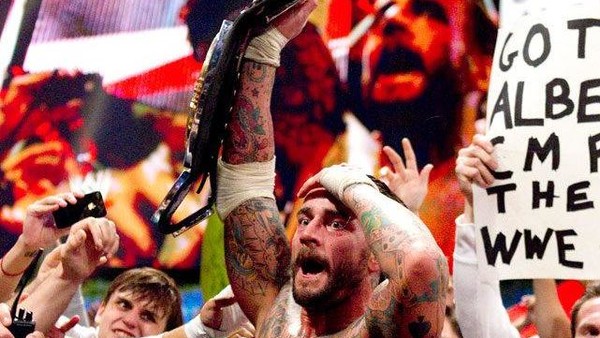
WWE has never taken kindly to outsiders. While WCW built their entire business strategy around cherry-picking talents from the then-WWF during the Attitude Era, the philosophy was quite the contrary up at Titan Tower: build stars from within, and watch the cream rise to the top.
It worked with the likes of The Rock, Kurt Angle, Shawn Michaels, Hulk Hogan, Yokozuna, Bret The Hitman Hart, and many others over the years. Vince McMahon viewed these stars as his creations, and valued them higher than talent who came from other companies, such as Goldberg, Sting, and Raven.
There are exceptions to every rule. For every guy that Vince McMahon created like a John Cena, there was the counter-cultures choice CM Punk to collide with him. While most outsiders to the company failed to draw money after being placed in a tough spot right out of the gate, there were several breakout stars who climbed over the mountains placed in front of them to become iconic stars of their era. AJ Styles could very well be the next wrestler to break out whilst retaining his persona from a previous company.
The criteria for this list is huge, so it's been narrowed down with a bit of grace. For example, you will not see Stone Cold Steve Austin on this list. Why? Because he was a Hollywood Blond before he stepped foot inside of a WWE ring; the character of Stone Cold was created after he started work for the company.
Same goes for the beloved Eddie Guerrero, whose tenure in WWE was summed up by lying, cheating, and stealing - another WWE creation, just like Austins run as Stone Cold. Those on this list were either a less-fleshed out version of the character they became and found success with in the company, or they amplified their past success on the biggest stage of them all.
10. Rob Van Dam

Rob Van Dam got the attention of ECWs head honcho Paul Heyman when he went out and cut a shoot promo on the promotion smack dab in the middle of the ring, stating that he was clearly worth more than a forgettable opening contest. Boy, was he right, and Paul could sense right away that he had a star in the making.
Looking like a handsome Jean-Claude Vam Damme, RVD skyrocketed to superstardom in the original ECW, becoming the Television Champion and making that title carry more prestige than even the ECW Heavyweight Championship. Its hard to not get excited about a title reign that lasts nearly two years.
Being shelved due to an injury meant that Rob Van Dam never technically lost his title, and the fans remembered it. ECW folded around the same time, leaving fans truly clamoring for more of the Whole Fn Show. The opportunity was set before him when he inked a deal with the WWE, but such success in a competitors playground left thick tension permeating in the backstage area of the WWE, both from a production standpoint and in the locker room. RVD himself is the first to admit in a Kayfabe Commentaries interview that he never bonded with Vince McMahon - a key step in being an outsider who found success in the company.
Mr. Monday Night grabbed the attention of fans of the big stage and forced the WWEs hand, regardless of how they felt politically about the marijuana enthusiast. Despite rubbing the Powers That Be the wrong way with his lackadaisical nature, he won over several influential members of the locker room over in due time, such as Booker T, and became one of the top guys in the company. Holding the WWE Championship once and the Intercontinental Champion six times, RVD was also the second-ever Money in the Bank winner, proving that the company could throw accolades his way to appease that loyal following hed carried with him for decades.
9. The Road Warriors

Road Warrior-pop is a term that gets thrown around from veterans in the wrestling industry. Steve Austin has often referred to it, and for the layman, it basically means the loudest sound your ears can possibly tolerate. The Road Warriors were the main attraction at every single event they ever strolled into for every single promotion they ever worked for up until their signing with the WWF in 1990.
Renamed as The Legion of Doom for Vince's promotion, Road Warrior Hawk and Road Warrior Animal ran roughshod immediately through the tag team division in the same way they dominated the likes of the AWA, NWA, All Japan, and WCW previously. They were known for their brute physicality; rumor has it that job guys who found themselves on the card against the Road Warriors would burst into tears upon finding out who their opponents were. This no-nonsense approach, mixed with the bells and whistles of the face paint and spiked, post-apocalyptic shoulder pads, must have resonated with the Chairman.
Their two WWF runs were both successful to varying degrees. Their first foray was iconic, including winning the Tag Team Championships at SummerSlam 91, and a year later zooming down the walkway at SummerSlam 92 at Wembley Stadium on motorcycles. Their second run in 1997, with Sunny as their valet, was even a minor success, keeping the team at the forefront of a wrestling brand that was on the verge of breaking free from the pack.
8. Booker T

Booker T had one of the most memorable tag team runs in wrestling history with his older brother, Stevie Ray, and their amazing manager, Sherri Martel. As Harlem Heat, the tandem made their mark in an industry where African American performers are often overlooked and overshadowed - especially in a company with strong southern roots like WCW. Harlem Heat won the WCW World Tag Team Championships a record ten times over the course of their career, and Booker T was destined to be one of the greatest tag team wrestlers to ever live. Hey, thats a pretty great career, right?
All of a sudden, though, Bookers work got better, and he gained steam as a singles combatant. Winning the WCW Television Championship opened a few eyes as to what the charismatic breakdancing fool could do. Near the end of WCW, he was a top guy, winning both the United States and WCW World Heavyweight Championships on the final night of the company. When the doors closed at WCW, he was the man. Perhaps thats why the WWE took a flyer on him, giving him the opportunity to come into an incredibly hostile territory and make an impact.
With hundreds of WCW wrestlers on the books at the WWE, many were outright buried before they had a chance. Big names like the nWo and Goldberg sat home and collected checks, while guys like DDP were chewed up and spat out. Booker kept grinding though, and won the boys in the back over with his likable demeanor and fantastic work in the ring. Hed end up winning that same World Heavyweight Championship, though fell short of the WWE Championship in what could be argued as the worst decision the company ever made: holding a red hot babyface down against Triple H at WrestleMania XIX.
Its impossible to justify a scathingly racist promo, let alone when the guy cutting said promo goes on to win. No matter the scenario, Booker thrived in every segment he was given in the company, from comedic to deadly serious.
7. The Dudley Boyz

The premier stars of ECW at the time of their defection to the WWE, Bubba Ray Dudley and D-Von Dudley, were running amok as the Dudley Boyz, coming straight out of Dudleyville and relocating to the world where sports entertainment was king. The dynamic twosome laid waste to everyone in their path in ECW and had some of the strongest heat this side of the 1980s, calling elderly grandmothers in the crowd the worst thing you can call a woman, all the while picking fights with grown men and teenagers in the stands.
How on Earth could a team so naturally vile and despised exist in the WWE, even during the curse word-laden Attitude Era? Somehow, someway, the Dudley Boyz thrived in their new environment. Bubba Ray tried to explain to Vince that they werent necessarily nice people in their personas, and Vince wisely told them to tailor their act for their new crowd. The Dudley Boyz became vicious in their actions. The tandem put 80 year-old Mae Young through a table on two occasions, including once off the stage. These actions spoke much louder than those dreadful words they uttered in ECW.
The Dudley Boyz reached new heights of popularity, largely thanks to their use of tables on the main shows. Bubba Ray would fall into a trance after D-Von brought in the furniture, putting their myriad of opponents through them for great agony. Their greatest claim to fame, however, would be their iconic series of matches with two pairs of WWE creations, the Hardy Boyz and Edge & Christian, as these six men put their bodies on the line in their epic set of Tables, Ladders, and Chairs matches in the early-00s.
6. Rey Mysterio

When you think of guys who never change, you may think of John Cena, due to the long-stale persona of his Hustle, Loyalty, and Respect moniker. Thats a fair conclusion to jump to, but Id argue the most successful man under one persona has been Rey Mysterio, the masked David to practically everyone elses Goliath.
Making a name in the States in ECW, Rey took the world by storm with his legendary matches against Psicosis, so much so that Eric Bischoff took notice and use his deep pockets to steal both talents away from Paul Heyman and co..
Rey, then known as Rey Misterio, Jr., turned heads with his series of stunning matches again Eddie Guerrero, including what can arguably be called the greatest wrestling match ever, at Halloween Havoc 1997. After Eddie and the rest of the Radicalz jumped ship to the WWE, Mysterio wafted in the dying breeze of WCW, being unmasked by Kevin Nash and his cronies, and relegated to a dead-end stable gig with the Filthy Animals before eventually getting the call to head up north to Titan Tower as the beacon of babyface hope for the Cruiserweight division. Under his mask once again, he was just as dominant in that division as he had ever been.
Eddie Guerrero, oddly enough, was the one who made Rey a star in WWE, and a legitimate contender for any titleeven the World Heavyweight Championship. Following the death of his dear friend Guerrero, Rey Mysterio entered the 2006 Royal Rumble as the second entrant, and lasted a record time to win the event and go on to face Randy Orton and Kurt Angle for the championship at WrestleMania, where he captured the gold. Rey Mysterio is without a doubt the greatest underdog in the history of wrestling, perfectly encapsulating the feeling that anything can happen on any given night in the business.
5. Jim Ross
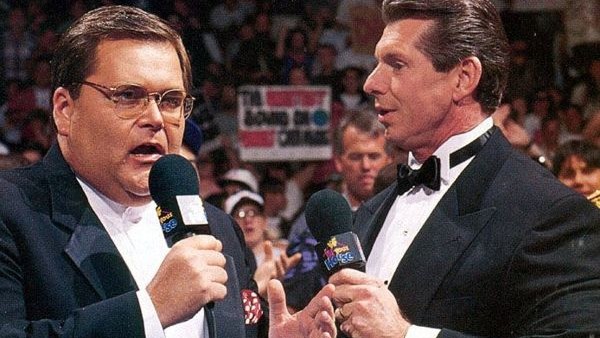
Heres one you probably didnt expect to see. While Jim Ross has (thankfully) only stepped into a wrestling ring to put his dukes up on a few occasions, his contributions to the WWE are both boundless and timeless. His calls resonate with anyone who watches the matches he did commentary for, as he invokes real human emotion nothing is prepped, and everything is made better for it. He was an everyman to the WWE product, providing a comforting, reliable voice of reason to a world that oftentimes shouldnt have made a lick of sense. And it almost never happened.
Broadcasters go to die in the world of the three-man booth. The set-up is a graveyard for even the most distinguished voices. We hear it on a weekly basis, where everyone is trying to get their point across at once to create a cataclysm of useless noise. Jim Ross was the voice of WCW (strike one), a man with a thick southern accent (strike two), and the third wheel of a menagerie of three-man teams in his first few years in the WWE (strike three). Somehow, someway, he wasnt out.
After facing the trials of having his contract expire, and being brought back in for a second chance for those inevitable three-man booths with incalculable talents, Monday Night RAW settled in behind the booming voices and opinions of Jim Ross and the miscreant Jerry Lawler. Ross donned a cowboy hat as a rib by McMahon and Co., and used the new image to his advantage as it gave fans a trustworthy face to go along with his unwavering, iconic voice. Ross stood up to his bouts of Bells Palsy in gutsy fashion, just another underdog intricacy to perhaps the most beloved babyface in the companys history. As Bobby Heenan was to being bad, Ross was to being good, proving that not everyones worth in wrestling is measured by what they do between the ropes.
4. CM Punk
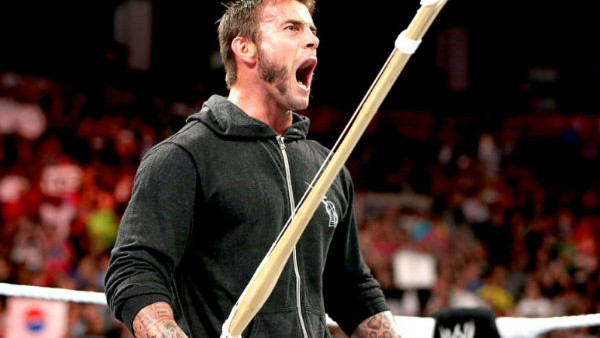
Look, when you go out on live television and state that the company you work for might be better when your boss is dead, its safe to say that youre a square peg trying to fit into a round hole. Such was the case with CM Punk, who never fit into WWEs mold, even when he was on top of the world and arguably the face of the company. Punk was making fans gasp in Ring of Honors Summer of Punk back in 2005, where he won the ROH World Heavyweight Championship as he was exiting the company to sign with WWE, holding the title hostage and threatening to take it with him to Connecticut.
CM Punks unbelievable run in WWE started off as a niche. He was the guy who could continually put on great matches, and the guy you could give the lesser titles. His loose cannon demeanor rubbed folks the wrong way backstage to the point that the company felt uncomfortable putting the strap itself on him and making him the spokesperson of the company. Fed up, Punk went out and cut the infamous Pipe Bomb promo that shocked and awed fans and non-fans alike, both proving the WWE brass point while also making sure that they absolutely had to make this guy who stirred up so much interest in a stale product the face of their billion dollar brand.
The biggest thing of note regarding CM Punks peaks is, of course, the unprecedented modern day title reign of 434 consecutive days. It all came crashing down when a part-timer, the Rock, came in and dethroned the champion. Part-timers taking the spots of young talents was a huge sticking point for Punk, so the tragicomedy of one relinquishing him of the gold did not go unnoticed. Ultimately, CM Punk didnt achieve what he set out to do in WWE by main eventing a WrestleMania event, but he did more than enough to prove his worth as a successful outsider to wrestlings premiere brand.
3. Ric Flair

When you think of Ric Flair, you think of the kiss-stealing, wheelin dealin, limousine-ridin, jet-flyin son of a gun, with his blonde flowing locks, elegant robes, sunglasses, and designer suits. When Jim Herd gained control of WCW in 1989, the television executive and the long-time face of southern wrestling in Flair had a brutal clash. This culminated with an ultimatum given to Flair by Herd to change his entire look and character. When Flair heard that Herd wanted him to shave his golden do, wear an earring, carry a gladiatorial shield to the ring and go by the name Spartacus, he had enough. He knew his self-worth and got in touch with Vince McMahon.
Very few people have ever made their WWE debut as an outside force that was on par in popularity with the biggest stars that the WWE has ever produced. The list of names can be read off on one hand: Sting, Goldberg, and Ric Flair. Flair thrived in his first few months with the company, somehow superseding McMahons ego and capturing the then-WWF World Heavyweight Championship at the Royal Rumble in 1992.
Things quickly soured for Flair amidst the backstage politics with Hulk Hogan at the time; to this day, the real story behind why their WrestleMania match-up was scrapped is a mystery only known by those closely involved in it. Before Flair skipped town back to WCW, he put his tenure in the company on the line against Mr. Perfect, anointing him a budding babyface after a successful heel run. Flairs true success would come much later after the folding of WCW as a company, as he had terrific matches with the likes of the Undertaker and Shawn Michaels in his last in-ring hurrah for the WWE. He was truly a Hall of Famer for both companies, and beyond.
2. Jerry The King Lawler

Arguably the most influential man in wrestling throughout the 1970s, Jerry Lawler ruled the Memphis, Tennessee territory with an iron fist. The man became such a beloved good guy that he eventually ran for mayor of the city and received a decent percentage of the votes, despite no political background. He owned his own restaurant that promoted the upcoming wrestling events. He even had a say in the creation of popular gimmicks for others, including Kamala. Once Elvis Presley died, Jerry Lawler officially became the King of Memphis.
While Vince McMahon, Sr. wanted nothing to do with Andy Kaufmans harebrained idea of inter-gender wrestling up in New York for the then-WWWF, Lawler recognized the benefits of the quirky idea (with the help of legendary wrestling journalist Bill Apter) and ran with it, making headline news across the world by feuding with the Taxi star. Perhaps it was this that jarred respect for the King from the younger Vince, who obtained his fathers promotion and began his own rendition of sports entertainment over serious wrestling contests. Lawler was brought into the company in 1992 as, of all things, a bad guy - and boy, did he thrive.
Getting his own foot in his mouth at the hands of Bret Hart may have been the highlight of his WWF wrestling career; needless to say, Lawlers in-ring work in WWE is only a footnote in his illustrious run in wrestling. Its what he brought to the presentation of the WWF, all the while remaining the King and a babyface in Memphis, that makes him so integral to the WWF during its most popular strides in company history. He and Ross were the team - the voicefor an entire generation of fans, and both were outsiders to the brand.
1. Chris Jericho
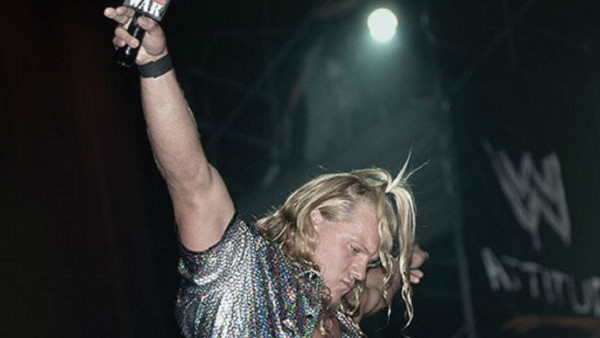
Here is the ultimate example of how to come into the WWE machine and break the walls down, so to speak. Chris Jericho, a fledgling mid-carder in WCW with an extensive following, had gotten over with his whiny crybaby heel persona. Nobody could pull that off quite like Jericho, who had to toil through that same mid-card as a debased goody-two-shoes for years before being allowed to embrace the Dark Side and come up with a cavalcade of excuses as to why he wasnt rising to the top of the company - including conspiracy theories within WCW. He was the most charismatic and entertaining portion of every Nitro, but he was going nowhere due to how the company was run.
When rumor had it that Jericho had jumped ship from WCW to the WWE, smart fans everywhere were losing their minds. A gigantic countdown timer was displayed on Monday Night RAW, and fans everywhere wanted to know what was going to happen. As the Rock was delivering a promo in the ring, the timer hit zero, and Y2J, the Ayatollah of Rock n Rollah himself, appeared, before verbally sparring with the #1 mic guy in the business. He made an immediate impact. He was the superstar we all knew he could be from WCWkind of.
You see, Jericho hit more valleys than peaks in his initial run. We all remember the debut, but according to Triple H he had nuclear heat backstage amongst the boys for defecting from the enemy and taking one of the top spots in the company on his first night in. Many Sunday Night Heats later, and Jericho found himself in good programs with two of the top females in the company: the belated Chyna, and Stephanie McMahon. These programs helped Jericho get over that stigma.
Given a brief and eventually negated WWF Championship victory on Monday Night RAW was a taste of what was to come, a reactionary move that unintentionally gauged interest in Jericho as the top performer in the WWF. A groundswell of fans supported Y2J, who kept his WCW persona, and he was anointed as the first Undisputed WWF and WCW Champion. He has since gone on to win numerous championships, becoming a Grand Slam Champion, and cemented himself as one of the all-time greats in the history of wrestling.