10 Most Overblown Wrestling Stables Ever

In its six years of existence, the New World Order had 65 total members (maybe more).

Stables. In pro wrestling, they're an easy and efficient way to get over a group of wrestlers who either need to be elevated on the card, or who otherwise have no specific role on the roster at that moment. When used in the 1980s, stables effectively allowed the WWF to marshal heels in efforts against Hulkamania, and allowed the NWA to do similar work in chasing down the likes of Sting and Dusty Rhodes. In the modern era, the WCW's greatest success came when the New World Order redefined the line between work and shoot for the 21st century. Of course, for every successful stable, there are those times when stables get overcrowded and lose effectiveness. Usually due to companies finding that everything and everyone attached to a particular group is truly "over," a greater number of wrestlers are attached to the group who are either a) doing nothing on the roster or b) are believed to be able to parlay alignment with a stable into becoming more "over" as a performer. In the aforementioned examples of great stables, both Bobby Heenan's "Family" and the nWo both make this list as being stables that failed in their effectiveness once too many wrestlers became involved. For as important as stables are, sometimes there are moments where there is absolutely too much of a good thing.

10. LWO

LWO Latino World Order El Dandy Psicosis La Parka LA ParK Damian Damien Damien 666 Damian 666 Galaxy Hector Garza The LWO was formed because Eddie Guerrero felt like a non-entity in WCW. Thus, the idea of reducing colorful, diverse and entertaining luchadores into a mob of guys in black t-shirts with a Mexican flag-inspired logo seemed sensible. However, that proved to not be the case. Luchadores were part of the unique mix that made WCW special as compared to the WWF. In giving the Mexican-born performers solidarity, they actually sublimated that uniqueness and instead made them into an amorphous mob of not-so over performers. In numbering near the teens at the close of the group, it was an idea that was progressive in theory, but terribly flawed in execution.

9. Special K

Special K Roh In theory, this is perfect. Take a group of unseasoned charismatic high-flyers and young female workers who are already hanging out at your shows and put them in a heel stable. They gain valuable in-ring experience, and hell...one of them could break out and become a star. In Ring of Honor's early days, a group of "rich ravers" billed from then-rave capital of the world New York City's Webster Hall venue included wrestlers named Izzy, Dixie, Deranged, Hydro, Angel Dust, Brian XL, Cheech, Cloudy, Elax, Hjinx, Lit, Mellow, Slim J, Yeyo, Dana Dameson and Becky Bayless (and their bodyguard Slugga). They interrupted shows to have in-ring raves, and even closed the show entitled "Wrestlerave '03" with an in-ring rave that shut down an actual match and closed the show. Seventeen people are seventeen people though, and when others joined for a few shows, the number would end up sometimes over 20. 20 people at ringside during a match? Yeah, that happened on occasion, and as a sometime attraction is great, but certainly verged on overkill. TNA performers like Jay "Hydro" Lethal, though? Without Special K, they likely wouldn't have had the platform with which to break out and have significant careers.

8. Dungeon Of Doom
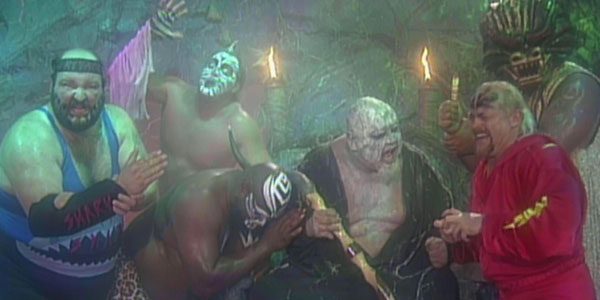
This one is an all-timer. King Curtis Iaukea, Kevin Sullivan, Jimmy Hart, Kamala, Earthquake, Brutus Beefcake, The Big Bossman, Vader, The One Man Gang, The Giant, Zeus, Bane, Meng, The Barbarian, The Yeti, Giant Haystacks, Lex Luger, Hugh Morrus, Konnan a leprechaun and Miss Jackie all can't combine over five tons of strength to defeat Hulk Hogan (and others, too...but largely JUST Hulk Hogan). WCW no longer exists. Long before the New World Order existed, this could be a reason why demise of WCW was inevitable. That's 21 people combined. Ridiculous.

7. The Magnificent Seven

http://www.dailymotion.com/video/x4tajf_goldberg-s-funeral-part-1_sport The end of WCW was a bizarre time. "CEO" Ric Flair, Jeff Jarrett, The Steiner Brothers, Lex Luger, Buff Bagwell and Road Warrior Animal (yes, because Hawk was dead) banded together at the literal end of WCW as the heel stable conspiring against a crew of babyfaces that included Goldberg (whom they "retired") as well as Booker T and amazingly enough, Dusty Rhodes. At a time when WCW needed to die, the idea that seven men who seemed to be so haphazardly thrown together were the top heel stable was just a case of showcasing everything wrong with mismanaged and overblown WCW at its close.

6. The New Blood

New Blood Wcw As a part of WCW's 2000 Russo/Bischoff co-booker re-launch, the duo decided that splitting the company into two warring factions was a smart idea. Of course, this is WCW (a company known for having a massive talent roster), so this wasn't likely to turn out exactly as planned. The Millionaire's Club and The Bew Blood were the names of the factions, the idea being that the more established "Millionaire's Club" - so named because of their contracts - were wrestlers who were holding back the young and talented "New Blood" from rising to the top of World Championship Wrestling. The Millionaires Club features 20 of the most recognizable names in pro wrestling history including Hulk Hogan, Ric Flair, Terry Funk, Lex Luger, Kevin Nash. The New Blood, 50 guys who were largely unknown to mainstream wrestling fans save Goldberg, Kevin Nash, Vince Russo and Eric Bischoff. One of the ultimate cases of possible "overbloating" (it's not a word, but it's an apt description) ever, the New Blood may actually be (in terms of guys actually getting over via stable association) one of the worst ever.

5. The Authority
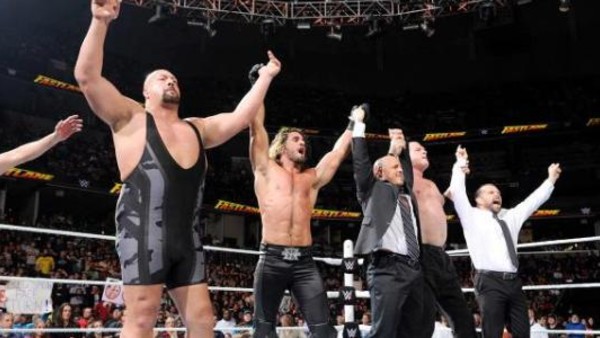
There's a great argument to be made for the roles of Jamie Noble and Joey Mercury as The Authority's J & J Security. However, when one considers the idea that The Big Show's role in The Authority now feels largely superfluous. In many ways, it actually makes the group in its entirety seem silly as hell overall. So, if we're to believe that Kane's the Director of Authority and Noble and Mercury run security for Seth Rollins, then what is the 7 foot tall, 400 pound Big Show even doing there? Yes, he turned on Team Cena at Survivor Series, but actually imagine if his reward for turning was to get the job now held by J & J. Seth Rollins with Big Show and his knockout punch as a bodyguard would be money. His blow is one of the few truly protected finishes in WWE, and imagine if Big Show were to say, hit Brock Lesnar with the knockout punch at Wrestlemania. The non-existent roof would come off of Levi's Stadium. On e of the worst cases of a missed opportunity, it makes The Authority not so streamlined at all.

4. Corporate Ministry

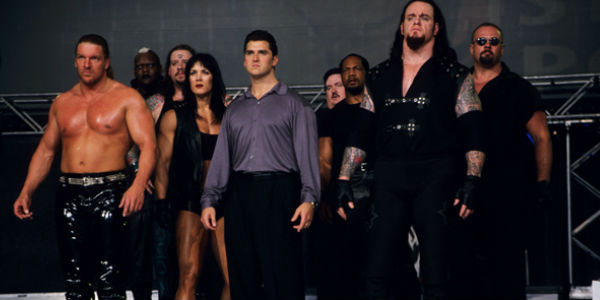
So the year is 1999, and in a move best meant to unify heat against the company's top babyfaces Vince McMahon, The Rock and Steve Austin, The Corporation merged with Undertaker's Ministry of Darkness in order to create the "Corporate Ministry" stable. You know a stable is overcrowded when various members of each stable have to, in storyline, immediately forget their gripes against each other, and this somehow makes them even meaner. Aside from having a pretty bad ass entrance theme, the Corporate Ministry only lasting for five months makes it almost a foot-note in the perpetually twisting and turning late period of the Attitude era.

3. The Heenan Family

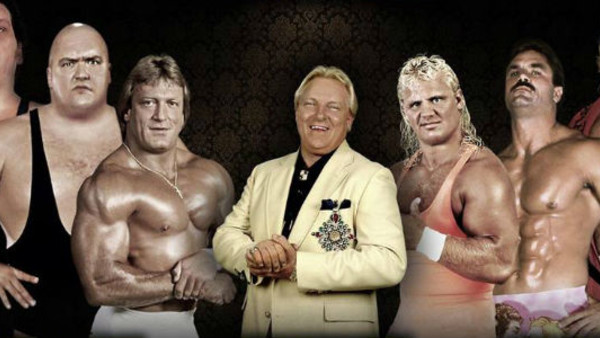
In the seven years Bobby "The Brain" Heenan was in the WWF, he managed over 20 different performers in his "Heenan Family" stable. Whether applying the heat to world champions like Hulk Hogan or The Ultimate Warrior on being a perpetual thorn in the back of wrestlers in the tag team division, Heenan was there. In retrospect though, it's entirely possible to consider that in the case of over half of the members of the family, Heenan ended up overshadowing that talents he was managing. For every Ric Flair or Andre the Giant, there's a Hercules or Red Rooster. A case of maybe going to the well 10 too many times, Heenan's truese excellence may lie in the fact that even though he took fewer bumps than talents that he managed, he overshadowed many of them.

2. D-Generation X (2000)

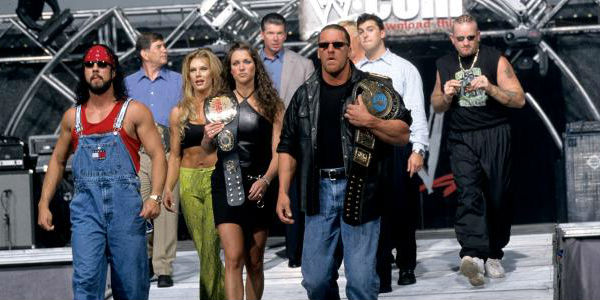
A fine case of studying a stable that got back together like a rock band that had too many hit singles as solo acts, the reformation of DX in 2000 mightily suffered from just being way too bloated. Triple H was the World Champion and had married Stephanie, meaning that on occasion Vince McMahon, Shane McMahon and the corporate stooges would occasionally appear with the group. As well, X-Pac was a top midcard heel and had acquired Tori as a girlfriend from his ex-partner Kane. The New Age Outlaws were also multiple-time tag champs and were very much over due to things not-so-much dealing with DX. There are 11 people that have been named, five of which are authority figures. This is, of course, the ultimate anti-authority stable. Suck it?

1. New World Order

BeFunky_nwo_group_article_2 At various points of the era between 1996-2002, roughly 65 different people were members of the New World Order. This was a crew that included a dozen-plus Hall of Fame wrestlers, the son of a Hall of Fame NASCAR driver, an NBA Hall of Famer and the hosts of TBS television program Dinner and a Movie. For as much as the New World Oder revolutionized professional wrestling, it got watered down pretty fast, right?!?!?!? Dinner and a Movie?!?!? Amazing.

In this post: 
dx Triple H
 
Posted On: 
Contributor
Contributor

Besides having been an independent professional wrestling manager for a decade, Marcus Dowling is a Washington, DC-based writer who has contributed to a plethora of online and print magazines and newspapers writing about music and popular culture over the past 15 years.