10 Major Lessons WWE Must Learn From 2017
The Universe isn't expanding; it's shrinking.
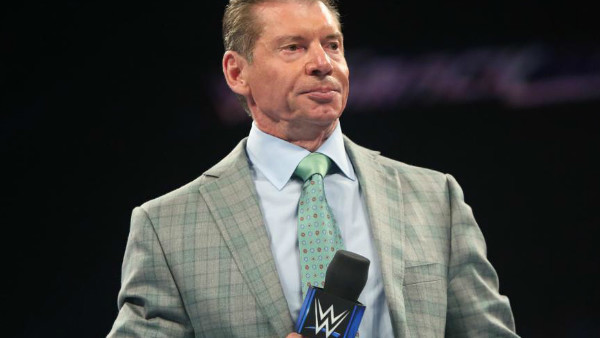
It's difficult to feign hysteria in the face of WWE's creative malaise - or even gauge how bad things could possibly get before WWE even remotely approaches anything resembling danger.
WWE's global reach is colossal. International TV deals; operating income; Network subscriptions; house show business; "digital engagement": virtually every component of the company's business either increased or, in some cases, broke records in the third quarter of 2017. The company is in rude financial health. While what they do is often incomprehensible, it clearly works.
But those who despaired at what was, at its worst, an abysmal year for WWE can maybe - optimistically - take solace in the fact that 2017 saw an emergence of unprecedented support for a rising independent scene.
There is a creaking paradigm shift in motion. The failure of WWE's pre-NXT developmental system forced the company to recognise that ROH, PWG et al. were the real proving grounds. But in reluctantly embracing the likes of Kevin Owens and Sami Zayn, they had to abandon the distinction between their guys and dreaded "Indy guys" - and we may have reached the inevitable point at which the audience no longer sees the distinction, either.
There are more Bullet Club t-shirts at RAW than Roman Reigns merchandise - and if nothing else, WWE surely cannot abide even a cosmetic loss to such a minor league enemy...
10. Lose Your Arrogance

Jinder Mahal represented peak market dominance in 2017.
A foreign menace with a bodybuilding physique and plodding ring style, he, not Randy Orton, was Vince McMahon's idealised sports entertainer built from the ground up. In no other era but the Network age could Vince McMahon get away with pushing a performer as alienating as Mahal - but without PPV metrics prohibiting the push, he thought he could.
Mercifully, it was an abject failure.
SmackDown attendances shrunk. Though house show attendances remained consistent, perhaps stagnant is the correct word: they are nothing to brag about. The inflated circuit accounts for the revenue, as opposed to show quality or star power. Mahal bored the vast majority of fans and critics into submission through wrestling turgid matches devoid of atmosphere, and the underwhelming fan reaction to his retconned match with Brock Lesnar at Survivor Series finally removed the Modern Day Maharaja from his throne - in parallel, perhaps, with the treacle-slow tickets sales for WWE's reduced India tour.
Mahal contaminated SmackDown with tedium this year - an indirect symbol, if not a cause, of the emergence of the independent scene - and such intemperance is something even WWE's undiscerning, loyalist core demographic could not stand for.
9. Refine The NXT Call-Up Process

The NXT call-up process is problematic in itself, particularly for those at the top of the card; those who watch the show have already witnessed their ascension, and those who don't aren't given a reason to invest in the characters. WWE relies on the former group to pop big for their debuts, rarely if ever heralded via vignette, and expect the latter to fall in line.
WWE compounds the problem through either ignorance, stupidity, or a weird, self-defeating malice. The company almost systemically botches the process - an infuriating development to which 2017 was not immune.
Shinsuke Nakamura, already incompatible with Vince's verbose vision for sports entertainment, debuted with a mouthguard in an underwhelming and unfunny programme opposite Dolph Ziggler, whose stand-up schtick was as insufferable as their match was a simplistic betrayal of "Shin's" sh*t-kicking aura.
Bobby Roode, a superb heel, debuted as a babyface. Instantly, his histrionic, glorious appeals degenerated from arrogant to goofy.
Samoa Joe fared better - though the timing was terminally stupid.
Tye Dillinger fared significantly worse. An enormously sympathetic babyface who excels through losing was never a great fit for the main roster, on which heels are lionised and wins and losses do not matter.
They haven't messed Asuka up. Yet.
That the anxiety trumps the excitement is indicative of the dire state of things. Something needs to be done; if WWE could magnify the TakeOver reactions and take these acts to the next level - by not blowing it, and what an easy remit that is - we might yet have a must-see product to anricipate every week.
8. 205 Live Is Dead. Kill It.

What more is there to write?
WWE shouldn't air 205 Live live, at least not after SmackDown. Like so much else in the company, it's all backwards. The Most Exciting Hour On Television features a glorified version of cruiserweight wrestling not at all dissimilar to the action on flagship programming. There are no stakes outside of a title picture acting as pure Kickoff filler. The talent is barely over because they are restricted, promoted apathetically, and stigmatised as skippable nonentities. There is too much wrestling to consume. There is too much WWE to consume for those who don't care for other promotions.
Take's not hot. Everybody knows the problem, which is why virtually everybody ignores 205 Live in their overstuffed wrestling diets. The failure of 205 Live is surely more embarrassing than killing it off, which you have to deduce is the reason it remains a Network fixture. It is a waste of money, and resources: there are great workers on that roster, but they're framed on the margins of the real show, and thus not received as the genuine article.
The show itself isn't the problem - it's not offensively bad, just dull - but the mentality is. Chief Strategy and Financial Officer George Barrios reckons we'll consume "just about everything" "super-served" to us.
He might need to rethink that one, given that 205 Live is routinely trounced by tears-old WCW PPVs talked up on mid-table podcasts.
7. Restore The Must-See Quality Of WrestleMania

WrestleMania should fly by; it should be a blur of an insane, expensive spectacle so special that it feels over before it's begun. That used to be its primary appeal, why the event was pro wrestling's version of Christmas Day.
WrestleMania 33, a continuation of a depressing trend, was a draining marathon. Even without factoring in the Kickoff, the show ran at a ludicrous five hours. The mega-match layout is as to blame for the duration; the card isn't a card, but a loose collection of contests. AJ Styles Vs. Shane McMahon went 20 minutes, which, given the length of the show, was too long for an opener. Kevin Owens and Chris Jericho suffered as a result of the sapped crowd, which only tired further in the wake of a slew of minimum 10 minute matches.
By the time Triple H and Seth Rollins wrestled a methodical war of attrition, the crowd, baking in the scorching heat, could barely pop for the elusive sight of Stephanie McMahon selling.
What's telling is that the tens of thousands roared back into life at the prospect of Goldberg Vs. Brock Lesnar, with the knowledge that there was very little chance of a self-consciously "epic" match on the receding horizon.
WrestleMania is the palate cleanser for the residue that is the mundane episodic TV of the winter months - but it's in danger of turning into a greasy, bloated feast few can stomach to finish.
6. Don't Indulge John Cena

John Cena, when asked or when he feels like it, is capable of elevating an opponent; the years of SuperCena, if nothing else, legitimised the man as a genuine gatekeeper. Daniel Bryan and Kevin Owens benefitted from conclusive victories over Cena who, having transitioned into a part-time role, should be pricking the fingers of those inducted into the made men club.
Instead, in 2017, he, all too often, was simply a prick. Mercifully, The Miz is sufficiently established to withstand the complete lack of seriousness directed towards him by Big Match John. Cena removed him from the Elimination Chamber with one AA - the least-protected finisher in the company - and made sure to keep the engagement ring in his pocket at WrestleMania 33 by barely exerting himself.
The worst was yet to come.
Cena's SummerSlam appearance was a counterproductive disciplinary measure masquerading as a p*ss-poor match with Baron Corbin, who was made to look like an utter goof. The ultimately pointless gesture that was putting over Roman Reigns at No Mercy was inoffensive, and ineffective, but his Survivor Series cameo was both anonymous and irritating. He buddied up to rival commentator Booker T and wore his own t-shirt before doing the square root of nowt.
Cena can do good, and at this stage in his career, his time isn't now; it's time to pay it forward.
5. They Are Women, Not Divas
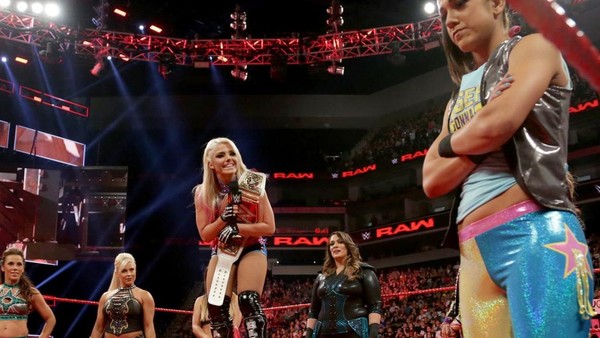
The "Women's Revolution" faltered badly this year.
Sasha Banks and Bayley shared both friendship and irrelevance. Fellow Four Horsewomen Charlotte Flair and Becky Lynch were equally anonymous, perhaps - not that the prospect excuses the complete lack of creative attention - because the SmackDown scribes are simply waiting for 'Mania season.
Even worse were the storylines WWE did pay attention to. Bayley was portrayed as a wallflower, Alicia Fox is still crazy after all these years, Mickie James an "old lady" - and given that the latter is younger than AJ Styles, there is no counterargument to the fact that these dismal arcs were mapped with the gender of the performers in mind. WWE regressed at least six years in this regard; about the only difference between the Women's division and the Divas of old concerned match length - and since everything goes long in the Network age, it's hardly a commendation.
The multiple multi-woman matches cast the vast majority of female performers as interchangeable parts to an outmoded machine - and, consequently, it was virtually impossible to care about any of them. At various points, they were all as good or as bad as the other, taking it in turns to do jobs and participate in title matches, the quality of which fell sharply.
It's nowhere near good enough - but the very weird reemergence of the brush-daft trios business of 2015 threatens to paint the likes of Mandy Rose into a corner.
4. Shatter Shane McMahon: Toughest SOB

Shane McMahon was credited for spiking WrestleMania 32 ticket sales. His apparent, nostalgia-driven drawing power is something we have suffered for since.
This author page is littered with criticisms of the trash Shane 'O Mac babyface act, because he's essentially a father figure to the grateful minnows on the SmackDown roster: hard-as-nails, he was the only logical choice to lead "Blue Team" to Survivor Series glory. He didn't, but it was fine: he blamed the impotent Kevin Owens and Sami Zayn in a terrible chapter of yet another Shane-centric story. His inglorious Sole Survivor role was received with silence in a drastically misjudged sympathy ploy. The message, that Shane was superior to Shinsuke Nakamura, Bobby Roode, Randy Orton and John Cena - Cena! - killed the crowd. The ego trip reached its tipping point.
Recent rumours suggest Shane will enter 2018 as a heel - cynically, the lack of credible heel opponents on the SmackDown roster may account for that, with one eye cast towards New Orleans - which might come as a relief.
Unless he fancies doing Shinsuke Nakamura a 'Mania "favour", and with his power absorption ability, doing a horrendous impression of Eric Bischoff at Starrcade '97.
3. Shuffle The SmackDown Staff

We aren't privy to the exact machinations of the SmackDown writing staff, nor the power politics - but if Brian 'Road Dogg' James wields as much influence as is reported, the man needs to go.
SmackDown has degenerated into a plot hole-ridden wasteland in 2017. Consider the curious case of Tye Dillinger; the man gets over by losing, he's such a pure babyface - and he's barely performed job duties on a blue brand in dire need of legitimised heels. Dolph Ziggler was begging for a programme with him to at least simulate credibility - but he was instead jobbed out ad nauseam, and we were still expected to take him seriously in the gatekeeper role. Until recently, Charlotte Flair did nothing of note because nobody on the writing staff can conceive of an absorbing programme outside of the title picture. Instead, she performed in countless multi-woman matches on a meaningless merry-go-round.
This myopic strategy extended to the doubles ranks, so thank f*ck for the Usos and The New Day, who were talented enough to fashion several entertaining bouts with a thread of continuity.
Cheap racism; a regressive retcon of the progressive Women's Money In The Bank Ladder Match; a laughable mishandling of Shinsuke Nakamura: SmackDown in 2017 was repetitive, profligate and all too often made zero sense.
2. Make It Mean Something

Bray Wyatt is a serial loser and is thus received as a serial loser by the fanbase. This is a profoundly simple connection to make, but it's one lost within an overarching company mentality of lazy luxury and inattentiveness.
Wyatt exists to lose to babyfaces, but is such a loser that those babyfaces become losers via association. Seth Rollins was never flatter than he was in late spring, when paired with Wyatt in an average programme. Wyatt actually won that programme, not that it mattered: nobody bought him as a threat, because he was already dead. What's more, there was no consequence whatsoever for Rollins. This didn't spark a confidence crisis; he simply rejoined forces with Dean Ambrose and walked into RAW Tag Team Championship contention. Wyatt then lost, comprehensively, his series with Finn Bálor - who fared far worse than Rollins in his immediate aftermath. No direction, no ranking system, no meaning. No genuine investment. No point.
There's no pretence that Wyatt even cares about winning, anyway; he did not demand a rematch for the WWE Heavyweight Title he lost at WrestleMania. His character has as much purpose as victories.
This malaise is all-encompassing. Wins are traded arbitrarily between whomever happens to be feuding at the time. Somebody wins in the end. They probably lose the next go-round.
There is little differentiation within the massive roster between Roman Reigns and Curt Hawkins - and so many of them could be far more over than they are.
1. Localisation Will Not Work

Localisation is the next major ploy of WWE's wider strategy. In an ideal world, WWE in the not-too distant future will promote a bespoke, local territory in each major or emerging market. The embryonic deployment of the strategy launched with all the success of a North Korean missile this year.
The United Kingdom Championship tournament drew good reviews, but seemed to exist as a defensive reaction to the growing 'BritWres' scene - a suspicion confirmed when the teased weekly show did not materialise. The real strategy - snapping up talent out of spite - was more successful. It's a d*mn shame that Tyler Bate and Pete Dunne aren't fixtures on television, but, in reality, they were signed to also limit the appearances for other promotions.
WWE pushed Jinder Mahal - Jinder Mahal! - with much more conviction in a thoroughly mystifying move. He was a jobber. He looked like and was thus received as a self-indulgent Vince McMahon pet project. He was marketed for a market WWE was unable to monetise for several, brain-frying reasons: locked-in TV deals precluding PPV revenue, the lack of a streaming culture, a descendent nation unwilling to accept him...
We have reached peak WWE content, as streaming figures for original Network content should have indicated. George Barrios must devise a new buzzword, for his "content ecosystem" is doomed by a disproportionate imbalance of existing content.