10 Genius Wrestling Characters That Happened At The Wrong Time

Would Brian Pillman's 'Loose Cannon' persona have worked in a different era?
Working as part of the creative team for a major pro wrestling company must often be difficult. Looking at WWE as the prime example, writers and creative team members have so many men and women to write for, and so much TV time to deal with, that the product must dominate their lives from day to day. Perhaps due to the pressure that they're under, the creative team don't always hit the mark. One need only look at the list of prospective names for the eventual 'Stone Cold' Steve Austin character for proof of that (Chilly McFreeze, anyone?). There are vast amounts of character traits and personalities on offer in many wrestling companies, so it's maybe only natural that some aren't quite as successful experiments as others. Sometimes however, a promotion or wrestler will come up with a character that just exists in the wrong time period. Maybe it should have happened earlier, or perhaps it could have been more successful if it occurred further on down the line in wrestling history, but all of these gimmicks and characters fit into that line of thinking. Some of these characters were far from being flops during their own respective eras, but the possibilities were there for more if they'd only happened at a different point in the grappling timeline.

10. Muhammad Hassan

Right off the bat, what better way to start this list than with one of the most controversial characters in WWE's recent history? Muhammad Hassan was portrayed as as Arab American who despised his adopted country for the the way they treated people in Muslim countries following the events of 9/11. In reality, 'Hassan' was played by Mark Copani, an Italian American who was born in New York, rather ironically given the context of his character's argument. The wheels fell firmly off the Muhammad Hassan wagon after controversial segments which included The Undertaker being attacked by 5 hooded thugs with piano wire and clubs on an episode of Smackdown. This was aired just days before the events of the London bombings in July, 2005, during which terrorists committed suicide bomb murders on London buses and the underground metro system. Sure, WWE were a little insensitive and behind the times with their portrayal of Hassan, and the controversy didn't help, but that's exactly it, they were only really guilty of being a little off the pace. Had Muhammad Hassan made his debut during the 1960's, 70's, 80's or perhaps even the early-90's, few would have batted an eyelid, because racial stereotypes and Anti-American heels were commonplace.

9. Mordecai

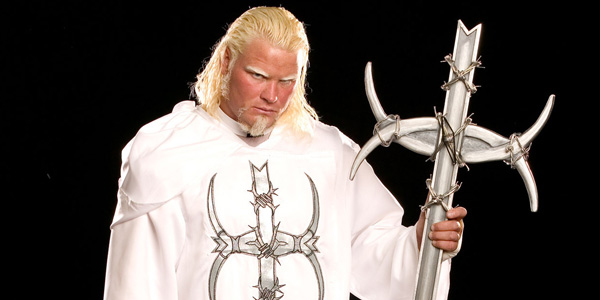
Let's not split hairs, Mordecai was a disaster during his short run in WWE between April, 2004 and July of that year. It was woefully apparent to everybody that the man behind the character, Kevin Fertig, was far from prepared to live up to the expectations that WWE management seemed to have of him. In essence, WWE seemed to believe that Fertig could be the next coming of The Undertaker, which is a hell of a lot of pressure. Acting as a religious zealot of sorts who promised to rid the world of sin, the story seemed to be ambling along in the direction of a natural feud between Mordecai and Undertaker, who had recently returned at WrestleMania XX as his old 'Deadman' self once again. It seemed likely that both characters would clash at some point, but it would never wind up happening. Had Mordecai been around in the early-to-mid-90's, there's absolutely no doubt he would have been programmed against The Undertaker in a feud. Let's face it, for all his shortcomings at the time, Fertig was a better performer than The Giant Gonzales, and a far better choice of opponent for 'Taker than the likes of King Kong Bundy. It wasn't to be though, and debuting in 2004 was a kiss of death for the Mordecai concept.

8. Scott Steiner's Main Event Persona
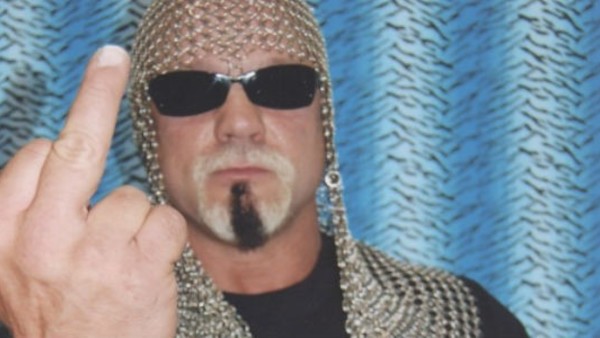
For those fans who would only later witness his aborted main event run in WWE against Triple H in early-2003, or his past-his-prime displays in TNA for many years, it may seen impossible to imagine that Scott Steiner was once one of the hottest characters in all of pro wrestling. Just a few years before he'd finally wind up back in WWE, Steiner was a bright spot on an otherwise dreary WCW landscape. Basically, Scott Steiner's character during the latter years of WCW was simply an extension of his real-life personality. Butting heads with many, 'Big Poppa Pump' was awesome during this period, providing one of the only reasons to tune into Monday Nitro and piecing together heated main event bouts against the likes of Bill Goldberg at the Fall Brawl 2000 Pay-Per-View. Unfortunately, it was a case of too little and definitely too late for the man, who had waited for years to become a top singles star in the company. As fate would have it, by the time he finally did make it to the top of the mountain, the company were so riddled with ineptness that the end was nigh. This 'new' Scott Steiner would have been perfect as a focal point for the nWo, or perhaps even a WCW charge against that group, many years before.

7. 'Marvellous' Marc Mero

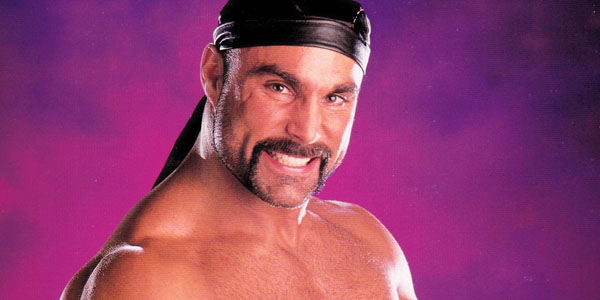
As the 'Wildman', Marc Mero struggled to become what Vince McMahon desperately wanted him to become, a supremely over babyface. A large part of this must be down to the fact that the wrestling industry was changing before everyone's eyes - fans weren't going to be satisfied with saccharine good guys any longer, they craved something with a little more spice to it. Switching things up, Mero embraced the boxing heritage of his youth, morphing into 'Marvellous' Marc Mero, a man who decided that he'd use his deadly fists to knock out any and all opponents standing in his path. Still aligned with his then-wife, Sable, Mero was quite brilliant in his role as the jealous lover, one who hated the fact that Sable seemed to be getting all the attention. In the late-90's, few fans cared for Mero, but not even really because he that effective a heel. The focus was simply on Sable, people couldn't get enough of her, and the story was rushed through of her split from Marc, when it really should have been explored more extensively. That may have been the case had Mero come along in the early-90's - as opposed to the latter portion of that decade - where he would have been allowed to build up significant heat with his jealous persona.

6. Sean O'Haire As The Devil's Advocate
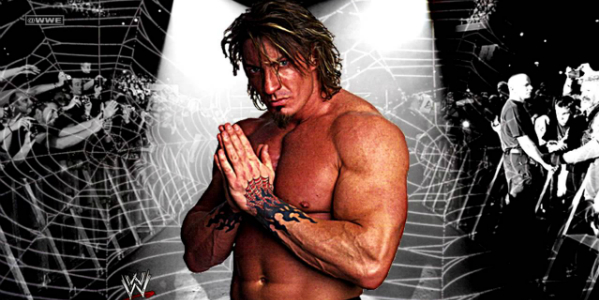
Upon signing for the then-WWF during that promotion's acquisition of WCW in 2001, Sean O'Haire was somebody name-checked by many as a potential future WWF Heavyweight Champion. O'Haire appeared to have all the tools that Vince McMahon looked for in a potential superstar, size, good looks and great agility for a big man. The closest O'Haire would come to the top of the cards in WWF/WWE was when associated with 'Rowdy' Roddy Piper, who acted as his manager of sorts. In January, 2003, vignettes aired of an altogether new character for the man. Smiling cruelly and urging people to break the law and sin, O'Haire peaked people's interest immediately, showing personality which had previously went unexplored. Acting as almost a 'Devil's Advocate', this new Sean O'Haire had endless potential, but it wouldn't quite be the ticket to the top that many hoped it would. In fact, just over a year later, O'Haire was released by WWE, so what went wrong? Well, focus was firmly on the likes of Brock Lesnar, Hulk Hogan, Triple H and even Scott Steiner in early-2003, and WWE were hopeful over newcomers like Batista, Randy Orton and John Cena. In short, O'Haire got left out in the cold, his 'big break' coming at the wrong time.

5. Stardust

Cody Rhodes has often been on the cusp of a main event run, but it seems clear that WWE officials see him somewhat in the same way they have always viewed Christian, a good hand, but not the kind of guy who can be the focal point of plans. That's a shame, because Rhodes has shown he can connect with the crowd (remember those 'Cody's mustache' chants?), and he routinely has good matches against a variety of opponents. In 2014, Cody began appearing under the guise of 'Stardust', a character designed to complement his brother, Goldust. Teaming together, the pair were immediately popular, but much like everything else in modern pro wrestling, it wasn't long before a split was on the horizon. Unfortunately, moving away from Goldust was the worst thing for the Stardust gimmick, because WWE have proven they're not really interested in pushing it beyond the lower mid-card. Recently, the man has become the king of the Kickoff show which airs before Pay-Per-View events, but more success would have surely been found during the mid-90's, right? Stardust was indicative of what the then-WWF wanted to achieve during that more 'cartoon-like' era, and he could have been a vital rival for Goldust back then.

4. Bad News Brown

It may seem wholly controversial to say, but long before Steve Austin was tearing it up as 'Stone Cold', a character by the name of Bad News Brown pioneered many of the personality traits which would become Austin's bread and butter during the 'Attitude Era'. The cold, calculating Brown very much believed in the whole 'don't trust anybody' shtick, and he stood out as a result. On the surface, Brown was a heel, that much is for certain, but digging a little deeper reveals that he was simply a lone wolf who liked to keep himself to himself. Constantly let down by others, Bad News elected to only trust in himself, something which is also true of the 'Stone Cold' mindset, one which proved to be wildly successful for Steve Austin years later. Nobody can claim that Bad News Brown would have been as big a star as Austin would become had he been a character in the late-90's, but he wasn't a great fit for the WWF of the late-80's and early-90's, standing out like a sore thumb at the time. A complex persona in amongst a sea of very much black and white heels and babyfaces, Brown was tailor-made for an era where he could simply exist on his own merits, rather than being shoe-horned into being 'good' or 'bad'.

3. Waylon Mercy

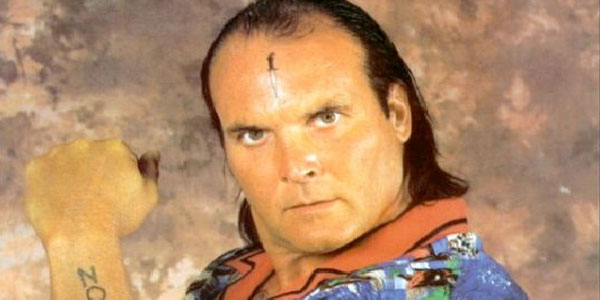
Bray Wyatt is an awesome addition to modern-day WWE programming, and Windham Rotunda plays the character to perfection. It's of real credit to Rotunda that he managed to convince fans to pay attention to a program against The Undertaker at WrestleMania 31, despite there being no 'streak' hook to cling on to. Years before Wyatt would become a staple of the company however, there was another character who shared much in common with him. Dan Spivey was a veteran of the ring by the time he joined the WWF for a second time in 1995. Recast as the insane Waylon Mercy, the man was far too out there a character for the company at the time - sure, Goldust may have appeared shortly afterwards, but Mercy was way ahead of his time. It wasn't a great recipe for success, to be as truly sinister as Spivey was in his new role. Instead of aiding his cause, it's arguable that by being so good at his new character, Spivey actually hurt his chances of succeeding in the cartoonish World Wrestling Federation of the mid-90's. Various injuries would eventually take their roll, forcing him out of the ring, but it's hard to imagine that Waylon Mercy wouldn't be as successful as Bray Wyatt is now were he still around.

2. DDP Is 'Positively Page'

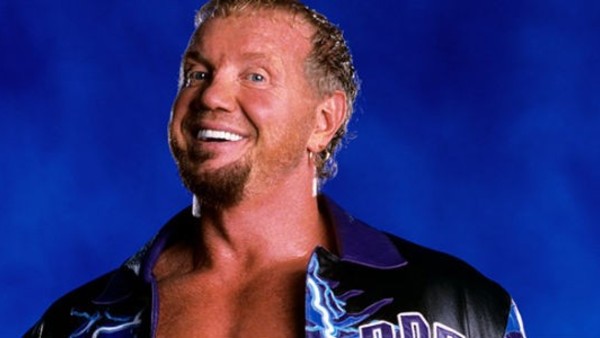
Diamond Dallas Page still stands tall as one of wrestling's most unlikely success stories. Page was nearly 40 by the time he started to regularly compete in WCW, and he had surpassed that age by the time he captured the WCW World Title at Spring Stampede in 1999. It made for a wonderful story, and would act as inspiration for one later gimmick which really should have been better dealt with. Forgoing a hefty payout from AOL/Time Warner (to honour the remainder of his WCW contract), DDP decided instead that he wanted to be part of the WWF, joining up and switching over his contract to the McMahon family shortly after WCW went to the wire. An auspicious start followed, being revealed as the stalker of The Undertaker's wife, before having the unholy hell beaten out of him by the 'Phenom'. In September, 2001, Page debuted a new character, one of a motivational speaker who was irritatingly chirpy and smiley. By this point, it was really too late in the day for the man to make a major splash, but that's not to say his new persona didn't have legs. The character would have been an excellent way to introduce Page to WWF fans, but he had been tarred by the woeful stalker saga, and the gig was up.

1. 'Loose Cannon' Brian Pillman

Brian Pillman's life would tragically end in October, 1997. In the midst of a hot storyline involving The Hart Foundation, Pillman was finally getting some of the recognition he deserved, but it was not to last. Known as the 'Loose Cannon', it was actually years earlier in WCW that the guy had started to develop that unpredictable character. So good was Pillman at being wacky and erratic that he actually convinced a lot of people inside the wrestling industry that he had legitimately lost his mind. That's an incredible thought, but the man also somehow convinced Eric Bischoff to actually release his from his WCW contract, so he could go and cultivate the 'Loose Cannon' persona in ECW. Pillman would never return to WCW, joining the WWF after a short stint in the land of extreme. There's no doubt about it, Brian Pillman would have been excellent throughout 1998 and 1999 had he been able to stay healthy. Unfortunately, injuries and health concerns had plagued him throughout his entire career, robbing fans of the chance to see the 'Loose Cannon' idea really come to the fore. What other wrestling characters do you think came along at the wrong time? Do you agree with the choices here on this list? Let us know down in the comments section below!

Contributor

Lifelong wrestling, video game, music and sports obsessive who has been writing about his passions since childhood. Jamie started writing for WhatCulture in 2013, and has contributed thousands of articles and YouTube videos since then. He cut his teeth penning published pieces for top UK and European wrestling read Fighting Spirit Magazine (FSM), and also has extensive experience working within the wrestling biz as a manager and commentator for promotions like ICW on WWE Network and WCPW/Defiant since 2010. Further, Jamie also hosted the old Ministry Of Slam podcast, and has interviewed everyone from Steve Austin and Shawn Michaels to Bret Hart and Trish Stratus.