10 ECW Stars Who Died Too Young
Balls Mahoney is just the latest in a long line of tragic ECW deaths...
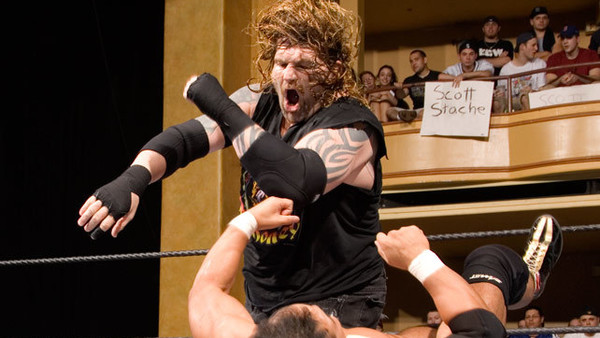
This week, the wrestling world lost another one when Jonathan 'Balls Mahoney' Rechner passed aware of as yet unidentified causes just a day after his 44th birthday.
When I read the news, I have to say that I wasn't surprised. Although wrestlers dying at a young age is, thankfully, becoming a less frequent occurrence than it once was, it's still not exactly a shock when a performer from a bygone era passes away before they hit middle age.
It's even less surprising when that performer used to wrestle for Extreme Championship Wrestling. ECW was the cultish alternative for wrestling fans who wanted something different than the more polished WWF and WCW between 1994 and 2001.
It was grimy, felt more authentic and, true to its name, was more 'extreme' than the so-called 'big two'. In ECW, the wrestlers took more risks and put their bodies through a great deal in order to entertain their rabid fan base. Many times this resulted in the performers using - and sometimes abusing - drugs in order to mask the pain.
Balls Mahoney worked an incredibly hard-hitting style and frequently took full-on unprotected chair shots to the head as part of his act. He was also a noted drug user and his appearance in recent years had led many to believe he was struggling with a serious addiction.
His is a story not unlike many former ECW stars who died far too young.
Note: this list will not include the likes of Eddie Guerrero, Mike 'Crash Holly' Lockwood and Chris Benoit who, whilst they did wrestle for ECW, did not have lengthy tenures in the company. Although it is interesting that their deaths were early and attributed in some way to substance abuse.
10. Axl Rotten
Balls' one-time tag team partner Axl Rotten also passed away in this year, dying on February 4th at the age of 44.
Axl, whose real name was Brian Knighton, debuted on the independent scene at the tender age of 17 and worked primarily as a singles wrestler before forming a team with his kayfabe brother Ian (who Axl helped train), known as the Bad Breed.
Knighton briefly worked for WCW in 1991 and befriended future ECW booker Paul Heyman, who hired the Bad Breed to work for the Philadelphia-based promotion in 1993. Inevitably, the duo split and began feuding with one another, leading to a series of gruesome stipulation bouts, including a 'Taipei Death Match' which saw both men covered their taped fists with shards of broken glass.
Yikes.
Axl continued to work for ECW until 1999 when he left and headed for the independent circuit. He made a cameo in the main event of WWE's ECW One Night Stand pay-per-view in 2005 and wrestled a few dark matches for the company soon after. He was going to become a full-time member of the roster but the deal was withdrawn when he overdosed on heroin and subsequently no-showed several events.
A spine injury left him paralysed and unable to perform in later years and he had been struggling with substance abuse issues. His death reportedly came as a result of a heroin overdose. Just hours before his body was discovered, he had eerily tweeted that 'the way I do things may not be the way you do things'.
9. Big Dick Dudley

The Dudley Boys - Bubba, D-Von and Spike - are of course very famous due to their exposure as members of the WWE roster, but in ECW there were a lot more than just the three members of the Dudley 'family', including Snot Dudley, Broad Street Dudley, Dances With Dudley, Dudley Dudley and the leader of the group, Big Dick Dudley.
Alex Rizzo began wrestling in 1986 after training with noted trainer Johnny Rodz and soon began touring Puerto Rico and the Northeast independents. He found his way to ECW in '94 as 'Big Dick Dudley', teaming with Dudley Dudley as the original Dudley Boys.
Soon the family grew and Rizzo was pushed to the side in something of an enforcer role. He certainly had the size for it at 6ft 6in tall, weighing 320lbs and built like a brick you-know-what house. His most notable feud came against Spike Dudley, which pitted the biggest and smallest members of the Dudley clan against one another.
But that was pretty much his peak and, fed up with how little was being used, he left ECW in 1999. He returned to the world of the independents, Puerto Rico and ECW rival XPW, which he helped co-found. Unfortunately, Rizzo was involved in a number of automobile accidents which left him on the shelf for extended periods of time, causing his career to stall.
Rizzo - who had a reputation as a legit badass outside of the ring - died on May 16th, 2002 of kidney failure. He was just 34-years-old.
8. 'Pitbull No.2' Anthony Durante
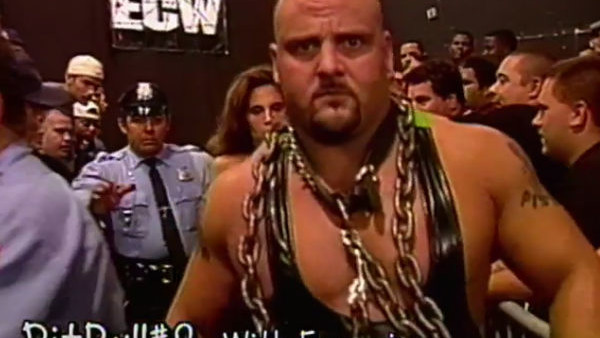
Gary Wolfe (Pitbull No.1) and Anthony Durante (Pitbull No.2), two prospects of Larry Sharpe's Monster Factory training school, began teaming together in the late 1980s and actually featured on WWE TV, losing to the likes of The Hart Foundation and The Brainbusters in squash matches.
Although they were merely job guys in the WWF, they enjoyed considerable more success in ECW, capturing the promotion's Tag Team Titles in 1995. They had well-received feuds with the likes of The Eliminators and the team of Raven and Steven Richards before Wolfe broke his neck and was put out of action for a considerable amount of time.
Durante then entered a feud with the man who put his partner on the sidelines, Shane Douglas, which culminated at ECW's first pay-per-view, Barely Legal, in 1997. Durante would leave ECW later in the year and work for a number of independent leagues before retiring in 2000 due to injury.
He, along with his girlfriend Dianna Hulsey, were found dead of an overdose of homemade Oxycontin on September 25, 2003. They left behind two small children, a 21-month-old boy and an 8-month-old girl, who were apparently left alone in the house with the bodies of their parents for days after their deaths.
7. Mike Awesome

Mike Awesome more than lived up to his braggadocios surname during his time in ECW. After making his name in Japanese hardcore cult outfit FMW (Frontier Martial Arts - don't ask), he turned up in Paul Heyman's promotion in 1998 and blew everyone away with his breathtaking series of matches opposite the talented Masato Tanaka (also of FMW fame).
But, a little backtracking is in order, because this was not the first time that Awesome had graced ECW rings. He'd first appeared for them back in 1993, when it was still known as NWA Eastern Championship Wrestling and gained a degree of notoriety at ECW's 1994 event 'The Night the Line Was Crossed' after he almost broke the back of J.T. Smith with a nasty-looking over-the-top-rope dive.
He was a different, more polished performer when he came back in 1998 and after impressing all of the right people in the Tanaka matches, he was given two runs as ECW Champion when he returned once again in September 1999.
Unfortunately for ECW, Awesome was poached by WCW soon after while he was still recognised as their champion. This turned the close-knit locker room against Awesome, whom they felt had not only sold out but also disrespected them and the business by going to a rival promotion while he was their champ.
The threat of legal action meant that WCW didn't dare show the ECW Title on television, but Awesome still needed to drop the belt, so he was drafted back in for a one-shot deal where he lost the belt to Tazz on a house show. This was most definitely a 'get changed, wrestle and get the f**k out of there' type deal.
Awesome's WCW and WWE careers were plagued by backstage politics and bad booking decisions and some truly woeful gimmicks (The Fat Chick Thriller, anyone?), but he did manage to save some face at the 2005 One Night Stand PPV, though, when he and Tanaka once again tore the house down, to the point where even ECW antagonists like JBL had to stand up and applaud their efforts.
The real-life Michaels Alfonso suffered a catalogue of injuries over the years, including some nasty ones to his knees, and decided to retire from the grap game in 2006. Sadly, on February 17, 2007 Awesome's friends found him hanging inside his Tampa home. He had committed suicide, aged 42.
It was rumoured that he became depressed when he learned that his high school sweetheart, whom he married in 1991, was planning to leave him.
6. Chris Candido
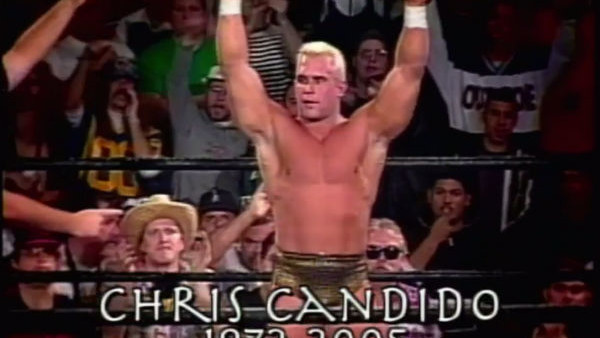
Chris Candido was a real 'wrestler's wrestler', in that he was easy to work with, safe and could make anyone look good. Rarely would you see the guy have a bad match, even if he was put in a powder blue singlet and given the name 'Skip'!
Mr. No Gimmick's Needed - yet another of Larry Sharpe's students - debuted in 1986 and took the familiar route of working the New Jersey independent promotions before he found a spot in Eastern Championship Wrestling in 1993.
Although the stint was fruitful, with Candido and his 'Suicide Blondes' stable (also featuring Johnny Hotbody and Chris Michaels) winning the ECW Tag Team Titles twice, it was also short-lived and he was gone within a matter of months.
At this time, Candido's primary focus was Jim Cornette's Smoky Mountain Wrestling promotion. Corny was a big fan of Candido's - and his manager/girlfriend Tammy 'Sunny' Sytch - and made sure they were prominently featured.
They impressed enough that they were signed by the WWF in 1995, debuting in May of that year as a pair of fitness freaks who lambasted members of the audience for being out-of-shape. Candido was soon paired up with Tom 'Zip' Pritchard as The Bodydonnas.
The Bodydonnas won the WWF Tag Team Titles once but their run wasn't too memorable. Candido had problems of his own with influential backstage group The Kliq, particularly Shawn Michaels, who was purported to be romantically involved with Sunny (it wasn't exactly a secret, either).
Candido left for ECW and would enjoy the best spell of his career, having some truly spectacular matches with the likes of Jerry Lynn, Rob Van Dam and Sabu and Lance Storm, before teaming up with Storm in a very successful tag team.
Candido's later, post-ECW in WCW and on the independent circuit years were marred by his and Sytch's drug abuse, but Candido cleaned himself up and got his act together enough that he was given a chance by the growing TNA.
Regrettably, that run came to a sudden, shocking end when Candido broke his leg at the 2005 Lockdown pay-per-view and died from a post-surgery blood clot a few days later on April 28th. He was 33 years-old.
5. Bam Bam Bigelow
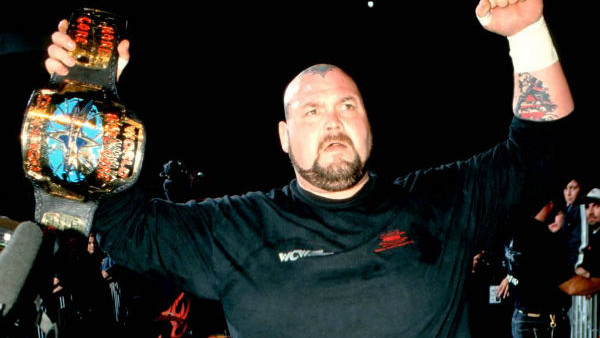
Unlike many of the names on this list, Bam Bam Bigelow was a big star before he came to ECW. The 390lb man with the flame tattoo on his his skull had notable stints in the WWF (1987-88 and 92-95) and in Japan, where he was a huge draw and earned big money wrestling the likes of Antonio Inoki in main events matches.
His most famous match was the WrestleMania XI main event, where he clashed one-on-one with NFL player Laurence Taylor. Bigelow felt he should have been a top dog in the WWF at the time but, like many in the company, he believed he was being held down by the infamous Kliq.
Fed up with his lot, Bigelow left the WWF in late '95 and headed back to Japan and for ECW. His ECW runs were broken up by a shootfighting venture in Japan - Bigelow lost to Kimo Leopoldo on a U-Japan card in November 96, but he claimed the whole thing was a work and that he was paid a substantial amount of money for it - but when he returned in 1997 he was a featured performer as a member of the Triple Threat (with Shane Douglas and Chris Candido).
Bigelow captured the Tag Team, TV and ECW World Titles during his stay with the promotion, but money was always an issue and, with the company in dire financial straits, he headed for WCW in late 1998 which is where he stayed until the company was bought by Vince McMahon in March 2001.
His final years consisted of independent show appearances and trying to medicate the debilitating injuries he'd suffered over the years. His back, in particular, was said to have been giving him a lot of trouble, and he retired in 2004.
Bigelow, who was one of the most agile and physically impressive big men, well, ever, died on January 19, 2007 as a result of high levels of multiple drugs being in his system, including cocaine and an anti-anxiety drug. He also had underlying heart problems.
He was 45-years-old.
4. The Public Enemy
Rocco Rock and Johnny Grunge were butting heads with each other long before they teamed up in an ECW ring. The two had a long feud on the independents and, in a nifty piece of useless trivia, the two wrestled each other (as Cheetah Kid and Johnny Rotten) in a dark match at the first set of Monday Night Raw tapings.
Eight months later, the two would form a team in ECW. The duo became wildly popular due to their weapons-filled arena-wide brawls and their penchant for smashing opponents (and themselves) through tables.
The team grew so popular and their gimmick was so on-the-pulse of contemporary American youth culture that they came to the attention of WCW, who were in the process of stacking their roster in order to fight in the Monday Night Wars.
Their WCW run was mixed at best, and the gimmick seemed watered down and out of place in the more mainstream setting. They had two years there, during which time they won the Tag Team Titles (for a measly eight days), before leaving and trying their luck in the WWF.
It was not a happy stay, since both men had heat with members of the locker room for one reason or another. A notable instigator of the heat was that stickler for backstage etiquette, Bradshaw. The big Texan, along with his Acolyte tag team partner Farooq, once beat the hell out of PE on an episode of Sunday Night Heat after the Enemy tried to get the change of a match finished so that they wouldn't have to be put through a table.
They were gone from the company soon after and returned to life on the independents. Ted 'Rocco Rock' Petty died aged 49 on September 1, 2003 of a heart attack while travelling to an indie show, while Michael 'Johnny Grunge' Durham died on September 16, 2006 as a result of sleep apnea complications. He was 39 years-old.
3. John Kronus

George 'John Kronus' Caiazzo got into the wrestling business when he met Perry Saturn in the late 80s. He was working as a bouncer for a bar that Saturn managed when the mop-lover told him about Killer Kowalski's training school.
After training with Kowalski, Saturn suggested that they team up and the two started tagging for Jerry Lawler's USWA promotion as 'The Eliminators'. From there they began touring Japan for the Wrestle and Roman organisation (WAR - don't ask) before naturally finding their way to ECW in 1995.
They were initially brought in as something not far from enhancement talent, doing jobs for established teams like The Steiners, but once Paul Heyman saw their chemistry and how they were catching on with fans, he decided to give them a push as an unstoppable force.
The Eliminators held the ECW Tag Team Titles three times and had well-received feuds with The Dudley Boys and Rob Van Dam and Sabu before Saturn suffered a torn ACL and was put out of action for up to a year. He opted not to return to ECW, instead taking a big money deal with WCW.
This left Kronus to fend for himself and, although he was impressively athletically and had a good look, there were never any major plans for him and he decided to leave the company in early 1999 and joined rival XPW.
Barring two appearances for Shane Douglas's Hardcore Homecoming promotion in 2005, Kronus all but retired in 2002. He pretty much stayed away from the business, but his high-flying style meant that he still felt the ill-effects many years after he retired.
He died of heart failure on July 18, 2007 just a few days after undergoing extensive knee surgery, at the age of 38 years-old. He was a well-known steroid and drug user during his wrestling heyday, and his family also had a long history of heart issues which had taken some members at an early age.
2. Hack Myers
Donald 'Hack Myers' Haviland wrestled for ECW from 1993 to 1996. He was never a major star but was a firm cult favourite, wrestling mainly undercard matches. The 'Shah of ECW' faces a host of top names like Sabu and Chris Benoit but was never able to best them.
As well as his time in ECW, he also wrestled extensively on the Florida independent circuit and turned up in WCW and WWF to work in an enhancement role on shows like Worldwide and Shotgun Saturday Night. Towards the end of the 90s he began training wrestlers, including former TNA and WWE star Tyson Tomko.
The journeyman performer retired in 2011 but the effects of a career in the ring lingered and he underwent brain surgery in November 2015. Sadly, just a few weeks later he died of complications of that surgery, two days away from his 42nd Birthday.
1. Louis Spicolli

Perhaps the most tragic example of the 'ECW curse' on this list, as Spicoli died of drug-related causes before he got to see his thirtieth birthday. He had been a hard drug user for years but had slowed down after he and others became concerned for his health.
When his mother was diagnoses with terminal cancer, he began using again and on the 15th of February 1999 he overdosed on Soma (a muscle-relaxing drug popular with wrestlers in the 90s) and white wine, causing him to choke on his own vomit in his sleep. He was just 27 years-old.
Spicolli began his wrestling career a decade prior, working the indies and as a jobber for the WWF, before finding a gig in Mexico for AAA, where he would wrestle under the unique moniker of 'Madonna's Boyfriend'.
His match at the WCW/AAA co-promoted When World's Collide pay-per-view brought him to the attention of the big companies and he was signed to the WWF, this time for a more prominent role than the one he'd had previously.
Well, sort of. At least the grungey 'Rad Radford' was a gimmick and had a little storyline (trying to become a member of the Bodydonnas), but it wasn't anything substantial. He was released from his contract when he was found unconscious by a neighbour after overdosing on Soma.
He resurfaced in ECW but his time there would be troubled, too. He was well-liked backstage but his constant and open drug use was becoming a burden for the company. When you consider just how much drug use went on in the ECW locker room, that's saying something. He was gone after a year.
He showed up in WCW and was in the middle of a feud with commentator Larry Zybysko before his death. It would have been his highest-profile gig to date, but his demons got in the way.