Star Trek: 10 Times Worf Was Ignored (But Was Absolutely Right)
How he resisted blurting out 'I told you so' is one of Star Trek's greatest unsolved mysteries...
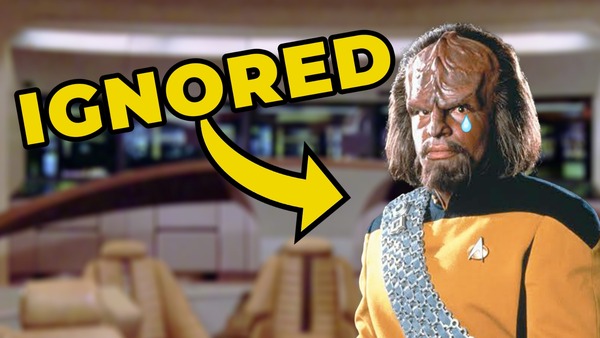
'No, Mr Worf' is heard so often throughout Star Trek that you would be forgiven for thinking he had a reputation for bad ideas. But the truth is, his instincts were often spot on.
Granted, it wasn't unknown for Worf's suggestions to escalate from time to time. Mysterious anomaly? Raise shields. Territory dispute? Fire phasers. Strange new lifeform? Load photon torpedoes, just in case.
However, as Chief of Security, it was literally his job to maintain a suspicious mind in the face of the unknown. After all, the rest of the crew could hardly indulge their scientific curiosities without someone keeping them safe.
While Worf clearly never met a security protocol he didn't like, he also had an uncanny knack for being ignored, only to later be proven right. Whether it was warning against trusting strangers too easily, or simply suggesting that the Enterprise stop flying directly into danger, these are some of our favourite examples of when Worf totally called it.
10. Where Silence Has Lease
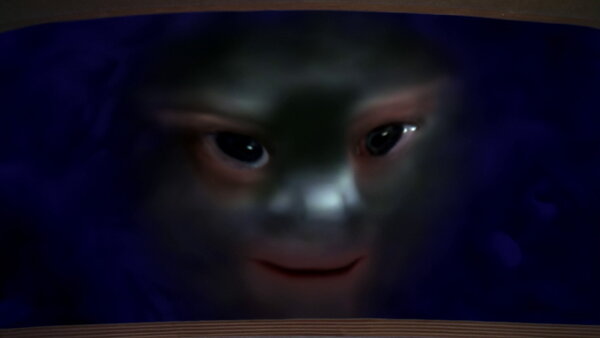
Don't trust the strange hole, he said. It might have a ship-eating monster in it, he said. So of course, Picard decided to poke around.
When the Enterprise sends a probe into a foreboding void and it disappears without a trace, Worf immediately suggests they move to yellow alert. A pretty sensible suggestion...until Picard asks why.
His embarrassment palpable, Worf is forced to admit that it reminds him of an old Klingon legend about a gigantic black space creature that devours entire vessels. Not the most convincing argument, but bizarrely, he ends up being spot on.
Picard naturally ignores Worf and takes the ship in for a closer look...and the void instantly swallows them up.
Things only go from bad to worse; a phantom Romulan Warbird attacks, a creepy ghostship escape room appears, and the enormous face of Nagilum emerges from the darkness.
The immortal entity thinks it might be entertaining to experiment with different ways of killing the crew, including the now infamous demise of poor Ensign Haskell. Of course, Picard refuses to play. He decides to blow up the ship rather than submit to such a terrible fate, forcing Nagilum to release them at the last second.
Still, Riker's final order of the episode is to give any holes a wide berth, so perhaps it was all a valuable learning experience.
Or they could have just listened to Worf in the first place.
9. The Wounded
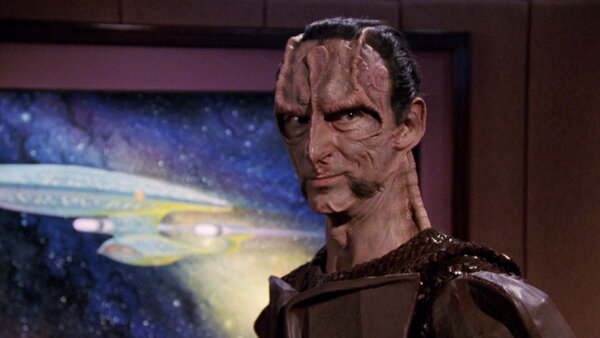
Years on from the conclusion of Deep Space Nine, it's difficult to imagine a time when the Cardassians would be given the benefit of the doubt. Yet that dilemma forms the heart of The Wounded.
This is the episode that first introduced audiences to the Cardassians. It opens with the bridge crew talking indirectly about the hard-earned truce that had been achieved with their one-time enemy. Truce or not, Worf's position is clear; Cardassians have no honour, and he doesn't trust them.
He seems to be proven right mere moments later when the Enterprise comes under fire, leading to the dramatic reveal of Gul Macet.
Macet explains that a Federation ship is responsible for the destruction of a Cardassian science station. Despite tension thick enough to cut with a laser-scalpel, it's agreed they should work together to pursue the ship responsible.
When Macet and his men arrive on the Enterprise, Worf insists they should be assigned a security detail. Picard is just as determined they be treated as guests. What Worf doesn't know is that the Captain is under strict orders to preserve peace, no matter the cost. And that is the soul of this story.
The Wounded examines the difference between truth and reconciliation. It looks at how past trauma can colour present dilemmas, summarised by Picard's poignant line:
When one has been angry for a very long time, one gets used to it. And it becomes comfortable, like old leather. And, finally, it becomes so familiar that one can't ever remember feeling any other way.
It delves into the ambiguous nuances of right and wrong, and when being 'right' isn't necessarily the most important thing.
Yes, Worf was right when he recommended the Cardassians be assigned a security escort. After all, one of Macet's men was found accessing a computer system without permission.
And yes, Worf was right when he insisted the Cardassians couldn't be trusted. Picard's suspicions about the so-called 'science' station received no denial from Macet.
But the idea explored in this story is far more complex; just because their suspicions were right, and Macet's claims were wrong, it doesn't mean they shouldn't fight for peace.
8. Captain's Holiday
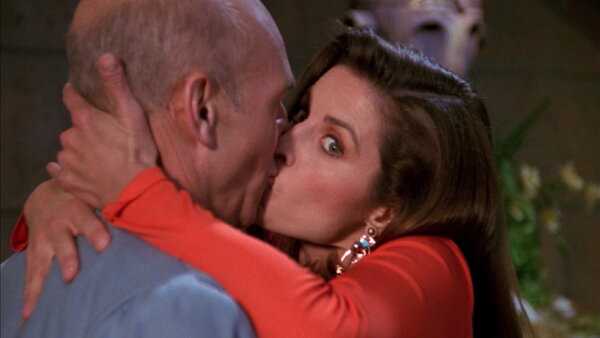
Picard's greatest weakness was never the Borg, or Q, or even his self-confessed dislike of children. It was the challenge of relaxing and having fun.
Manipulated into taking shore leave, Picard reluctantly heads to Risa. In fairness, this seems to be the least well-suited holiday destination for the always-on, intellectual captain, but the plan is simple; relax, read a book in the sun and enjoy some 'me-time'.
Worf, meanwhile, identifies the flaw in this plan. Sending Jean-Luc Picard...archaeologist, adventurer, amateur detective and general chaos magnet...to a pleasure planet, unattended, seems like a disaster waiting to happen. So Worf implores the Captain to let him send a security officer with him. Picard promptly dismisses his concerns.
With barely enough time to apply sunscreen, Picard becomes entangled with the resident femme fatale, recruited into a perilous treasure hunt, and caught in an increasingly outlandish chain of events that spans time and space.
For most people, lurching from one mortal danger to another wouldn't be the ideal holiday itinerary...but we suspect that Picard had the time of his life. Even if he would never admit it. And to be fair, nobody could have reasonably predicted the pulp-adventure that would unfold.
Except perhaps Worf.
7. Rightful Heir
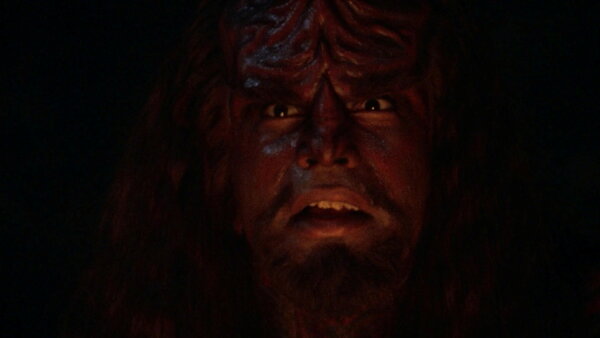
The only people more likely to ignore Worf than Picard are Klingons.
Rightful Heir opens with Worf facing a crisis of faith. His desperate need to conjure a vision of Kahless, the legendary Klingon leader of old, is met with deafening silence. So he decides to visit the monastery at Boreth in his search for answers.
It's safe to say that Worf got more than he bargained for.
Despite growing impatient after days of meditation, an overjoyed Worf finally sees the mythical Kahless...the problem is, so does everyone else. It seems that Kahless has finally returned to his people, as promised, but Worf immediately smells a rat. While the other Klingons welcome him with unquestioning devotion, Worf greets him with a tricorder scan and a list of increasingly awkward questions.
It turns out to be entirely warranted. The clues this 'Kahless' may not be the mightiest warrior in Klingon history are all there. His memory is hazy...he uses a distraction tactic when he's in danger of losing a fight...and he fails the ultimate Klingon Warnog taste test.
The trials and tribulations that follow sees Worf pushed and pulled between doubt and belief. Until, finally, Kahless is proven to be nothing but a clone created by the priests, and Worf falls into a pit of disillusionment.
Enter Data, the unlikely philosopher, who relates the experience of his awakening; he was told he was nothing more than a machine, yet chose to believe he was a person. It helps Worf realise that it doesn't always matter whether something is real or not...the choice to believe holds power. And that's what makes Rightful Heir one of those fascinating moments in Star Trek. What starts as simply another Klingon episode ends with the idea that faith shouldn't be a substitute for critical thinking, but it can have meaning and power in and of itself.
6. Cause and Effect
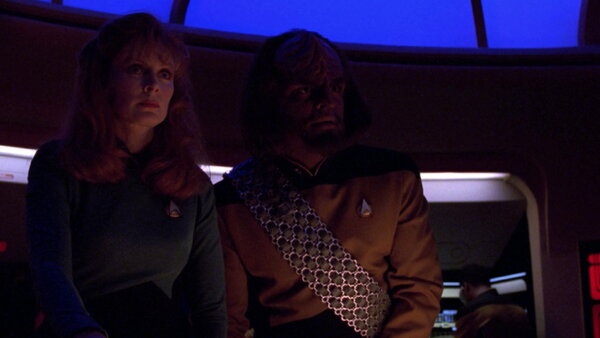
There's only one thing worse than being ignored when you're right...and that's being ignored again and again and again.
This is the maddening fate that befalls Worf when the Enterprise finds itself trapped in a time loop. After reliving the same days over and over, the crew start to get a strange sense of déjà vu they just can't shake. When echoes from past loops bleed into their present, they surmise that the destruction of the ship might be responsible for locking them into the temporal phenomenon.
It's at this point that Worf suggests they reverse course, an entirely sensible proposal given the need to avoid the explosion and escape the loop. However, Picard dismisses the idea out of hand, insisting they can't afford to second-guess themselves. It's an interesting stance, considering that second-guessing the course of events is precisely what alerted them to the phenomenon in the first place.
And so, they continue into a temporal distortion for the umpteenth time, and we're subjected to the sad sight of the Enterprise exploding...again. Eventually, they find a way to send a clue into the next cycle, avoiding another deadly collision and escaping for good. But they could have escaped sooner if they'd just listened to Worf.
And in Worf's defence, he isn't even being particularly Klingon here. His suggestion isn't aggressive, mistrusting or confrontational. He's literally suggesting that they turn around to try to avoid a death trap. And he still gets ignored.
But the real insult to injury? They discover they've been trapped for 17.4 days, making it highly unlikely that Worf was ignored only once. Who knows just how many times he ended up being ignored?
5. The Way Of The Warrior
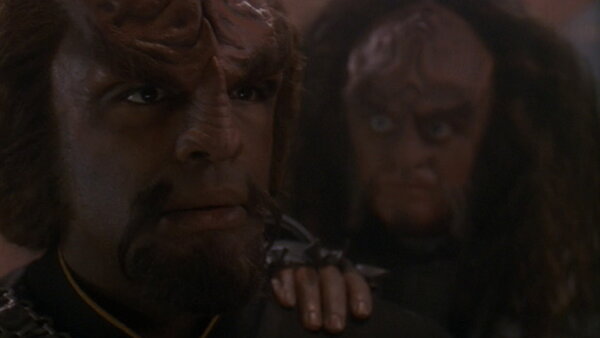
So far, there's been a distinct lack of Deep Space Nine entries on this list. That's because, by and large, the station's residents were far less inclined to ignore Worf. Perhaps his new commanding officer recognised the benefit of Worf's warrior instincts during a time of war...or maybe Sisko's own ruthless streak made him more sympathetic to Worf's point of view.
Either way, the Klingons didn't get the memo.
Worf's very first outing in Deep Space Nine sees him locked in a battle of wills with Chancellor Gowron...although much of their conflict plays out via General Martok. When the General arrives, flanked by countless Klingon ships, he claims it's to help the Federation defend itself against the Dominion. Less than convinced, Sisko sends for Worf, hoping he can wheedle the truth out of them.
It proves easier said than done. Worf's attempts to open a dialogue with his contacts in the Empire are ignored. He tries to convince Martok that their behaviour has teetered on the edge of dishonour and implores him to share the truth...but Martok dismisses his concerns and warns him against interfering.
When Worf finally uncovers their plan to invade Cardassia Prime, he does his utmost to dissuade Martok from the catastrophic course of action, warning him that the Federation won't join them in an unprovoked attack. But even with the support of The Sisko himself, his advice falls on deaf ears. And Worf's attempts to bypass Martok and sway Gowron personally fare no better.
Undeterred, the Klingons forge ahead, culminating in the brutal attack of DS9 itself. Faced with the prospect of fighting a war on two fronts, Gowron finally withdraws, but it's too late. The alliance between the Klingons and Federation has been shattered.
Although we later learn that the entire crisis had been manipulated, it's hard not to think about how many lives could have been saved if Gowron had just listened to Worf in the first place.
4. Star Trek: First Contact
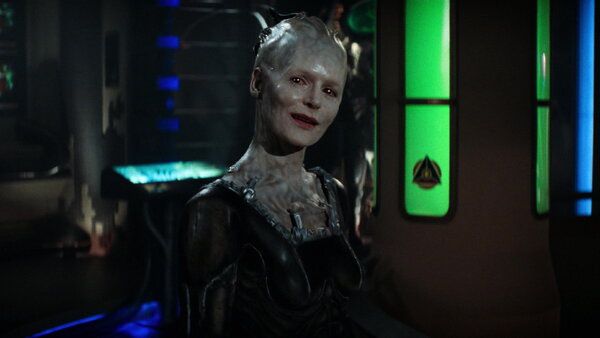
Most of the entries in this list stem from Worf's instincts to raise shields and Picard's trust in diplomacy. But then the Borg arrived, with their terrifying quest to destroy individuality and turn living, breathing people into drones.
Skirmishes with this new lethal enemy finally culminated in an inevitable invasion of the Federation. What couldn't have been predicted is how the terrible battle would end.
A Borg sphere and the Enterprise are thrown back in time. Picard must simultaneously protect Earth's first contact with the Vulcans, whilst stopping the Borg from snuffing out humanity in the past.
The beauty of First Contact is that it switches Picard and Worf's usual instincts. The Borg have been spreading throughout the ship like a virus. Worf realises the battle is lost. So instead of urging Picard to fight, Worf's solution is brutal but simple; abandon ship and destroy her to defeat the Borg.
Picard refuses. This time, he's the one unwilling to back down from a fight. His usual pragmatic instincts are blinded by unresolved past trauma at the hands of the Borg. And heartbreakingly, it causes Picard to lash out in a way he never usually would. He calls Worf a coward, knowing it's the one word that's sure to ignite the warrior's blood.
Luckily, Picard is forced to confront the truth by Lily, a 21st century woman caught in the crossfire. Her unique perspective allows her to name his thirst for vengeance for what it is. And it's her candid words that snap Picard back to reality. First Contact isn't just a brilliant Star Trek film, it's a fascinating yet disturbing examination of what can happen to even the greatest of people when they don't confront their demons.
And don't worry about Worf. Not only do the old friends make up by the end of the film, he eventually gets his wish when the Enterprise-E is destroyed on his watch. By the look on his crewmates' faces in Picard, he won't be living it down anytime soon...
3. Samaritan Snare
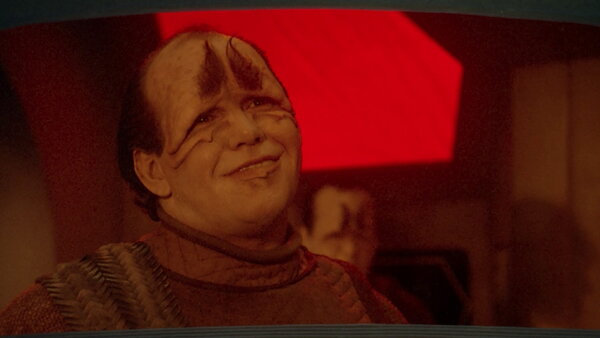
We've all heard the one about the Good Samaritan, the parable that teaches us to have compassion for strangers. All of us, apart from Worf, it seems, who saw through the Samaritan Snare the moment he laid eyes on the Pakled.
Riker has been left in charge of the Enterprise. Usually, he would be at the top of many a 'Best First Officer' list, however Picard is gone for barely five minutes before things start to go wrong. It begins with a distress signal from a stranded vessel. When the Pakled appear on screen, their overly simplified, repetitive speech patterns disarm the crew. They can't foresee such unassuming people being a risk.
Except for Worf.
When Riker assures the Pakled that he'll beam La Forge across to fix their ship, Worf objects, using his very best 'have you lost your mind' tone. He asks if they truly need to send over their Chief Engineer, to which Riker points out they need help. Worf, undeterred, asks why they don't just send a how-to guide. Riker's response? Do they look like they can handle our technical specifications?
Worf, who clearly understands what assumption is the mother of, maintains that they know nothing about them and need more information.
Nevertheless, Riker sees fit to send La Forge to the Pakled ship alone, without so much as an assistant or escort. And when Troi appears on the bridge, sensing trouble ahead, it's too late. The snare is sprung, the Chief Engineer is taken prisoner, and Worf is grinding 'I told you so' into his back teeth.
For one glorious moment, Riker seems to think he can resolve the situation by shouting 'stop it' at the viewscreen. But in the end, he devises an inexplicably convoluted ruse to retrieve La Forge. None of which would have been necessary if they'd just listened to Worf from the get-go.
2. Liaisons
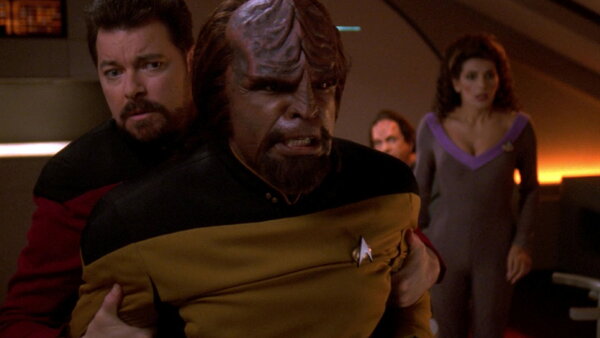
No one can accuse Worf of not being self-aware.
Liaisons opens with Riker and Worf bickering like a married couple. This is our clue that Worf is in for a rough ride. He's already in a bad mood, having been forced to wear a dress uniform to greet two Lyaaran diplomats, but things go from bad to worse when one of them insists that Worf be his liaison.
The moment the request has left Byleth's lips, Worf is shaking his head at Picard, his eyes silently screaming 'please no'...while Riker's head merrily nods. Decision made, Worf leaves with Byleth to serve as his guide for the duration of his stay.
While Troi's diplomatic liaison only seems interested in desserts and a good time, Byleth is continuously jabbing at Worf, leading to one of Data's finest accidental insults. Worf complains that Byleth is demanding, temperamental and rude...Data's response?
You share all of those qualities in abundance.
Absolute burn.
Worf finally reaches the end of his tether and declares to Riker, in great detail, how he will tear Byleth apart with his bare hands. He even admits he's a bad diplomat, and for the sake of the ship and the Federation, requests reassignment.
He could not have been any clearer. He literally tells Riker what will happen. But Riker, with a big, smug grin on his face, denies the request.
Lo and behold, tensions come to a head during a poker game. Worf throws the diplomat across the room and follows up with a headbutt to the ridges for good measure. Almost exactly the outcome Worf had predicted.
Luckily, we learn this is precisely what Byleth wanted, having been sent to learn about antagonism...and goodness, did Worf oblige. But if this had been any other diplomatic situation, there would be serious questions to answer. And no one could claim that Worf didn't warn them.
1. Disengage
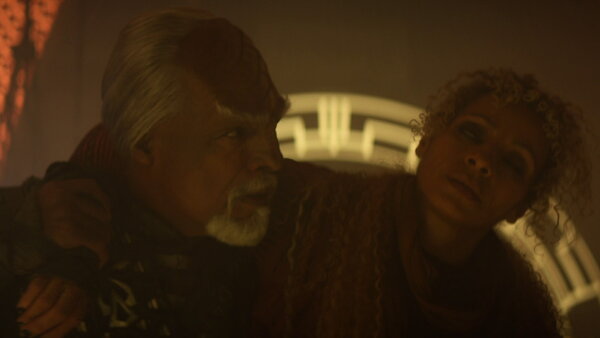
Even Star Trek: Picard era Worf wasn't immune from the phenomenon.
A devastating attack on the Starfleet recruiting centre leaves Raffi Musiker struggling with an unbearable sense of guilt and responsibility. Despite repeated warnings from her anonymous handler not to engage, Raffi is determined to track down the person responsible by any means necessary.
The way Raffi dismissed her handler out of hand should have been our clue that he was none other than our favourite Klingon security expert. And this time, Worf was even in a position to make his advice an order...but he was still ignored.
Raffi rushes headlong into the den of a despicable Ferengi crime lord, but finds herself caught in his clutches. Just as his guards move to dispatch her, Worf appears and lays waste to the thugs in a suitably dramatic reveal.
And what an entrance...a kur'leth through the chest, green blood everywhere and a severed head rolling across the floor. Let's be honest, fans had been waiting years to see Worf back in action, so it's hard to hold this one against Raffi.
It also finally allowed Worf to say the words that had no doubt been bubbling away inside him for years:
I told you, do not engage.