Doctor Who Review: Hell Bent – How To Succeed At Death Without Really Dying

A brilliant beginning that fails at the moment it refuses to kill its darlings.
WARNING! SPOILERS: This post contains spoilers and speculation for the Doctor Who series nine episode €œHell Bent€. The Doctor Who series nine finale €œHell Bent€ is a giant fake out and that is both a good and bad thing. The often referenced hybrid is an enormous red herring soon rendered meaningless in a cloud of clever dialog and determined misdirection. The true series nine arc is the Doctor€™s descent into selfishness and his unhealthy obsession with Clara. €œHell Bent€ briefly masquerades as a war story but soon turns into a narcissistic romance where our heroes are so busy admiring their own reflection in the other person€™s eyes they ignore what€™s going on around them. It€™s brilliant up until the point the script falls in love with its own cleverness. The power of Clara€™s death is undermined for the sake of a sly and convenient happy ending and the episode falls to pieces. It€™s fitting Clara is left without the pesky bodily functions that signify life as her character was never truly allowed to breathe. Instead of a fully realized human being we are left with a second-hand copy of the Doctor€™s path and personality. Clara may be one of the longest running companions but in the end we still don€™t know her.

6. The War Hero

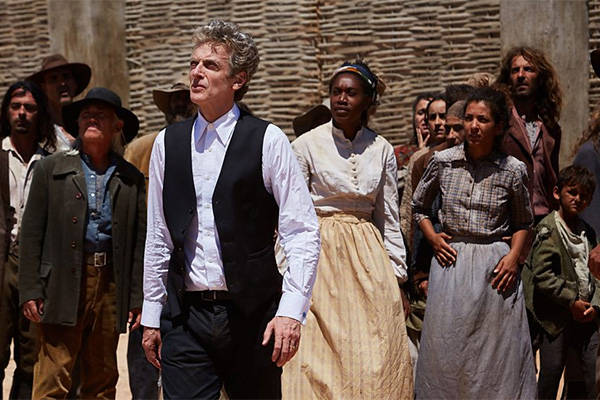
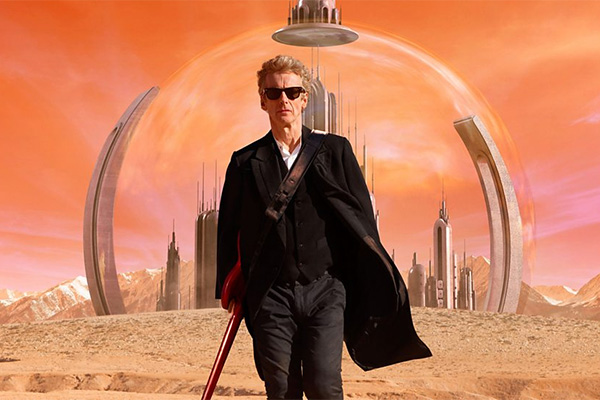
The class system is alive and well on Gallifrey but the Doctor is a hero of the people. He disdains the mechanics of war, facing down a gun turret like a student activist in Tiananmen Square. The soldiers view him as one of their own. He is not a general but a comrade in arms. His weapon is a spoon. This is the Doctor the people want to believe in. He is the legend rather than the man. Yet the Doctor has not returned to Gallifrey to secure the rights of the people. He is there to serve his own selfish needs. Heroes are likely to lose their personhood over time, becoming more like monuments to themselves. The Doctor uses this to his advantage. He is akin to the seventh Doctor here €“ the master manipulator who is more than willing to twist a situation to gain what he wants.

5. The Tyrant

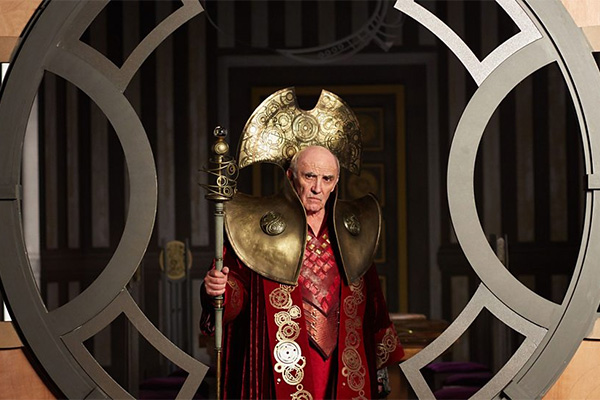
Rassilon is the voice of authority gone mad with power. He is the Machiavellian Prince who believes the end justifies the means. He is the politician who uses the promise of security as a justification for torture and draconian measures to silence all who would oppose him. Yet there is something missing from Donald Sumpter€™s performance. Perhaps we are simply inured to this kind of political posturing. The character of Rassilon may well have been better served by casting against type. The Doctor removes Rassilon from power yet he is not so different from the man he holds in such contempt. He has no care for the problems of Gallifrey, seeking only to relieve his grief. As Clara points out he is not the only person to have ever lost someone. Yet he cares only for himself, not even taking the time to explain to Clara what he is planning. He doesn€™t care if she supports him. He wants things his way and he will do anything to achieve his goal.

4. The General

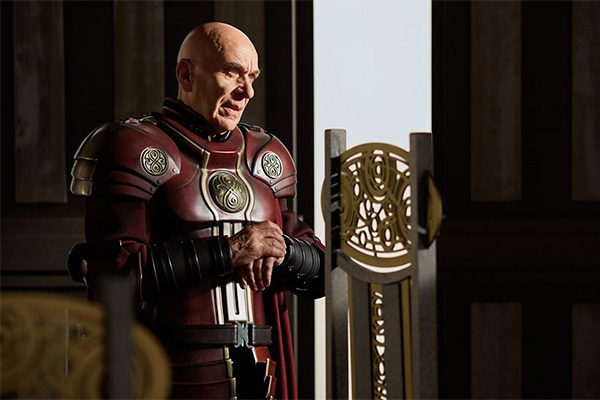
The General represents the person caught in the middle. It is evident he is not an evil or thoughtless man as he attempts to do the right thing. Yet while he aids the Doctor he is no pushover. When the General questions the Doctor€™s motives he is met with a violent assault. That the Doctor would attack an unarmed person shows just far he has fallen. It is a shocking moment. The Doctor makes light of it but we€™ve been told many times that regeneration is akin to dying. The Doctor robbed this person of his identity. Rassilon on the other hand is sent into exile. Is this a comment on the privileges of class? How many times have men of wealth and power gotten away with their crimes whiles those of lesser rank suffered in their stead? The Doctor uses the General like a tool, literally stripping away his personhood and while she returns to life in a new form it does not absolve the Doctor of his guilt.

3. The Mother Figure

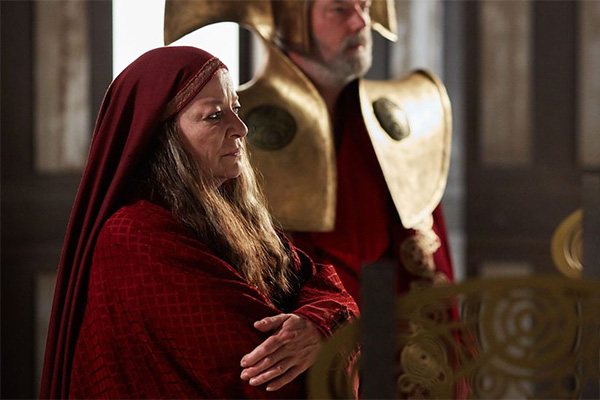
Ohila is the exasperated parent dealing with a selfish, irresponsible boy lashing out in pain and frustration. For a being of great age this is the Doctor at his most childish. Ohila is there to point out the Doctor€™s idiocy. She reprimands him with stern authority and he plays the recalcitrant adolescent. This is a Doctor out of control. He is perhaps closer to the Master in these moments than he has ever been. The Cloisters is a techno-hell, a place where beings are kept alive and slowly harvested by the database they are trapped in. The moment in which the Dalek begs to be exterminated is chilling. Of course the Doctor€™s spent time there before and discovered the way out of the room. It€™s Clara, however, who is attempting to show him the way out of his head. She too begs for an end not due to her own suffering but in order to stop the pain others may endure if she is not allowed to go.

2. The Impossible Girl

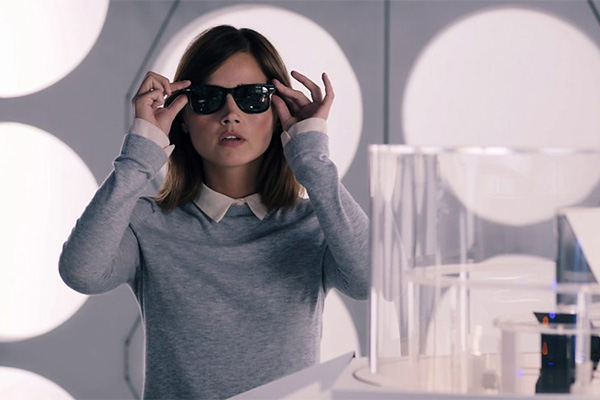
Did writer and showrunner Steven Moffat go too far in making Clara into a kind of uber-companion? She was there to comfort the Doctor in childhood and save him at various points throughout his timeline. She sacrificed herself as a Dalek. She eventually took on the Doctor€™s role and treated those around her as expendable as long as they serve her need for control. Her arrogance led to her downfall and the Doctor tortured himself for over four billion years to save her only to forget her as she flies away in her very own TARDIS. She became the Doctor€™s everything and in doing so was never allowed to become herself. In a reversal of perhaps the most tragic companion story ending of the entire show the Doctor€™s mind is wiped and Clara is left with the memory of their time together. Why does this not have the same power as Donna€™s loss? Is it because women are habitually required to give up their identities in service to another while men are not? In this story the loss of memory feels more like a gimmick than a tragedy. Clara gets her happy ending but her character is sacrificed on the altar of expediency.

1. The End

Ashildr or €œMe€ appears once again in this episode as the lone figure left alive at the end of time. She is, however, completely superfluous. There is no reason for her to be there other than to grant her another forced happy ending. For the most part €œHell Bent€ is a fitting successor to €œHeaven Sent€. It only fails at the moment it refuses to kill its darlings. Rachel Talalay€™s direction, however, never lets us down and Murray Gold€™s score was exceptional. Series nine was a magnificent effort with the requisite flaws but overall it was an amazing achievement. Peter Capaldi€™s guitar-playing punk rebel Doctor is a fascinating take on the character and while Clara may have had her problems there was never anything wrong with Jenna Coleman€™s brilliant performance. The Christmas episode featuring Alex Kingston looks to be a grand romp and a fun and glittering end to a rather dark season. There€™s a new sonic screwdriver and a brand new companion to look forward to. If there€™s one thing series nine proves it€™s that series ten is in very good hands.

Contributor
Contributor

Mary Ogle is the author and illustrator of “Orangeroof Zoo” a whimsical tale of magical realism told through the pages of a coloring book for adults. Working as a professional artist in the digital medium, Mary’s commissions have included everything from fine art to fan art, book cover design, illustration and book layout. Find more of Mary’s work at www.maryogle.com. Mary currently finds inspiration in the Ojai Valley, residing in a snug little cottage with a recalcitrant cat.