Doctor Who: EVERY Version Of The Master Explained
Every version of the Master in televised Doctor Who, from Gallifrey to life inside a gold tooth!

Since Roger Delgado debuted in Terror of the Autons, the Master has taken on almost as many faces as the Doctor has. However, unlike the Doctor, it's a little harder to number the Master's many incarnations. That's why we don't refer to them as the First, Second, or Third Masters, not least because the second Master was played by two different actors – Peter Pratt and Geoffrey Beevers.
It's also hard to number the Masters because from the 1980s onward, the Doctor's arch-nemesis is inhabiting non-Time Lord bodies left, right, and centre! But with all of this in mind, we can confidently say there are 13 distinct versions of the Master depicted in televised Doctor Who.
This means that we won't be talking about some of the other memorable incarnations such as Jonathan Pryce in the 1999 sketch The Curse of Fatal Death, or Alex Macqueen's deliciously evil Big Finish Master.
And, for clarity, we're not counting such memorable disguises as Sir Gilles Estram, Kalid the Conjurer, or Mr. Razor as separate incarnations either, though they will of course be mentioned. On the whole, we're only interested in the sinister Time Lord hiding beneath the mask.
13. The First Master (First Appearance: 1971)

The First Master was conceived as the Moriarty to the Third Doctor's Sherlock Holmes, and this dynamic was a huge success right from the start.
Both men were incredibly debonair fashionistas that also happened to be super geniuses – one of them good, and one of them evil. There's a cool charm to Roger Delgado's portrayal of the First Master that made him an utterly compelling, and dare we say it, likeable Doctor Who villain.
The First Master was introduced in the 1971 serial Terror of the Autons, and would become a recurring fixture in the Third Doctor's tenure. Given that Gallifrey wouldn't be introduced until late 1973, and Time Lord lore in general was still in its very early days, not much was known about the First Master at the time, though it was immediately established that he and the Doctor had history. For example, the Master reveals that he sought out the Doctor because he was his "intellectual equal".
Among many other iconic moments, the First Master proved himself adept at sword fighting, and even formed an alliance with the Daleks – firmly establishing how far removed the Master was from the Doctor's core values.
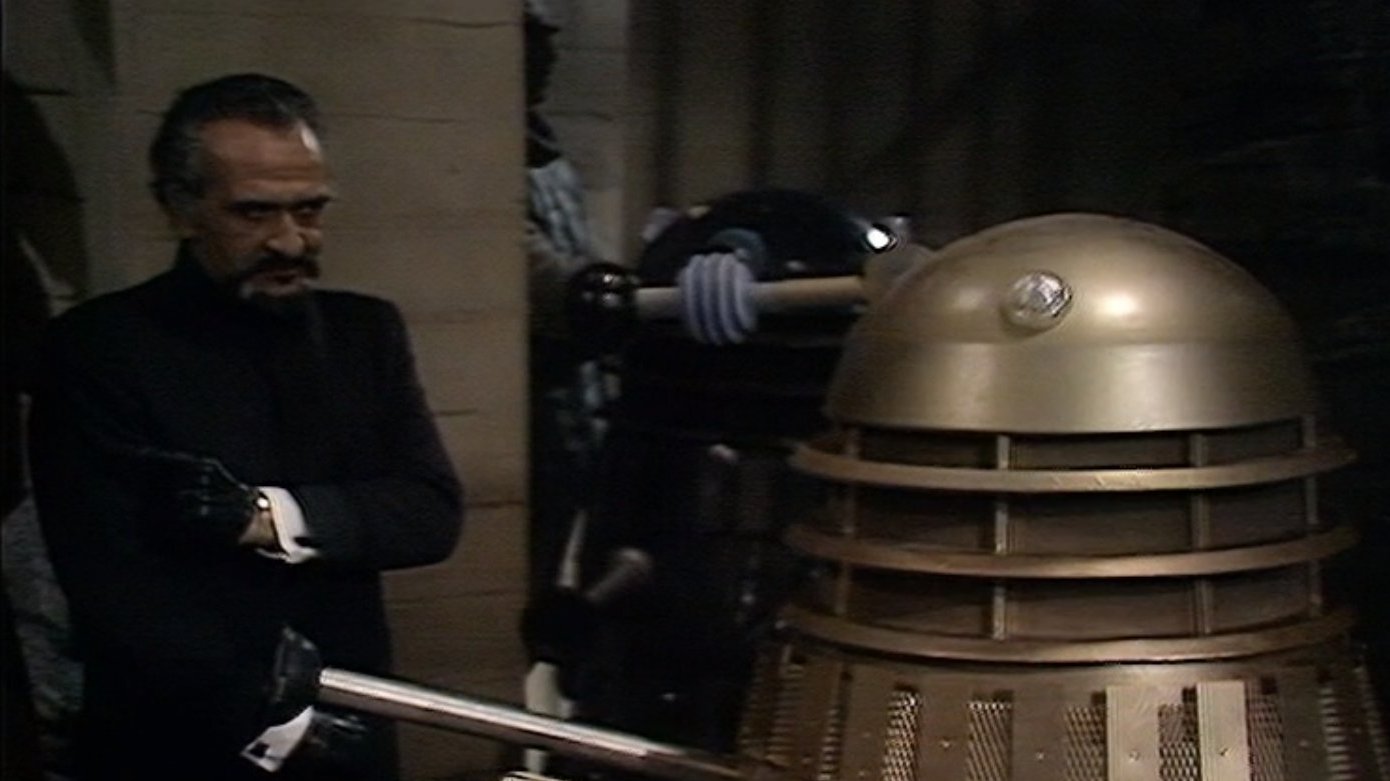
But the most interesting element that Roger Delgado and Jon Pertwee brought to the two characters was a hint of genuine friendship, based on their begrudging mutual respect for each other.
The battles between the Third Doctor and the First Master are just as much about petty point-scoring between old friends as they are about world domination. There's a reason why the Tenth Doctor mentions the Axons when cradling the dying Saxon Master – they're remembering the good old times! This dynamic was reflective of the very real friendship between Pertwee and Delgado, and it has informed every portrayal of the two frenemies ever since.
The First Master's time was cut short due to Delgado's tragic death in 1973, resulting in a rather abrupt end for this incarnation. With no regeneration and no explanation given for the character's disappearance, it would be several years before the Master returned, in a radically different form.
12. The Decayed Master (First Appearance: 1976)

Nobody would have criticised Doctor Who for choosing not to recast the Master after Roger Delgado's death, but three years later, it did just that when the Master returned as the primary villain in the 1976 serial The Deadly Assassin.
This time facing off against Tom Baker's Fourth Doctor, this version of the Master (played by Peter Pratt) was at the end of his regeneration cycle, and existed as a decaying husk of a Time Lord.
We are never told exactly what happened to the Master between the First Master's life and this one, merely that he was found on the planet Terserus, dying, with no regeneration possible, and was then brought to Gallifrey. Here, he planned to use the energy from the Eye of Harmony – a stabilised black hole beneath Gallifrey – to renew himself. Though not fully successful in this plan, he did enough to prolong his life and escaped in his TARDIS, which was disguised as a clock.
Returning five years later in the 1981 serial The Keeper of Traken (this time played by Geoffrey Beevers), the Decayed Master was once again trying to restore himself, and this time, he succeeded, taking over the body of the Traken governor Tremas.
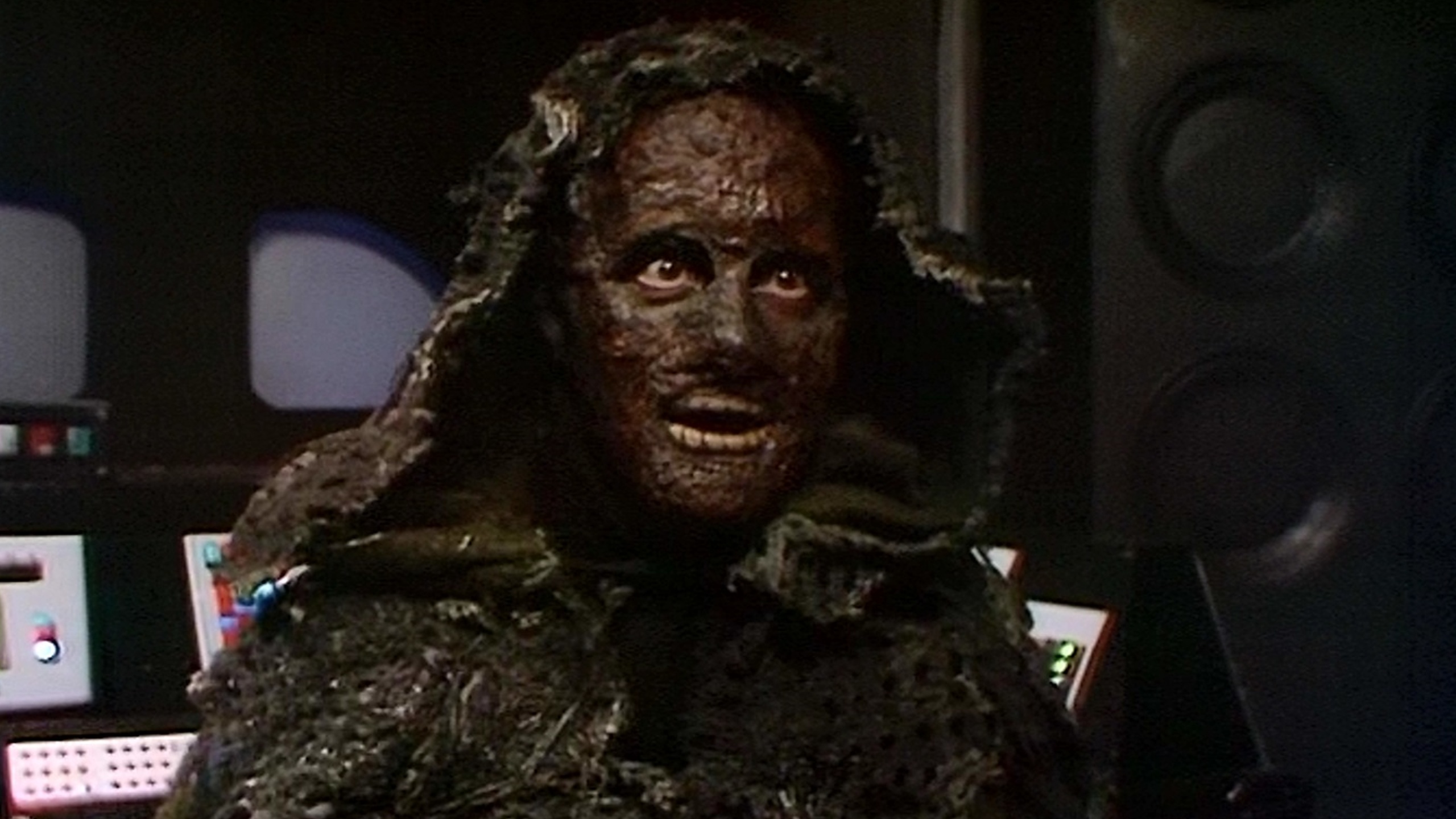
Where the First Master had been suave and debonair, the Decayed Master was scheming and desperate. This added a harsher edge to the character that really fitted the horror-inflected Doctor Who era of the 1970s. The Master was no longer Moriarty – he was the Phantom of the Opera.
With a new body at last, the Master was properly back, and it wouldn't be long before the Doctor encountered him again.
11. The Tremas Master (First Appearance: 1981)

The Master was brought back for Tom Baker's final story, the 1981 serial Logopolis, as a means to smooth the transition into Fifth Doctor Peter Davison.
With Tremas being the father of the Doctor's companion Nyssa, this was a murderous step-up for the Master, who would go on to kill companion Tegan's Aunt Vanessa too! His body count increased further when his actions caused the destruction of a large portion of the universe, while he was also responsible for the Fourth Doctor falling off an enormous radio telescope, which began his regeneration into the Fifth Doctor.
Played by Anthony Ainley, the Tremas Master would face the Fifth, Sixth, and Seventh Doctors. He was much more of a moustache-twirling villain than any incarnation before him, and it was here where the Master's penchant for disguises was firmly established as an iconic trait of the character.
The Tremas Master would disguise himself as the French knight Sir Gilles Estram in The King's Demons, the grey-skinned alien Kalid in Time-Flight, and most bizarrely of all, a scarecrow in The Mark of the Rani. He may come across as sophisticated, but he was totally unhinged! The Tremas Master would also use the Tissue Compression Eliminator to shrink his foes on a regular basis, establishing it as the Master's weapon of choice.
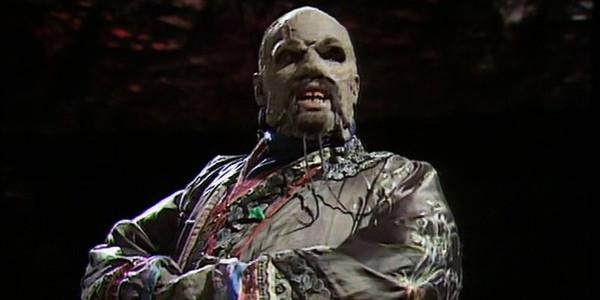
This Master would return for the final serial of classic Doctor Who, 1989's Survival, where he was left trapped on the dying Cheetah World after doing battle with the Seventh Doctor.
With Doctor Who absent from our TV screens for the next seven years, it would be a while before we learned what happened to the Master next.
10. The Trial Master (First Appearance: 1996)

It's certainly possible that the Master who's put on trial in the opening of the 1996 TV Movie is the Tremas incarnation. However, it's not Anthony Ainley who gets exterminated by those high-pitched Daleks – it's actor Gordon Tipple.
It's not clear exactly what the Master did in the gap between Survival and the TV Movie to anger the Daleks, although given that he was on trial on the Dalek homeworld Skaro, it may have been something to do with destroying or taking over their planet.
Alternatively, an early draft for the TV Movie had the Master in league with the Daleks, so maybe it's a hangover from that?
Either way, the result of the Master's trial was his execution. Unable to regenerate due to having used up all his lives, his remains were placed in a casket, and the Seventh Doctor set about taking them back to Gallifrey for a proper burial.
However, this was a task he would fail to complete.
9. The Bruce Master (First Appearance: 1996)

The Master has the survival skills of a cockroach, so of course he found a way out of being exterminated and stuffed inside a casket.
After escaping in the form of a liquid snake and short-circuiting the Doctor's TARDIS, they ended up in 1999 San Francisco. The Doctor was gunned down in a gang war and soon regenerated into the Eighth Doctor, while this rather gooey incarnation of the Master took over the body of ambulance driver Bruce.
This was a Master who could spit venom which had some kind of mind-controlling properties, a substantial upgrade from his previous abilities. The Bruce Master is also the most outright brutal of incarnations, throttling people and snapping necks left right and centre – although thankfully, he retained the Master's penchant for big camp costumes, which softened the edges a little.
As is usually the case with the Master, his plot in the TV Movie related purely to his survival, at the cost of all else. With the help of his mind-controlled puppet Grace Holloway, he was able to open the Eye of Harmony – a version of which now resided in the Doctor's TARDIS – with the aim of stealing the Doctor's remaining regenerations.
Though he came dangerously close to pulling this plan off, he was foiled by Grace and the Doctor, and soon took a tumble directly into the Eye of Harmony.
8. The Shalka Master (First Appearance: 2003)

With Richard E Grant's elseworlds Ninth Doctor having recently been canonised in the Season 1 episode Rogue, it stands to reason that the same is true for his version of the Master.
The 2003 animated web series Scream of the Shalka saw Grant play the original Ninth Doctor, a few years before Christopher Eccleston would assume that mantle in the main show.
The Shalka Master was voiced by the great Sir Derek Jacobi. Here, the Master's conciousness has been transferred into a handy robot shell, and fortunately for the rest of the universe, this robot Master is confined to the TARDIS, essentially acting as a security guard for the Doctor's ship.
There was an odd couple partnership between Richard E Grant's Doctor and Derek Jacobi's Master that could have provided a fresh dynamic had Scream of the Shalka led to further adventures. Despite their antagonism towards each other, it's clear that the Master cares about his old friend – why else does he convince Alison to become the Doctor's companion?
With Russell T Davies recently stating that Scream of the Shalka is canon, the Shalka Master fits neatly between the Bruce Master and the next Master, without causing any major disruptions.
And speaking of the next Master...
7. The War Master (First Appearance: 2007)

The War Master was the first Master in the modern era of Doctor Who.
Once again played by Sir Derek Jacobi, the Series 3 episode Utopia found this Master at the very end of the universe, where he was disguised as the kindly Professor Yana. But unlike the Master's other disguises, Yana wasn't aware of who he really was.
At an unknown point in the past, the Master had used Gallifreyan technology called a Chameleon Arch to store his true consciousness inside a fob watch, with the human Professor Yana being little more than a mask. The Master did this to hide himself away from the destruction of the Time War, the great war between the Time Lords and the Daleks, due to being too scared to face it himself.
The interesting thing about this incarnation of the Master was how Doctor-ish he became when hiding as Professor Yana. He uses his scientific genius to try and save the last of humanity from extinction, and it's only once he opens the fob watch and becomes a terrifyingly sinister Master – played to perfection by Derek Jacobi – that his true colours are revealed.
This Master only appeared in a single episode due to being gunned down by his assistant Chantho. He regenerated inside the Doctor's TARDIS, which dematerialised and took him back to 21st century Earth.
6. The Saxon Master (First Appearance: 2007)

Assuming the façade of politician Harold Saxon, this Master was able to reach the very top of the British government.
This was a serious upgrade from infiltrating plastics companies or playing dress-up for Concord passengers. As disguises go, becoming the Prime Minster of the United Kingdom is about as successful as it gets!
The Saxon Master wasted no time in putting his political power to dastardly use, murdering the American President and taking over the world. Though this scheme was reversed by the Tenth Doctor, it cemented this Master as the most evil incarnation to date – especially with the reveal that his alien minions the Toclafane were actually the very humans he had pledged to protect while disguised as Professor Yana, stuffed inside metal balls and turned into weapons.
This Master was also more vain and spiteful than any before him. After being shot dead, he refused to regenerate, believing that by leaving the Doctor as the last of the Time Lords, he would "win". And when he was inevitably resurrected, he turned every single human on Earth... into himself! This scheme resulted in the Saxon Master being sent back into the final days of the Time War, though he would eventually escape this fate, and encountered the Doctor one last time on a Mondasian colony ship, before being killed by his future incarnation Missy.
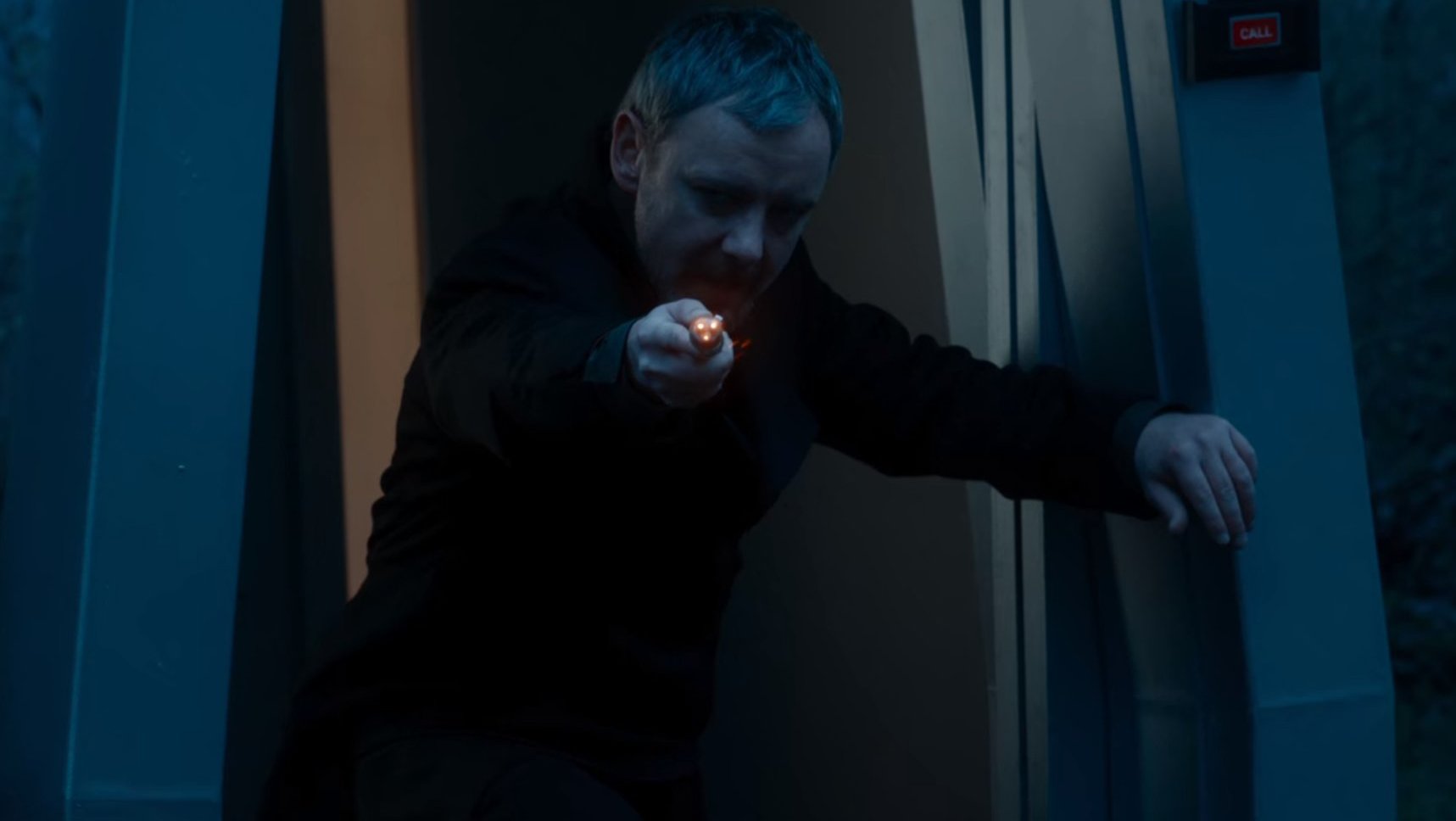
John Simm's Master was a perfect counterpoint to David Tennant's manic pixie dream Doctor, but he was also terrific opposite Peter Capaldi in the Series 10 finale.
Saxon was also the point at which the Doctor's arch-nemesis was no longer inspired by Moriarty – this Master was the Joker to the Doctor's Batman, an agent of chaos who delighted in burning everything down.
5. The Child Master (First Appearance: 2007)

The Series 3 episode The Sound of Drums gave us a rare insight into the Master's life as a child on Gallifrey.
Young actor William Hughes played this version of the character, dressed in the black-and-white Time Lord robes reminiscent of those seen when the Time Lords were first introduced in the 1969 serial The War Games.
In a brief flashback sequence, we see a young Master stare into the Untempered Schism, a gap in the fabric of reality through which the entire time vortex can be seen. We learn that this is a form of initiation, with Gallifreyan children being taken from their families at the age of eight, and entered into the Time Lord Academy.
This formed part of the Master's origin story, suggesting that he became the way he is because the Untempered Schism – and the immense power it contained – drove him insane.
4. Missy (First Appearance: 2014)

Missy is a hugely important incarnation of the Master, for two reasons.
By casting Michelle Gomez as a gender-flipped Master, Steven Moffat laid the groundwork for the first female Doctor a few years later. And as it pertains to the world of the show, Missy is the first incarnation since Roger Delgado who isn't an outright villain.
Perhaps reflecting Peter Capaldi's love of the Jon Pertwee era, Steven Moffat writes the Twelfth Doctor and Missy as two estranged friends. It's more heightened than Pertwee and Delgado because of Michelle Gomez's murderous Mary Poppins characterisation, but the friendship is still there, and it's stronger than ever.
Missy also builds on story elements introduced by the Shalka, Yana, and Saxon Masters. She's more of a companion than a villain, gets to pilot the TARDIS, she plays at being "Doctor Who," and she even tries to save the day.
Indeed, Missy's redemption arc was at the core of her character. She goes from raising a Cybermen army in the Series 8 finale, to choosing to stand with the Doctor against the Cybermen in the Series 10 finale.
However, the genuine tragedy of Missy is that the Doctor never sees her redemption, and never learns of her decision to stand with him. Before she can tell him, she's gunned down by the Saxon Master, setting up a cruel reset of the Doctor-Master relationship by the time of their next meeting.
3. The Spy Master (First Appearance: 2020)

The Saxon Master was a perfect disguise for the great British public, but the Spy Master is an incredible disguise that fools even the Doctor.
At some point before his first appearance in the 2020 episode Spyfall, the Spy Master learned of a long-buried secret: that the Doctor was the Timeless Child, a mysterious being from another universe from whom the ability to regenerate had been extrapolated, and spliced into other Gallifreyans.
This, somewhat understandably, made him very angry. Not only had the Time Lords lied, but this meant that the Master contained a small piece of their greatest enemy and oldest rival.
In response, the Spy Master destroyed the Time Lords and burned Gallifrey to the ground. Sacha Dhawan's Master draws on John Simm's Jokerish portrayal, but manages to be even more unhinged and dangerous, with a primal rage to complement his madness.
The Spy Master also, finally, gives us a modern series Master with a TARDIS. His outback shack flying through the sky is a wonderful callback to both The Wizard of Oz, and Michelle Gomez's wicked witch characterisation.
He also liked a song and dance, just like the Saxon Master. The Spy Master's Rasputin routine just pips the Scissor Sisters when it comes to iconic moments!
2. The Doctor Spy Master (First Appearance: 2022)

Having failed to take the Doctor's remaining lives in the TV Movie – and then having failed to be the Doctor in World Enough and Time – the Master finally achieves both in The Power of the Doctor.
Concocting an elaborate scheme to trap the Thirteenth Doctor, the Master takes over her body and sets about on a campaign of character assassination on a galactic scale. Though still looking like the Spy Master, the fact that the Master uses regeneration energy to pull off this scheme counts this as a separate incarnation.
It's an incredible idea, and the fact that the Master feels the need to literally cosplay as every incarnation of the Doctor is a brilliant visual representation of just why they'll never understand what it means to be the hero.
But among all this evilness, it's testament to Sacha Dhawan's skills as an actor that he brings a degree of vulnerability to this version of the Master, as he pleads with Yaz to give him a chance.
The Doctor Spy Master was soon thwarted and the process reversed, with the Thirteenth Doctor becoming herself once again. Not one to accept defeat so easily however, the Master fires an energy beam at the Doctor, killing his best frenemy before collapsing himself.
1. The Gold Tooth Master (First Appearance: 2023)

At some point between The Power of the Doctor and The Giggle, the Master encountered the Toymaker.
The Master had approached the Toymaker, dying and begging for their life. So, naturally, the Toymaker challenged them to a game – a game that the Master lost.
It's unclear whether this was the Spy Master on the brink of death, or a new, unseen incarnation that the Spy Master regenerated into. But whichever version it was, the Toymaker encased them inside his gold tooth.
Being shrunk to the size of a tooth feels like a poetic punishment for the Master, given his love of the Tissue Compression Eliminator!
When the Toymaker was defeated, his gold tooth was dislodged, before being picked up by a mysterious female hand with red nails. Is the Fifteenth Doctor about to face down a resurgence of the Cult of Saxon? Or is there some other plan being drawn up for the Master's return?
Whatever the case, it seems we'll have to wait a while. Showrunner Russell T Davies has stated that the Master is "parked" for the time being, so who knows when they might show up again.