10 Doctor Who Episodes That Had The Balls To GO THERE
Doctor Who stories that took a big swing and delivered something truly surreal – or downright weird!
With more than 800 episodes, 300 stories and 40-plus seasons (and counting), Doctor Who’s writers are always looking for new and exciting ways to regenerate the show.
Let’s be real: Doctor Who is quirky and very, very bizarre at its core. Whether it’s killer androids made of sweets, slime-covered slugs like Sil, or walking blobs of fat, the Whoniverse has always leaned into the weird, wonderful, and downright surreal.
But sometimes, the show goes beyond the usual monster-of-the-week fun. Every so often a writer throws out the rulebook, ditches the expected sci-fi tricks, takes a bit more of a risk and boldly says, "Yeah. We're doing this." And that takes balls.
So, join us as we wander into the unknown. As we stroll into the strange. As we ease into the eldritch. As we... you get the idea. They might not all be great stories, but they do earn points for being among the most unique and avant-garde in Doctor Who's eclectic back catalogue...
10. The Web Planet

When Sydney Newman first brought his exciting new sci-fi show to Verity Lambert, he had one important rule. "No bug-eyed monsters!" Or BEMs for short. He wanted Doctor Who to lean on the more serious, educational side. But then, along came the Daleks, and that rule was quickly thrown out the window for giant ants and enormous moths.
Before Doctor Who had the budget to render alien worlds convincingly, 1965’s The Web Planet ambitiously attempted a six-part story set on the alien world of Vortis, featuring a cast composed entirely of giant insects.
Without a single human extra in sight, the cast performed in heavy, unwieldy costumes, communicating in clicks, buzzes, and opera-esque pitch shifts. Vaseline was smeared on camera lenses to create a spooky atmospheric effect. While it's easy to poke fun at the wobbly sets and unconvincing costumes today, the ambition on display is staggering.
We're thrown directly into a truly unearthly environment, demanding that we accept giant ants and moth-people as tragic, compelling characters.
Has it aged well? Not so much. But it still remains weird, otherworldly, and wildly brave television for its time.
9. Sleep No More

Much can be said about Mark Gatiss's contributions to Doctor Who, and it's not all glowing – but he is nonetheless a writer willing to challenge the limits of the show’s storytelling.
Set aboard an abandoned space station orbiting the distant reaches of Neptune, the episode follows the Doctor and Clara as they join a rescue operation to uncover the fate of the station’s missing crew.
A bog-standard Doctor Who 'base-under-siege' story on paper then, but Gatiss takes it one step further by showing the entire story through the eyes of the cast, edited together in-universe by Rassmussen (played by Reece Shearsmith).
Rassmussen frames the events as a warning, a desperate attempt to document what befell the station’s inhabitants. In reality it's a big old trick, and the very episode we are watching has been designed to infect anyone who watches it.
This approach was startlingly new for Doctor Who, as it had never before relied on the found footage format to tell its stories. Found footage immerses us in the terror and claustrophobia. There are no breaks; you'd better hide behind the sofa because we’re locked in (literally) alongside the Doctor. The removal of the iconic theme song and opening title sequence only adds to that unsettling feeling.
The episode does its best to explain why we can see through everyone's eyes... but unfortunately, sentient eye-dust monsters do not quite live up to the bold narrative risk.
8. The Mind Robber
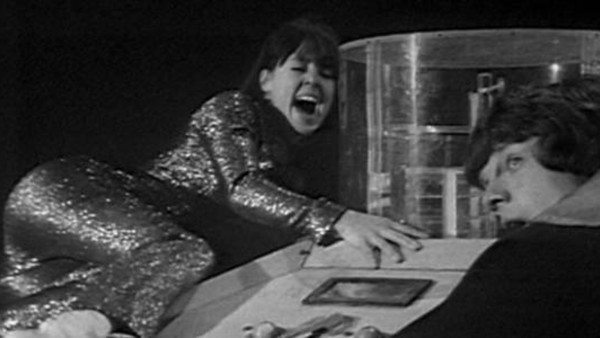
If there's a story that proved Doctor Who could break its own rules, it’s The Mind Robber. Forced into drastic action to escape a volcanic eruption engulfing the TARDIS, the Second Doctor, Jamie, and Zoe find themselves outside time and space itself, marooned in the Land of Fiction.
With a complete lack of budget and an extra episode added to the serial at the last minute, the writers turned constraints into bizarre gold. The Doctor encounters fictional characters like Medusa, Gulliver, and the Minotaur in a bleak, white, infinite void, with strange creatures and surreal moments aplenty.
During filming of The Mind Robber, Frazer Hines (who played the Doctor's companion Jamie) contracted chicken pox and was replaced for part of the serial by Hamish Wilson. The plot uses the strange power of the Land of Fiction to ensure this switch works gracefully, by having the Doctor incorrectly arrange Jamie's face in puzzle form, bringing his friend to life... with a slightly different look.
Unhinged, meta-referential, and brilliantly inventive, The Mind Robber proved Doctor Who could turn severe production limitations into daring TV art.
7. Amy's Choice

Nowhere is Doctor Who more surreal and experimental than when it dives into a crazy character study. Amy's Choice forces the Doctor, Amy, and Rory to confront who Amy truly is and how she wants to live her life. Trapped between two dream scenarios orchestrated by Toby Jones’ menacing Dream Lord, Amy is placed squarely at the centre of the dilemma.
Team TARDIS must figure out which reality is real: a quiet, mundane life where Amy and Rory are happily settled and expecting a baby (and Rory has a questionable ponytail), or a dangerous life aboard the TARDIS alongside the Doctor.
The episode truly shines in how it pushes each character to their limit by putting them through their own ordeals and forcing them to make difficult choices, and the Dream Lord delivers just the right amount of reality-bending surrealism without it ever feeling gimmicky. Throw in an army of evil pensioners and you have one of the most unique episodes in the modern series.
It was a bold episode for the midway point of Matt Smith's first year, which up until that point had been your fairly standard monster-of-the-week fare. Had audiences recovered from post-Tennant depression enough to accept a strange, slow burn character study that relied on our deep investment in this new Doctor and TARDIS team?
The response to the episode would indicate a resounding yes.
6. The Celestial Toymaker

Stepping into the domain of absolute cosmic horror disguised as a children’s game, The Celestial Toymaker sends the First Doctor, Steven and Dodo into a pocket dimension ruled by an omnipotent entity known as the Toymaker, one of the most surreal Doctor Who villains in the show's entire history.
This 1966 serial forces the Doctor’s companions to play lethal games of blind man’s buff and TARDIS hopscotch, while the Doctor himself is rendered invisible, playing a high-risk game of his own against the Toymaker.
The serial was a huge swing for the show at the time, removing the Doctor from much of the action and stripping away the familiar sci-fi safety nets to present a surreal, abstract nightmare that proves Doctor Who could cross into sheer, unadulterated fantasy whenever it felt like it. It's no wonder the Toymaker was brought back for the 60th anniversary.
The story's original ambitions were even more daring too. Due to William Hartnell's health issues and his strained relationship with the producers, it was originally conceived that the invisible Doctor would return with a different face, with a new actor cast to replace Hartnell!
This didn't happen of course, but it does mean that The Celestial Toymaker laid the foundations for the concept of regeneration, making it one of the most important stories in the show.
5. It Takes You Away

It Takes You Away stands as one of the Thirteenth Doctor’s most experimental stories. Moving away from standard alien-invasion tropes, the episode becomes an existential fairytale and an examination of grief.
The story opens in a secluded Norwegian cottage, where the Fam meets a blind girl hiding from an unseen creature. Inside the house they find a mirror acting as a portal between realities; the Doctor and her companions cross the deadly “Anti-Zone,” in order to get to the other side.
From a technical standpoint, to demonstrate how we’re now within a mirror, this other reality is entirely flipped, which is a very cool detail that adds to the strange vibes and rewatchability of the episode.
It Takes You Away works brilliantly as a much-needed character study, asking questions about accepting what you want to see versus what is actually there, and how one might need to give up a world that has something they’re missing.
It features one of the most surreal concepts in recent Doctor Who memory: the Solitract, a sentient universe incompatible with ours, which lures grieving individuals by projecting perfect imitations of their deceased loved ones, resulting in the Doctor emotionally reasoning with a cosmic universe taking the form of a talking frog.
It’s bizarre, bold, heartbreaking, and quintessentially Doctor Who.
4. Ghost Light
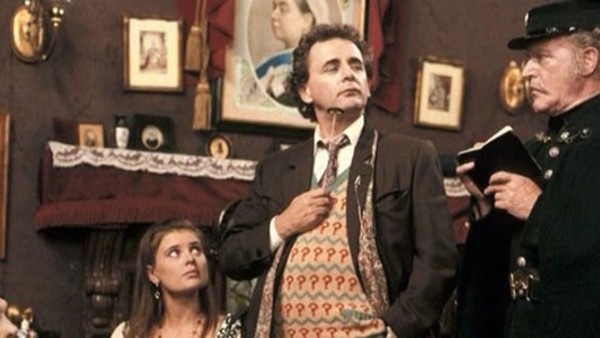
Writer Marc Platt was famously asked what had been sprinkled on his cornflakes to come up with one of Classic Who’s most delightfully confusing stories.
Regularly praised for its rewarding rewatchability, Ghost Light finds Ace and the Doctor in a haunted Victorian-era house. For the Doctor, it's an investigation to work out what the mysterious presence Ace felt as a child 100 years in the future actually was. For Ace, it is reliving the worst night of her life.
The story drops us into an evolutionary horror house filled with alien survey ships, Neanderthal servers, control-obsessed entities, and subtle digs at Victorian social morality. It rejects straightforward storytelling altogether, refusing to hand-feed the audience information.
Instead, it asks viewers to put the puzzle pieces together themselves, building a hauntingly dense character drama that remains unmatched in complexity, and quite frankly, weirdness. It's a crystallisation of the Sylvester McCoy years, which took more of an eldritch approach than the previous few eras and weren't afraid to push the limits of the show a bit more.
Marc Platt reportedly described Ghost Light as "The Addams Family on acid", and he's definitely got a point with that.
3. The Crimson Horror
If there's one thing Mark Gatiss can be relied upon to deliver, it's a memorable episode of Doctor Who – for better or worse!
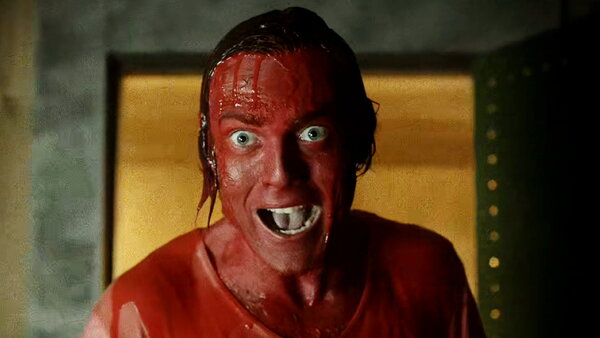
The Crimson Horror is bonkers to the extreme, and unabashedly so. Set in 1890s Yorkshire, it's a body horror period piece involving a prehistoric red leech attached to Dame Diana Rigg's chest, whose venom paralyses people and turns them bright red.
Stylistically it's unlike almost anything in the modern series, fully leaning into its B-movie premise and Victorian trappings – particulary part way through, when the cast and crew of The Crimson Horror turn what would otherwise be a clunky, exposition-heavy middle segment into a truly unique sequence.
Rather than having the Doctor explain how he ended up blind, petrified, and held captive, the episode pauses for a silent-movie, hand-cranked flashback sequence that fills in the gaps. It's incredibly stylish and delightfully macabre.
The Crimson Horror leans heavily into penny-dreadful camp, showing a story that understands exactly how bizarre it is and gleefully leans all the way into it.
Like most Gatiss episodes and like a lot of Series 7B, it may be divisive and doesn't quite live up to its potential, but at the same time there's nothing else quite like it in the show.
2. Wild Blue Yonder
When Russell T Davies returned to Doctor Who for the 60th anniversary, there was much talk about how he would best celebrate the show’s 60 years in an exciting way.
He could have played it safe: bring back all the still-living Doctors and fill the episodes with cameos and fan service. However, given that the previous year marked the BBC’s centenary celebrations with the return of the Fifth, Sixth, Seventh, Eighth, and First Doctors (along with a host of classic companions, plus the Daleks, Cybermen and Master for good measure), there was a real risk of the show repeating itself with two nostalgic cameo-fests back-to-back.
So what was Mr Davies to do? Bring back the man who really did not want to go, David Tennant, alongside fan-favourite Catherine Tate for a trilogy of specials and lock them in the middle entry entirely by themselves at the edge of the universe.
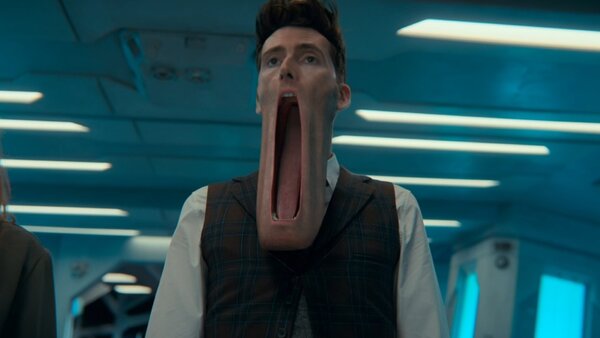
Wild Blue Yonder abandons big anniversary fanfare for unsettling cosmic body horror. The Doctor and Donna face the 'Not-Things', shape-shifting entities at the edge of creation that copy their forms with grotesque, distorted limbs and warped psychological mind games. There are only two actors and four characters in the entire thing. It almost shouldn't work, but it absolutely does.
It was a massive gamble for a big anniversary, and it would've been so easy to just phone up Matt Smith and have him and Tennant bounce off each other for an hour, as had proved so successful ten years prior – and many fans were clamouring for something similar in 2023.
Instead RTD took a much more daring route, proving that even after six decades, the show’s greatest strength is trapping two brilliant actors in a spaceship to run up and down a corridor.
1. Kinda
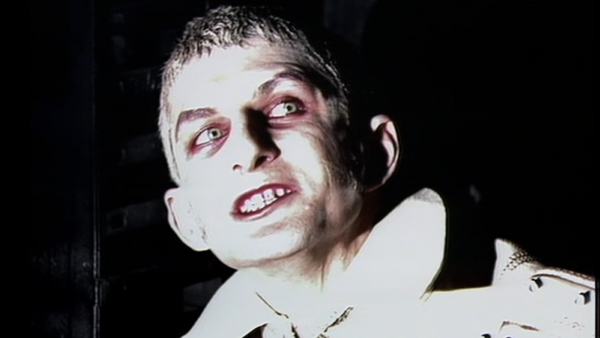
Kinda sends the Fifth Doctor and his companions into a surreal, psychological nightmare on the paradise planet of Deva Loka.
Instead of relying on standard sci-fi monsters with ray guns, the story dives into religious symbology, analytical psychology, and an ancient evil: the second member of the Pantheon of Discord on this list, the Mara.
The Mara is a godlike being that assumes the form of a giant snake and has a penchant for possessing people, most notably Tegan. And this is where the story really gets weird. These sequences take place within Tegan's head, a black void filled with a creepy elderly couple dressed in all white and playing a chess game, alongside a host of other trippy and chilling visuals.
There are moments in the story that really push the boundaries of what was possible within the limits of the technology available to them, especially the rituals with the Kinda in the third episode. It's avant-garde, unapologetically weird, and driven by intense, theatrical performances more so than anything else.
By pushing children’s television into dark, existential territory, Kinda shows the series was willing to swap pulse rifles and lizard costumes for pure psychological dread.