Doctor Who: 10 Things You Need To Accept To Be A Whovian

Being a fan doesn't come without its issues.
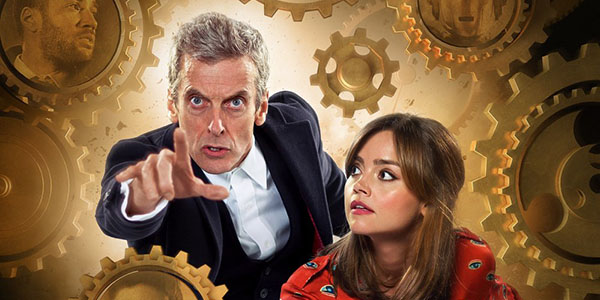
Doctor Who Series 8 Boxset Being a fan of Doctor Who is always a rollercoaster - there are epic highs and devastating lows. To be a fan, however, there are some things you have to just accept without questioning. Well Ok, Whovian€™s question but still accept them. These factors are a huge part of what Doctor Who is all about and by taking them away, the show becomes diluted and overly placid. They€™re what make Doctor Who, Doctor Who. They€™re what makes the show different. As such, fans accept these differences €“ sometimes through gritted teeth €“ because without them the show they love and adore would fall into the traps that so many shows before them have fallen into. Doctor Who would lose its truth and become just another TV show. When watching Doctor Who, a show about an Alien whose best friend is a human, travelling through time and space, suspension of disbelief is a given, but sometimes it€™s not the stories that fans just have to accept. Sometimes it€™s writing, sometimes it€™s continuity, sometimes it€™s the decision of an actor to leave the show when they€™ve just hit their stride. So let€™s take a look at those things that viewers need to accept in order to be a Whovian.

10. TARDIS Transformations

Wardoctardis Just as every fan has a favourite Doctor and a favourite Companion, generally they all have a favourite TARDIS. Whether or not it€™s the first TARDIS they see, or a particularly stunning recreation, there tends to be one TARDIS that stands out. From 2005 through to 2010, we had one consistent version that both Eccleston and Tennant maintained throughout. Then along came Matt Smith (and with him Stephen Moffatt) and since then we€™ve had three versions in five years. The first version came into being during The Eleventh Hour when the TARDIS was repairing itself and The Doctor was running around chasing after Prisoner Zero. Following the demise of The Pond€™s, The Doctor changed his TARDIS once again, becoming more clinical, perhaps showing a more grown up side to the mad man in a box. Following his regeneration Twelve redecorated again, albeit not a complete overhaul, merely changing a few colours, reducing the lighting levels and adding some round things. Whilst the change of the vehicle, doesn€™t seem like the most wrenching of changes, there€™s a familiarity about the TARDIS €“ much in the same way that there is a familiarity about the face behind the wheel. The TARDIS is a subject that often comes between fans when talking about Doctor Who and their love or hate of a redecoration, much as they do with The Doctor€™s Regeneration.

9. Innuendo

Tumblr Mr65qd8hpm1sa84g4o5 500 Gif Family shows have to have something for everyone, something for the kids and something for the parents. Luckily for the parents, they can enjoy the stories and the characters much like the younger family members, whilst also being treated to witty dialogue. Let€™s take for example the relationship between Eleven and River Song. More specifically, this particular titbit and see if you can spot the innuendo. The Doctor: Be careful! River: Careful. Tried that once. Ever so dull. The Doctor: Shout if you get into trouble. River: Don't worry, I'm quite the screamer. Now 'there's a spoiler for you! This is, of course, harmless. There€™s nothing explicit or graphic, but there is definitely an implication that perhaps The Doctor and River Song come to know each other a little better in the future. Fan€™s, in general, don€™t complain about the innuendo per se, but every once in a while, there is an awkward moment where one of the younger fans turns to a parent and asks €œWhat does River mean?€ Most of the jokes would likely go over the heads of those viewers that are more innocent of age, but at the same time there€™s a moment after every innuendo where parents exchange worried looks, before being able to settle back down to their favorite show.

8. Kissing
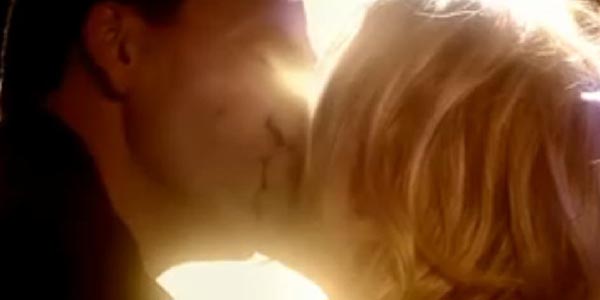
Speak to any original series fan and they€™ll tell you one thing for sure, there wouldn€™t have been any of this kissing malarkey in Tom Baker€™s day. It€™s true of course; although it wasn€™t the revived show that broke the Doctor€™s ability to spend months at a time in a confined space with a beautiful woman without kissing them. It was Paul McGann - that handsome rogue - that finally caved when planting a smooch on Daphne Ashbrook in the much maligned television movie. Since the return of the show to our television screens, however, the kissing has upped to almost Romantic comedy levels of proportion. Rose, Astrid, Martha, Donna, Lady Christina de Souza, Amy, River and Clara; this is the list of companions who have canoodled with The Doctor, Rose in particular with two different regenerations. Whilst it is understandable that Eccleston, Tennant and Smith have all been younger and more virile than previous regenerations, it seems to be the way of television these days where a romantic element is generally added to most shows, no matter what the premise. Enter the Twelth Doctor, sharp, blunt, to the point. However you describe him, it all comes back to the same thing. He€™s a socially inadequate alien who finds it difficult to use his inside voice. This is it, fans screamed, the chance we€™ve been waiting for. A Doctor who will travel with a friend, who will be like a mentor. Good bye romance, good bye lovey-dovey, good bye hugging and most of all good bye kissing. Oh brilliant€

7. No Killing

The Doctor doesn€™t kill. Generally speaking that€™s his rule, and whilst we know there are times that he could save an evil villain and chooses not to, generally speaking The Doctor doesn€™t kill. At a time when Anti-heros are all the rage, with good guys killing bad guys in almost every television show and film that has airs, to keep to a character as conflicted as The Doctor from killing every evil being he meets is a tough ask. Fans are so used to seeing a sticky end for the wrong doers in television shows, that when The Doctor shows mercy, or sends an alien back home, it can seem strange. Daleks and Cybermen aside, The Doctor is generally filled with compassion and a willingness to forgive. Of course, The Doctor€™s no killing rule generally doesn€™t apply to the two races I€™ve just mentioned. It would often appear that The Doctor doesn€™t see Cybermen as people who are alive to kill, but technology he can destroy. In a similar way, his view of the Dalek€™s is so brutally fixed, that even the idea of a good Dalek filled him with fear. As such, his meetings with Dalek€™s tend to end with their own extermination. But those two enemies aside, The Doctor will always give a choice. Walk away, or be stopped. When Missy turned millions of humans into Cybermen, there was a moment where The Doctor would look to break his own rule to save Clara. In the end, he didn€™t have to, but to break his most basic rule shows just how much The Impossible Girl really means to him.

6. Long Story Arcs

The generally accepted convention is that there are two paths for television. An ongoing story arc with a long term pay off, much like Torchwood: Miracle Day, and a monster of the week style of show such as Scooby-Doo. Doctor Who takes elements of both styles and combines them to create a Monster of the Week, with a hint of a longer term story. Take for example Deep Breathe; the enemy in this show was vanquished never to be seen again, but this was our first meeting with Missy. We€™re generally offered subtle hints about what might be coming without ever being offered too much information. Take, for example, the dying moments of The Face of Boe. His proclamation that €œYou are not alone€ spanned the entirety of the third series before being revealed to be a premonition of The Master€™s return. €œSilence will fall€ spanned three whole series, from Matt Smith€™s beginning to the very end. Often stories would be so subtle that we would hear about them once a series, allowing us to almost forget that there is a story that needs to be resolved. Fans were so wrapped up in Missy, that it wasn€™t until the final moments of Series 8 that we were reminded that Gallifrey was out there and The Doctor still needed to find it. Long story arcs can often be frustrating for fans who want the answers now, but all good things come to those who wait. With the revived show, viewers just have to accept that the answers will come eventually.

5. Companion Changes

companions Rose Tyler, two series, Martha Jones, one series, Donna Noble, one series, Amy and Rory Pond two and a half series, Clara Oswald€ Well we€™re not so sure yet but there we go. The faces of the companions change more often than those of The Doctor and whilst from a logical stand point that makes sense, it doesn€™t mean that it€™s any easier to accept. Since the beginning of the revived series, fans have been lucky. Apart from the deaths €“ by natural causes it is assumed €“ of Rory and Amy during the events of The Angel€™s Take Manhatten, fans haven€™t had to deal with the death of a companion. Of course we saw Rory die, twice, but he was never gone for that long, and there was always a feeling that he would come back but the fact remains, we€™ve been generally sure that every companion so far has gone on to live a life after the TARDIS. Again, this doesn€™t make it any easier to accept when they do leave. With rumours rampant that Clara Oswald may well be set to leave our screens in the coming months, it€™s time for fans to start guessing who could be next and whether they€™ll be as cute and flirty as the Blackpool native has been. She was there for fans through the change from Matt Smith to the older and darker Capaldi, and it felt like our journey of acceptance ran hand in hand with hers. Once she accepted the Twelfth Doctor, then we began to as well. It€™s hard when a companion leaves, especially when their end means we won€™t see them again. Let€™s be honest, though, this is Doctor Who were anything goes. You can never say never.

4. Lies

Lies, lies, lies. They€™re everywhere in Doctor Who. The Doctor lies, the companions lie and most of all, Steven Moffat lies. It€™s something fans just have to get used to. If Steven Moffat answered every question he€™s asked about The Doctor truthfully, we would never have a story to look forward to. Every day, The Grand Moff is asked about Gallifrey, about Clara leaving, about The Doctor€™s next companion. If he told the truth he would be criticised for ruining the story, and if he ignored the question he€™d be called arrogant. So he lies. Those lies feed down into his characters, as we€™ve seen over the years. The Doctor lying to Amy and Rory in The Girl Who Waited about the TARDIS being able to sustain two versions of Amy Pond. The fact is, there is a good chance that wasn€™t a lie. We€™ve seen the TARDISes capabilities to maintain a paradox when The Master brought the Toclafane back from the future. The Doctor lied about whether or not that he would do it even if he could. He never intended to allow the future version of Amy to live. It wasn€™t his plan at all. The Doctor lies. Companions lie too; Amy lied about marrying Rory, Clara lied to Danny about travelling with The Doctor, Clara lied to the Doctor about Danny being safe. It€™s a whole nest of lies wrapped in a web of untruth. To be fair, lies are what make a story interesting. If everyone told the truth then there would be no suspense. If Clara had told The Doctor that Danny was still dead, he€™d never have let her go, so there would never be a reunion which is what this year€™s Christmas Special looks to be about. There are things a little harder to accept than lies, however, which leads me to€

3. Inconsistencies

It€™s easy to accept that sometimes, in a show where so much is going on and so many things are happening, that the little things can slip through the net. Let€™s take for example the fact that through the years, The Doctor has been very quick to point out that he is unable to go back and forward in time within his own timeline. Doing such a thing is impossible and can have catastrophic effects. This, of course, is done to ensure that when a plan fails, The Doctor can€™t just hop in his TARDIS, go back a few minutes and try again. This is fine, except that when The Doctor talks about the Time War, it€™s made clear that the reason the war was so horrific was that The Daleks and the Time Lords would keep travelling back and replaying the same battles over and over again like on a video game. Alright, let€™s assume that the collective power of the Daleks and the Time Lords allowed them to break that one fundamental rule of time travel. That doesn€™t explain why The Doctor, during the events of The Pandorica opens and The Big Bang, travels back in time to help Rory to release the past version of himself from the Pandorica. If it was this easy, why can€™t the Doctor do that every time someone died? Or every time he was a few seconds late working out an enemies€™ plan? If you think about things like this too much, you can quickly fall into the trap of not being able to enjoy Doctor Who for what it is. Sometimes, you have to just ignore the inconsistencies and tell yourself that it€™s Doctor Who, and anything can happen.

2. Heartbreak

Heartbreak within Doctor Who comes in many forms. From realising that Spaceship UK is being piloted by a Space Whale, to the inevitable end of our favourite companion. One thing the writers of Doctor Who are very good at are creating characters that we love and then pulling the rug out from underneath them. One particularly heart-breaking episode was the 2007 Christmas special, in which we lost four very popular characters that were only ever met in this episode. The lovable Zocci, Bannakaffalatta, Morvin and Foon Van Hoff, two happily married humanoids, prize drawe winners from the planet of Sto and of course Astrid Peth. What was even more wrenching about the deaths of these four interesting and lovable characters, was the survival of the utterly loathable Rickston Slade. Of course, moments of heartbreak can come in much greater forms. Watching The Doctor hold the body of the fallen Master, asking him to regenerate so they could travel space and time together. Amy€™s pain at the apparent death of her true love, only to forget him moments later. Donna Noble having to forget everything she€™s seen and done, all to go back to her old life after changing so much. And of course, that inevitable moment when your Doctor finally€ Let€™s not talk about it. This kind of sorrow comes hand in hand with being a Whovian. Fans know it€™s coming, and sometimes can see where it€™s coming from. Every now and again, however, viewers are sideswiped by something they have never expected and when that happens, when that time comes, you can almost hear the hearts of a nation break as one.

1. Regeneration

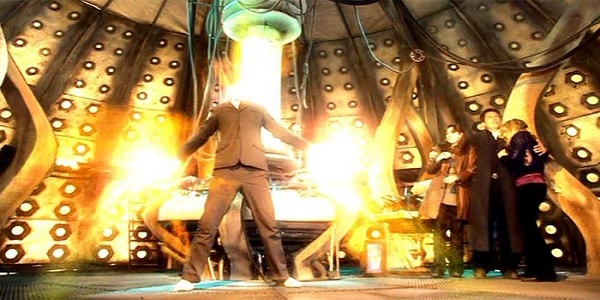
Really? Is this something that has to be mentioned? Fine. Regeneration, the act of rebuilding ones body following a trauma that would usually cause death. This rebuilding process can often change both appearance and personality. It can also cause almost unbearable pain to those who witness it. Too formal? Alright. Every few years, fans fare forced to deal with the agony of losing their hero. It€™s a tough process that follows the usual five steps of grief. First, they ignore it, pretend it€™s not going to happen before then getting angry that the man who plays The Doctor would even think of leaving them. Next, fans will start to hope that they have one more series, one more Christmas special, one more opportunity to tell The Doctor just how much they love them so that maybe he will stay. Viewers will generally be saddened by the exit often leading to tears and sorrow, before declaring that they€™ll never watch the show again. Finally, they accept it; they watch the New Doctor and he wins them over because, in truth, those who write the show know just what type of actor (or maybe actress?) will be able to take over the mantle. The fact is, Doctor Who is unlike any other show on television. In most cases, if the lead actor dies then you grieve and you move on to another show. If the title character leaves the show then, generally speaking, the show is over. Sometimes the show has changed in a way that means that the formerly lead character is no longer the only main character in the show anymore, but with Doctor Who that is never the case. Every week, fans tune in to see a mad man in a box. When he dies, they grieve but are then immediately presented with a replacement that they have to accept in order to continue watching the show. It€™s like when a gold fish dies and parents go and buy a replacement, except that the goldfish doesn€™t travel through time and fight Daleks! Regeneration, especially your first ever regeneration, is one of the hardest parts of being a Doctor Who fan. You accept The Doctor for who he is, and he seems to be just hitting his stride when the news hits. But if you can accept regeneration, if you can fight past that grief, then you have definitely earned the right to call yourself a true Whovian. Are there any other things you think that we have to accept to be Whovians? I€™d love to hear your ideas in the comments below.

In this post: 
Doctor Who
 
Posted On: 
Contributor
Contributor

Doctor Who, WWE and Liverpool fan with a huge vocab... vocabu... who knows a lot of cool words.