10 Ways Doctor Who Is Now Completely Unrecognisable

Where the hell did Doctor Who go?

In 2005, when Russell T Davies brought Doctor Who back to our TV screens, there were many nostalgic types who imagined that the show would remain relatively unchanged, albeit with perhaps more of a modern feel to the effects budget. But Davies was smart in his reinvention of the much-loved property, taking everything that made the classic version of the show so iconic and adapting the format for a new era in television storytelling. He extended the episode length, added in an established actor to play the lead role and started to subtly insert more adult subtexts into the breathless adventure that resulted. He reshaped and remade the classic sets and aliens so that they would appeal to a new generation. And yet he still ensured that the show acknowledged its past and played up to certain tropes that long time viewers would expect to see on screen. Over time, the new show has established its own identity. It will always be indebted to its past, but it has acknowledged its place in the here and now by breaking many of the apparently unbreakable rules of the classic series. Some fans feel that it has betrayed its roots, but many feel that those changes have helped give the show a depth and a more universal appeal. On NuWho's 10th anniversary, here are just 10 ways in which it has departed from the classic series in ways that would have been unthinkable back when the show was cancelled in 1989.


10. Companions Have Lives Beyond The TARDIS

Beginning with Rose and her mum, NuWho has sought to create a new kind of dynamic for the Doctor/companion relationship. The new companions tend to be people with lives beyond their travels with the Doctor. It is true that Rose sought to escape that life, but in the end she returned it in a way when she and her mum found themselves in an alternate dimension, reunited with an alternate version of Rose's dad (and Rose's very own ersatz-Doctor, but since there's something deeply creepy about the wish fulfillment aspect of that storyline, let's just gloss over that one!). Since Rose, Martha allowed her family to become involved with the Doctor, while the Ponds returned to their married lives between adventures. Even Clara had something of a normal life, and the Doctor became, at times, a disruption to her burgeoning romance with Danny Pink. In the old days, companions tended to be stuck with the Doctor, rarely developing lives beyond the confines of his time travelling police box. Tegan's Aunt Vanessa, for example, is never really mentioned after her brief appearance in Logopolis. Ace meets a few old friends in Survival (but by then the series was beginning to evolve, right before its untimely yanking from the airwaves). Fans occasionally hear of a family member from Sarah Jane Smith, but these instances are more lip service than anything. No, in NuWho the companions lives beyond their travels with the Doctor are just as important as they're lives with him.

9. Recurring Characters (Who Aren't Simply Monsters)
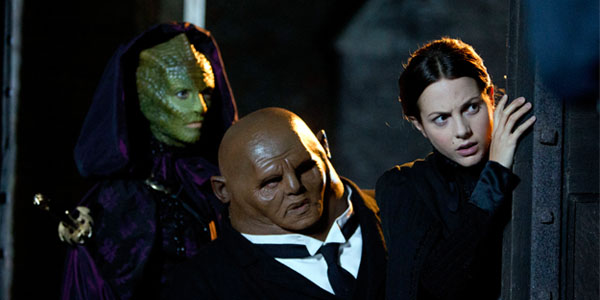
Although the Doctor encountered a few people more than once on his travels in the classic days (Sabalom Glitz, for example, met the Sixth and Seventh Doctors), there were rarely any characters who appeared in more than one story. Ever since NuWho set up Rose's mum Jackie as a recurring character, the series has delighted in bringing characters back for new adventures and new situations. The most recent example is, of course, the love-em-or-hate-em (and you should love 'em!) Paternoster gang. These characters, one suspects, were meant to be a bit of a gag but wound up becoming some of the most popular and enduring characters of the new series to date, so much so that they have now encountered two incarnations of the Doctor (the Eleventh and Twelfth). But beyond the Paternosters, the show has had the young kids who Clara babysat (quickly jettisoned), Rory's brilliant dad, and even James Corden's Craig counts. And who's to say he won't be back? Imagine the shock of realising his best bud has turned into a grumpy old man! In the classic series, there was a sense of "one and done" with guest stars and characters who weren't villains. Now, with a new ethos and a new energy to the show, characters are allowed to simmer for a while away from the stories in which they were introduced. And this is a very good thing indeed.

8. A (Nearly) Consistent Continuity

With so many different explanations for the sinking of the Titanic or the destruction of Atlantis, and a lot of Classic Who writers making things up on the fly (does the TARDIS exist in a state of grace, or doesn't it?), the old series was a hodge-podge of ideas and theories that, despite the tortured attempts of many uber-fans, never really made a whole lot of consistent sense. After the revelation of the Time Lords, for example, some of the First and Second Doctor's actions suddenly seemed at odds with the idea that this is what they were escaping from. But while the new series may, occasionally, contradict itself, it seems there have been far more attempts at creating a consistent continuity than in the old days. Now that the series is a million dollar (or pound) marketing opportunity, the writers need to take more care in crafting a believable universe. Fans can take it for granted that when things happen, such as the Master becoming the Mistress, they become set in stone continuity-wise and play into the larger story of the Whoniverse. This means that occasionally some Classic Who continuity has been sledgehammered into place, while others have been ignored. But the result is a Whoniverse that feels far more consistent, rather than a procession of little unconnected pocket worlds and times and rules that change from story to story. That's something to be thankful for, right?

7. A Sense Of Scale

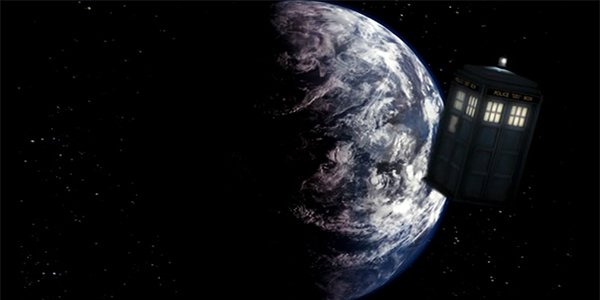
Aside from a brief flirtation with big-scale effects at the start of Trial of a Time Lord (a sequence that still looks quite incredible, regardless of how you feel about the story that follows!),Classic Who tended to tell quite intimate stories. There were practical reasons for this, of course. The sheer number of base under siege stories arose due to the fact that it was easier to dress a corridor as an alien environment than to dress a whole landscape. In NuWho, though, viewers can, and do, frequently travel to worlds that feel completely alien and encounter situations that make the jaw drop. From dinosaurs in Victorian London to steampunk Cyber Kings and the snow-blind landscape of the Ood homeworld to the sight of the TARDIS dragging the Earth across whole galaxies, NuWho flirts with a sense of epicness that the Classic Show could only dream of. There are pay offs to this, of course. Some of the best Classic Who stories were made even better by limited budgets, forcing a kind of inventiveness from the crew that resulted in some spectaular and weird stories. The old jokes about wobbly sets and cheap filming in quarries, though, can no longer be applied to Who as it exists in the 21st century. Amen to that.

6. Story Arcs

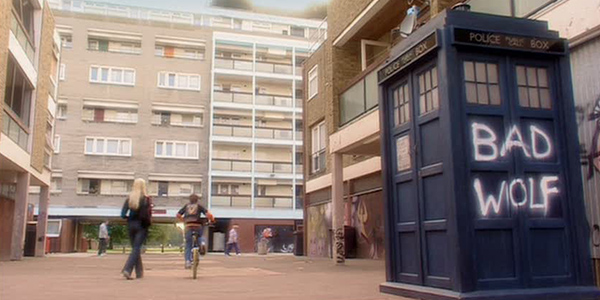
The Key to Time and Trial of a Time Lord attempted to tell connected stories over the length of a series. While these attempts seemed groundbreaking at the time, the truth was that, while there were nominal connections to a continuing arc as the Doctor searched for the Key to Time or attempted to defend himself in intrusive trial scenes set on Gallfrey, for the most part, the series did absolutely nothing different. These 'arcs' were simply ways to nominally connect different adventures but you could understand one without having seen another. While NuWho does try and tell standalone adventures, the arcs have become more sophisticated. From the simple planting of "Bad Wolf" and "Saxon" imagery in early scenes to the more complex, long form arcs instigated by Steven Moffat during Matt Smith's first season, interconnected story arcs have become a vital part of NuWho rather than the arguable special events which they had been presented as in the past. Sometimes, of course, this does lead to the series tying itself in knots. The attempt to resolve the question of River Song's motivations and past in Season 6 became so convoluted and unbelievable that many people were left scratching their heads and wishing for the good old days of stories that stood perfectly on their own week by week. It all makes perfect sense, though, if you really look at it. Promise.

5. The Doctor's Development

The Doctor has always been an essential character. Even with the changes between regenerations in mood and temperament, he was a constant force on which the viewer could rely. Any revelations made about him did little to change his essential nature. Not much has changed, but these days fans get to glimpse a bit more of the Time Lord behind the hero, as they see his anger, his sadness and his compassion in more detail than they ever did on the classic series. The new Doctor is recognisably human in his emotions, making him more relatable to a modern audience. He is still, and always will be, the hero, of course, but his development has become decidedly deeper. Viewers have seen him fall in love with Rose, come to terms with his survivor's guilt regarding the Time War and deal with the unintended consequences of many of his actions. No longer resetting himself from adventure to adventure, the new Doctor grows and changes in subtle ways. And it is a beautiful thing to behold.

4. Faster Pace

In the good old days, the Doctor and his companions would arrive on a planet, meet the locals, mess around for a while and eventually get into trouble. They could do this over four, six or even ten episodes. Nowadays, most stories are told in 45 minutes, with the emphasis on getting in and out of the story as quickly as possible. In some cases, this is a brilliant device. Gone are the days of the Doctor & Co getting captured and then escaping on multiple occasions. Gone are the days of obvious filler such as the ridiculous and unnecessary sword fight - replete with the bizarre moment where the Doctor eats a sandwich - in The Sea Devils. Now our hero gets in and gets on with his work. It's brilliant, it's breathless, it's exciting. But at the same time, this can lead to some underdeveloped episodes, where ideas and adventures whiz by so quickly that the conclusions can seem rushed and ill thought through, The trade off is clear, but it has lead to many compact and exciting stories, such as Blink, Mummy on the Orient Express, Father's Day and The Eleventh Hour.

3. International Recognition

Doctor Who was once the reserve of the geeky, shy and obsessive. Or at least that was the overriding impression of the majority of the general public and broadcasters. As good as the show was, it had become knnown as the go-to entertainment choice for slightly odd people. Since the show's return, it has become a flagship show for the BBC. The Matt Smith era capitalised on an unexpected American market by filming in the US for several episodes. And David Tennant became an international sex symbol, which is perhaps a first for any man playing the Doctor. To give you an idea of the show's new found, and ever growing, popularity, the 50th anniversary episode was simultaneously aired in 94 countries. And it wasn't just shown on TV, either. They were so confident that people would want to watch the adventure that they screened it in cinemas all over the world as well. Doctor Who has well and truly become an internationally recognised cultural icon in its new iteration. And it's about time, too!

2. Doctor Love

It's not true that the Doctor of the classic series did not fall in love. In the William Hartnell adventure, the Aztecs, the first Doctor quite clearly falls in love with Cameca, even if it is a subtle romance. After that, the Doctor's sexuality seemed to never quite be mentioned on the show, although if one looks hard enough, there are likely hints. Even the much vaunted "kiss" of the TV movie is more a moment of passion than it is one of romance. However, when David Tennant came onto the show as the Tenth Doctor, the romance element was dialed up to take advantage of the chemistry between Tennant and Billie Piper. The Doctor has been lusted after and has indeed lusted after others. While Smith pretended not to see sexuality in others, there was clearly a lot of flirtatiousness in his Doctor, particularly in the relationship between himself and River Song. This has been toned down for Capaldi, who is decidedly. "not your boyfriend". There has always been frank and obvious relationships between others on the show, including same sex couples and a misjudged attempt at sexual humour in the episode Love & Monsters. Some fans hate this new aspect to the show but it feels more real in many ways and a lot more grown up than merely pretending that love and, by extension, sex don't exist in the Doctor Who universe.

1. Less Reliance On Cliffhangers

The classic show loves a good cliffhanger. In fact, it loved them so much that in one particular story, Dragonfire, the Seventh Doctor got stuck in a quite literal cliffhanger for plot reasons that are debated to this day. But when the show returned in 2005, the cliffhangers seemed to have vanished. Adventures were wrapped up in 45 minutes, meaning that there was no space for the traditional sting music to signify a week long wait to discover just how the Doctor was going to get out of this particular mess. Which is not to say there are no cliffhangers in the modern show. Some episodes run over two and sometimes three parts. But the fact of the matter is, the show is less reliant on the hook of the cliffhanger for viewers to return. These multi part stories feel like events, now, rather than just something to be taken for granted. It has changed the format of the show beyond recognition, and yet has resulted in some incredible, tightly constrained stories. And those cliffhangers that do remain? Some of them make that week long wait absolutely interminable. And viewers wouldn't want it any other way... What did you think of this list? Are there any other ways Doctor Who is now completely unrecognisable? Join the conversation in the comments section below. Happy 10th anniversary, NuWho!

In this post: 
Doctor Who
 
Posted On: 
Contributor

R. M. McLean exists somewhere outside of time and space.