10 Reasons Why The 1996 Doctor Who TV Movie Sucks

This isn't the rebooting you were looking for.
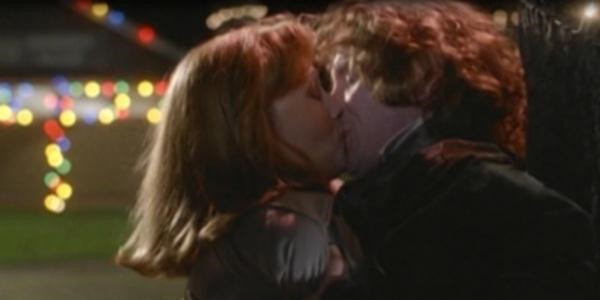
In 1996, Doctor Who had been off the air for almost 7 years. During its absence from our screens, the Whoniverse had been carefully expanded by fan efforts including the licensed BBV video dramas (some of which had only a tangential connection to the show) and the immensely popular Virgin New and Missing Adventures which took the Doctor, via the medium of literature, to previously unexplored dimensions in time and space. There was, of course, a brief hope with the Dimensions in Time charity special, but in traditional retcon fashion, most viewers did their best to forget that one ever happened. Finally, in the mid 90s, everything changed. The US expressed interest in co-producing a Doctor Who series with the BBC. A pilot was written and Paul McGann was cast as the 8th incarnation of the Doctor. To ensure some kind of continuity with the BBC series, Sylvester McCoy agreed to appear in a regeneration sequence. Excitement levels went through the roof. This would be Doctor Who on a grand scale, with a genuine budget and a dedicated team of writers who could take the Doctor places the BBC shoestring could never even dream of. The truth, however, turned out to be very different. The pilot was universally met with a collective shoulder shrug. Certain fans became outraged at plot points including the Doctor€™s apparent half human heritage and the infamous kiss (that, in the context of things, was actually incredibly chaste and quite sweet). But these are simply sideshows to the fact that the TV movie was, unfortunately, just a complete mess. Here are 10 reasons that the TV movie, unfortunately, didn't turn out to be the revival fans had been hoping for.

10. The Seventh Doctor's Out Of Character Demise

By the end of his run, and throughout the New Adventures series, the Seventh Doctor slowly became known as a master manipulator, finally catching up on old enemies and paying off ancient debts. He fought the Gods of Ragnarok. He - almost - wiped out the Daleks. He tried to hide the truth of his great legacy. He was a mysterious and ancient figure who chose to look like an innocuous middle aged man, hiding his wrath with whimsy. And then, he was killed, unceremoniously, by stepping out of the TARDIS into an unknown area of San Francisco where he was immediately shot by a group of Triads who were never heard from again. Brilliant. It told us absolutely nothing about who this incarnation had been and what he had done. It was a random, pointless and unceremonious death, compounded by the indignity of Grace Holloway€™s hurried surgical procedures, that betrayed and laughed in the face of everything that had been done to make the Seventh Doctor one of the strangest and most mysterious of all his incarnations. Fans thought he would go out enacting some dark and manipulative scheme, not be cut in his prime by a random act of bad timing!

9. The Master€™s Never Explained Snake-Like Tendencies
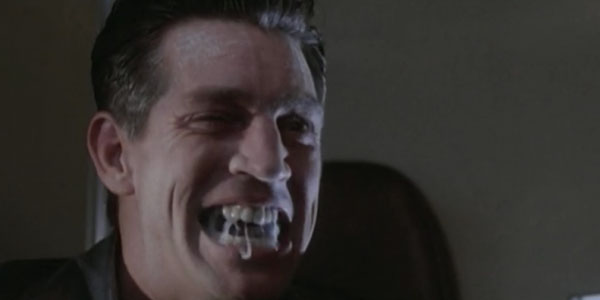
So the Master is killed by the Daleks. That€™s fine and in character. He€™s worked with the tyrannical tinpots many times, and he's betrayed them just as often. But following his execution, the Master inexplicably becomes a transparent slug that can possess people and cause them to spit venom. Admittedly, the body stealing is something he's done before (in The Keeper of Traken), but the rest of his almost supernatural abilities are never really explained. In fact, last time fans saw him, he was in the process of becoming a human cheetah, so these new powers come as more than a bit of a surprise to anyone who knows the history of the once notorious renegade Time Lord. There is never a reason given for these abilities, either. The Doctor shows no surprise that the Master is even capable of these bizarre feats. Oh, sure, the Master will do whatever it takes to stay alive, but at least there€™s usually an explanation for his odd behaviour. In this case, his snake-like tendencies seem like a natural part of being a Time Lord. It€™s lazy, it€™s strange and it could easily have been fixed with just a few lines of dialogue.

8. Everybody Lives! (Because The TARDIS Says So)
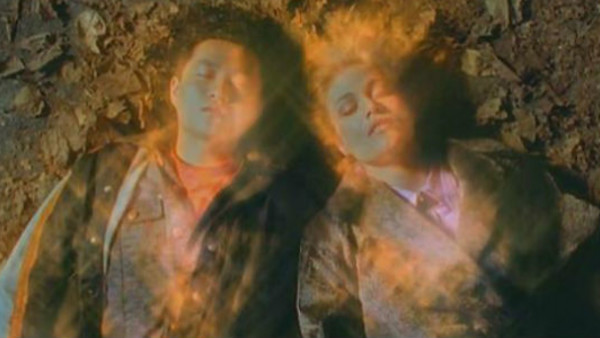
Speaking of lazy plot devices, at the very end of the story, things seem bittersweet as both Grace and Chang Lee are killed in their attempts to help the Doctor defeat the Master (Chang Lee finally cottoning onto the fact that the creepy guy in the sunglasses might not be as magnanimous as he first appears). The Doctor has always been steeped in death so viewers might expect at least one of these two potential companions to die, but when they both pop their clogs, it rams home the horror that occurs whenever the Master decides to enact one of his lunatic schemes. However, this is clearly too dark an ending and, with a little bit of hand waving, both Grace and Chang Lee are inexplicably resurrected by the TARDIS. It€™s never explained really how this happened other than the TARDIS seems to have have a moment of being "sentimental". They€™re certainly not regenerated because the Doctor confirms that they€™ve gone somewhere he€™s €œnever been€. Regeneration, after all, is not actually death. Now, some might explain this by the residual energy from the Eye of Harmony being used, and it€™s a plausible explanation as far as these things go. But in pure story terms, its lazy and cheap, making the deaths of Grace and Chang Lee meaningless and leaving a pretty horrid taste in the viewer€™s mouth.

7. Gratuitous Motorcycle Chase

Never has an action sequence seemed more out of place than the motorcycle chase where the Doctor and Grace steal - albeit in a very Doctorly fashion - a cop's bike and try to beat the Master to the party where the €œatomic clock€ (don't even ask) is being unveiled for the first time. There have always been action sequences in Doctor Who but this one sticks out like a sore thumb in terms of its placement and its execution. Those close up shots are excruciating, giving no sense that they are actually on a motorcycle at all. It also feels fairly pointless, too, adding nothing to the story except a clichéd moment where they drive between two trucks while moving at an alarming rate of speed. It€™s an action sequence for the sake of it, taking up valuable time that could have been far better spent on character or plot, both of which the TV movie was in desperate need of.

6. Piloting The TARDIS Is Like "Setting An Alarm Clock"

An element of disbelief has always been required in Doctor Who, especially when the Doctor allows anyone to touch the TARDIS console. After all, given everything that can go wrong with travelling through time and relative dimensions in space, it€™s very clear that only experienced users should ever attempt to get to Margate in 1782 without accidentally rupturing the timelines or unleashing Terrible Creatures from the Beyond. But once again, the Doctor needs to let someone with zero experience attempt to reset the console. In his defence, he's been subdued by the Master and dressed up in a prop that was clearly rejected from the set of A Clockwork Orange at the time, but still, his explanation of Grace to "think alarm clock" when it comes to mysteriously "rerouting the power" of the TARDIS is absolutely useless and makes absolutely no sense at all. In real life, if you€™ve never seen the inside of a car before, you would have no idea which wires to pull or which nuts to tighten in order to start it after stalling, never mind if the future of the universe relied on your having to do so.

5. The Humour (And The Injokes) That Mostly Fall Flat

From Professor Wagg's "Om" meditations to the Monty-Python-Lite of the cop who drives into the TARDIS and straight back out again, to tiny injokes only the fans will understand and likely groan at (really? Another reference to Baker's scarf?!), the movie is peppered with tiny sight gags and asides intended to add light relief. The problem is most of them are fairly predictable or have been seen before. The fat morgue attendant fainting is so clunkingly predictable, you could set your clock - or reset your TARDIS console - by it. It's broad and it's not witty. Doctor Who's humour has always come from character but the movie's characters are all paper thin, only present to serve the plot. And on the topic of humour, let€™s not even get started on the inexplicable levels of camp bestowed upon the Master. €œI need the Doctor€™s body!€ and €œI always dress for the occasion€ are two moments intended to evoke a wry smile, but instead make the viewer cringe and think about changing the channel.

4. Grace's Yo-Yo-ing Levels Of Credulity

Oh Grace, Grace, Grace. Such potential to be a voice of reason to the new Doctor. You are, after all, a medical practitioner of some regard with a cool head on your shoulders, and you seem able to hold your own when bantering with a Time Lord. In the end, though, you appear to do little more than exist to react in whatever way is most expedient to the plot. Grace is the first to claim that the Doctor isn€™t human and sees first-hand the moment where the Doctor pulls her medical equipment from his own body. But she still refuses to believe the Doctor isn€™t human. She watches him walk through solid glass and yet seems to stick to her belief that he is just some crazy mad man with memory loss. What's more, all his talk about the world being sucked into a black hole is nonsense. Two minutes later, she's completely on board and running about on the back of a motorcycle with not a care in the world, helping this mad man steal part of an atomic clock. All of this would be fine if fans perhaps knew more about who Grace was as a person, but as it stands she just seems to exist in order to advance the plot and inform the viewer about the Doctor, rather than going on her own unique journey.

3. The Doctor's Inexplicable New Ability To See Everyone's Future

"Gareth, answer the second question on your mid-term exam, not the third. The third may look easier, but you'll mess it up..." The Doctor, in his new state, is confused and lost and having trouble keeping a handle on who he is, never mind keeping track of anything else. And yet he seems to be able to look at people and know things about their future. The way it appears in the script is more that he has a formidable foreknowledge than that they are going to become terribly important people in the future. Take his last words to Lee, a person he doesn€™t appear to recognise until he tells him to stay away from SF next Christmas. The specificity of the way he talks to people about their future is unnerving. Were fans to meet Einstein, they couldn€™t tell him how he felt when working out the theory of relativity or know that he was thinking another formula might have been easier. The Doctor€™s never been this specific before or since, and it seems like a kind of low level telepathy or sensitivity to the time vortex more than anything. Or perhaps, just perhaps, it is simply poor scriptwriting.

2. The Master's Terrible Characterisation (And His Inexplicable "Plan")

Eclipsed only by the embarrassing gurning of John Simm in 2007, Eric Roberts' performance as the Master is one of the most excruciating depictions of the character ever put on screen. At least Simm had some energy about him. Devoid of motivation, flair or even a comprehensible plan (to be fair, most of the Master's plans and goals are flimsy at best!), Roberts' Master simply scowls and makes grand declarative gestures while killing people with his new snake-like abilities. Roberts looks mostly bored throughout, and who can blame him? There's nothing to get his teeth into here. The Master is the Doctor€™s oldest enemy, his equal and opposite. Here, he's reduced to a standard villain replete with rants and gratuitous murdering. And his plan to steal the Doctor's remaining regenerations is fine, except that it probably results in the destruction of the universe, which makes the Master more than a little shortsighted here. And then, adding insult to injury, he gives the TARDIS indigestion (something the viewers might just relate to).

1. It's The Only Time, Until The Night Of The Doctor, That Fans See Paul McGann On Screen As The Doctor
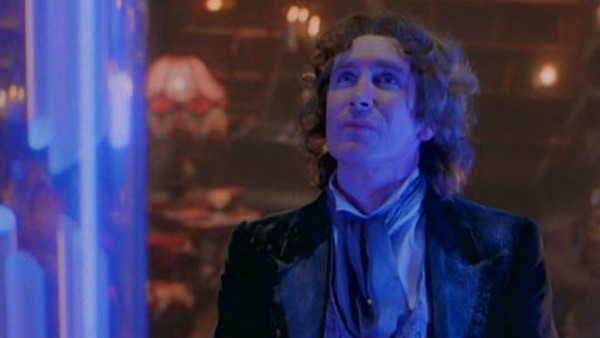
For all of the things that the movie gets wrong, it gets one thing very right indeed. If you have any reason to sit through the nonsensical script and the leaden performances of the guest stars, it€™s the Doctor himself. Paul McGann, from the moment he sits bolt upright in the morgue, is simply the Doctor. He owns the part completely. Check out his glee at finding shoes that fit or his passionate description of lying on a field under Gallifreyan skies. His desperation in the final moments of finding a way to save the Earth is palpable. You almost forget the handwaving going on in the script, such is his conviction. Most fans would have been happy with a full series based on Paul McGann alone. He hit all the right notes, adding a depth to even the worst lines in the script. If the show had gone to series and found its feet, McGann might have been one of the most popular Doctor's ever, mixing the eccentricities of actors like Baker and Troughton with the wide-eyed innocence of Peter Davison. So it€™s true. You can argue about the rest of the arguments presented here, but the absolute number one reason that the TV movie sucked was this: It€™s the only time (until The Night of the Doctor minisode) that fans saw Paul McGann in action as the Doctor. While he has since proved himself in the Big Finish audios, it's entirely possible that his performance could have brought in a new generation of 90s viewers to the world of Doctor Who. But, alas, thanks to a troubled production that never quite hit the mark, it was never to be. And that, perhaps, is the greatest tragedy of all. What did you think of this list? Do you agree/disagree with our reasons why the 1996 Doctor Who TV movie sucks? Join the conversation in the comments section below...

In this post: 
Doctor Who
 
Posted On: 
Contributor

R. M. McLean exists somewhere outside of time and space.